Posted in 2020-2029, Film Review

Disclosure Day (2026)

© Universal Pictures and Amblin Entertainment

Disclosure Day – Film Review

Cast: Emily Blunt, Josh O’Connor, Colin Firth, Eve Hewson, Colman Domingo, Wyatt Russell

Director: Steven Spielberg

Synopsis: A cybersecurity expert and a meteorologist find themselves being pursued by a sinister government organisation due to their connection to some strange unexplained phenomena…

Review: “Are we alone in the universe?” A burning existential question humanity has asked across the aeons of our existence, driven by the belief that, in such a vast universe, extraterrestrial life exists beyond the world we call home. Without a definitive answer, cinema has extensively explored the concept of extraterrestrial life since its inception, beginning with the 1902 short film A Trip to the Moon by Georges Méliès. Among modern filmmakers who have left a UFO-sized imprint on this genre, you need look no further than Steven Spielberg. Close Encounters of the Third KindE.T. the Extra-Terrestrial, and War of the Worlds (2005). After looking inward to tell his personal story of how he fell in love with moving pictures and aspired to make them with The Fabelmans, the legendary filmmaker turns his camera back to the skies in search of that elusive, definitive answer to whether alien life could really be out there.

The world stands on the brink of a catastrophic global conflict and cybersecurity expert Daniel Kellner (O’Connor) is hunted by his former employer, the shady government organisation Wardex headed by the ruthless Noah Scanlan (Firth), after he stole top-secret documents and hard drives confirming the existence of extraterrestrial life. Daniel is determined to release the information to the public, believing they have the right to know, with Wardex stopping at nothing to capture him and ensure those files never see the light of day. All the while, Kansas City meteorologist Margaret Fairchild (Blunt) experiences strange occurrences, speaking languages she doesn’t know, both human and non-human, with the latter occurring when she’s on air. Soon, Margaret finds herself pursued by Wardex as well, as she’s connected to this mysterious event in a way she doesn’t fully understand. She soon finds herself in a race against time to find Daniel and a group of former Wardex employees who have gone rogue with their mission to broadcast the truth before it is too late.

Throwing the audience headfirst into the action, amidst an extremely politically charged world where global superpowers stand ready to destroy each other with the simple push of a button, is certainly a bold (and depressingly relevant) way to open your film, without giving much in the way of key context. A striking way to open a film which could have very easily backfired. However, in such a distinguished filmmaker’s hands, it wastes no time in immediately conveying the gravity of the situation. The stakes could not be higher, as Daniel and his girlfriend Jane (Hewson) race to keep the files out of Wardex’s hands and make them public knowledge before the planet is left devastated by a nuclear catastrophe and civilisations as we know them have crumbled.

Given the extent to which he has explored the topic across his spectacular career, it shouldn’t come as much of a surprise that Spielberg has been fascinated by extraterrestrial life since a very young age, a fascination that has become a staple of his filmography. Yet this is a far cry from the whimsical wonder of seeing a young boy become best friends with an alien with a glowing finger who just wants to phone home. Based on a story outline by Spielberg, the screenplay by the director’s long-time collaborator, David Koepp, remains grounded in a gritty political thriller shaped by 21st-century politics. Agendas fly all over the place as various parties are pursued by the government, which will do everything in its power to prevent top-secret files that expose dark truths which could be utterly damaging to its reputation from coming to light. It all sounds eerily familiar to the world we live in today.

With no shortage of men in suits relentlessly pursuing both Daniel and Margaret, the film offers plenty of exhilarating chase sequences, including one involving a moving train, allowing Spielberg to remind us of his force behind the camera. Yet beneath these slickly directed action sequences, many key players lack substantial character development. O’Connor is solid as a cyber expert determined to blow the whistle on long-buried government secrets, but his relationship with Jane is severely underdeveloped. In a rare change of pace from the quintessentially charming British man he usually plays, Firth is suitably menacing as Scanlan, complete with his natural accent, no less. He has a machine-like determination to prevent full disclosure, believing it would cause severe, irreparable harm to all of us.

The unquestioned star of the show, however, is Blunt’s Margaret. A woman who is initially far out of her depth, with little idea of what happened to her on air and confused as to why the government is suddenly pursuing her. Yet, as the film progresses, both she and the audience slowly come to understand just how integral she is to ensuring humanity’s survival, particularly as the film’s climactic third act comes into focus.

The rest of the cast, including Colman Domingo’s Hugo Wakefield, are not given nearly enough screen time or development, eschewed in favour of the high-intensity chase sequences. As the old saying goes, “the thrill is in the chase, not the capture”, but perhaps Spielberg could have leaned more into the cerebral side of the sci-fi mystery. Nevertheless, even after five decades of making us look to the stars and so much more, the veteran director gives us plenty to ponder. Not only to ask if there is life out there, but also how we can be a more cooperative and unified species, should the day ever come when it is revealed that we are not alone in the universe after all.

Centred around a magnetic, career-best performance by Emily Blunt, Disclosure Day delivers thrills and sharply probes the existential mystery of alien life, humanity in the 21st century, and where we might be going. 


Posted in Film Review, London Film Festival 2025

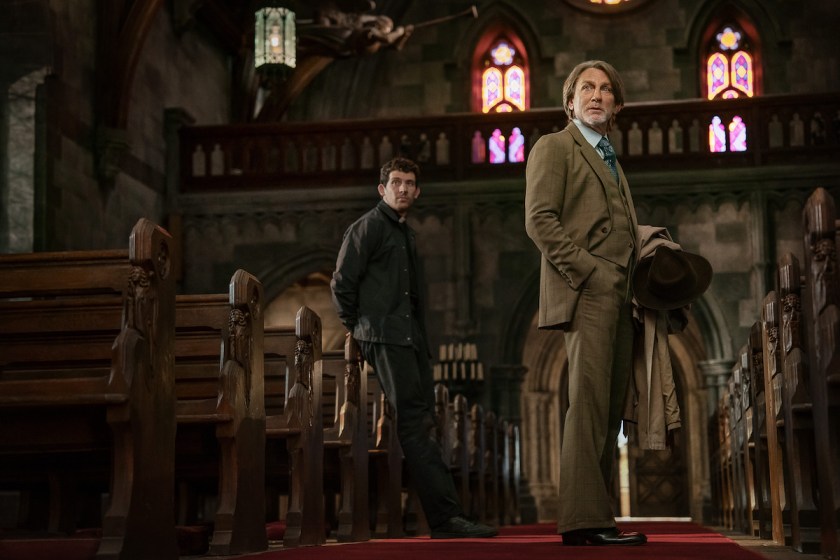
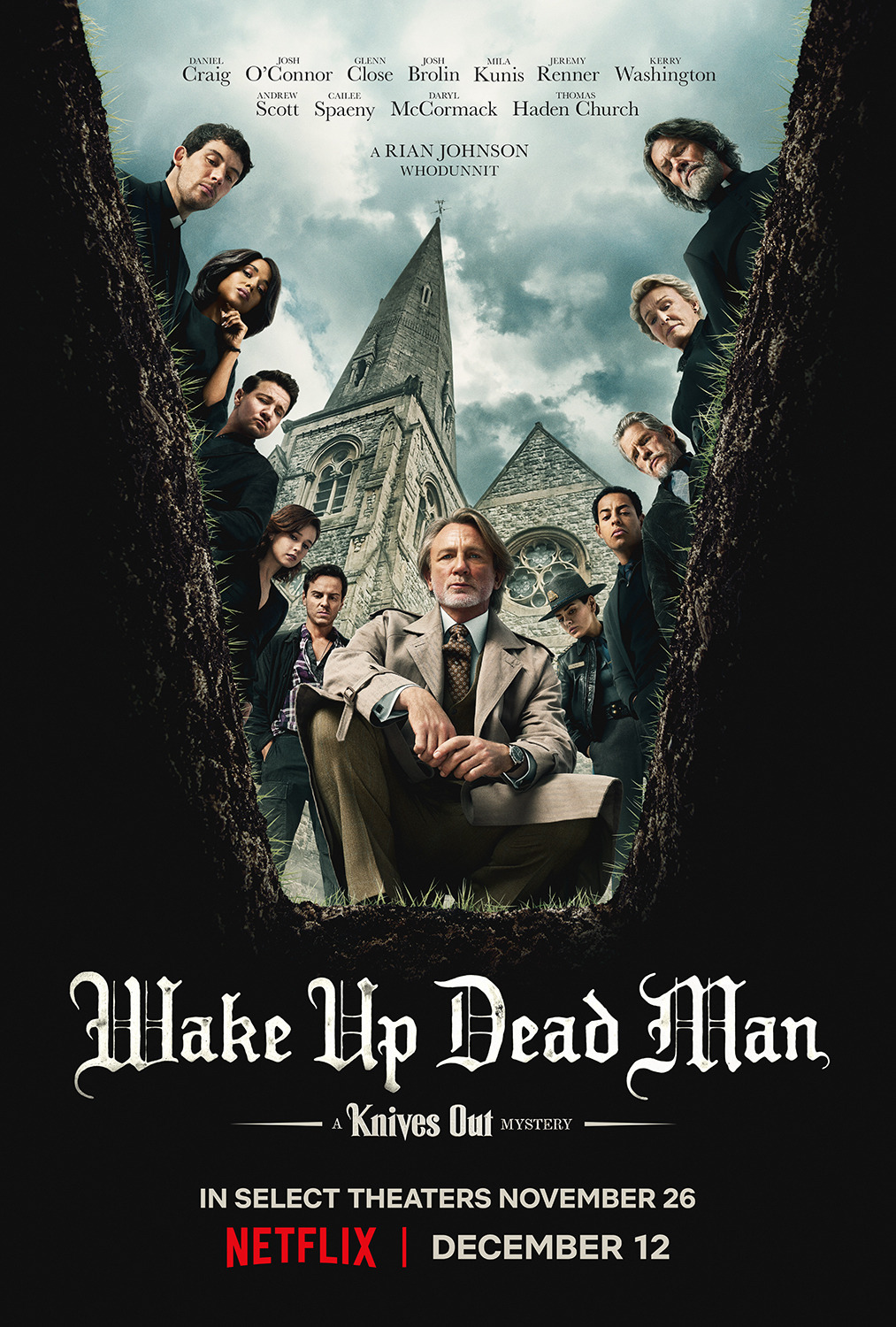
Wake Up Dead Man: A Knives Out Mystery (2025)

© Netflix and T-Street Productions

Wake Up Dead Man: A Knives Out Mystery – Film Review

Cast: Daniel Craig, Josh O’Connor, Glenn Close, Josh Brolin, Mila Kunis, Jeremy Renner, Kerry Washington, Andrew Scott, Cailee Spaeny, Daryl McCormack, Thomas Haden Church

Director: Rian Johnson

Synopsis: In a parish church in Upstate New York, renowned detective Benoit Blanc takes on his darkest case to date…

Review: In terms of the most memorable and wholly original characters to have emerged on the big screen in the last ten years or so, there can surely be no doubt of the inclusion of gentleman sleuth Benoit Blanc in the conversation. When audiences were first introduced to him in Massachusetts to investigate the death of a wealthy, renowned crime novelist in 2019’s Knives Out, with his sharp suit, keen detective eye, eccentric mannerisms, and last but by no means least, that iconic Southern accent, it was a match made in cinematic heaven. A new icon of the great detective genre was born.

It is true that not everything that comes out of Hollywood indeed warrants or needs a sequel and/or a cinematic universe. It would have been a crying shame if audiences never got another chance to join Detective Blanc as he puts his skills to the test to solve another case. Thankfully, a bumper deal with Netflix allowed Johnson to craft two further sequels. After joining a bunch of self-described “shitheads” on a private Greek island for a murder-mystery party in the equally brilliant Glass Onion, the master detective is back once more for his darkest case to date.

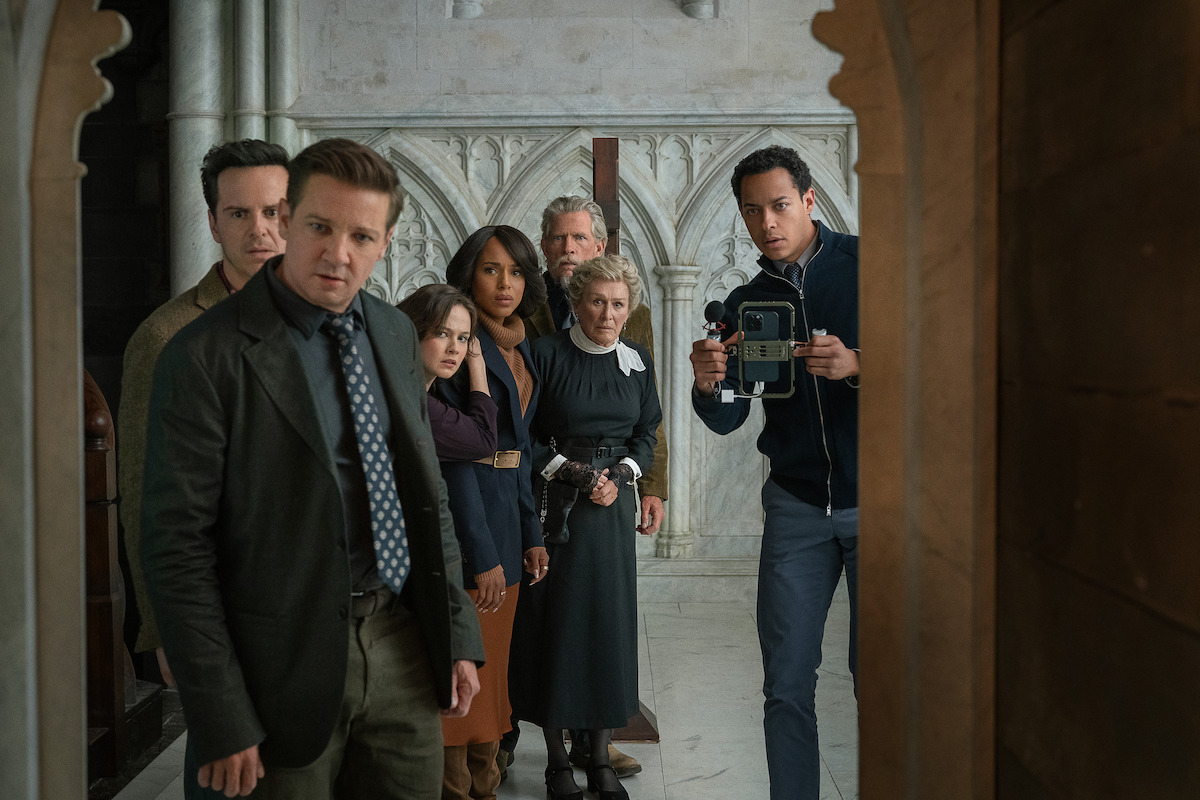
As with the previous two films in the franchise, when it comes to plot details, the less you know, the better. We’ve moved away from the private island of a vainglorious billionaire and back to the United States to an Upstate New York parish where Jud (O’Connor) has been recently reassigned after he let his temper get the better of him towards a fellow priest. He becomes the assistant to the pious Monsignor Wicks (Brolin), and they do not see eye to eye at all. The firebrand manner with which he delivers sermons doesn’t go down well with many of the congregation (including Jud), leaving only a select few loyal and devout regulars. During one such sermon, when the Monsignor goes off to a locked pulpit, he is stabbed to death. The “impossible crime” has been committed, with suspicions immediately falling on Jud, and it soon becomes clear there is only one detective in the world who can solve it.

After two fantastic previous instalments that breathed new life into the murder mystery genre, the pressure would have been on for Johnson to maintain his impressive streak and satisfactorily complete the trilogy. Therefore, it would have been easy for him to deliver a similar follow-up to what came before and put down the magnifying glass. Yet, the writer/director is having none of it and really challenges himself by leaning into much darker and bordering on horror material. As one would suspect, given that the scene of the crime is in a church, religious imagery is present in abundance, with the power of one’s faith in their religion and their beliefs being thoroughly put to the test. Though, this merely scratches the surface, with global politics being the way they are in the year of our Lord 2025, the screenplay has much to say about how Christianity, particularly in the US, is used by lunatic and dangerous demagogues whose who use poisonous and hateful rhetoric to simultaneously solidify their rabid base of supporters and attempt to convert those who don’t believe to their cause. Johnson’s writing has lost none of its sharpness.

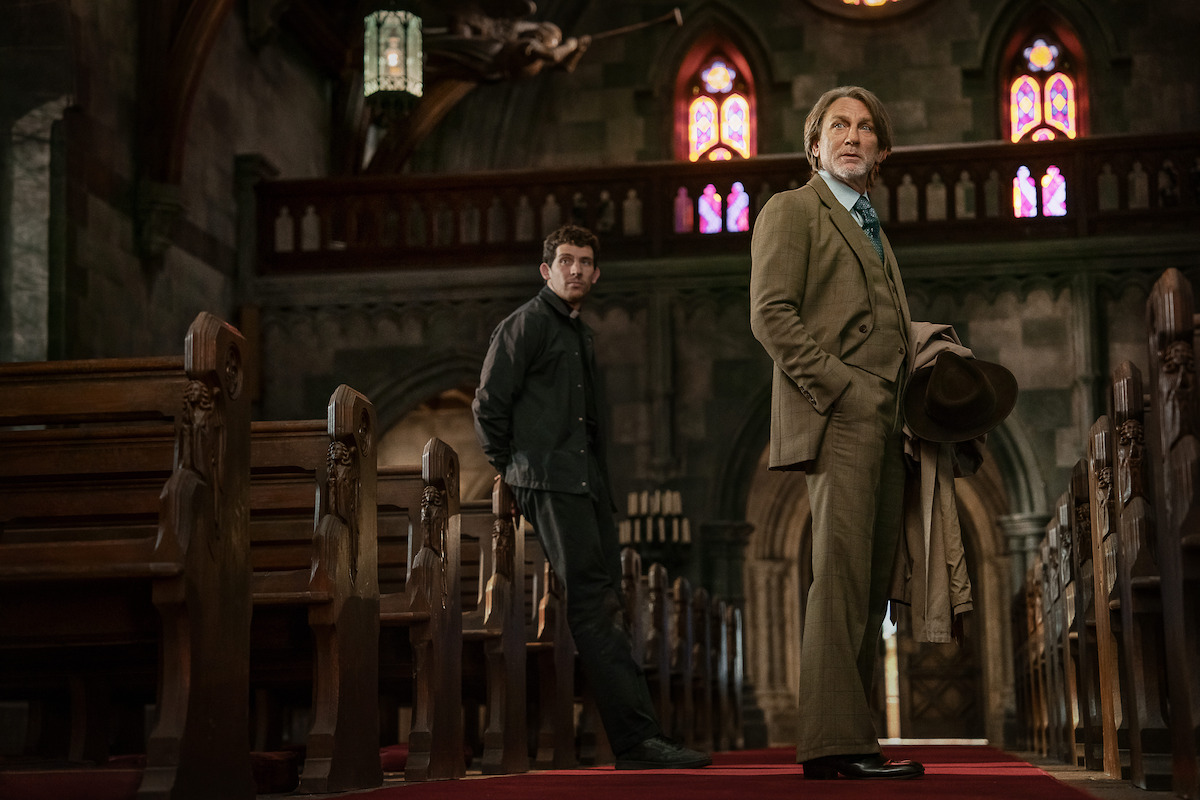
In his third outing as Blanc, this time with a lush and voluminous head of hair and a very sharp suit, Craig once again shines as the master detective. Even though it takes a while for him to arrive on the scene, Johnson perfectly sets the stage and establishes the events that lead to Blanc’s arrival. Ultimately, this means that the film takes its time to get going until Blanc makes his grand entrance and immediately has at least a couple of pages of dialogue, and that is a conservative estimate. Like with previous films where Blanc had his key accomplices in Marta Cabrera and Helen Brand, Jud is the centre of this mystery, and O’Connor runs away with the film and delivers the best performance, outshining even Blanc, which is no easy feat. It wouldn’t be a Knives Out film without a stacked and glittery ensemble cast. While they’re all enjoyable to watch and play a part in the centre of this mystifying murder, some have significantly larger roles than others, with one particularly devout follower being the scene-stealer.

The location and the ensemble may change, but Johnson keeps the faith with his familiar crew. Rick Heinrichs’ production design fully leans into the gothic vibes, while Steve Yedlin’s cinematography masterfully uses striking lighting and shadows to illustrate the dark and shadowy secrets at the centre of this particular church. Both help to create the rather troubling illusion that the church building itself is almost a living organism, with wickedness, corruption and unholiness at its centre. It might not reach the highs set by its predecessors, but the murder mystery genre continues to be in rude health thanks to Monsieur Johnson. Blessed be to him and to Monsieur Blanc for providing audiences with a modern trilogy of marvellous murder mysteries, and let us hope that their sleuthing adventures will continue for many more years to come.

Leaning heavily into darker themes about faith in religion and the power of individuals, as well as the dangers of their influence on vulnerable individuals, a sublime scene-stealing performance from Josh O’Connor ensures Rian Johnson completes his trilogy of murder mystery sleuthing in excellent style. 

Posted in 2020-2029, Film Review

Challengers (2024)

© Amazon MGM Studios, Metro-Goldwyn-Mayer and Pascal Pictures

Challengers – Film Review

Cast: Zendaya, Mike Faist, Josh O’Connor

Director: Luca Guadagnino

Synopsis: A former tennis prospect turned coach must train her husband when he faces off against his former best friend…

Review: From the football pitch to the tennis court, to the racing tracks of Formula One, passion is usually never in short supply when it comes to professional sports. From the professional athletes playing the sports to the legions of fans in the stadium, and the countless millions watching on TV across the globe, there is a fervour for following our beloved team or individual player that cannot be outmatched. What if those feelings were not contained to merely the respective arenas on which the sports are played, and went beyond those and into the players’ personal lives? Relationships where the initial love and desire sour turn into seething resentment and acrimony in this steamy tennis drama from Luca Guadagnino.

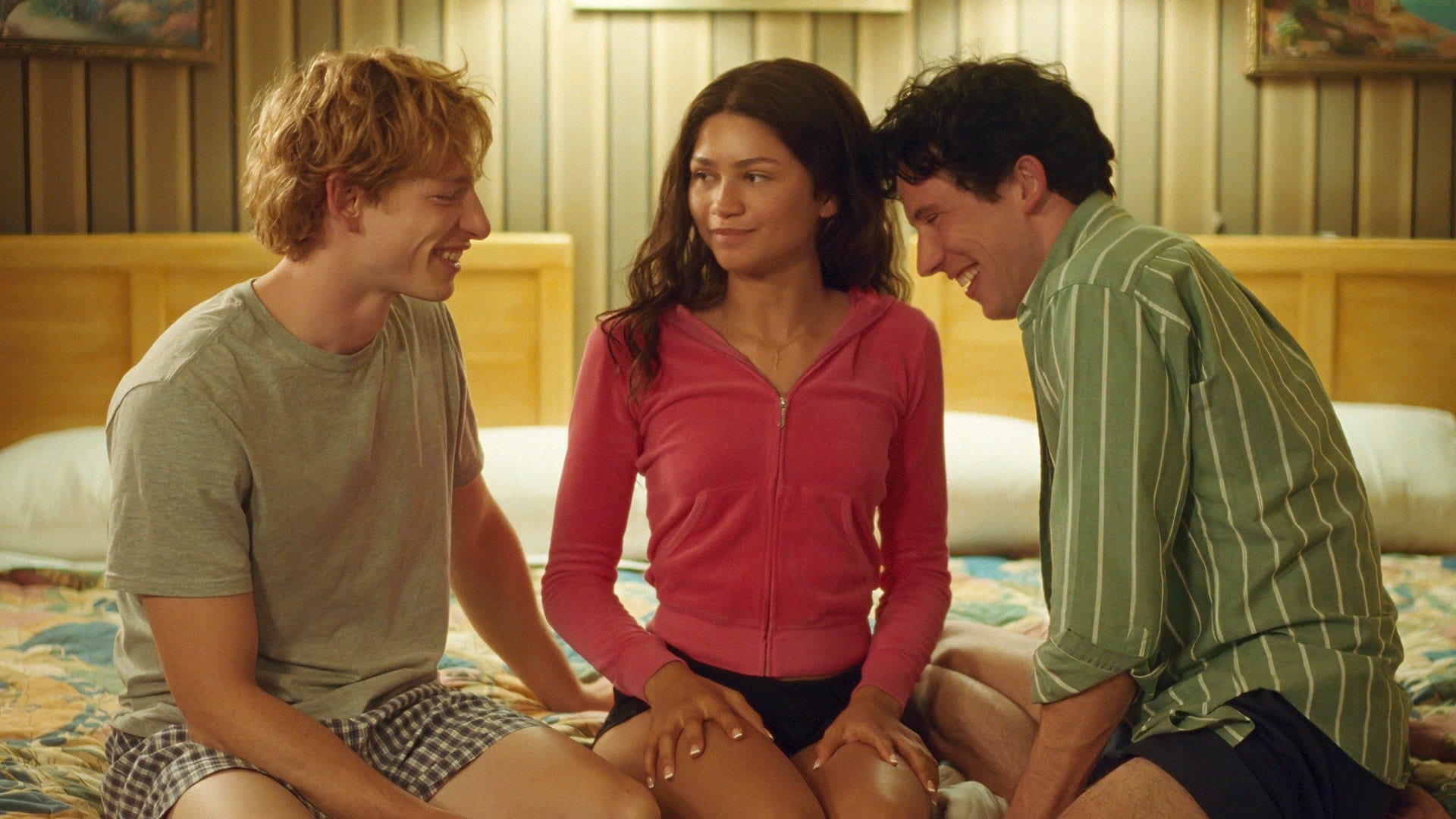
Tashi Duncan (Zendaya) is a tennis prodigy, a star destined for the most unstoppable career trajectory to become one of the best players the sport has ever seen. She captures the attention of lifelong friends Art (Faist) and Patrick (O’Connor), who become instantly smitten by her and desperate to win her affection. She ensnares them both and lays down a tantalising gauntlet, that whoever wins in their upcoming match will be the one who gets Tashi’s number. This challenge to win Tashi’s heart is the first swing in a journey over multiple years in which romance blossoms, once promising careers are cruelly cut short due to injury, and Art and Patrick’s budding friendship in their youth irrevocably damaged. It all comes down to one specific Challenger tennis match, a grudge match in more ways than one, with Tashi watching on from the stands.

Sensuality, desire and seduction are three words inextricably linked to any film directed by Guadagnino. Even in films where you would have thought it would be near impossible to make these themes relevant, such as a story of two young lovers forced to live a life on the run due to their cannibalistic tendencies. It might have seemed impossible to match the sunshine-drenched seduction on display in Call Me By Your Name, but the tennis ball has the peach outmatched because this is arguably the most seductive and horniest film he has made to date. The desire to be the best in your profession, in this case, a tennis player, coincides with the pursuit of a romantic partner/relationship. In Tashi’s mind, tennis is akin to being in a relationship and requires two, or in this case, three people to make it work. It’s this relationship which takes centre court as the boys pursue Tashi, and the ensuing love triangle and the complexities and emotions that go along with their relationships only intensify as the years progress.

By the time the crucial match has come around, saying there’s no love lost would be a massive understatement. The stakes could not be higher, with much more than bruised egos on the line, it is utterly pulsating to watch. Justin Kuritzkes’s screenplay is sharp and fierce with ice-cold and devastatingly brutal jibes and insults, some of which should in time take their place in a montage of some of the best insults/rebukes in cinema. The piercing dialogue, combined with the fierce power struggles that ensue within this bitterly fraught love triangle makes for utterly fascinating viewing, and with three utterly magnetic performances.

O’Connor’s Patrick is exceedingly cocksure and with a smugness that by all rights should make you want to throw a racket, or fire a bunch of tennis balls out of a machine at top speed at him to wipe the smile off his face.  Faist’s Art is considerably more withdrawn and focused on getting one over his former friend and arresting his slump in form. Yet the film’s ace is unquestionably Zendaya. She sets the wheels in motion, splintering apart the friendship between Art and Patrick like a tennis racket being mercilessly destroyed due to frustration. It’s a performance that serves as a reminder as to why she is one of the brightest talents in the industry and the best performance she has given on the big screen at least.

New shirts, please…

A cast fit and firing all on the top of their game is matched by their director. Guadagnino utilises several innovative style choices to illustrate the weight of the stakes that are riding on this match. Sayombhu Mukdeeprom’s cinematography utilises intense, sweat-dripping close-ups of the players in action where drops of sweat even drip onto the camera lens, as if there wasn’t enough sensuality on the screen to pump up the horniness, to wide shots and POV shots of the tennis ball as it is furiously smacked across the tennis court with intense feeling by both players. The tub-thumping disco vibes of the score by Trent Reznor and Atticus Ross only adds to the intensity of the rivalry being played out before our very eyes. Like a tennis rally constantly going back and forth, the film utilises a lot of time-hopping and non-linear narrative to illustrate the differing dynamics at various points in the lives of these people and how they go from lusting after each other to wanting nothing more than to go for each other’s throats.

It effectively illustrates how these emotions go from one extreme to the other over the course of many years, but with so much zipping around, the time jumps can get a tad confusing. Despite that minor fault, in a time when original ideas in Hollywood are certainly out there but don’t always come to the fore, it is refreshing to see such an exhilarating, original and thrilling piece of cinema be served up. Wimbledon and the other major tennis tournaments have a lot to live up to this year.

A fascinating and impassioned character study of desire, power and an insatiable hunger for success served with pulsating filmmaking and three electric performances.  Game, set and match.