
Posted in 2020-2029, Film Review, London Film Festival 2025

Hamnet (2025)

© Universal Pictures, Focus Features, Neal Street Productions and Amblin Entertainment

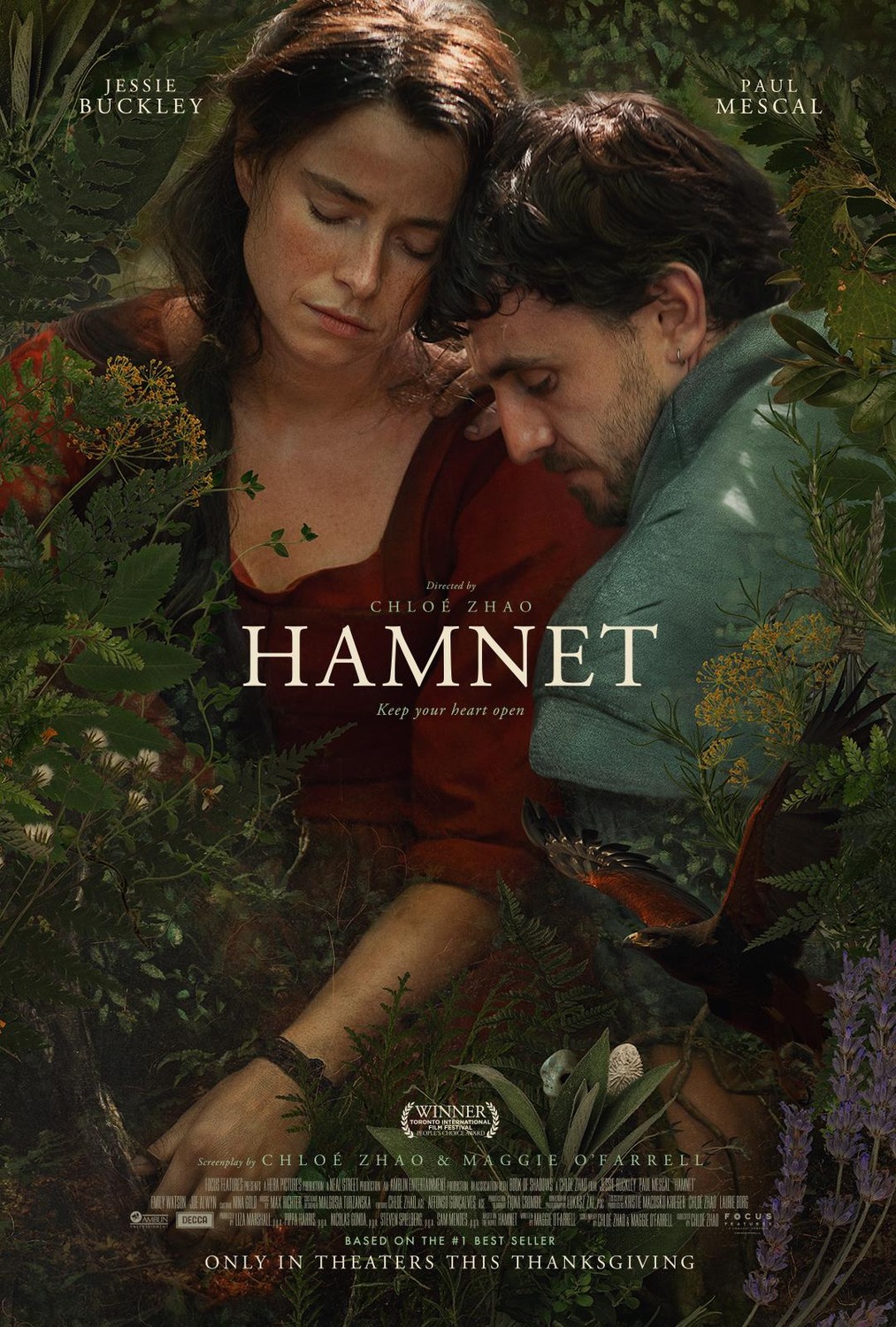
Hamnet – Film Review

Cast: Jessie Buckley, Paul Mescal, Emily Watson, Joe Alwyn, Jacobi Jupe, Olivia Lynes, Bodhi Rae Breathnach

Director: Chloé Zhao

Synopsis: A fictional account of the tragic circumstances which led William Shakespeare to write his timeless masterpiece “Hamlet”…

Review: “To be, or not to be, that is the question.” It is one of the most instantly recognisable quotes from among the nearly 40 plays that make up the works of the great William Shakespeare. A line delivered in the third act, when the play’s protagonist is deeply contemplative, pondering whether to end his own life. A line so powerful that it has taken on a life of its own over the centuries since it was first written on parchment. What may have inspired one of the greatest writers in history to craft this line and, indeed, one of his most significant works? Enter Academy Award-winning filmmaker Chloé Zhao with an equally compelling and tragically heart-wrenching interpretation of how one of the greatest writers who ever lived channelled his grief into creating a masterpiece.

After a prologue revealing that the names Hamnet and Hamlet were interchangeable, we meet a young William Shakespeare (Mescal) working as a Latin tutor at a local school, long before he became the renowned playwright history remembers him as. On one fateful day, he catches sight of Agnes (Buckley) practising falconry and quickly falls head over heels in love with her. Despite protests from their respective parents, they wed and swiftly consummate their union, with Agnes first giving birth to a daughter, Susanna, followed by twins Judith and Hamnet. As the children grow up, the bonds within the family strengthen, even as William begins to find success in London and is forced to spend time away from his family, making the moments he shares with his children, particularly Hamnet (remember the name Jacobi Jupe), all the more precious. This makes it all the more harrowing when tragedy strikes.
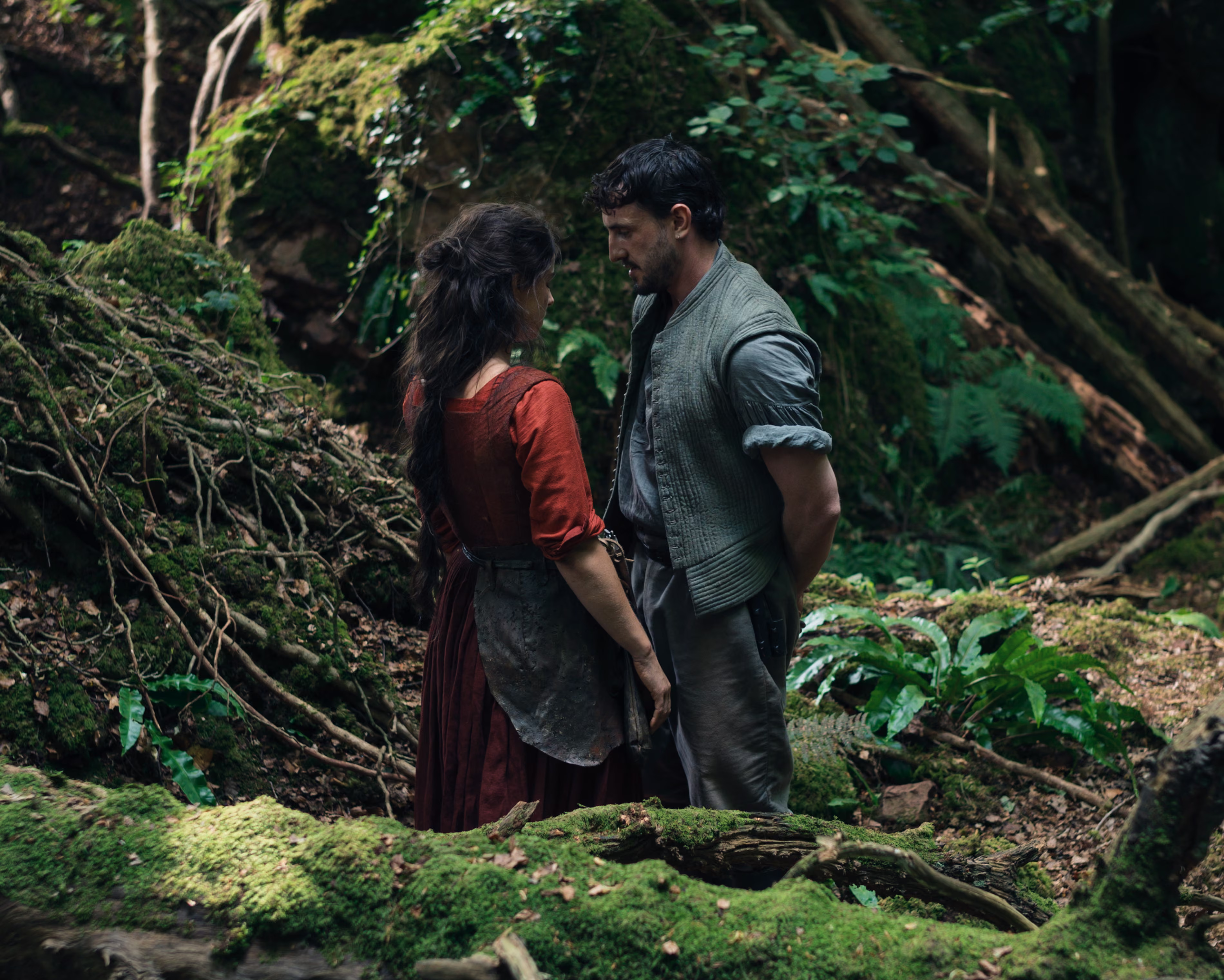
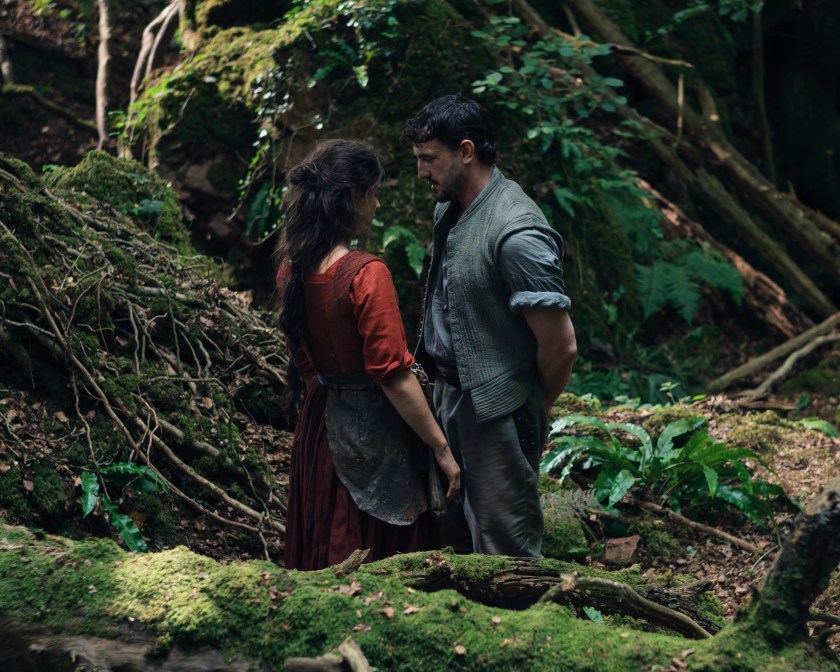
From a moving (and Oscar-winning) story about a woman who chooses to live as a modern-day nomad to the all-encompassing Marvel Cinematic Universe, to tell the (underappreciated) story of a group of all-powerful, immortal Marvel deities, to Shakespeare, Chloe Zhao’s filmography is undoubtedly eclectic. Yet there is a common theme that beats at the heart of all these films, exploring the humanity and spirit of people who, for one reason or another, find themselves cut adrift and/or isolated from society. Zhao and Maggie O’Farrell’s script (based on O’Farrell’s book of the same name) leans into this and patiently explores the loving and tender romance that develops between Will and Agnes. With one having the gift of the written word and the other a deep connection to the forest, they are isolated from their families, and their relationship feels wholly incompatible. It wouldst appear that opposites doth attracteth, and though their love and the love they have for their children blaze like wildfire, it is severely put to the test in a way that no parents should have to go through.

Grief is a shared experience, something we will all go through at some points in our lives, though it affects us in different ways. Zhao’s masterful and measured direction empowers her actors to deliver performances that are both subtle and profoundly moving. For a film that focuses on the life and one particular work of Shakespeare, he doesn’t have the most substantial amount of screen time. Nevertheless, Mescal delivers another captivating performance, capturing the emotion and humanity of the man and the wordsmith. With her husband out of the picture and away on business for a considerable portion of the film, it falls on Agnes to be the glue that binds the family together. Jessie Buckley is nothing short of sensational here and gives maybe her career-best performance. She captures the fierce maternal instinct of a mother who will stop at nothing to protect those closest to her. Yet, when something as potent as a deadly illness comes, she is completely powerless to stop it from claiming her child’s life. The emotion is raw, guttural, and she will split the audience’s hearts into a thousand pieces.

Such an unfathomable and devastating loss would severely test the most resolute and unbreakable bonds that hold a family together. How would one even begin to comprehend, make sense of their life and purpose, and process their sorrow? Despite her own unbearable pain, Agnes knows she must endure and be strong, if not for her own sake, then for the sake of her other children, even more so with her husband more distant than ever and lost in his own grief. Such grief serves as the inspiration for the creation of his ultimate tragedy, his timeless magnum opus, which forms the basis for the film’s poignant third act as the play is performed for the very first time, with Agnes in the audience.
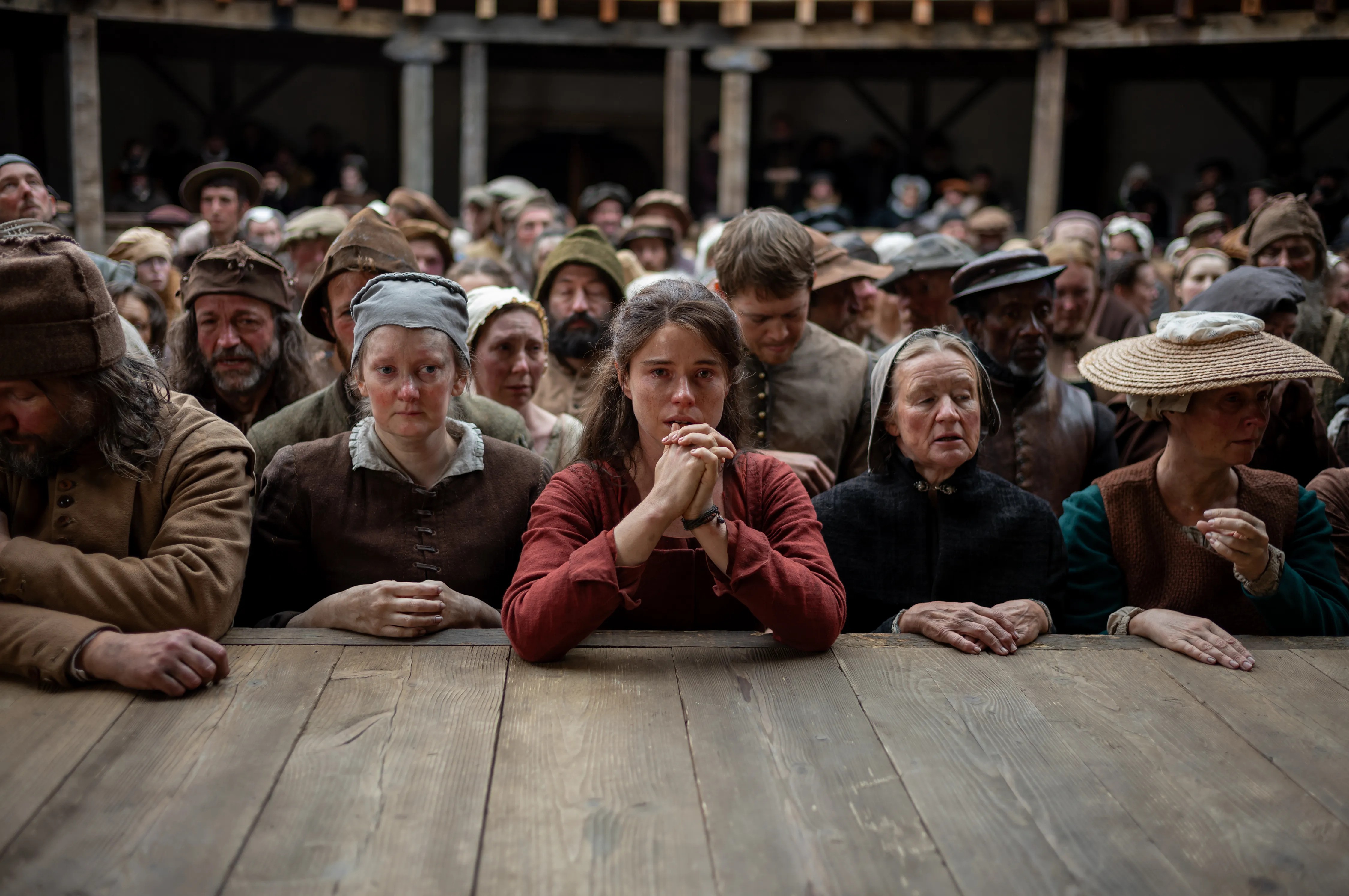
With Fiona Crombie’s incredible production design to faithfully recreate the Globe Theatre, we see through Agnes’ eyes the anguish of the loss she has felt since his death, being released as fury and confusion as to why this latest play bears her son’s name. Yet, this dissipates when she begins to understand the play’s meaning, allowing for a moment of emotional release felt not just by Agnes, but by the whole crowd in the Elizabethan England theatre and the audience themselves. Max Richter’s emotionally resonant score features Elizabethan instruments to wonderful effect throughout, but it is the use of the composer’s most well-known piece that you will have heard in previous films that will have the tears flowing, unless thou art a robot. It is fitting that in the same way the Bard’s grief inspired him to create a literary masterpiece, the creation of that play has enabled another team of artists centuries later to create a masterpiece of the cinematic variety.
A deeply moving and human portrayal of the universal experience of grief and the everlasting power of art to help us understand and come to terms with our heartache and sorrow. A film destined to be as timeless as the works of the Bard himself. 

a

Posted in 2020-2029, Film Review

The Brutalist (2025)

© A24. Universal Pictures and Focus Features

The Brutalist – Film Review

Cast: Adrien Brody, Felicity Jones, Guy Pearce, Joe Alwyn, Raffey Cassidy, Stacy Martin, Emma Laird, Isaach de Bankolé, Alessandro Nivola

Director: Brady Corbet

Synopsis:  A talented architect escapes post-World War II Europe and emigrates to the US to start a new life in pursuit of the American dream…

Review: An arduous boat journey, followed by a walk down a gangway, to mark the start of a new life in a country that offers so much potential and opportunities for success. This is the core principle of the American Dream, a concept popularized by US writer James Truslow Adams during the Great Depression. It has been ingrained in the ideals of the nation for decades. No matter who you are or where you come from, you can achieve your dreams in the United States of America. This promise has inspired millions of immigrants to move to the country and lies at the heart of this ambitious and powerful film by Brady Corbet.

In post-World War II Europe, Hungarian-Jewish architect László Toth (Brody) emigrates to the United States after surviving the Holocaust. Unfortunately, he has been separated from his wife, Erzsébet (Jones), who remains in Europe with their niece, Zsófia (Cassidy). After disembarking from the boat and catching an upside-down glimpse of Lady Liberty in all her glory, László makes his way to Pennsylvania to stay with his cousin, Attila (Nivola), and Attila’s wife, Audrey (Laird). Attila offers László the chance to work in his furniture business. One fateful day, they receive an offer from Harry Lee Van Buren (Alwyn), who wants to hire them for a job to renovate the library at his father Harrison’s (Pearce) home. Initially, Harrison, a wealthy industrialist, strongly disapproves of the renovations and dismisses László from his home without paying him for the work. However, after László’s designs for the library receive glowing praise from the architectural community, Harrison returns to offer László the opportunity to design his magnum opus: a community centre that will house a gymnasium, chapel, and reading room in honour of Harrison’s late mother.

In such times when the subject of immigration is at the centre of hateful and bigoted rhetoric emanating from certain world leaders, the arrival of such an expansive and grand film in terms of its scope and themes couldn’t be more timely. Like a vast and tall structure built to last for generations to come, Corbet and Mona Fastvold’s weighty screenplay tackles a plethora of meaningful and potent subjects including the Jewish identity, the unremitting horrors the Holocaust inflicted on the Jewish people, the joys and hardships that go along with looking to fulfil the promise of the American dream as an immigrant, and the desire to make or construct something which will ensure you leave a lasting legacy on the world. Yet that ambition comes with a cost, because as Laszlo finds out, to what extent will you drive yourself into the ground in pursuit of perfection when the path to get there is littered with seemingly mountainous obstacles too heavy to move?

To leave everything you have known behind to pursue a brand new life on an entirely new continent is a journey that millions have embarked upon across generations. For Adrien Brody, whose mother and grandparents fled their native Hungary to emigrate to the US, it is evident how much of a personal role it is for him. He channels this into his incredible performance as we can see Laszlo is a man driven by his passion for his craft, and his determination to make a better life for himself so that one day Erzsébet and Zsofia will finally be able to join him in the US. Such is the lengthy process, it takes a while for Erzsébet and Zsofia to finally be reunited, but when she does finally arrive in the US, Jones more than makes her presence known with a powerful performance. As the wealthy benefactor who plays a central role in giving Laszlo a chance to realise his vision, Pearce is utterly compelling as Van Buren Sr. There is a warmth to him, a generosity where he recognises Laszlo’s talents. However, beneath that warm and embracing exterior, there is a hint of a darker side, a jealousy and bitterness that threatens to come to the surface as the film, and this hugely ambitious project progresses.


Whenever a film clocks in at a runtime exceeding three hours, discussions inevitably arise as to whether it justifies such a lengthy runtime. With a built-in intermission, the film’s structure keeps eyes firmly transfixed on the screen, be it the awe-inspiring production design, Lol Crawley’s breathtaking cinematography and the majestic score by Daniel Blumberg. Given the exorbitant budgets with which many films are made these days, how the film only cost $10m is astonishing and should serve as a lesson for filmmakers that exorbitant budgets aren’t always needed. However, even with the lengthy runtime, during which the audience has been taken on an immersive journey across several decades, the conclusion comes off as very abrupt and rushed. Like spending years on an exciting construction project, only to haphazardly complete the final stages in a comparatively short period. Even with such a lengthy runtime, the film would have benefitted from an extra 15 to 20 minutes to provide audiences with some necessary closure.

Despite some question marks about the film’s use of AI to enhance the Hungarian dialogue of László and Erzsébet, as well as for some of the former’s drawings, what Corbet has brought to the screen with only his third feature film is mightily impressive. With its pertinent exploration of the struggles of immigrants to fulfil the promise that the American dream sold to them, combined with its weighty themes of striving to establish yourself as a master in your craft, only to be held back due to a plethora of societal factors, including but not limited to the brutal (pun absolutely intended) nature of capitalist society. The wondrous filmmaking will only carry increased significance as time goes by.

Across such an epic runtime, The Brutalist could have easily been bogged down by the sheer ambition of its timely story. However, with an engrossing performance from Adrien Brody at its core, Corbet has built a towering and pertinent examination of the immigrant experience which will stand tall for generations to come. 

Posted in 2010-2019, Film Review, London Film Festival 2019

Harriet (2019)

Image is property of Focus Features and Perfect World Pictures

Harriet – Film Review

Cast: Cynthia Erivo, Joe Alwyn, Leslie Odom Jr, Janelle Monáe, Clarke Peters

Director: Kasi Lemmons

Synopsis: A look at the life of Harriet Tubman, who after escaping the cruelty of slavery, becomes a leading figure in the fight against its abolition…

Review: There’s no getting away from the fact that slavery in the 1800s represents one of the darkest points in human history. While this period was full of appalling atrocities committed against human beings, even in such troubling times, such powerful and uplifting stories can be brought to light. Stories of amazing courage and perseverance, stories that deserve and, arguably need to be brought to a wider audience, and one such example of this, is the amazing inspirational story of Harriet Tubman.

Having spent her entire life in slavery, Harriet strives to breath the free air. When an attempt to secure her freedom, via legal methods, is vehemently rejected, she senses that she might face severe punishment for trying to secure her freedom. Fearing for her safety, she decides to take matters into her own hands. She bravely runs away in a desperate bid to secure her freedom, which proves to be successful. Upon gaining her freedom, she makes it her mission to liberate slaves from their masters, and becomes a leader in the abolitionist movement to end this cruel and barbaric practice.

Having burst onto the scene in 2018 with Widows and Bad Times at the El Royale, Cynthia Erivo demonstrated her considerable talents to audiences the world over. However with this role, she produces an astonishing, career best performance. She imbues Harriet with a strong willed fearlessness, and a resolute determination in her mission to win her freedom. This doesn’t waiver in her later exploits, as she uses this tenacity and bravery to go out and strive to position to free as many of the people that have fallen into slavery as she possibly can. It is her movie and she carries it magnificently. Outside of Erivo’s sublime performance, Leslie Odom Jr is solid as an abolitionist ally and Joe Alwyn as Harriet’s slave master, has the callous and nasty personality you’d expect from a slave master. On the other hand, though she’s also is on reliably good form, Janelle Monae’s character could definitely have done with more screen time.

The screenplay’s approach to its subject matter, written by Lemmons and Gregory Allen Howard, doesn’t really break any new ground for the biopic genre. However, this doesn’t act as a hindrance to the film, simply because, the incredible circumstances that surround the story of this remarkable woman are more than enough to craft a compelling story on their own merit. With a story that consistently manages to be riveting throughout, the approach taken by Lemmons through the script and her direction, does Harriet Tubman’s remarkable story justice. When a story has this much power behind it, it doesn’t need to reinvent the biopic genre, but instead honours this remarkable woman whose exploits deserve to be well known across the world.

With films such as 12 Years A Slave and now Harriet, these powerful dramas serve to remind everyone about the painful nature of the horrors that this institution brought upon so many people. However, they also serve as a powerful reminder that through sheer perseverance, grit and determination, anyone, no matter who they are, can accomplish anything they set their mind to. Furthermore, truly remarkable feats that end up changing the course of human history will absolutely stand the test of time.

With a sublime lead performance from Cynthia Erivo at its core, Harriet is a compelling and rewarding drama that pays tribute to an influential figure in American history, and honours her extraordinary legacy.

Posted in 2010-2019, Film Review

Mary Queen of Scots (2018)

Image is property of Working Title, Focus Features, and Universal Studios

Mary Queen of Scots – Film Review

Cast: Saorise Ronan, Margot Robbie, Joe Alwyn, David Tennant, Guy Pearce, Gemma Chan

Director: Josie Rourke

Synopsis: After the death of her first husband, Mary Stuart returns to her Scotland where she is crowned Queen,  posing a threat to the crown of her cousin, Queen Elizabeth I…

Review: The time of the Tudors was, as perhaps its most well known ruler Henry VIII is any example, an interesting period in history. Squabbles with the Pope and the Catholic Church, half a dozen different wives for one particular monarch, a few hundred Protestants being burnt at the stake for another, and quite a few people literally losing their heads. An interesting period then for a director who has a wealth of theatre experience, Josie Rourke to make her cinematic debut, and it’s a transition one she makes remarkably well.

In this period piece however, we focus on the final monarch of the Tudor dynasty, Elizabeth I and specifically her struggles that she endured when a younger Queen, namely Mary Stuart, arrives in Scotland and poses a very serious challenge to the English throne. Mary, meanwhile has her own problems to deal with as being a Catholic, some do not approve of her religion and hence do not see her as being the rightful ruler. And so begins a power struggle, with the two Queens competing to rule.

Being the regal women that they are (both in life and in this film), Saorise Ronan and Margot Robbie are both on excellent form as Mary and Elizabeth respectively. Ronan brings a real fiery feminist nature to her portrayal of Mary, fierce but determined to succeed when there are men, such as John Knox (an excellent David Tennant) who view her with pure contempt due to her Catholic faith, not to mention her gender. For Robbie, she is not quite as fierce as her Scottish counterpart, but she possesses some steely determination when, with the years passing, her inability to produce an heir to her throne, start to take their toll.

The screenplay by Beau Willimon of House of Cards fame does take a little bit of time to get going in the initial stages, but when it gets going, it successfully weaves politically scheming and conniving, mixed in with some romantic drama and political squabbling. That being said, what with there being so much history in the period of Elizabeth I alone, the film tries to cram a substantial amount into its run time, which can leave things feeling a little uneven in terms of its story. Rourke’s direction is remarkably confident for someone making their cinematic debut, and she clearly shows that she has the talent to further her career as a film director.

When bringing any period piece to the screen, it’s imperative that the costumes and production design are resplendent and both are equally so, with Alexandra Byrne’s costumes especially going some way to add that extra layer of authenticity. Their brilliant work is complimented by the gorgeous cinematography provided by two time Oscar nominee John Mathison. For sure the film takes some liberties with its source material, but so long as it serves the story, which in this case it does, then all the better for it. Given the times we are living in, the film reminds its audience, that women, no matter who they are, where they come from or what time they lived in, deserve to have their voices heard.

Offering an intriguing look at the workings of Tudor politics, mixed in with two excellent performances from its leading ladies, ensures that this biopic packs some royal ferocity.