Posted in 2020-2029, Film Review

Oppenheimer (2023)

© Universal Pictures and Syncopy

Oppenheimer – Film Review

Cast: Cillian Murphy, Emily Blunt, Matt Damon, Robert Downey Jr., Florence Pugh, Josh Hartnett, Casey Affleck, Rami Malek, Kenneth Branagh, Alden Ehrenreich, Benny Safdie, Jason Clarke, Dane DeHaan, David Dastmalchian

Director:  Christopher Nolan

Synopsis:  Telling the story of the theoretical physicist J. Robert Oppenheimer and how he helped to develop the atomic bomb during World War II…

Review: The filmography of Christopher Nolan has always had a fascination with science and the impact advances in science could have on society. Interstellar travel, a globe-trotting time-bending/inverting mission, the exploration of a fierce rivalry between a pair of magicians blowing minds with their impressive tricks, and of course, a certain caped crusader fighting crime with an array of scientific gadgets. Therefore, given the direct namecheck in Tenet, it felt inevitable that Nolan would sooner or later turn his attention to the story of the scientist regarded as one of the most influential people to have ever lived, during one of the most defining moments of the 20th century. A man known as the father of the atomic bomb, one of the deadliest scientific creations in human history, J. Robert Oppenheimer.

Based on the 2005 biography American Prometheus: The Triumph and Tragedy of J. Robert Oppenheimer by Kai Bird and Martin J. Sherwin, Nolan’s screenplay is extensive in its scope and ambition in how it chooses to depict the life of its eponymous theoretical physicist. Though in typical Nolan fashion, he doesn’t do things by the book regarding what one might expect from a biopic. Split between two perspectives, “Fission” depicts how events were seen from Oppenheimer’s point-of-view, while “Fusion” opts for a black-and-white colour palette and depicts the latter stages of Oppenenheimer’s career, specifically when his security clearance was up for renewal and the intense scrutiny which surrounded him and his Communist links. Links, given the USA at the time was entering the Cold War with the Soviet Union and at the height of McCarthyism, are of enormous concern to the government, which became of particular interest to Lewis Strauss (Downey Jr.), the former chair of the Atomic Energy Commission, who later sought a top position in the US government.

As one would expect from Nolan, the film takes a non-linear approach to the story by continuously jumping between the two timelines throughout. However, what follows over the course of the next three hours is a fascinating exploration of a pivotal moment in history, a complex character study of the man at the centre of the creation of this deadly weapon and the impact it had on his conscience, the immediate and far-reaching consequences of the bombs being dropped on Hiroshima and Nagasaki bringing World War II to an end. Yet, in doing so, ignited the arms race between the world’s two superpowers which would define global politics for the next several decades and still has an effect on world politics to this very day. It is unquestionably a very dialogue-driven film, but Nolan’s screenplay never fails to keep events on screen engaging with the dialogue every so often interjected with scenes of atoms colliding, and Jennifer Lame’s editing ensures the film’s pacing remains brisk.

Having worked with Nolan numerous times across his career in supporting roles, Cillian Murphy finally gets his chance in the leading role and he seizes it with both hands. Through those piercing blue eyes, Murphy’s extraordinary performance takes us deep into the mind of this man and allows him to fully exhibit a range of emotions. From a brief look at his academic life, his early days as a university professor teaching quantum physics, a triumphant moment following the end of World War II, to his haunting guilt over creating a deadly weapon that has wrought unspeakable horror and devastation on countless lives.  Alongside Murphy’s incredible leading performance, Nolan has arguably assembled the all-star cast to end all-star casts, with everyone giving an excellent performance. In a cast this stacked, it is hard to stand out from the crowd, but the one who shines brightest is Robert Downey Jr. as Lewis Strauss. For years, he charmed audiences as the genius, billionaire, playboy, and philanthropist Tony Stark. This is a very different role, but as he did throughout his tenure in the MCU, Downey shows off his incredible talents and portrays Strauss as a very driven individual who is at the forefront of the pushback against Oppenheimer following the conclusion of WWII and will find anything he can to discredit the physicist.

On the subject of the Manhatten Project, which dominates the second act of the film and is where Nolan’s renowned technical wizardry comes to the fore. Through Hoyte van Hoyetma’s stunning cinematography and incredible sound work, the recreation of the testing of atomic devices ensures the audience feels the effects of these blasts. It all acts as a prelude to the nerve-shredding Trinity Test sequence, which Oppenheimer feared could cause a chain reaction that would destroy the world. The audience knows it won’t have that effect, but Ludwig Gorannsson’s score masterfully captures that nerve-shredding tension that would have undoubtedly raced through the minds of these scientists until the explosion. An explosion which, incredulously, is fully captured in camera without the assistance of special effects, a mind-blowing cinematic accomplishment.

However, while the technical mastery on display cannot be denied, what has been Nolan’s Achilles heel throughout his career has been writing female characters. Unfortunately, the female characters leave much to be desired. Florence Pugh makes the most of her limited screen time as Communist Party member Jean Tatlock, Oppenheimer’s mistress. Though, while they serve the narrative to an extent, a handful of her scenes feature full-frontal nudity and they ultimately come across as gratuitous. Emily Blunt’s turn as Kitty Oppenheimer could have very easily gone in a similar direction in which she is barely utilised and falls into the stereotype of the supporting housewife, but she avoids that with a memorable and fiery exchange with lawyer Roger Robb (Jason Clarke) during her husband’s security clearance hearings. While Nolan’s fascination with science in his previous films gave him theoretical scientific premises to explore, what he put under his cinematic microscope here is a world away from what he has previously accomplished in his career. The impact of this scientific breakthrough, the psychological effect it had on the man who developed it, and the long-lasting consequences of what can happen when one man, and indeed a whole country choose to play God, consequences which are still reverberating on the world stage today.

Under the vision of its masterful director, with a packed all-star cast led by an incredible awards-worthy performance from Cillian Murphy, gives Nolan the requisite materials required to craft a riveting and forensic character study of a man whose work changed the course of human history forever. 
a

Posted in 2010-2019, Film Review

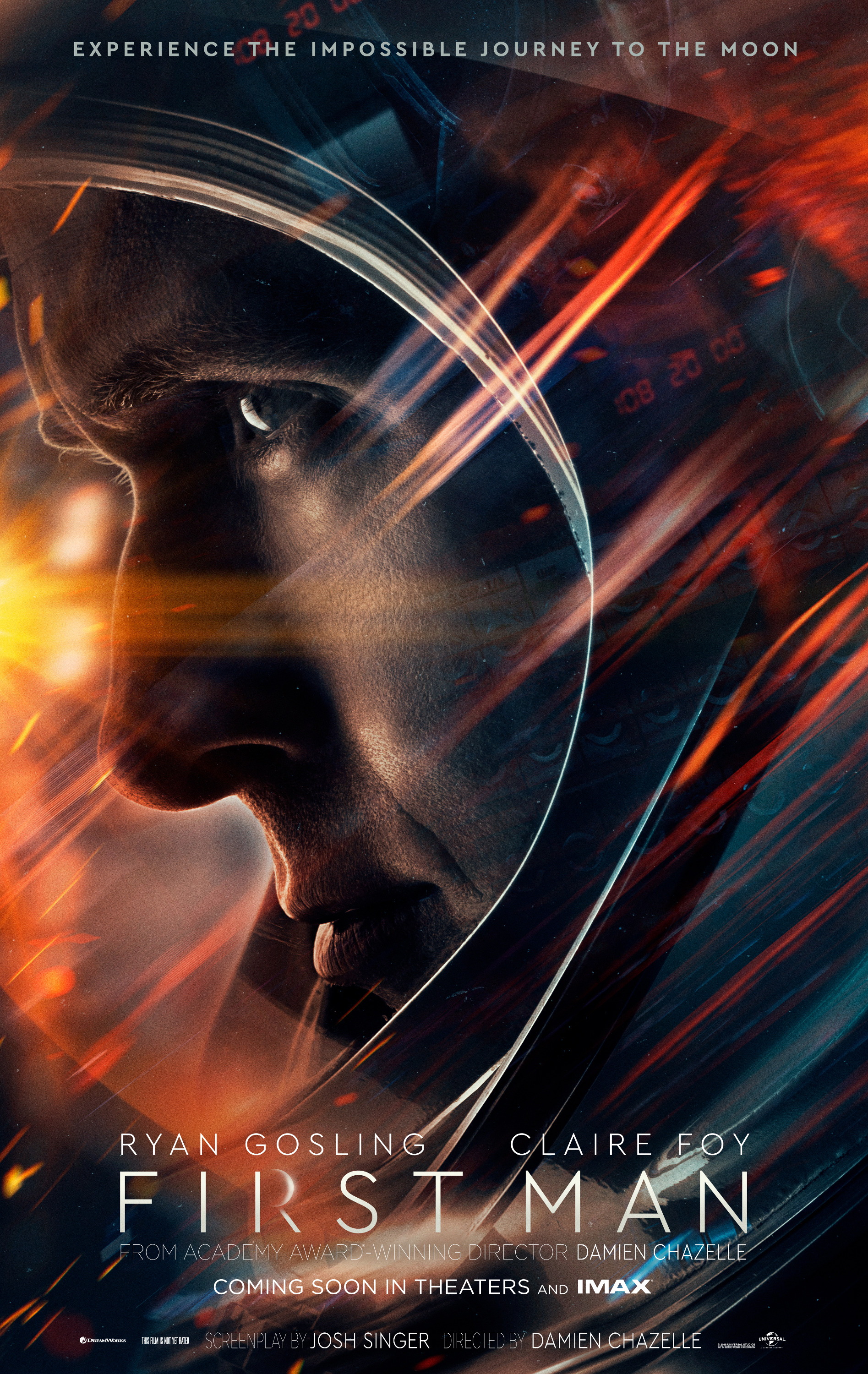
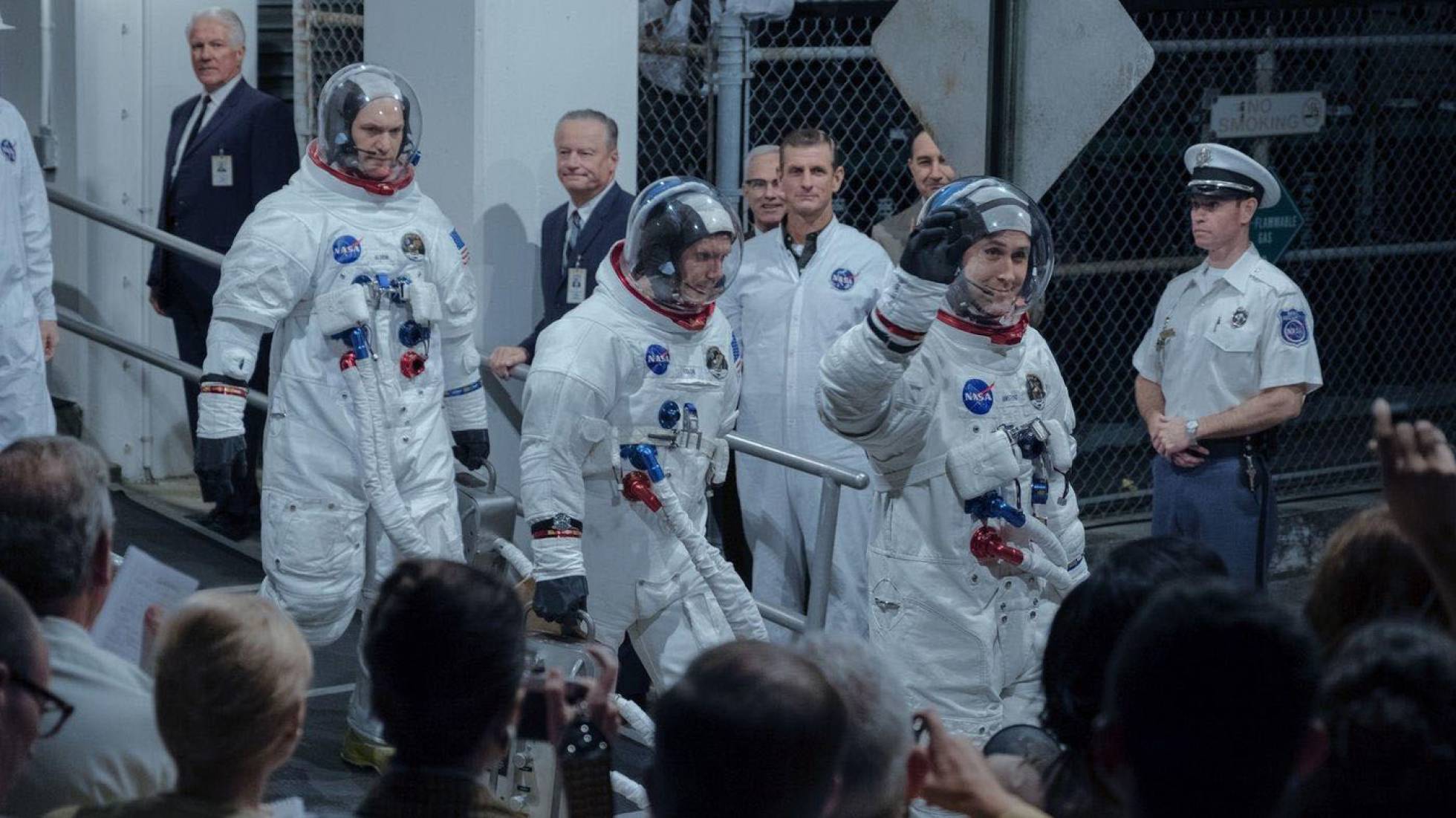
First Man (2018)

Image is property of Universal and Dreamworks

First Man  – Film Review

Cast: Ryan Gosling, Claire Foy, Jason Clarke, Kyle Chandler, Corey Stoll, Ciarán Hinds

Director: Damien Chazelle

Synopsis: Telling the true story of astronaut Neil Armstrong and how, through many years of intense training at NASA, he became the first man to walk on the surface of the Moon.

Review: In terms of the greatest historical moments of the 20th century, there is perhaps few that could rival the moment where for the very first time, the world watched as the human race set foot upon the surface of the moon. The man who took that very first step, and uttered the immortal line “One small step for [a] man, one giant leap for Mankind,” was Neil Armstrong.  It is this man’s remarkable life and journey that incredibly hasn’t really been explored to such an extent on the big screen before, this is until Damien Chazelle came along.

After working together so successfully on La La Land, Gosling re-teams with Chazelle to play Armstrong, and Gosling once again excels. Right from when we meet him, you get the impression that this guy is focused and determined, something that has run through both of Chazelle’s last two films. He’s much more stoic here, but no less resolute in his mission, except there’s no jazz clubs involved this time. Josh Singer’s script goes into some quite personal detail that people might know about Armstrong including his family life, and the deeply personal tragedy that he goes through in the early stages, whilst also focusing on his NASA training, and all the perils that he faced on his journey to becoming the first man to walk on the moon.

Claire Foy, having donned the crown of Queen Elizabeth II, steps into a very different role as Armstrong’s wife Janet. A role that is quite clichéd for sure, yet it’s one she absolutely shines in alongside Gosling to be there as his figure of support, and at the same time, when it comes to the eve of his lunar mission, to voice her fury at the very real possibility that her husband might never see their kids again. Their relationship is the fierce beating heart of this story, and while the rest of the cast all give solid performances to complete a solid ensemble cast, no one else apart from Foy really has enough time to shine alongside Gosling.

For a director who’s only 33, he has already had a remarkable run of success with his previous two films Whiplash and La La Land, both garnering critical praise and awards aplenty, including the Best Director Oscar for Chazelle for the latter. The ambition for a film like this almost goes without saying, but Chazelle rises to the challenge and delivers another immensely well crafted film. Re-teaming with some of his frequent collaborators in the cinematography (Linus Sandgren), score (Justin Hurwitz) and editing (Tom Cross) departments, the film is crafted to perfection. The space scenes, especially the final lunar landing are so masterfully executed, it feels so real and authentic, and Hurwitz’s score is just superb.

Given the scope of this story, spanning almost over a decade into just over two hours, seems like an impossible task but Singer manages to streamline it as effectively as he can. Yet the pacing does suffer around the second act, especially when there is not a great deal happening down on Earth. However once, we gear up for the all important third act, the spectacle is turned up to ten, and never ceases for the rest of the film. For a director as young as Chazelle, to have an absolutely stellar hat-trick of films already under his belt is a remarkable accomplishment.

A remarkable and fascinating look at the mission to the moon and the man at the centre of it, with superb performances from Foy and Gosling. Another out of this world addition to the stellar filmography of Damien Chazelle.

Posted in Film Review

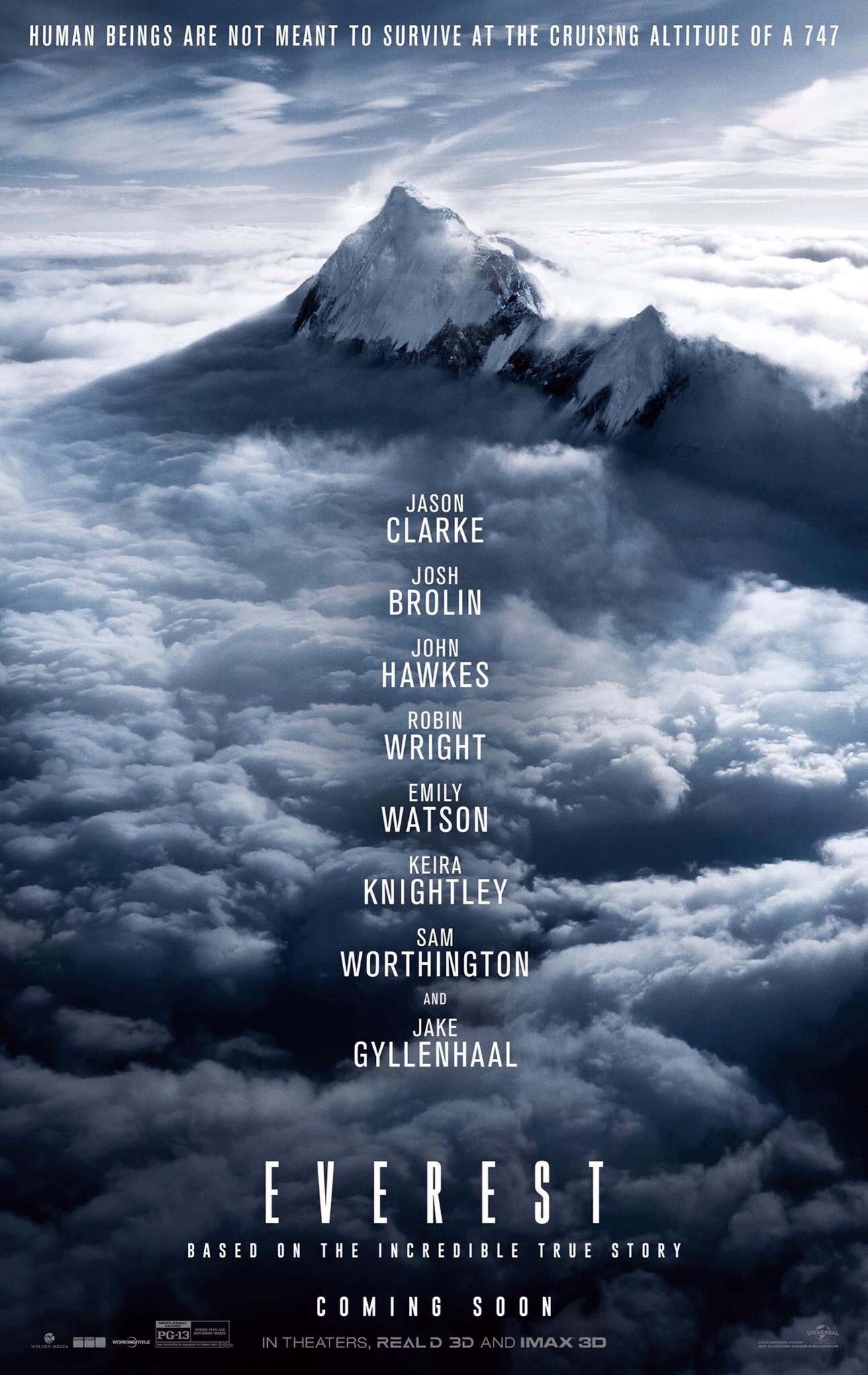
Everest (2015)

everest
Image rights belong to Cross Creek Pictures, Walden Media, Working Title Films and Universal Pictures

Everest – Film Review

Cast: Jason Clarke, John Hawkes, Jake Gyllenhaal, Josh Brolin, Elizabeth Debicki, Emily Watson, Keira Knightley.

Director: Baltasar Kormákur

Synopsis: At the top of tallest mountain in the world, a group of climbers face a fight for survival as they run into trouble as a deadly snow storm

Review: Eight thousand, eight hundred and forty eight metres, the height of the tallest mountain in the world, a place where the temperature never rises above freezing, going as low as minus 36 degrees Celsius in the winter and rising to minus 19 degrees in the summer (on average.) The challenges and risks of climbing this beast is one that would probably make many people considering to ascend it running scared. Even the most experienced of mountaineers can encounter problems and make a fatal mistake, and after watching this drama come true story about a 1996 expedition to Everest’s summit, one may rethink any aspirations to take on this perilous quest, in a similar vein to 2013’s Gravity, that may have killed any desires to become an astronaut amongst audience members. The opening captions at the beginning only remind viewers of the sheer dangers that climbers face when taking on this challenge. The human body is simply not built to function at those altitudes.

The film focuses on several expeditions seeking to reach the top of the world, which just so happen to be led by rival companies. One of these led by Rob Hall (Jason Clarke) and another by Scott Fischer. (Jake Gyllenhaal) During a fateful excursion to the summit, problem after problem begins to surface, and these snowball (pun intended) into a desperate fight for survival for our group of mountaineers. As was the case with Gravity, it could have been easier for them to shoot on green screen, however director Baltasar Kormákur puts the viewer right into the heart of the mountain with some majestic shots of the summit and surrounding areas, whilst cleverly using places such as the Ötztal Alps in Italy to double up as Everest. The use of practical shooting locations which also included Nepal gives the film definitive authenticity. The audience feels like they are climbing the mountain with the climbers, and feel the sense of peril that the group find themselves in when the storm closes in.

With quite an extensive cast, including some big Hollywood names, you would expect the acting to be top of the range, and well it is. The likes of Josh Brolin, and Jake Gyllenhaal do deliver some wounded and yet powerful performances, but the centre fold of the film is Jason Clarke’s Rob Hall and he is the star of the show as the leader of the main expedition featured. It is mainly through his perspective that we watch the events unfold as the expedition bids to reach the summit. Yet with many people in the film, there is a risk that the extensive cast get  shall we say, swallowed up by the mountain, and unfortunately this does come to pass. The film tries to flit from one expedition to another with multiple strands of the story, thus making it difficult for the audience to keep track of what is going on all the time.

The cinematography and the score are both tremendous, with the latter adding much to the film’s tension filled scenes. In addition, the nature of the story is extremely impactful. “Because it’s there,” a line that is often said in the film. Yet it serves as a reminder for the viewer that just because something as wondrous as Everest is there, the challenges and risks of climbing it are extensive, and a quest to summit the top of the world is one that should not be taken lightly.

Visually mesmerising, with some great individual performances crammed into the somewhat overcrowded cast, the downer is that many of these performances end up being lost in the vast white slopes of Everest itself.

b

Posted in 2010-2019, Film Review

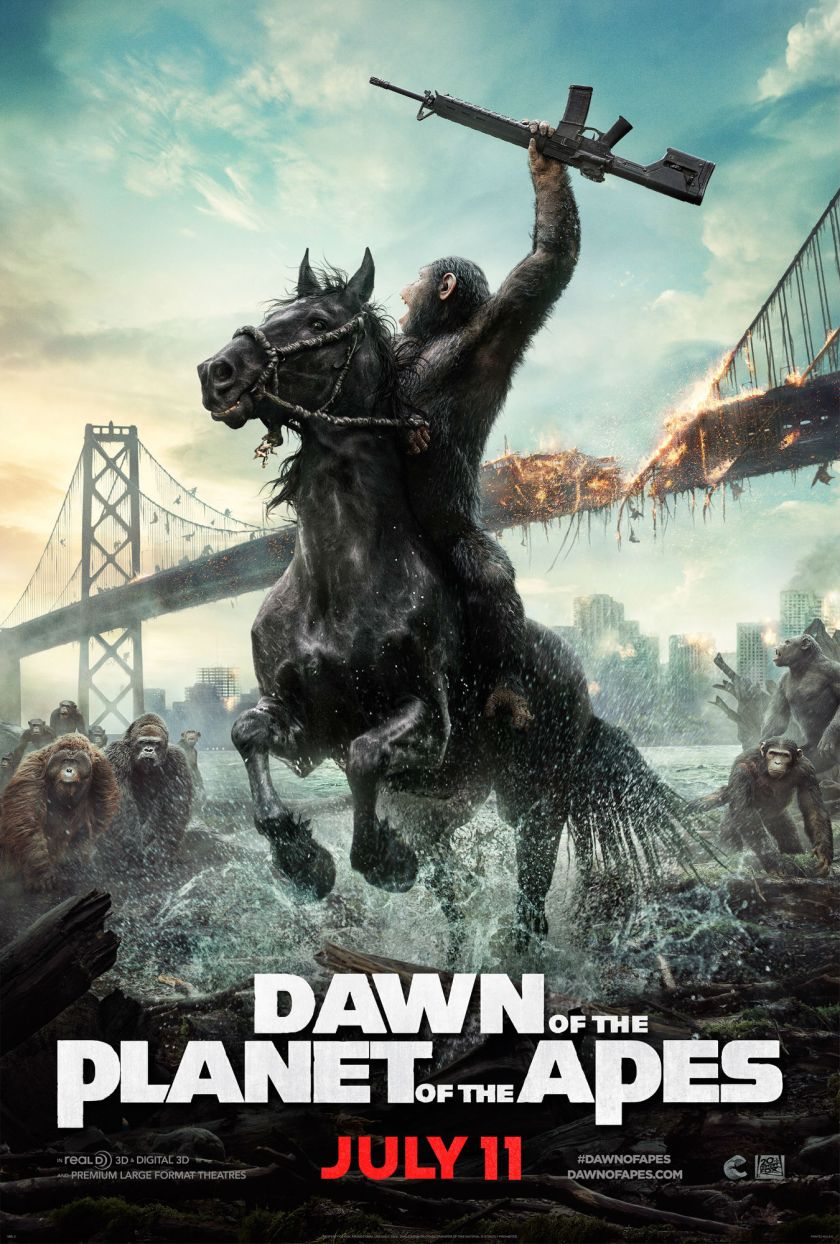
Dawn of the Planet of the Apes (2014)

dotpoa
Image is property of Chernin Entertainment, TSG Entertainment and 20th Century Fox

Dawn of the Planet of the Apes – Film Review 

Cast:  Jason Clarke, Andy Serkis, Gary Oldman,  Keri Russell, Toby Kebbell, Kodi Smit-McPhee

Director: Matt Reeves

Synopsis:  Ten years after the events of the first film as humanity has been devastated by the virus. The colony of Apes, led by Caesar are prospering. However, when a last batch of surviving humans resurface, tension resurfaces and it is poised to erupt into a war  to establish control over the planet.

Review: Sequels, are seemingly ever-present in the world of Hollywood. Sometimes, they come along and disappoint, failing to top its predecessor, or nothing more than a cash grab. Yet when a sequel takes the first film and tops it, in many ways, it is something to be admired. 2014 showed itself to be the year of remarkable sequels.  With the Matt Reeves-directed Dawn, a sequel to 2011’s Rise, we continue that great sequel trend with a beautifully directed and riveting story that will ensure that the Planet of The Apes franchise is not going anywhere any time soon.

With humanity obliterated in the wake of the Simian virus that was unleashed at the end of Rise, Caesar, once again brilliantly motion captured by Andy Serkis, and his crew of apes have their spot where they live. With a whole community established, it is enthralling to watch the apes interact with each other. They have their own language and their population is thriving. There are no humans about (or so they think) and all is right in the ape world. They live, and they prosper. This is, until a group of humans come along looking for something to help their population return to normality. Instantaneously,  conflict threatens to break out once more between the two factions amid uneasy truces. Distrust is brewing in the ranks of both camps and it threatens to completely boil over into all-out war as there are those on both sides who simply do not trust the other. In some cases, these reasons are clear and in others, they are not.

Through the marvel of motion capture realised by WETA Digital, it is Andy Serkis in the role of Caesar who completely steals the show once again. His performance is incredible to watch, it is almost as if it is not brilliant computer-generated imagery and is actually a real life ape communicating with humans. He is the glue that binds the ape community together and he is the star of the show. The motion capture technology looks astoundingly for all of the ape community, with different actors playing different apes, and the different personalities of all of the apes shine through. Yet Caesar’s not the only ape who takes the limelight, the more hostile angry Koba, portrayed by Toby Kebbell is an ape on a mission, to eradicate humanity. He is vicious and angry and is determined to gain revenge on the humans.  The computer generated imagery is flawless and it is a strong contender to scoop some awards for its breathtaking visuals in this year’s awards season. With great apes also come some interesting human characters, namely Malcolm (Jason Clarke) and Dreyfus (Gary Oldman) also come into conflict about what to do with the Apes. One wants peace, the other wants war, and it threatens to boil over at any given moment.

The action in this film is taken up a notch from the first movie, with some enthralling battle scenes. 2014 offered some sweet action scenes but some of the battles in this sequel are some of the stand-out moments of cinema in 2014. As the title poster illustrates, apes on horses is a sample of this brilliance. Under Matt Reeves’ masterful direction, Dawn provides a compelling and somewhat moving story about a fight to survive, mixed with compassion and a desire for both species to co-exist, whilst some factions of both communities strive for supremacy over the other. With a third film in the works, once again directed by Reeves and scheduled to be released in 2017, more Apes goodness will be on the way.

With incredible visuals, interesting human characters and even more interesting apes, combined with a really well-told and interesting story, this is arguably the best entry of the revitalised Apes franchise, and with Reeves returning for a third outing, the stage is set for something special. 

a