Pressure – Film Review
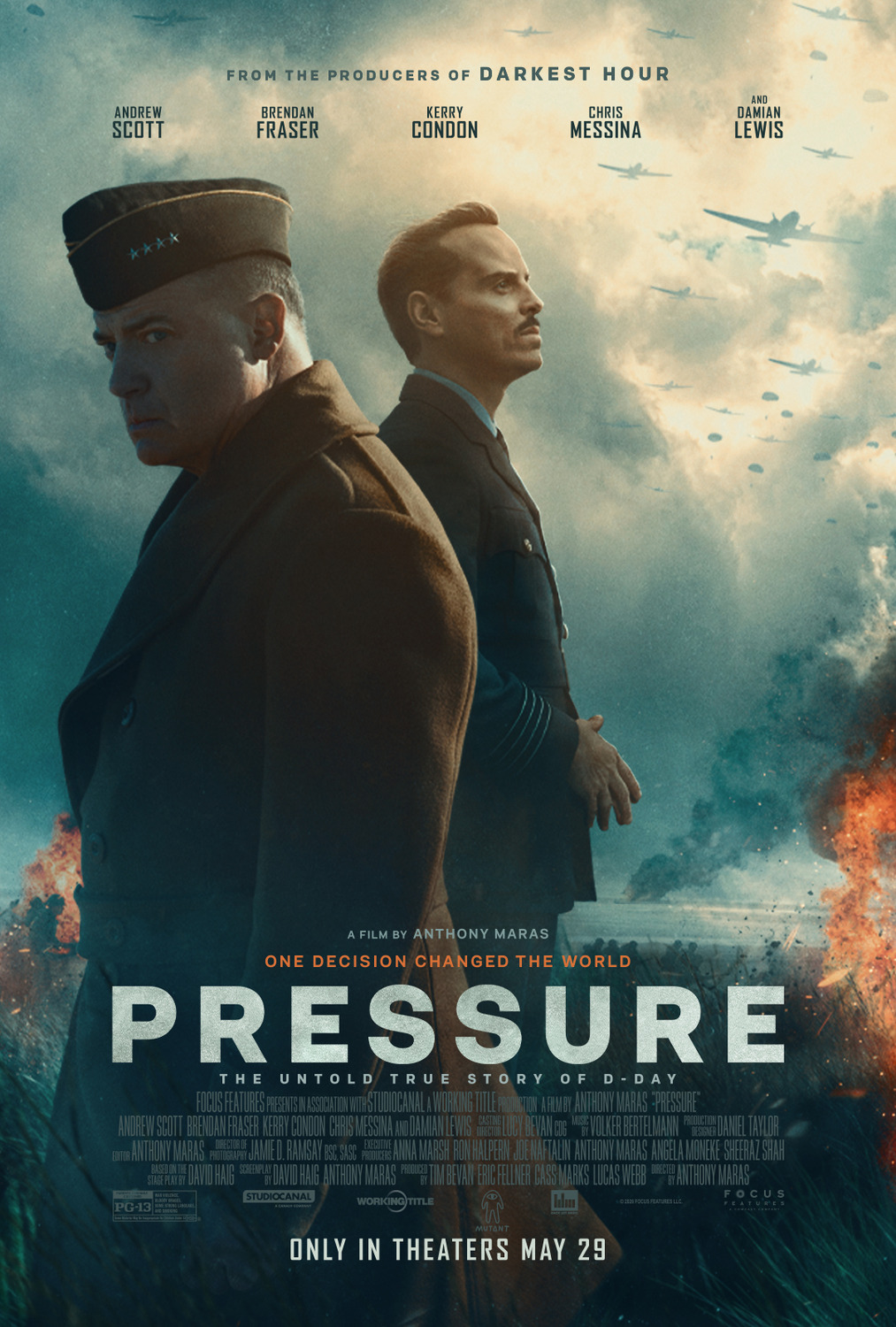
Cast: Andrew Scott, Brendan Fraser, Kerry Condon, Chris Messina, Damian Lewis, Con O’Neill
Director: Anthony Maras
Synopsis: In the days leading up to D-Day, the Allied forces are faced with a critical decision to launch the invasion of German-occupied Europe or delay it because of adverse weather conditions…
Review: Weather dominates the lives of almost everyone on Earth, to the point that “what’s the weather going to be like?” is almost certainly a daily conversation in households worldwide. This is especially true in Britain, where the weather can be extremely unpredictable. Met Office research conducted last year showed people in the UK spend, on average, 56.6 hours a year talking about the weather. It is easy to see why, when the weather affects numerous aspects of our lives, including what clothes we wear when we head out and whether our plans for the day can go ahead. Or, as Anthony Maras’ gripping historical drama demonstrates, how accurate weather forecasts changed the course of World War II.
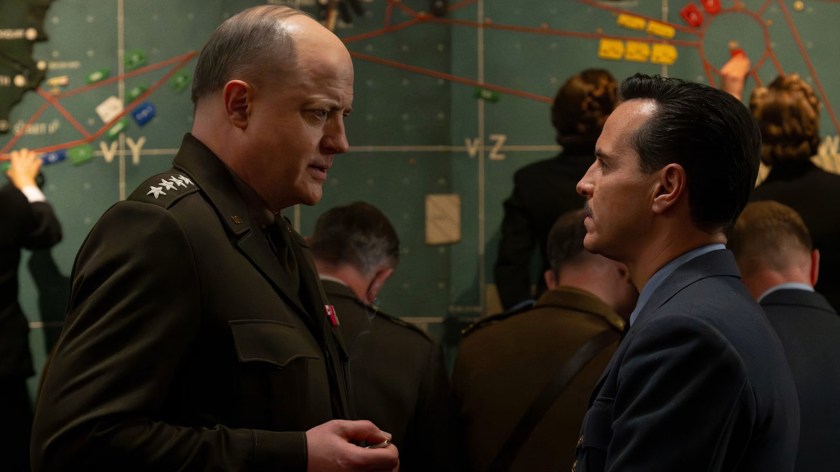
June 1944, the Allies are making the final preparations to launch the invasion of Nazi-occupied Europe, otherwise known as Operation Overlord, under the command of General Dwight D. Eisenhower (Fraser). The failure of Exercise Tiger, one of the rehearsals for the D-Day landings off the Devonshire coast, which resulted in 749 American soldiers losing their lives, weighs heavily on the minds of the Allied leaders. Determined to ensure the operation’s success, Eisenhower calls in meteorologist James Stagg (Scott) and appoints him Chief Meteorological Officer, tasking him with predicting the weather for the invasion scheduled for June 5. Stagg and his team quickly determine that two storms are heading for the English Channel, which would make conditions extremely hazardous and urge Eisenhower to delay. This puts Stagg directly at odds with Irving Krick (Messina), the US meteorologist, who uses historical weather patterns and predicts clear skies. The pressure riding on this decision is monumental, with not just reputations at stake but the fate of the war itself, as launching the invasion in adverse weather would be catastrophic for the Allies’ hopes of victory.
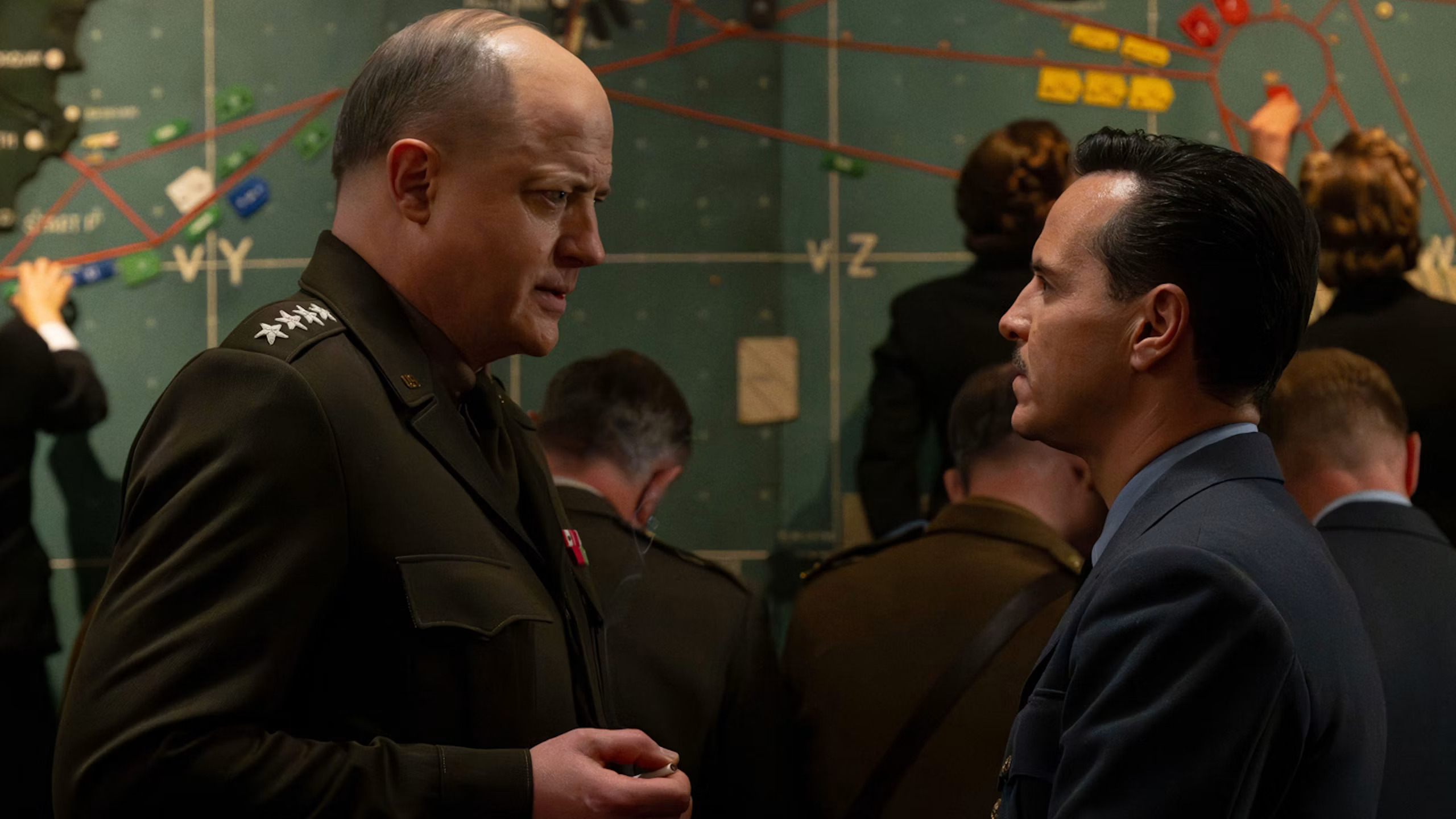
Adapted from the play of the same name by David Haig, images of men in a war room poring over and forensically studying maps and weather data suit the stage well, but sound dry and monotonous on the big screen. But with Haig and Maras both on screenplay duties, the play translates into a compelling, gripping work. Through extremely unsettling imagery that demonstrates the horrors of Exercise Tiger’s failures, and the wider historical context of the Normandy landings and their significance in shaping the course of the war, the stakes could not be higher. Even though they work for the same side, the contrast in methods between Stagg and Krick creates tension that could be cut with a knife as the hours pass before the all-important decision of whether the invasion proceeds or is delayed.
It is very reminiscent of 2014’s The Imitation Game, where the battles are not on the front line but instead are fought by people working meticulously around the clock to crack the “unbreakable” Enigma code. In this case, the battlefield is deciphering isobar charts to predict the completely unpredictable enigma that is the British weather. Much like that film’s protagonist Alan Turing, Stagg keeps a stiff upper lip when questioned and berated by both his US counterpart and the commanding officers he serves, not just Eisenhower but also General Montgomery (Lewis), who emphasises the need for urgency so the Allies can strike while the iron is hot. Yet Scott imbues Stagg with resolute steeliness and unwavering conviction in his forecasts. He is categorically uninterested in being liked and will not budge, even under intense scrutiny from his fellow meteorologists and the military’s top brass.
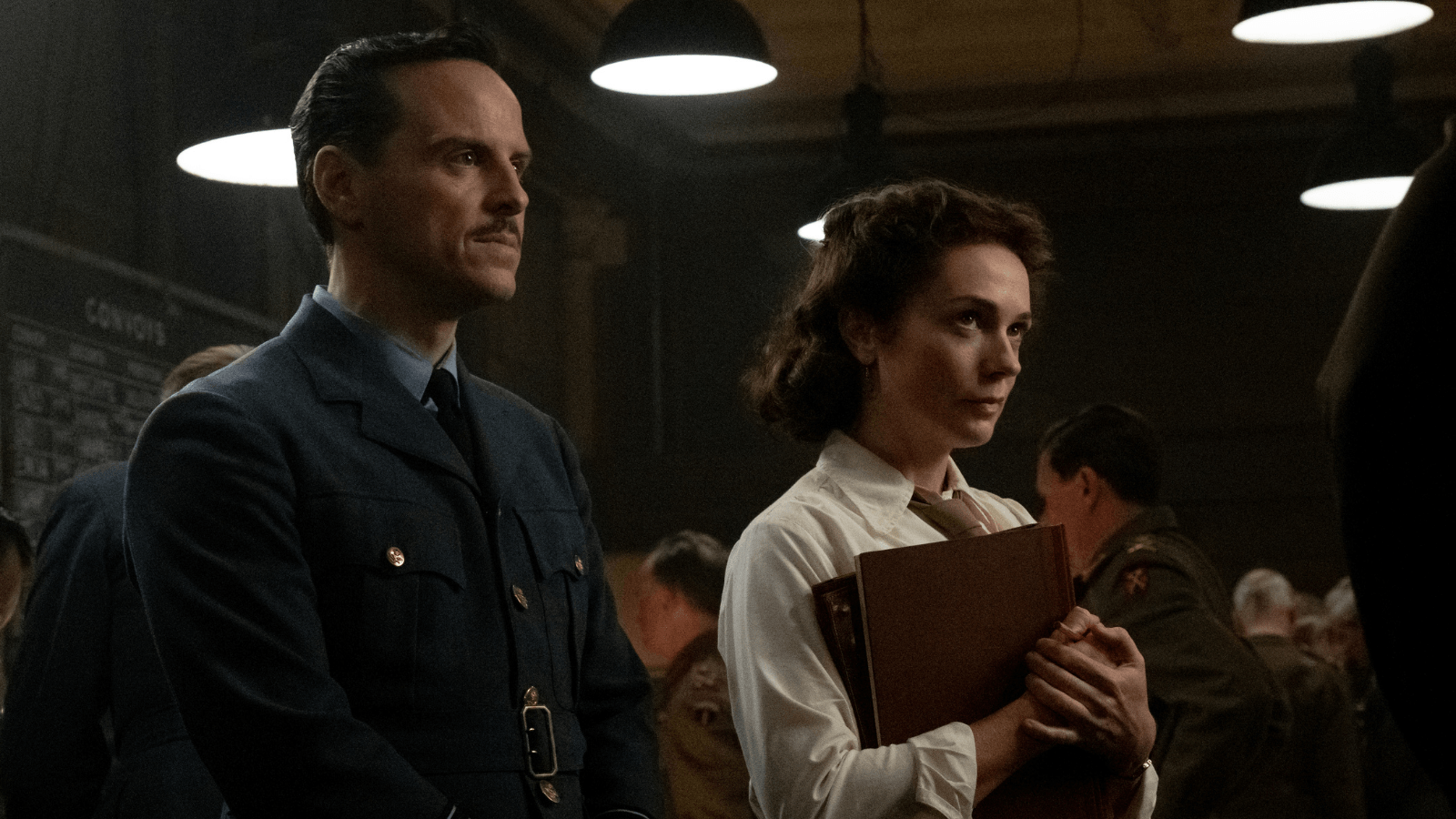
Fraser, always an enigmatic presence whenever he’s on screen, is a metaphor for the oncoming storms, a powerful and menacing force of nature you would not dare to cross under the best of circumstances and could very easily get swept away if you crossed his path. Despite his thunderous presence, he allows key moments of humanity to ground him. He is like everyone else in the building, working under the most intense and time-critical circumstances, and must wrestle with the consequences if he gets this hugely significant decision wrong. Amid a room full of male bravado and egos, Kerry Condon as Eisenhower’s secretary, Kay Summerby, is the calming presence needed to keep those egos in check and a reassuring figure of support for Stagg, as he is away from home right before his wife is about to give birth.
With every detail of every weather map studied and scrutinised, everything comes to a head when the Allied forces decide to launch the operation. This is what everyone has spent day and night working towards. Maras’ direction shifts up a gear when the perspective switches from the war rooms of Southwick House to the beaches of Normandy, bringing the ferocious, unforgiving intensity the Allied soldiers faced as they landed, with enemy fire relentlessly raining down on them. The filmmaking can feel a little conventional, but this can be forgiven since the film depicts a fascinating piece of history that might not be so well known to audiences. Weather conversations are a familiar part of modern-day life and the film pays the perfect tribute to those brave scientists and meteorologists who staked their reputations and the fate of millions of soldiers on the most important forecast in the history of the 20th century.
Taking the mundane subject of weather and crafting it into a compelling slice of historical drama, anchored by another powerful performance from Andrew Scott, Pressure pays tribute to those unsung scientific minds whose accuracy and precision shaped the course of World War II.