Posted in 2020-2029, Film Review, London Film Festival 2021

Belfast (2021)

© TKBC, Northern Ireland Screen, Focus Features and Universal Pictures

Belfast  – Film Review

Cast: Jude Hill, Caitríona Balfe, Jamie Dornan, Lewis McAskie, Judi Dench, Ciarán Hinds, Colin Morgan

Director: Kenneth Branagh

Synopsis: Telling the story of the lives of one family living in Belfast during the 1960s…

Review: Irrespective of where we’re born, there’s a universal truth to the saying: “Home is where the heart is.” No matter who you are or where you come from, there’s likely to be a particular place on this Earth that means a great deal to you. Perhaps it is the town where you were born, or perhaps it is the place where you made those first memories that will shape you and who you are for the rest of your life? That special ode to your hometown and the immeasurable impact it can have on your life during your formative years is the heart beating at the centre of this deeply personal film from Kenneth Branagh.

Buddy (Hill) is a young boy living in Belfast during the late 1960s. He’s surrounded by his loving family, which consists of Ma (Balfe), Pa (Dornan), his brother (McAskie), and his paternal grandparents (Dench and Hinds). Like any child, Buddy goes to school, works hard in class, and seeks to win the heart of a girl in school who he has a crush on. Outside of school, playing on the street with his friends, and going to the pictures with his family, all with the carefree innocence that any child would have. It should be the perfect family life, but it’s about to be turned upside down. The country is about to be engulfed in political tension and violence which, will bring much uncertainty to this tight-knit Northern Irish family.

Given that we see the entire film from Buddy’s perspective, there’s a lot riding on Hill’s shoulders. Fortunately, he carries the film beautifully, balancing the naivety of youth, with an acute awareness of the tricky situation that’s developing. Alongside a brilliant leading performance from Hill, the rest of the cast are faultless in their performances. As Buddy’s parents, Ma and Pa are faced with an increasingly difficult choice of what to do and how best to raise their children in the politically charged circumstances that they find themselves in. Pa’s job in England is the main source of income for the family, hence money is tight. It’s a dilemma that puts a strain on their relationship, which is only compounded by the fact that he’s away for so much of the time.

Plus with the ongoing political tension that Belfast is engulfed in, there’s a dilemma as to whether they should leave the city that means so much to both of them behind? Do they want to uproot their two children from the lives that they have built in the city? Special mentions must go to Catriona Balfe and Jamie Dornan, both of whom give career-best performances. They clearly both love one another and care deeply for their children. So, they want to do what is best for them. Furthermore, due to his father’s absence, Buddy’s mother has quite the job to raise both him and his brother, mostly by herself. As such, Ma has a tendency to be quite overprotective of both her sons, but especially Buddy. They’re not on screen together a lot, but when they are, Balfe and Dornan’s wonderful chemistry helps add so much depth and layers to their characters. It’s always the sign of a quality performance that you no longer see the actor, instead, you see the character that they are playing, and this is true across the entire cast.

For a film that’s set in a time where political tensions are on a knife-edge, where violence could erupt at any given moment, it seems unlikely that the story would allow for much humour. Yet, Branagh’s screenplay allows for plenty of humorous moments to shine through. A lot of the humour comes from the dynamic between Buddy and his grandparents. Both of them impart their wisdom and knowledge to Buddy as he negotiates this difficult period in his life. This is where Ciaran Hinds, in particular, really excels. As well as being the kind and gentle grandfatherly figure, be a little cheeky and share a humorous moment with Buddy.

Branagh’s screenplay expertly walks the line between the dark and tense nature of the political tension of the time, with the family dynamic. It would be easy for Branagh’s screenplay to get bogged down by the intense nature of the politics of the time. However, the film avoids this by keeping it focused on seeing the world, and the ongoing situation, from Buddy’s perspective. Branagh has crafted a story that anyone will be able to connect with. No matter where you are from, or no matter how far you go in this world we live in, you never forget your roots.

The most personal film that Branagh has ever made, and quite possibly his best. A beautiful celebration of childhood, the places and the people that make us who we are.

Posted in 2010-2019, Film Review

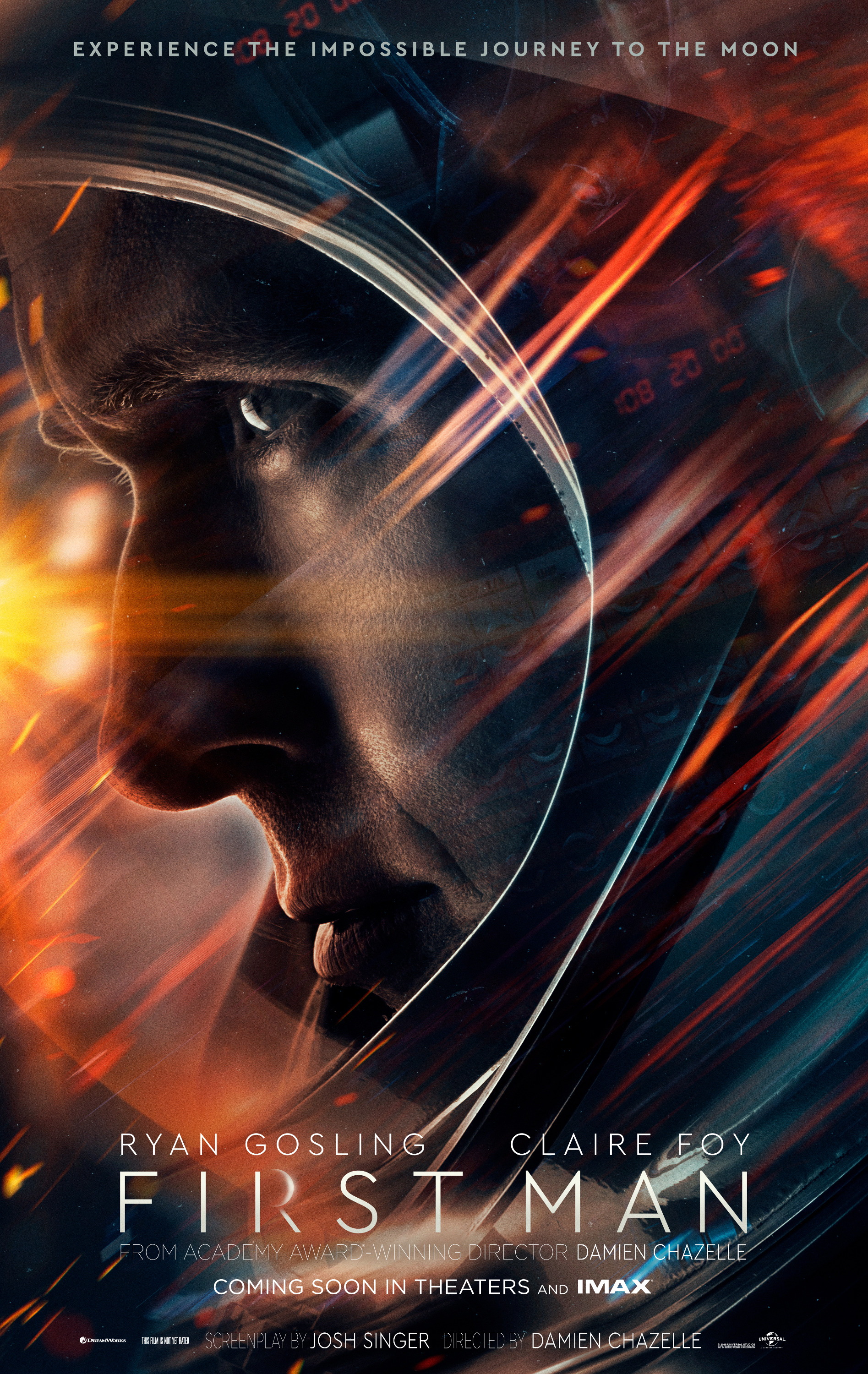
First Man (2018)

Image is property of Universal and Dreamworks

First Man  – Film Review

Cast: Ryan Gosling, Claire Foy, Jason Clarke, Kyle Chandler, Corey Stoll, Ciarán Hinds

Director: Damien Chazelle

Synopsis: Telling the true story of astronaut Neil Armstrong and how, through many years of intense training at NASA, he became the first man to walk on the surface of the Moon.

Review: In terms of the greatest historical moments of the 20th century, there is perhaps few that could rival the moment where for the very first time, the world watched as the human race set foot upon the surface of the moon. The man who took that very first step, and uttered the immortal line “One small step for [a] man, one giant leap for Mankind,” was Neil Armstrong.  It is this man’s remarkable life and journey that incredibly hasn’t really been explored to such an extent on the big screen before, this is until Damien Chazelle came along.

After working together so successfully on La La Land, Gosling re-teams with Chazelle to play Armstrong, and Gosling once again excels. Right from when we meet him, you get the impression that this guy is focused and determined, something that has run through both of Chazelle’s last two films. He’s much more stoic here, but no less resolute in his mission, except there’s no jazz clubs involved this time. Josh Singer’s script goes into some quite personal detail that people might know about Armstrong including his family life, and the deeply personal tragedy that he goes through in the early stages, whilst also focusing on his NASA training, and all the perils that he faced on his journey to becoming the first man to walk on the moon.

Claire Foy, having donned the crown of Queen Elizabeth II, steps into a very different role as Armstrong’s wife Janet. A role that is quite clichéd for sure, yet it’s one she absolutely shines in alongside Gosling to be there as his figure of support, and at the same time, when it comes to the eve of his lunar mission, to voice her fury at the very real possibility that her husband might never see their kids again. Their relationship is the fierce beating heart of this story, and while the rest of the cast all give solid performances to complete a solid ensemble cast, no one else apart from Foy really has enough time to shine alongside Gosling.

For a director who’s only 33, he has already had a remarkable run of success with his previous two films Whiplash and La La Land, both garnering critical praise and awards aplenty, including the Best Director Oscar for Chazelle for the latter. The ambition for a film like this almost goes without saying, but Chazelle rises to the challenge and delivers another immensely well crafted film. Re-teaming with some of his frequent collaborators in the cinematography (Linus Sandgren), score (Justin Hurwitz) and editing (Tom Cross) departments, the film is crafted to perfection. The space scenes, especially the final lunar landing are so masterfully executed, it feels so real and authentic, and Hurwitz’s score is just superb.

Given the scope of this story, spanning almost over a decade into just over two hours, seems like an impossible task but Singer manages to streamline it as effectively as he can. Yet the pacing does suffer around the second act, especially when there is not a great deal happening down on Earth. However once, we gear up for the all important third act, the spectacle is turned up to ten, and never ceases for the rest of the film. For a director as young as Chazelle, to have an absolutely stellar hat-trick of films already under his belt is a remarkable accomplishment.

A remarkable and fascinating look at the mission to the moon and the man at the centre of it, with superb performances from Foy and Gosling. Another out of this world addition to the stellar filmography of Damien Chazelle.

Posted in 2010-2019, Film Review

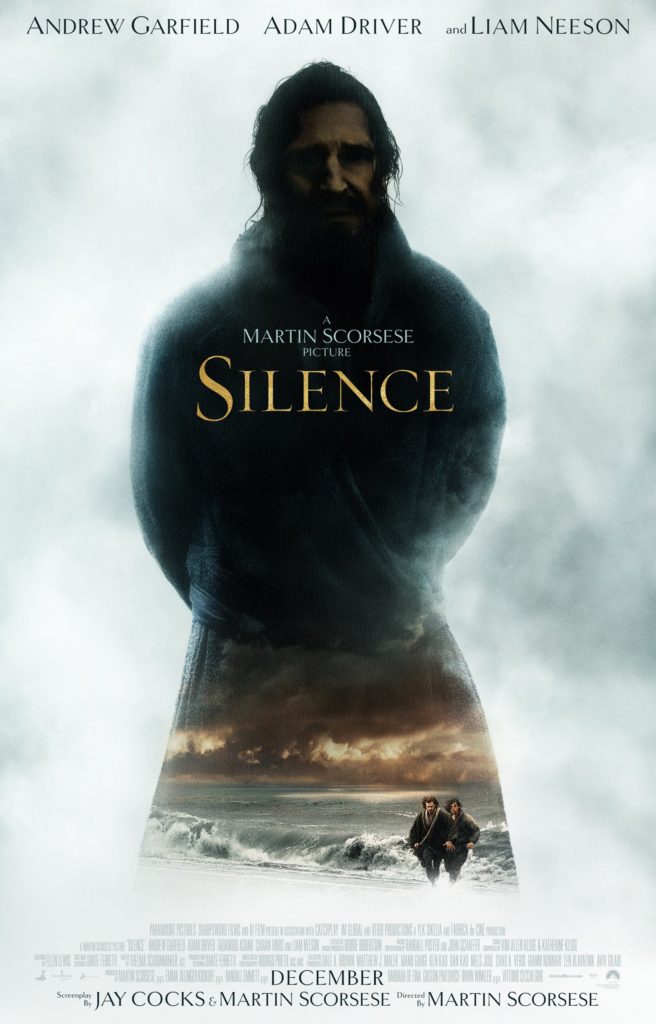
Silence (2016)

silence
Image is property of Paramount Pictures and IM Global

Silence – Film Review

Cast:  Andrew Garfield, Adam Driver, Tadanobu Asano, Ciarán Hinds, Liam Neeson, Shinya Tsukamoto, Issey Ogata, Yōsuke Kubozuka, Nana Komatsu, Ryo Kase, Katsuo Nakamura, Yoshi Oida

Director: Martin Scorsese

Synopsis: In seventeenth century Japan, two Jesuit priests set out on a mission to seek out their mentor, all the while trying to teach their faith, in a country that vehemently opposes Christianity.

Review: Religion is a subject that even to this day remains quite controversial. In certain areas of the world, people who practice other religions are frowned upon, and some even face extreme violence and persecution for their beliefs, with certain events in history demonstrating how people who are of certain faiths received brutal and fatal treatment because of their religion. It is then quite remarkable that a tale set in the seventeenth century, has certain elements that ring true in the 21st century. Therefore for Martin Scorsese, a man born and raised in a Catholic environment, it certainly takes a fair bit of courage to make a film that tackles such difficult subjects and religious persecution, and for that he certainly deserves plaudits.

Adapted from the 1966 novel of the same name by Shūsaku Endō, the story focuses on Fathers Rodrigues (Garfield) and Garrpe (Driver) who travel to Japan seeking to find Father Ferreira (Neeson) who they believed might have renounced their religion, due to the extreme hostilities that Christians faced at that time. Undeterred by the daunting mission facing them, they travel to the country and try to locate their lost mentor, and to teach their religion. Scorsese is a man who is arguably most well known for his gangster flicks, but this is his passion project, nearly 25 years in the making, and he tells the story in brutal and unflinching manner. With a screenplay co-written by Scorsese and Jay Cocks, there is no shying away from the horrific and painful treatment that Christians received for their beliefs, and if they didn’t renounce their religion, it usually would not end well. The film is very dialogue driven, but the writing is of a very high standard, and certainly poses questions that will certainly leave the audience with plenty to ponder as they watch.

sielnce

The performances are riveting to watch, particularly from the three main men, but the spotlight focuses primarily on Garfield. and he certainly gives one of the performances of his career. His belief in his faith is unwavering, even in the face of great suffering and pain, and the attempts made by the locals to renounce his religion. After shooting to stardom thanks to his work with Star Wars, Driver is also equally terrific in his work, giving a harrowing performance, and both men could certainly get award nominations for their performances.

The cinematography by Rodrigo Prieto is both beautiful and haunting at the same time. It is crystal clear that with each frame of this film, that great care and precision has gone into their creation. Nothing is rushed, as such the slow pace might jar with some, whilst also explaining the film’s 161 minute running time. There are plenty of visual images to get the minds of the audience deep in thought, and while some will almost certainly have viewers numb with the brutality that these Hidden Christians faced. “A picture tells a thousand words” is quite a popular phrase, and in this instance, that certainly rings true. Having spent so long on this story, Scorsese’s passion for the story absolutely comes to the fore, and makes it all the more gripping to watch, so much so that even if you’re not religious,or practise a religion that is not Christianity, you’ll find it difficult not to be moved by some of the events on screen.

Indeed, the title of “Silence” is quite appropriate, given that for the Jesuit priests and all those in Japan at the time who practised Christianity, they had to practise their faith in silence, and despite their suffering, their prayers were met with silence. And there will be moments of silent reflection for the audience once the credits begin to roll, as it’s pretty inescapable that although these are ficitonalised events of the past, they will still carry a significant weight to them given how in different corners of the globe, people of certain religions continue to endure strong hostility, to this day.

Quite a long time in the making, but certainly worth the wait. Scorsese’s passion for the story shines through, and it helps to deliver a tense emotional journey for all, with themes that continue to have great significance to this day

a