
Wake Up Dead Man: A Knives Out Mystery – Film Review
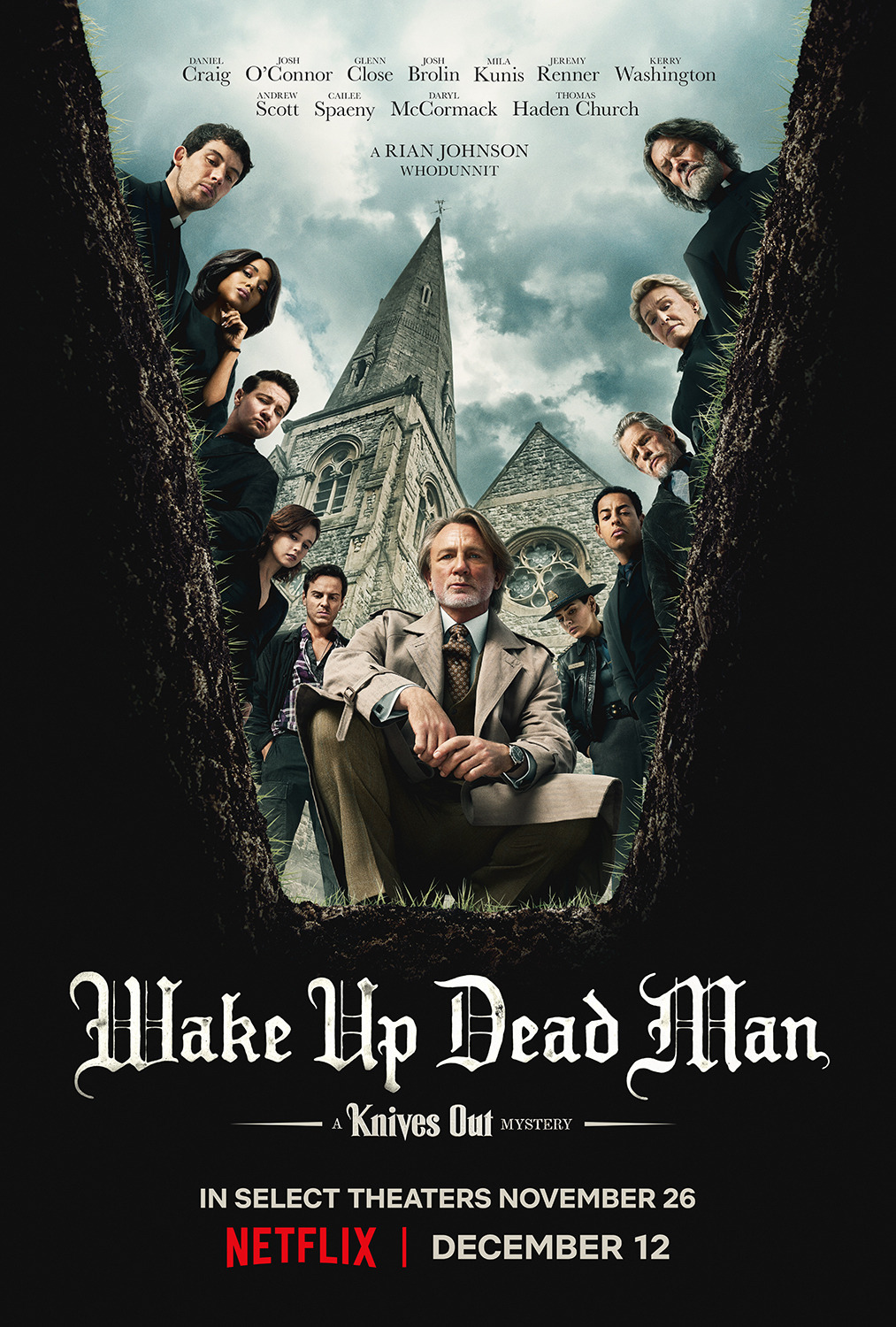
Cast: Daniel Craig, Josh O’Connor, Glenn Close, Josh Brolin, Mila Kunis, Jeremy Renner, Kerry Washington, Andrew Scott, Cailee Spaeny, Daryl McCormack, Thomas Haden Church
Director: Rian Johnson
Synopsis: In a parish church in Upstate New York, renowned detective Benoit Blanc takes on his darkest case to date…
Review: In terms of the most memorable and wholly original characters to have emerged on the big screen in the last ten years or so, there can surely be no doubt of the inclusion of gentleman sleuth Benoit Blanc in the conversation. When audiences were first introduced to him in Massachusetts to investigate the death of a wealthy, renowned crime novelist in 2019’s Knives Out, with his sharp suit, keen detective eye, eccentric mannerisms, and last but by no means least, that iconic Southern accent, it was a match made in cinematic heaven. A new icon of the great detective genre was born.
It is true that not everything that comes out of Hollywood indeed warrants or needs a sequel and/or a cinematic universe. It would have been a crying shame if audiences never got another chance to join Detective Blanc as he puts his skills to the test to solve another case. Thankfully, a bumper deal with Netflix allowed Johnson to craft two further sequels. After joining a bunch of self-described “shitheads” on a private Greek island for a murder-mystery party in the equally brilliant Glass Onion, the master detective is back once more for his darkest case to date.
As with the previous two films in the franchise, when it comes to plot details, the less you know, the better. We’ve moved away from the private island of a vainglorious billionaire and back to the United States to an Upstate New York parish where Jud (O’Connor) has been recently reassigned after he let his temper get the better of him towards a fellow priest. He becomes the assistant to the pious Monsignor Wicks (Brolin), and they do not see eye to eye at all. The firebrand manner with which he delivers sermons doesn’t go down well with many of the congregation (including Jud), leaving only a select few loyal and devout regulars. During one such sermon, when the Monsignor goes off to a locked pulpit, he is stabbed to death. The “impossible crime” has been committed, with suspicions immediately falling on Jud, and it soon becomes clear there is only one detective in the world who can solve it.
After two fantastic previous instalments that breathed new life into the murder mystery genre, the pressure would have been on for Johnson to maintain his impressive streak and satisfactorily complete the trilogy. Therefore, it would have been easy for him to deliver a similar follow-up to what came before and put down the magnifying glass. Yet, the writer/director is having none of it and really challenges himself by leaning into much darker and bordering on horror material. As one would suspect, given that the scene of the crime is in a church, religious imagery is present in abundance, with the power of one’s faith in their religion and their beliefs being thoroughly put to the test. Though, this merely scratches the surface, with global politics being the way they are in the year of our Lord 2025, the screenplay has much to say about how Christianity, particularly in the US, is used by lunatic and dangerous demagogues whose who use poisonous and hateful rhetoric to simultaneously solidify their rabid base of supporters and attempt to convert those who don’t believe to their cause. Johnson’s writing has lost none of its sharpness.
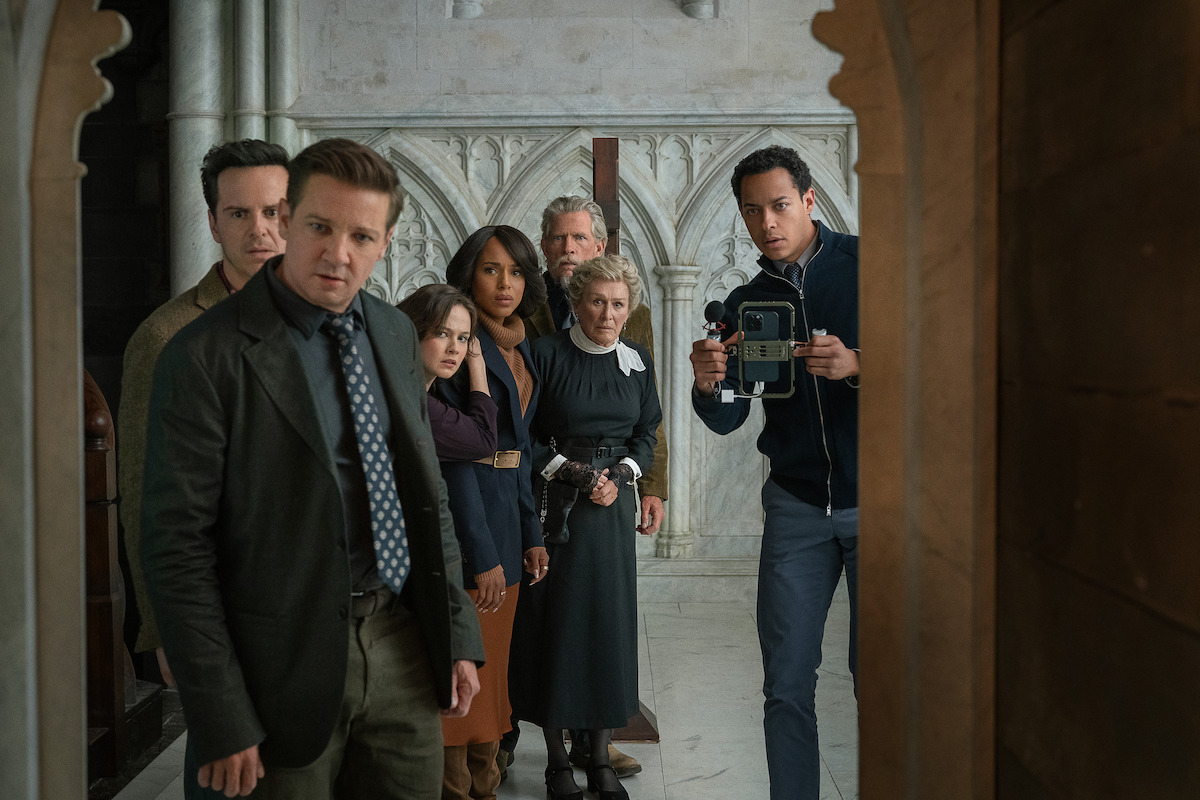
In his third outing as Blanc, this time with a lush and voluminous head of hair and a very sharp suit, Craig once again shines as the master detective. Even though it takes a while for him to arrive on the scene, Johnson perfectly sets the stage and establishes the events that lead to Blanc’s arrival. Ultimately, this means that the film takes its time to get going until Blanc makes his grand entrance and immediately has at least a couple of pages of dialogue, and that is a conservative estimate. Like with previous films where Blanc had his key accomplices in Marta Cabrera and Helen Brand, Jud is the centre of this mystery, and O’Connor runs away with the film and delivers the best performance, outshining even Blanc, which is no easy feat. It wouldn’t be a Knives Out film without a stacked and glittery ensemble cast. While they’re all enjoyable to watch and play a part in the centre of this mystifying murder, some have significantly larger roles than others, with one particularly devout follower being the scene-stealer.
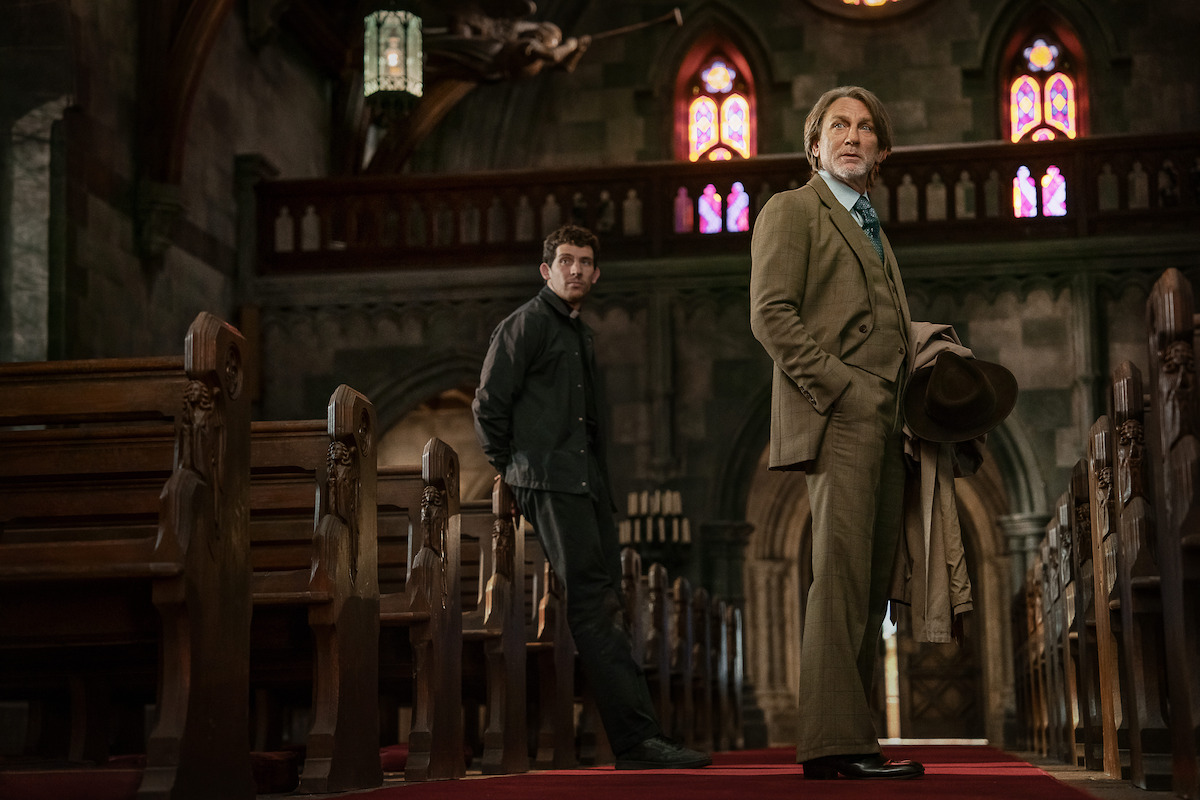
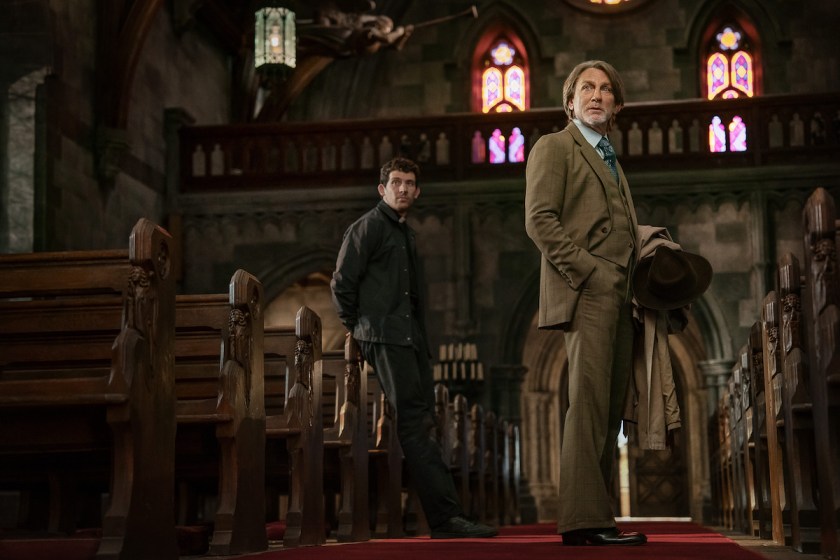
The location and the ensemble may change, but Johnson keeps the faith with his familiar crew. Rick Heinrichs’ production design fully leans into the gothic vibes, while Steve Yedlin’s cinematography masterfully uses striking lighting and shadows to illustrate the dark and shadowy secrets at the centre of this particular church. Both help to create the rather troubling illusion that the church building itself is almost a living organism, with wickedness, corruption and unholiness at its centre. It might not reach the highs set by its predecessors, but the murder mystery genre continues to be in rude health thanks to Monsieur Johnson. Blessed be to him and to Monsieur Blanc for providing audiences with a modern trilogy of marvellous murder mysteries, and let us hope that their sleuthing adventures will continue for many more years to come.
Leaning heavily into darker themes about faith in religion and the power of individuals, as well as the dangers of their influence on vulnerable individuals, a sublime scene-stealing performance from Josh O’Connor ensures Rian Johnson completes his trilogy of murder mystery sleuthing in excellent style.



 Through the Silver Screen