Posted in 2020-2029, Film Review

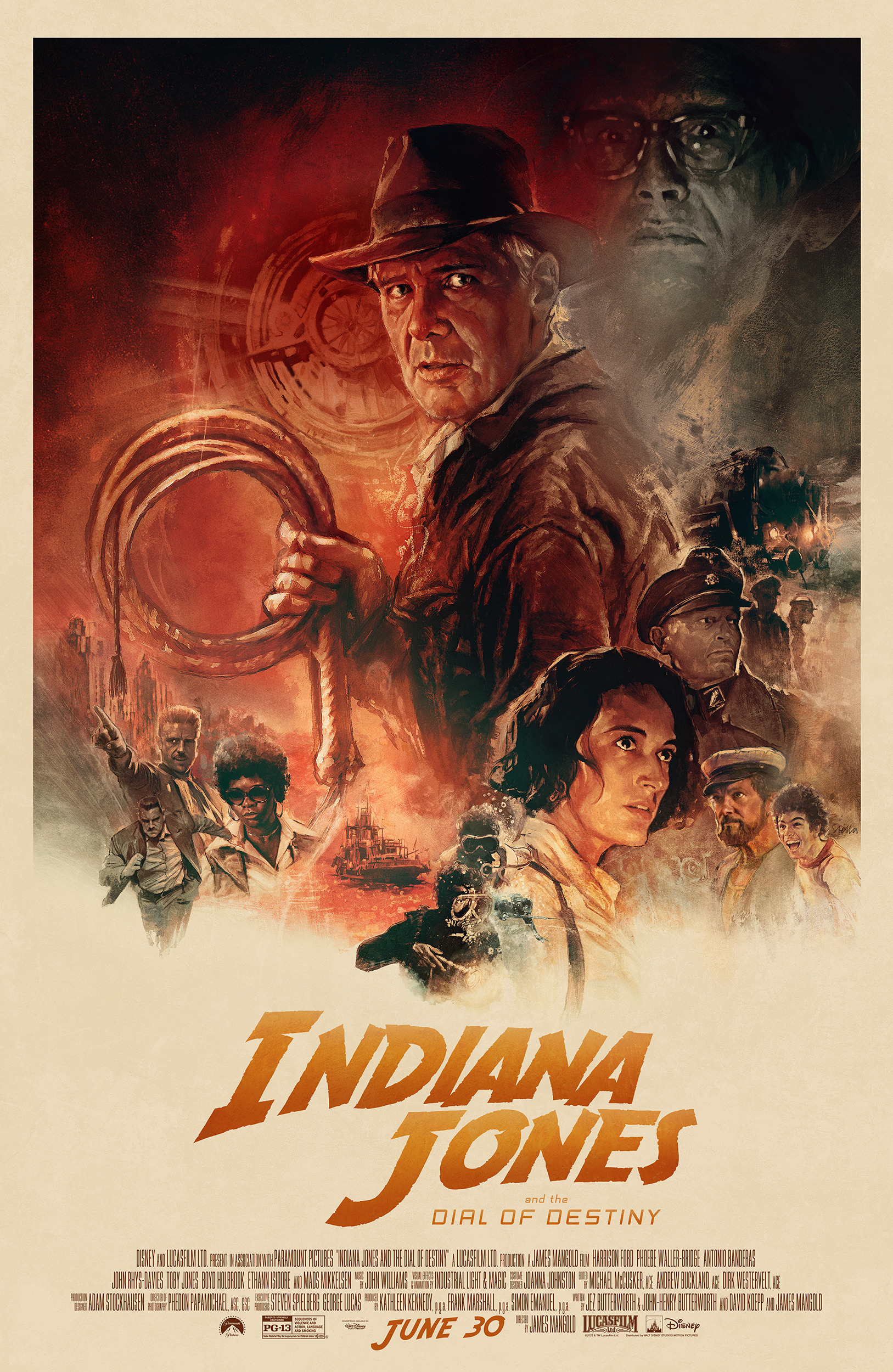
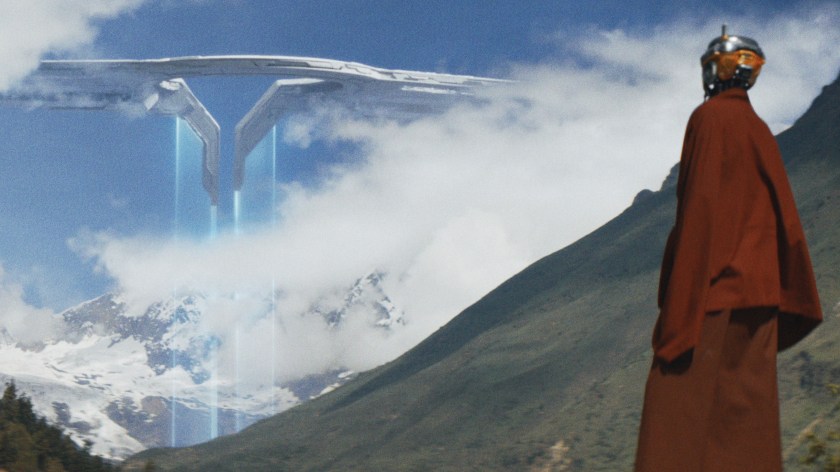
Indiana Jones and the Dial of Destiny (2023)

© Walt Disney Pictures and Lucasfilm

Indiana Jones and the Dial of Destiny – Film Review

Cast: Harrison Ford, Phoebe Waller-Bridge, Antonio Banderas, John Rhys-Davies, Toby Jones, Boyd Holbrook, Ethann Isidore, Mads Mikkelsen, Shaunette Renée Wilson

Director:  James Mangold

Synopsis: Legendary archaeologist Indiana Jones finds himself in a race against time, and the Nazis,  in a bid to recover a historical artefact…

Review: Whether it be the fedora, the whip, his sense of adventure, his charm, or the fact he loves to give a Nazi or two a punch to the face, the appeal of Dr Henry Walton “Indiana” Jones Jr is one which has endured throughout the decades ever since he made his debut in 1981’s Raiders of the Lost Ark. The subsequent three films which followed may have varied in quality, but what did not vary was the popularity of this character, which has endured to the point where he is widely regarded as one of the greatest characters in the history of cinema. Fifteen years after what was billed as his last adventure, Indy has dusted off the leather jacket and the whip, for another go at one final adventure.

The year is 1969 and Dr Jones is on the brink of retirement from his teaching job as a university lecturer. The Space Race between the USA and the Soviet Union is in full swing, with the former poised to be the first country to send people to the moon. While once his students were fascinated by the subject of archaeology, now they’re completely unenthusiastic and are far more interested in space, leaving Indy facing up to the prospect of a rather lonely future in retirement. This is until his goddaughter Helena Shaw (Waller-Bridge) shows up out of the blue seeking Indy’s help to locate an ancient historical artefact in the form of a dial, which is said to have belonged to Archimedes. Though, of course, the dial is also being pursued by former Nazi Jurgen Voller (Mikkelsen), who has since been recruited by NASA to assist the US with their efforts in the Space Race.

Before the globetrotting adventure to retrieve this artefact can begin however, the film turns back time to a thrilling 20-minute prologue set during the tail end of World War II minute prologue, where a younger Indy (via a digitally de-aged Ford) and his fellow archaeology enthusiast Basil Shaw (Jones) are in search of another artefact which they believe may be in the possession of the Nazis of. However, a chance encounter leads them to this dial which may or may not have some kind of magical powers of some kind to it. It wouldn’t be an Indy film without it! Fast forward 25 years, and Indy and Helena set off on a new adventure to retrieve this priceless treasure before it falls into the wrong hands.

Ford is an actor who has no shortage of legendary roles to his name, each of which he has reprised over the years to wonderful effect, and Indy is no exception. It is apparent Ford has a great affinity for this character, and despite his age, he puts in a committed performance proving there is no one else to don Indy’s fedora. Given the length of time Ford has played this role, the script by Jez Butterworth, John-Henry Butterworth, David Koepp and James Mangold leans into this longevity and the fact that an adventure of this nature would wear an adventurer of his age down. His general grumpiness, combined with Helena’s endless energy and enthusiasm, lends itself to some comedic moments, and Waller-Bridge is tremendous in the role. She is easily given the most development out of all the new characters, which is frustrating particularly where Mikkelsen’s villain is concerned. He’s an actor who has proved he can play a thoroughly unlikeable villain with nuance and subtlety to the point where you almost feel sorry for him. Unfortunately, the script doesn’t develop him much beyond he’s a former Nazi who is desperate to find this dial for his nefarious purposes and so Indy and Helena must stop him and his assortment of goons led by Boyd Holbrook’s Klaber at all costs.

It is strange that for an Indiana Jones film, there is no involvement of either franchise creator George Lucas or the director of the first four films Steven Spielberg, with both instead serving as executive producers. Taking on the reins from Spielberg is an unenviable task, but it is one which James Mangold rises to. He is a director who notably has experience with giving a beloved character the swansong they deserve and has an incredibly broad range of films across a multitude of genres in his career. The action scenes have a vibrant energy to them and are visually stunning to look at especially the opening prologue and some of the action scenes in the second act. While these are fun to watch, the film clocks in at nearly two and a half hours, it is the longest film in the franchise to date and you begin to feel that run time by the end due to some sluggish pacing. Furthermore, the film can feel a bit too reliant on the by-the-numbers nature of its plot and the nostalgia many will undoubtedly have for this franchise, aided by the score that the living legend John Williams provides. Matching the lofty standards set by two-thirds of the original trilogy (looking at you Temple of Doom), was always going to be a tall order. However, where Kingdom of the Crystal Skull fell short, Dial of Destiny turns back time to let this character roll back the years and enable him to take a final bow befitting of an iconic screen legend.

While it leans a bit too much its nostalgia and its tried and tested formula, the committed performances from Ford and Waller-Bridge ensure the legendary archaeologist’s final adventure is one which is absolutely worth going on.  

Posted in 2020-2029, Film Review

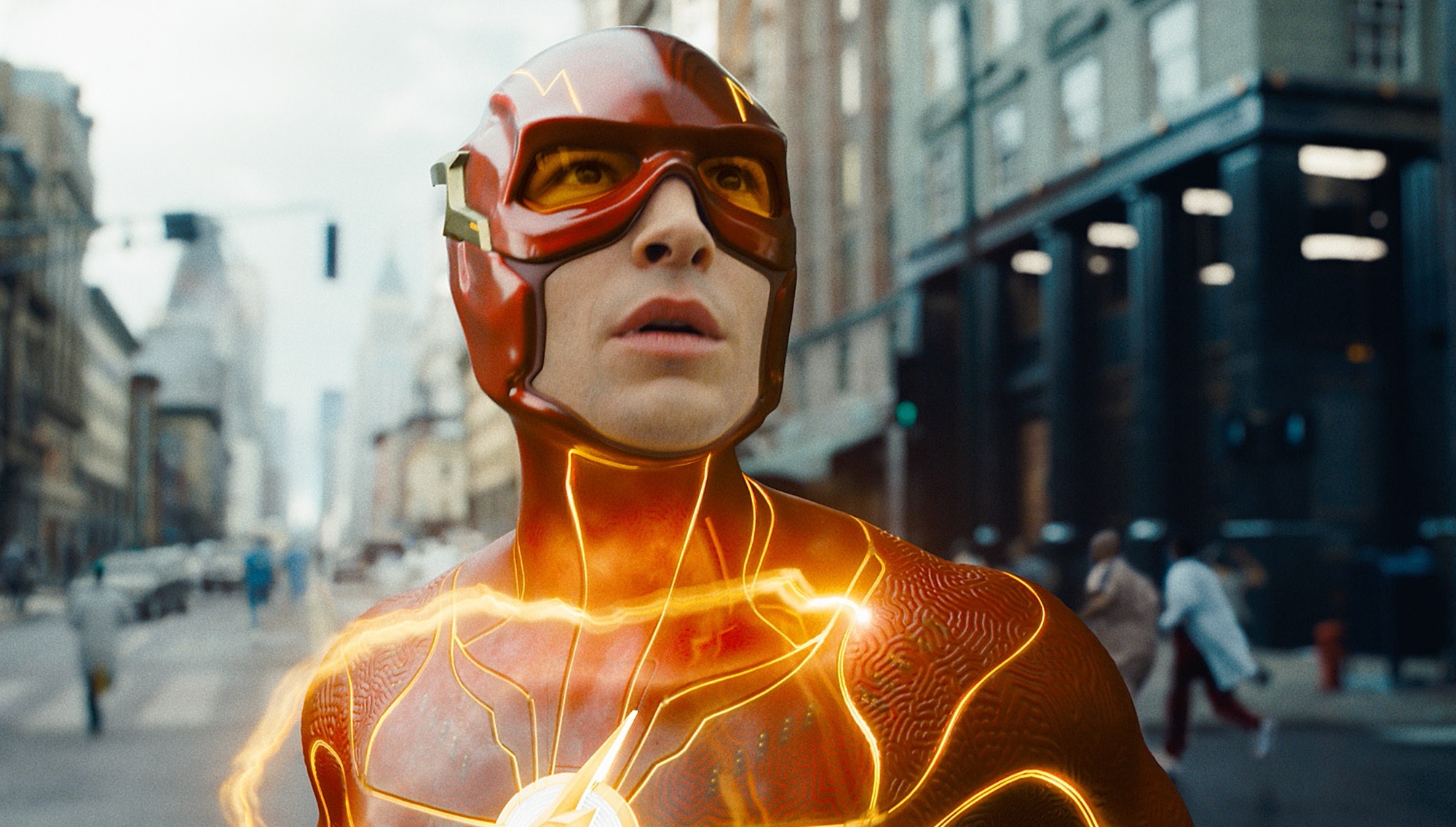
The Flash (2023)

© Warner Bros. Pictures and DC Studios

The Flash – Film Review

Cast: Ezra Miller, Sasha Calle, Michael Shannon, Ron Livingston, Maribel Verdú, Kiersey Clemons, Antje Traue, Michael Keaton, Ben Affleck

Director:  Andy Muschietti

Synopsis: Upon discovering he can use his powers to travel in time, Barry Allen/The Flash attempts to rectify a tragic incident from his past…

Review: Before taking the time to analyse the latest, and one of the last films in the DC Extended Universe as we know it, it would be remiss for anyone to not bring up the subject of the string of off-screen allegations which have followed the film’s star Ezra Miller since the film wrapped production in 2021. Such is the scale and extremely serious nature of said allegations of misconduct, they cannot be ignored and the art can no longer be separated from the artist. Furthermore, given we’ve known for a while that the DCEU as we know will be rebooted under the direction of James Gunn and Peter Saffran, these allegations will have to be addressed by the studios at some point in the future.

Barry Allen has settled into his day job as a forensic investigator while also helping to fight crime as a member of the Justice League. However, his dad is awaiting trial after he was accused of murdering his mother when Barry was a child. When he discovers by travelling at such high speeds he can travel back in time, he attempts to alter the past to prevent his mother’s death, only to realise he has landed in an alternate universe, where he encounters his younger self. Together, the two of them must work out how to fix the damage that has been done to the universe before it is too late.

Multiverse movies have become all the rage in recent years, so despite being centred on an extremely fast character who can travel at super speeds, it is somewhat ironic this has been one of the last films to get in on the action. Though, in all fairness, it has been stuck in development hell for a long time, with multiple directors being attached at one point or another. The dual performances by Miller are solid. It provides some entertaining moments seeing the older Barry get irritated by the antics of his younger self, though they are both overshadowed by the return of Michael Keaton’s portrayal of Bruce Wayne/Batman. Given his legendary status, and arguably being the best actor to ever don the cape and cowl, it would have been easy for Keaton to show up, film his scenes and collect his pay cheque no fuss no muss. But he commits to it, because he’s BATMAN, and the delivery of certain iconic lines from his Batman films are joyful to watch.

Unfortunately, what is not so joyful to watch, is the film itself. Any film which tries to dabble in time travel/multiverse adventures needs an airtight screenplay to prevent things from spiralling entirely out of control. Christina Hodson’s screenplay, working from a story by John Francis Daley, Jonathan Goldstein and Joby Harold, is heavily influenced by the Flashpoint storyline from the comics. However, perhaps given the screenplay has presumably gone through numerous versions, the final product leaves an awful lot to be desired. It attempts to juggle too many different plot threads with Barry’s remorse over what happened with his parents, time travel, an adventure with an alternate universe Batman, and a climatic superhero showdown in the third act that it becomes severely muddled and unfocused. As if that wasn’t enough, it introduces a new iteration of Kara/Supergirl into the mix, portrayed by Sasha Calle making her feature film debut. Calle does an excellent job with the material she’s given, but she is severely underutilised and the same is true for the return of Michael Shannon as General Zod, whose presence feels nothing more than a glorified cameo to set the stage for the third act.

This does have its moments, particularly around said final act and director Andy Muschietti does a capable job of trying to hold the film together through the chaos of this misadventure. However, as well as the opening action sequence, this third act is marred with some truly inexcusable sub-standard CGI, which should not happen when you have a $200m budget. While there have been some high points in the ten years since Man of Steel first took flight, ultimately, the current DCEU has got to a point where too many of its productions have been beset by too many problems, admittedly sometimes through no fault of their own. Nevertheless, the time is right for Gunn and Saffran to take charge and reboot the universe, but if this is to be the great reset for the DCEU it has been marketed as, a good starting point would be to unequivocally address the allegations surrounding Miller and hold them to account.

An adaptation of arguably the most well-known storyline from the comics should have been a slam dunk and the perfect way to bring this chapter of the DCEU to a close. Yet no amount of time travelling, or the glorious return of Keaton as the Caped Crusader, can save this multiversal misfire from becoming a jumbled mess. 

Posted in 2020-2029, Film Review

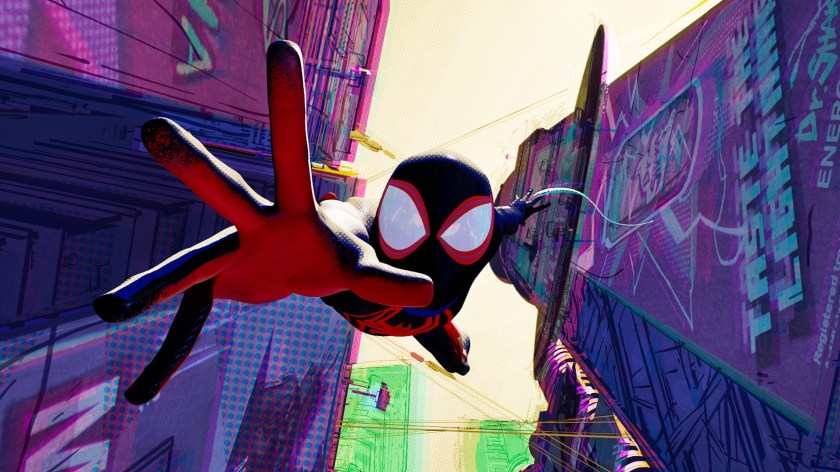
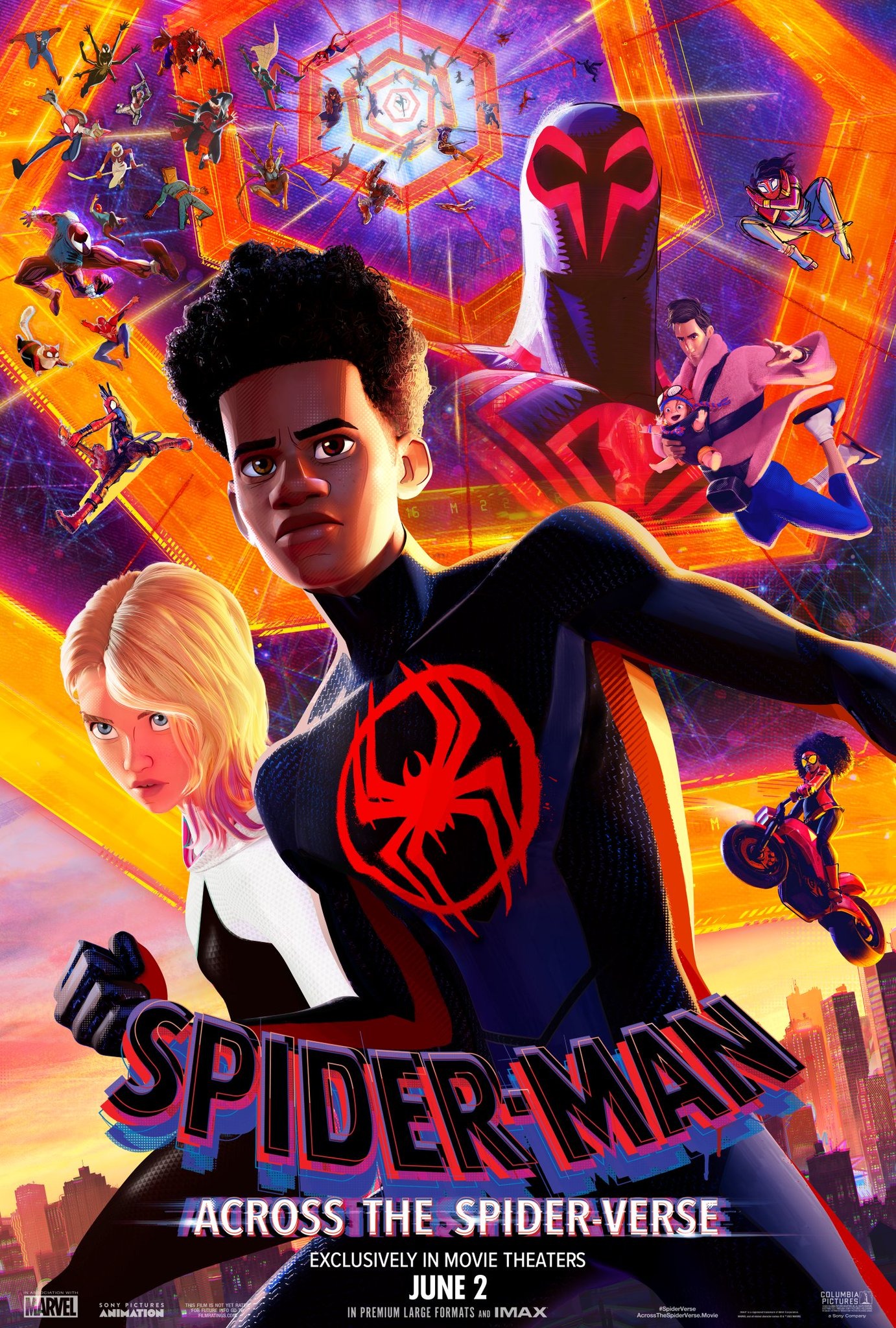
Spider-Man: Across the Spider-Verse (2023)

Columbia Pictures, Sony Pictures Animation, Lord Miller Productions and Marvel Entertainment

Spider-Man: Across the Spider-Verse – Film Review

Cast: Shameik Moore, Hailee Steinfeld, Brian Tyree Henry, Luna Lauren Vélez, Jake Johnson, Jason Schwartzman, Issa Rae, Karan Soni, Daniel Kaluuya, Oscar Isaac

Directors: Joaquim Dos Santos, Kemp Powers and Justin K. Thompson

Synopsis: After spending a year fighting crime as Spider-Man, Miles Morales reestablishes a connection with the multiverse and a whole society of Spider-People who must prevent a new threat from destroying the multiverse…

Review: It is no exaggeration to say that when Spider-Man: Into The Spider-Verse swung its way onto the big screen back in 2018, it was a game changer, not just for animation, but the broader superhero genre itself. The vibrant and colourful animation felt like it was ripped straight from the pages of a comic book and the animation itself was so groundbreakingly impressive, that every studio in town has had to since raise its game while its influence has been noticeably apparent in a handful of subsequent films. Furthermore, the film was ahead of the curve in terms of the plethora of live-action superhero films which have adopted multiverse travelling shenanigans. Five years later, these creative geniuses have only gone and done it again.

It’s been over a year since the events of Into the Spider-Verse and Miles Morales (Moore) has settled into his life as his universe’s Spider-Man. Though he’s desperate to see the likes of Gwen/Spider-Woman and Peter B. Parker (Johnson) again. When he encounters the mysterious villain known as The Spot (Schwartzman), it sets Miles on a new journey where he encounters a whole web (pun definitely intended) of Spider-People, who seek to neutralise the threat before it breaks the multiverse apart.

Given the many incarnations of this iconic character we’ve had over the years, what made Into the Spider-Verse so special was the way it took the familiar origin story of how the bite of a radioactive spider transforms a young man into a superhero and honours it. Yet at the same time, it breathed new life into it by telling said origin story in a manner which felt unique and original, with some genuine laugh-out moments and hugely inspiring acts of heroism and awesomeness, such as the now iconic Leap of Faith sequence. Across the Spider-Verse picks up where its predecessor left off with Miles balancing his superhero duties with the tricky decision of where he wants to go to college and the even trickier decision regarding his future aspirations. While the previous film really homed in on Miles’ relationship with the other Spider-People, the script by Phil Lord, Christopher Miller and David Callaham allows the relationship between Miles and his parents Jeff (Tyree Henry) and Rio (Velez) to really flourish.

Both can sense Miles has a lot on his mind, but as the old saying goes “Mother knows best” and it is in these personal moments between Miles and his mother which helps keep Miles’ feet on the ground. As well as taking its time to explore his relationship with his parents, the film allows room for Miles’s relationship with his love interest Gwen (Steinfeld) to develop even further, while allowing time for her tragic backstory to take centre stage. The voice work across the board across the board is once again exceptional, especially for Steinfeld given the added emotional gravity of her story and how, like Miles, her role as Spider-Woman has caused the relationship with her father to break down.

Alongside the returning Peter B. Parker (Johnson), the film introduces a number of new friendly multiverse Spider-People, including Jessica Drew (Rae), Indian Spider-Man Pavitr Prabhakar (Soni) Spider-Punk Hobart “Hobie” Brown (Kaluuya), and the leader of the Spider Society, Miguel O’Hara (Isaac), who is determined to prevent The Spot from tearing the multiverse apart at all costs, though the manner in which causes Miguel to frequently clash with Miles. Speaking of The Spot, at face value, he is a villain whose name and appearance could have lent itself to ridicule, but by weaving his origin story into Miles’ previous multiversal adventure, he proves himself to be a powerful and threatening antagonist to the Spider-Society.

Given its predecessor broke new ground in terms of its animation, you would think there is no way they could surpass themselves here. Yet, somehow, these animators have outdone themselves. There are simply not enough superlatives to describe just how astounding it is. Each new world the film explores provides the film’s team of animators to scale new heights and provide a unique look and feel for each different world and utilises a plethora of different animation styles, while once again throwing down the gauntlet for other studios to aspire to be at the level these animators are at. The bar has once again been set at a new height, and the expectation will be at sky levels when the final instalment of this wonderful story, Beyond the Spider-Verse, takes the leap of faith into cinemas next year. Should it stick the landing, we will, without any question of a doubt, be looking at one of the finest trilogies of all time.

Picking up exactly where its predecessor left off, combining stunning animation, a flawless combination of exhilarating action, and a character-driven story to leave the audience on tenterhooks for the concluding chapter of this amazing story. A perfect sequel. 

a

Posted in 2020-2029, Film Review

Polite Society (2023)

Polite Society – Film Review

Cast: Priya Kansara, Ritu Arya, Nimra Bucha, Akshay Khanna, Seraphina Beh, Ella Bruccoleri, Shobu Kapoor, Jeff Mirza

Director: Nida Manzoor

Synopsis: An up-and-coming martial artist must hatch a plan to save her sister when she gets engaged…

Review: In the history of cinema, the genre of kung-fu/martial arts is one which has been typically male-dominated, with the works of icons such as Bruce Lee and Jackie Chan inspiring filmmakers to this day. However, there has been no shortage of iconic female characters who have left their mark on this genre, such as Uma Thurman’s The Bride from Kill Bill or some of the many films starring the icon that is Michelle Yeoh, including a certain Academy Award-winning multiverse inspired adventure. On the back of that film’s phenomenal success, which only added proof (as if it was needed) of women firmly establised their credentials as badass warriors capable of taking anyone down, along comes Nida Manzoor with her wickedly funny directorial debut to reinforce that notion, and is ready to chop down anyone who would say otherwise.

Ria (Kansara) is an aspiring martial artist codenamed “The Fury” and harbours ambitions to become a prominent stuntwoman for major Hollywood productions. She is close with her sister Lena (Arya), who moved back home after dropping out of art school.  Lena helps to film the videos for Ria’s YouTube channel and the sisters have formed a close bond. However, their relationship is strained when Lena meets the handsome Salim (Khanna) and promptly falls head over heels for him. When Lena accepts Salim’s proposal of marriage after a relatively short period of time of being together, Ria becomes immediately suspicious and must use a combination of her martial arts expertise and aspiring sleuth skills, with the assistance of her friends Clara (Beh) and Alba (Bruccoleri), to try to understand what it is about Salim that has captured Lena’s heart and form a plan to somehow prevent her sister from going through with tying the knot.

Hell Hath No Fury like the fists of The Fury…

As the budding young martial artist at the centre of this delightful fusion of Bollywood, meets action comedy, meets coming-of-age tale, Priya Kansara’s wonderful breakthrough performance deserves to put her on an immediate path to stardom. Her commitment and dedication to her craft as a martial artist, and unwavering career ambitions are immediately relatable. Her relationship with Lena is also very sincere and both Kansara and Arya share a warm chemistry, where both sisters are passionate and determined to support each other in their lives, particularly given the expectations of their parents (Shobu Kapoor and Jeff Mirza). Though their bond is put to the test when Salim enters the picture and the looming possibility of seeing her sister married to this man prompts Ria and her friends to get creative with their sleuthing, which lends itself to plenty of comedic moments.

With a handful of TV directorial credits under her belt, including Doctor Who and her Channel 4 comedy series We Are Lady Parts, Manzoor makes the transition to the big screen seamlessly. Her script captures the family dynamic of a British-Asian family, while also being instantly relatable for anyone who’s harboured ambitions to make their mark on their chosen profession and will stop at nothing to achieve it, even in the face of setbacks. Yet, this is just one facet of the film, with some fast-paced, exhilarating action scenes. The influences of the works of Edgar Wright’s Cornetto Trilogy and Scott Pilgrim are undeniable, but Manzoor’s direction is assured and framing these scenes against a backdrop of a traditional Pakistani wedding works to perfection. Furthermore, PC Williams’s costume design ensures these colourful and stunning wedding garments leap off the screen.

Without straying into too much detail, there’s an element of outlandishness to the direction the plot goes in. However, given the film is a near blast to watch from start to finish, it is easy enough to roll with the punches and enjoy the ride. In a year, which has already seen the wonderful Rye Lane charm audiences with its fresh take on the rom-com genre and establish Raine Allen-Miller as an exciting new voice among up-and-coming British filmmakers. Nida Manzoor follows suit with a wonderfully unique film, which lets the fists of The Fury fly, all while celebrating the power and badassery of women and the unbreakable bond of sisterhood.

A joyous fusion of the warm and loving bond between sisters, quintessential British comedy and a celebration of Bollywood, as well exhilarting action sequences ensures Polite Society is a fist-pumping good time, with a star-in-the-making performance from Priya Kansara.

Posted in 2020-2029, Film Review

Puss in Boots: The Last Wish (2023)

© DreamWorks Animation and Universal Pictures

Puss in Boots: The Last Wish – Film Review

Cast: Antonio Banderas, Salma Hayek Pinault, Harvey Guillén, Florence Pugh, Olivia Colman, Ray Winstone, Samson Kayo, John Mulaney, Wagner Moura, Da’Vine Joy Randolph, Anthony Mendez

Directors: Joel Crawford and Januel Mercado

Synopsis:  Discovering he has gone through eight of his nine lives, Puss in Boots discovers a possibility to restore all of his lives through a magical wishing star…

Review: With his signature boots, hat and sword, it is easy to see why the cunning (and cute when he wants to be) feline warrior known as Puss in Boots captured the attention of everyone when he first appeared in Shrek 2 back in 2004. While he cropped up again in later sequels, the first sequel featuring everyone’s grumpy but lovable ogre remained the jewel in the crown for the franchise based in a land far far away. While he later appeared in his own 2011 spin-off which came and went without seemingly too much fanfare, this sequel has come along to put the Shrek franchise back on the map with the best film in the franchise since the first Shrekquel.

Puss In Boots (Banderas) is living his best lives as a fearless warrior who craves adventure, which leads to an enthralling encounter between Puss and a gargantuan monster/mountain hybrid, all within the film’s opening first act. While he succeeds in his fight against the creature, it comes at a cost. Upon waking up, he finds out that he has used up eight of his nine lives and is urged to put his swashbuckling adventure days behind him for good. However, Puss learns of the existence of a magical wishing star which could replenish his lives, but Puss soon discovers he is being hunted by a terrifying hooded wolf (Moura), the physical manifestation of death itself, and must evade him at all costs before he has a chance to get his lives back.

In a franchise which at its peak was a clever and hilarious look at our perception of fairytales, Paul Fisher and Tommy Swerdlow’s screenplay leans into the fairytale world with the magical wishing star, as well as the use of some high profile characters from well-known fables as side characters, most notably Goldilocks (Pugh) and the Three Bears (Winstone, Colman and Kayo). However, it expertly combines this fairytale backdrop with a Western heavy vibe as Puss, a feline version of Clint Eastwood’s antihero from The Man With No Name trilogy in many respects, must battle an assortment of creatures big and small in his quest to avoid a permanent encounter with death. Banderas has always felt perfect for this role and he is once again perfect as there’s an array of emotions Puss goes through over the course of this enthralling adventure, which must see Puss reluctantly work with a past flame in Kitty Softpaws (Hayek Pinault), who is not happy with Puss, to say the least.

It makes for a fascinating dynamic between these two as they go on their adventure, aided by adorable therapy dog Perro (Guillen). Alongside them, Wagner Moura’s performance as the physical incarnation of death feels particularly chilling and foreboding. The best family movies are the ones which combine elements which will delight younger audiences while giving older members thought-provoking and mature themes. With its explorations of mortality, and the anxiety which can come along with that, it adds so much emotional weight to the story. Ever since the release of Spider-Man Into The Spider-Verse, the bar for producing ground-breaking animation has been raised massively. The combination of the fairytale setting, as well as the Western vibe, gives the animators the opportunity to tinker with varying styles of animation. Whether it’s the glint in a character’s eye, an exhilarating action scene, the visualisation of the titular wishing star or another form of magic artefact, the visuals remain dazzlingly impressive throughout.

It is a shame the Big Bad Wolf/Death’s appearances in the film are fleeting because he is such a commanding, ominous presence, it makes the film’s main villain Jack Horner (Mulaney) seem a bit superfluous in comparison. Horner is a bit one note in terms of him being just straight-up evil and cruel with barely any nuance to him, it makes you wish the film had used more of the former and less of the latter. Nevertheless, while many had assumed the Shrek franchise was consigned to the books where one would read about all those fairytales it parodied, Puss In Boots: The Last Wish serves as a reminder that, like its titular hero seeking to replenish his nine lives, there could be plenty more life, and magic, left in the franchise in a land not too far from Far Far Away.

Visually stunning, with a layered and emotionally resonant story at its core, this latest venture into the world of fairytales and talking animals with everyone’s favourite feline warrior will leave audiences purring with delight. 

Posted in 2020-2029, Film Review

Guardians of the Galaxy Vol. 3 (2023)

© Marvel Studios

Guardians of the Galaxy Vol. 3 – Film Review

Cast: Chris Pratt, Chris Pratt, Zoe Saldaña, Dave Bautista, Karen Gillan, Pom Klementieff, Vin Diesel, Bradley Cooper, Sean Gunn, Chukwudi Iwuji, Will Poulter, Elizabeth Debicki, Maria Bakalova, Sylvester Stallone

Director: James Gunn

Synopsis: The Guardians of the Galaxy are put in a perilous predicament when their base, and one of their own, comes under attack…

Review: It seemed unthinkable back in 2014 that a film based on a very obscure comic, which featured a sentient raccoon and a talking tree, could have been such a runaway success and brought a new dimension to the Marvel Cinematic Universe. Aided by a banging soundtrack, perfectly well-drawn characters who developed a strong sense of camaraderie, along with humour and heart, this is precisely what James Gunn brought to the table when the first Guardians of the Galaxy film blasted its way into cinemas. A sequel was inevitable, which had its moments but fell short of reaching the lofty heights set by its predecessor. Following on from their team-up with Earth’s mightiest heroes, a holiday special, and amid a rocky road to the big screen following the initial firing and subsequent rehiring of Gunn, everyone’s favourite team of rag-tag, lovable outlaws-turned-heroes is back for one last emotional adventure.

The Guardians, Star-Lord (Pratt), Drax (Bautista), Nebula (Gillan), Mantis (Klementieff), Rocket (Cooper) and Groot (Diesel),  have established their base on Knowhere and are enjoying a rare moment of peace after their years of saving the galaxy from an assortment of creatures, from a living planet to the Mad Titan Thanos. Star-Lord (Pratt), in particular, is still reeling from the loss of his lover Gamora after Thanos sacrificed her and is spending a lot of his time drowning his sorrows. Their brief respite from galaxy-saving is halted when their base comes under attack from a terrifying new threat, putting the lives of specific members in immediate peril. Forced to regroup and assess the new threat they face, the Guardians set out on a deeply personal quest (which sees them cross paths with alternate-timeline Gamora)  to find out who is targeting them and neutralise them before they bring about the end of the team as we know it.

Right from the moment we first met them as an out-of-sorts bunch of criminals who became the galaxy’s defenders, there has been an ever-present strong sense of camaraderie between this unlikely team of eccentric beings from all over the galaxy, a togetherness arguably stronger than any other team-up in the MCU to date. They were united by a common bond of being looked down on by the galaxy for one reason or another, which drew them closer together and made them a family, just not one related by blood. Having gone off to work with DC to give their equivalent to the Guardians some CPR, while his situation with Marvel was up in the air,  Gunn’s screenplay continues to build on the strength of the togetherness and bonds that this team have built over the years, especially for a mission where the stakes are just as high when compared to the previous two films, but for a very different reason this time around.  No spoilers to be found here, but while Vol. 2 explored Star Lord’s origins at length, this time around, as Gunn himself admitted, the key motivation for coming back to conclude the trilogy was to finish telling Rocket’s story.

The examination of this origin story, and the deeply personal nature of the ensuing mission make it the most personal film for the team, and by extension for Gunn himself. A recurring theme which has been recurring throughout the franchise is the idea that everyone deserves a second chance, and Gunn emphatically drives this point home here. There’s lots of emotion at stake here, not just for the Guardians who are fighting to save one of their own but are coming up against by far their most compelling antagonist yet in the High Evolutionary, portrayed terrifyingly by Chukwudi Iwuji. To say this guy has an ego (no, not that one) would be an extreme understatement. He is obsessed with creating essentially a utopia, to the extent that he will stop at nothing with experimentation, and Rocket is the key to all of his plans. The film goes into detail with the backstory of how Rocket came to be the lovable and awesome badass that he is, which isn’t afraid to explore some thought-provoking and heavy themes, and also really packs an emotional punch.  Every character gets their moment to shine, but make no mistake, this movie belongs to Rocket.

The film is a little rough around the edges in places and could have benefited from a little bit of fine-tuning to trim down its two-and-a-half-hour runtime. However, given the status of this concluding chapter was up in the air for so long and there were real question marks as to whether Gunn would get to close out this chapter, those can be forgiven, especially when the characters have established this deep bond, not only as a team but with the audience themselves. Gunn’s attention now turns to DC to oversee the revamp of its own cinematic universe, but this franchise has always been his baby. Therefore, after nine years since we first (fooled around) and fell in love with these characters, the impact they have had on the MCU is immeasurable, and it is immensely satisfying to see Gunn close this chapter of the galaxy’s favourite bunch of a-holes in mighty fine style.

Easily the most personal story in the trilogy, Vol. 3 combines the humour, action and establishes a deeply felt unity and togetherness like no other Marvel team-up.  A fittingly awesome and emotional send-off for the galaxy’s favourite collection of misfits-turned-heroes.

Posted in 2020-2029, Film Review

The Super Mario Bros. Movie (2023)

© Illumination, Universal and Nintendo

The Super Mario Bros. Movie – Film Review

Cast: Chris Pratt, Anya Taylor-Joy, Charlie Day, Jack Black, Keegan-Michael Key, Seth Rogen, Fred Armisen

Directors: Aaron Horvath and Michael Jelenic

Synopsis: After being transported to the Mushroom Kingdom, Mario must join forces with Princess Peach to stop Bowser from conquering the world…

Review: With his signature red cap, overalls and signature moustache, it is not an exaggeration to say that ever since he made his first appearance in a Donkey Kong arcade video game in 1981, the character of Mario has become one of, if not the, most famous video game character of all time. Given his enormous influence in video games, it is perhaps somewhat surprising that the legendary Italian plumber has crossed over to the cinematic realm only once. Then again, given how poorly received both critically and commercially the 1993 film was, it is little wonder Nintendo exhibited uncertainty before giving another cinematic adventure with Mario the green pipe, sorry, green light. Now, 30 years after that unmitigated disaster, Nintendo has teamed up with Illumination to bring us a new cinematic incarnation which certainly captures the essence of the games, but sadly falls short of landing the gold star it would have hoped for.

Mario (Pratt) and Luigi (Day) are brothers who have started a plumbing business in New York City. While out on a job, the duo stumble across a pipe which transports Mario to the Mushroom Kingdom and Luigi to a realm controlled by the evil Bowser (Black). Determined to rescue his brother, Mario must team up with Princess Peach (Taylor-Joy) to save him and stop Bowser’s plans from taking over the Mushroom Kingdom.  Such a plot feels ripped straight from a Mario game, and the film endeavours to feel as authentic to the games as possible, which will undoubtedly please long-time fans of the franchise. Yet, while striving for authenticity is to be commended, it also comes at a cost. Matthew Fogel’s screenplay opts for a simplistic approach of throwing as many recognisable elements from iconic Mario games of the past into the film, such as the racing, or Luigi’s Mansion, with seemingly little thought of a plot or a fully developed story. The use of these Easter Eggs will please long-time fans, but the world of Mario is so vast and rich, the opportunity was there to come up with a story which is not severely lacking and could not even be fixed with the help of a magic mushroom.

The subject of the voice casting was, to put it mildly, the topic of much discussion, with Chris Pratt’s casting as the voice of Mario being the decision which was by far and away the most debated. Pratt is an actor who has proven he has the potential to be a voice actor in comedies (The Lego Movie) and in more heartfelt emotional roles (Onward). The decision to have Mario and Luigi as brothers who hail from Brooklyn is a smart one and it makes for an easy adjustment for fans who might have been worried about Pratt attempting the familiar exaggerated Italian accent, though there is a fun little nod to that at the beginning of the film. The voice work across the board is functional towards the film’s paper-thin plot. Furthermore, since there’s barely a scintilla of character development in the majority of the characters, with the exceptions of Princess Peach and Bowser, it results in no emotional stakes in the ensuing adventure at all.  Peach’s character is often reduced to the role of a damsel-in-distress in the games, yet she is thankfully proactive and asserts her leadership over the Mushroom Kingdom, while Jack Black’s portrayal of the King of the Koopas injects some much-needed personality and humour into the film, but it all counts for very little.

The animation is impressive in its detail as it perfectly captures the look and feel of a typical Mario game. However, the bar for animated films continues to be raised by studios across the board in recent years, and consequently, in spite of its phenomenal success at the box office with its Despicable Me franchise, Illumination’s efforts still pale in comparison to the efforts of its rival studios. Given the immense popularity of these characters, which have stood the test of time over multiple decades, there was so much potential for a proper big-screen adaptation which would successfully introduce him to a new generation and satisfy the audience members who grew up with the video games. It certainly accomplishes the former, but really misses the mark with the latter. Mamma Mia, what a missed opportunity!

Impressively animated, but a paper-thin story and severely undeveloped characters ensure this latest adaptation of the Nintendo franchise is devoid of any emotional stakes which made the games so iconic.

Posted in 2020-2029, Film Review

Fall (2022)

© Lionsgate and Signature Entertainment

Fall – Film Review

Cast: Grace Caroline Currey, Virginia Gardner, Mason Gooding, Jeffrey Dean Morgan

Director: Scott Mann

Synopsis: Two friends find themselves stranded atop a 2,000ft tall radio tower…

Review: As human beings going about our day-to-day lives, we are accustomed to having our feet on terra firma for most of the time. However, there are those daredevils out there who love to be adventurous/out of their minds (delete where appropriate), and climb exceedingly tall structures all in the name of thrill-seeking and adventure. Such individuals form the basis for this simple, but undeniably extremely tense and nerve-shredding thriller which is exhilarating and positively terrifying for those who are utterly terrified of heights.

Becky (Currey) and Hunter (Gardner) are two best friends who love to go rock climbing. On one particular day, they are out climbing a mountain one day, with Becky’s husband Dan (Gooding), when tragedy strikes. Fast forward nearly a year, and Becky’s life has spiralled where she is in a deep depression and battling alcoholism. Upon encouragement from Hunter, the two of them set out to climb the 2,000 ft B67 TV tower in the middle of nowhere, so the two can rediscover their passion for adventure and enable Becky can finally move on from the tragic events one year prior. The adventure goes to plan when the two of them are, for a brief moment, on top of the world for a brief moment. However, as they begin to make their descent, disaster strikes as the ladder they used to climb up breaks apart, leaving them stranded atop the tower, with no way down and with very little in the way of supplies.

To put it into perspective, standing at 2,000ft, the B67 TV tower would be the fourth tallest building in the world behind only the Burj Khalifa in Dubai, the Merdeka 118 in Malaysia and the Shanghai Tower, which is all sorts of terrifying. While the actors were not actually at such extraordinarily unnerving heights, the decision by the filmmakers to shoot on a practical location in the California desert, and construct the upper part of the tower on top of a mountain, is extremely effective as it adds a great of authenticity to the suspense. Mann’s direction, with the vertiginous cinematography and a very effective score, all combine to sell the peril of their situation and are guaranteed to make anyone sweat profusely with anxiety as the horror of the situation unfolds as these two battle the elements, and more, in their bid to stay alive.

The script by Mann and Jonathan Frank wastes little time establishing the core events which prompt Becky and Hunter to make this perilous ascent up to the top of this abandoned TV tower. To make matters worse for them, the platform at the top of the tower is exceedingly narrow, giving Becky and Hunter little room for manoeuvre as they must find a way to ensure they avoid that terrifying 2,000 ft drop back down to earth and alert the authorities to their plight. While the script does veer a bit into the overly dramatic with some of the dialogue between the two of them, it serves to develop the relationship between them, and the performances of both Currey and Gardner remain strong as the desperation of their plight means drastic action may well have to be taken sooner or later.

The seemingly hopeless nature of these two poor souls’ plight enables Mann to keep the audience on their toes throughout the film’s 97-minute run time, while retaining the nail-biting tension. Yet by the time it reaches the culmination of the third act, the ending does feel a little bit rushed. However, it is a refreshingly original and extremely effective tale of survival in the most perilous circumstances. By the time the credits begin to roll, and your heart rate has returned to normal,  you may be eternally thankful you’ve got those two feet on the ground and will almost certainly have no plans to scale such heights now, or at any point in the future.

The premise is totally absurd, but due to extremely compelling film-making, Fall is an enthralling and simultaneously terrifying white-knuckle ride. 


Posted in 2020-2029, Awards Season, Oscars, Ranking

95th Academy Awards: Best Picture Nominees ranked

Another awards season has come to a close and it is time to celebrate Hollywood’s biggest night with the 95th Academy Awards. After a full uninterrupted year of films on the big screen, ten films are competing for the top prize. They include a sharp social satire on the wealthy, a furious examination of the patriarchy, a biopic of one of the most iconic music artists of all time, a new interpretation of a classic anti-war novel, a couple of extremely successful sequels, and one of the most original films of the year.

An impressive crop of nominees, but as usual, only one film will emerge victorious. So, without any further ado, here’s my ranking of these films from worst to best. We start with…

10. Tár

I’ve always found every time awards season rolls around, there is always going to be one film that I struggle to connect with. This year, this film is Tár. For his first film in 16 years, director Todd Field brings the story of Lydia Tar, a fictional composer whose life begins to fall apart when a series of scandals come to light. There is a lot of depth to Fields’ screenplay, it is so rich and detailed, with a lot to say about cancel culture and the pedestal we often put celebrities on, you could almost be forgiven for thinking the film is based on a real-life figure, brought to the screen superbly by Cate Blanchett.

However, despite Blanchett’s incredible performance, the film sits at the bottom of this list because, while the film is impeccably crafted, I found it a bit of a slog to get through. Furthermore, the character of Lydia Tár was a difficult one to connect with and the film left me feeling quite cold as a result.


9. Elvis

Elvis Aaron Presley. The King of Rock and Roll and one of the most accomplished musicians to have ever lived. The popularity of musical biopics meant another film about the life of the singer was bound to happen sooner or later. In the hands of Baz Luhmann, a director whose previous films have certainly not been shy of extravagance and lavishness, he seemed like the ideal candidate to direct a film about the iconic singer.

Luhmann certainly goes all out for this depiction as he bids to capture Presley’s entire life, seen through the perspective of his controversial manager, Colonel Tom Parker (a severely miscast Tom Hanks). The film’s ambition cannot be denied, but even at 2 hours and 39 minutes, the attempt to capture Presley’s entire life feels too ambitious for its own good and drags the film down. However, what keeps it afloat is the extraordinary performance by Austin Butler whose dedication to bringing Elvis to the screen is so transformative, you could be forgiven for thinking it was the King himself on screen.


8. All Quiet on the Western Front

Throughout history, we have seen numerous examples of the horrors and brutality of war, and these horrors have often been captured in film in quite a brutal fashion. Indeed, those horrors have been brought into much sharper focus since the start of Russia’s barbaric invasion of Ukraine last year, which makes this new take on the 1930 novel by Erich Maria Remarque feel all the more relevant in light of the brutality of the scenes we’ve all seen in Ukraine over the last 12 months.

The film recaptures the brutality of trench warfare and the unimaginable horror the soldiers on both sides would have gone through on a day-to-day basis, with millions sent to their deaths to make minimal gains. The film is technically flawless, boasting immaculate production design and cinematography. However, while it serves its purpose as an anti-war film, it suffered due to a lack of development of its lead characters who merely exist to hammer the film’s main point home about the brutal and unforgiving nature of war.


7. Triangle of Sadness

Ever since the COVID pandemic hit and the wealth gap between the 1% in our society and everyone else grew even bigger, satires of the super-rich have been in plentiful supply as of late, which has been joyful to watch and necessary. However, none have done so in quite a scathing, and simultaneously hilarious manner as this Palme D’Or winner from Ruben Östlund.

Focusing on a young couple who are invited onto a cruise ship for the super-rich, the film is not afraid to take shots at numerous aspects of society, from wealthy oligarchs to social media influencers. This all culminates in a hilarious and slightly nauseating second act during a fateful night aboard the cruise, a scene which was an absolute riot to experience at a packed screening during London Film Festival. The film’s three distinct acts all have a unique feel to them, and while it does begin to run out of steam in the third act, it retains that stinging rebuke of the wealthy.


6. Women Talking

The only film of this year’s contenders to be directed by a woman (more on this later). The very fact Sarah Polley’s powerful and furious examination of the patriarchal nature of our society and analysis of an ongoing problem in said society was at very real risk of missing out on a nomination is shambolic, and some serious conversations would need to have been had if it had missed out.

Focusing on an isolated community of Mennonite women who have been repeatedly raped and sexually assaulted by the men in their community brings an urgent meeting where the women must decide whether to stay and fight or to leave. The film, as the title suggests, is very dialogue-driven. However, Sarah Polley’s screenplay, adapted from the novel of the same name by Miriam Toews, is so powerful and so tremendously performed by every member of its cast, especially Jessie Buckley and Claire Foy, that when these women are talking, everyone in the world should be listening to what they have to say.


5. The Fabelmans

Steven Spielberg, a director whose career has spanned over six decades, in which time he has provided audiences with killer sharks, killer dinosaurs, an extraterrestrial who wanted to phone home, an insanely cool archaeology professor who is arguably one of the best characters in cinema history, and so much more. Yet, as seems to be a trend among filmmakers in recent times, the legendary director has made his most personal film yet, about how he discovered his love of movie-making and the people in his life who played a key role in urging him to pursue his dreams of becoming a director.

Unlike some other films recently released this year which have tried to capture the magic of cinema only to completely miss the mark, Spielberg’s film captures the importance of family and how those around us can play a significant role in shaping the career we choose to pursue, as well as a passion for the art of cinema.


4. The Banshees of Inisherin

Full review here

There are not many directors who can combine a really (and I mean really) bleak situation and use that as a backdrop to provide utter hilarity quite like Martin McDonagh. On its surface, his latest film is the simple story of two men and the fallout when one of them abruptly decides he doesn’t want to be friends with the other one. Yet, there is so much more to McDonagh’s screenplay than this simple premise as it explores themes of toxic masculinity, nihilism, loneliness, and pursuing creativity over friendship all against the backdrop of the Irish Civil War.

The reunion (sort of) of In Bruges stars Brendan Gleeson and Colin Farrell, both of whom arguably give the best performances of their careers, is fantastic to see. Yet, the show belongs to Jenny (the donkey to whom Farrell’s character holds dear) and Kerry Condon’s scene-stealing performance as the sister to Colin Farrell’s character. A fecking brilliant motion picture!


3. Avatar: The Way of Water 

Full review here

The first of two films on this list which utterly dominated at the box office this year. It had been 13 long years since the first Avatar film came out, and after such a long wait, the question as to whether audiences would be interested in a return to Pandora raged. Several months, and nearly $2.3 billion dollars as of writing this later, it is fair to say audiences this debate has been settled. Audiences were interested and proved to the naysayers you should never ever bet against James Cameron.

With the visuals being a key selling point for the first film when it opened back in 2009, the question would have been how to surpass those this time around? And it would be fair to say they did just that, the use of pioneering new motion capture technology all while actually shooting these scenes underwater provided the film with some breathtaking visual majesty which is completely awe-inspiring to look at. Much can be said of the film’s script and how it is in many ways a retread of the first film, but when the last hour hits, it never lets up and reinforces Cameron’s talent for crafting terrifically compelling action.


2. Top Gun: Maverick 

Full review here

The second sequel among this year’s nominees and the film which, before The Way of Water came along, was the undisputed champion of the box office in 2022.  When it finally took to the skies last summer (after numerous delays), it was the film which as Steven Spielberg himself admitted to its star Tom Cruise might have just saved the cinematic experience as we know it.

Right from the very first moment when Kenny Loggins’s “Highway to the Danger Zone” blasts over scenes of jets taking off from a military warship, the film hits those nostalgic notes right off the bat runway. Yet, what this legacy sequel pulls off so successfully is it adds a real sense of emotional weight to the story, particularly for Cruise’s Maverick and certain decisions he has made across a 30-year career as a naval aviator. Furthermore, I cannot talk about this film without mentioning the aerial combat sequences, which were utterly exhilarating to watch. A perfect example of how to do a legacy sequel, and one that takes my breath away every time I rewatch it.


1. Everything Everywhere All At Once 

Full review here

What more is there to say about A24’s highest-grossing film of all time? Ever since it had its premiere in March last year at South by Southwest, the word of mouth for this film, and the insane level of hype surrounding it, was simply unprecedented. Was it actually going to live up to the hype when it finally opened on our shores in May? As you might have guessed from its position on this list, the answer is an emphatic yes.

I genuinely have no idea how writers/directors The Daniels concocted such a wacky, bonkers, insane and genius script which threw everything into the mix and somehow made it all work. The film had everything, multiversal travel, hotdog fingers, tremendous kung-fu-inspired fight scenes, googly eyes, and a genuinely very emotional scene with two rocks. But above all else, an impactful and moving family drama with one of, if not the best performances the legend that is Michelle Yeoh has given throughout her extraordinary career, as well as a wonderful performance from Ke Huy Quan, who will be one of the best Supporting Actor winners we’ve had in a long time. It was, for many people, the film which defined cinema in 2022 and it fully deserves its status as the best picture frontrunner, and will be one of the best victories of all time should it crown its phenomenal awards-season success.


Could/should have been nominated…


So there you have it, that is my ranking of the ten films up for Best Picture. However, I always like to hypothesise what could have been, because for me there are some films which really should have been included in this year’s race. Therefore, if I was an Oscar voter, my ballot for the ten films to be nominated would be to remove, Tar, Elvis and All Quiet on the Western Front, and replace them with:

She Said (review). In the same vein as last year when Ridley Scott’s powerful historical drama The Last Duel was snubbed entirely across the board last year, the absence of Maria Schrader’s tremendous film about how two reporters from The New York Times broke the story about Harvey Weinstein’s rampant sexual abuse led to the rise of the important #MeToo and Time’s Up movements is bemusing, to put it kindly. The film had an incredibly difficult job, given this is very recent history, to portray this story in a careful manner, and they did exactly that. Had it been nominated (as it should have done), it would have sent a real message of support to those who suffered at the hands of Weinstein. A real missed opportunity by the Academy.

The Woman King (review). Another brilliant film directed by a woman, and another which has been inexcusably overlooked by the Academy. So often, when a historical epic is brought to the big screen, it is from the perspective of men, such as Gladiator or Braveheart. This is precisely what made Gina Prince-Bythewood’s film so unique, that it centred on one of the few all-female armies in recorded history. Yes, it does take some liberties with the true story of the Agoije, this is not uncommon when bringing a true story to the big screen. Its extraordinary cast, led by an exceptional Viola Davis all shine, and it was just an epic time at the movies. Like with She Said, this is an incredible film which should have been nominated in all of the above-the-line categories, but the very fact it wasn’t nominated for anything at all feels particularly egregious.

Glass Onion: A Knives Out Mystery (review). A snub which is not as egregious as the ones mentioned so far, given that the brilliant sequel to Knives Out, got the adapted screenplay nomination it deserved. But, given the aforementioned screenplay nod, I am surprised to see it didn’t crop up anywhere else because it was definitely deserving of multiple nominations, given it clearly must be liked by the Academy. Supporting Actress for Janelle Monae did feel like a long shot due to how crowded that category is, but a nomination for costumes at the very least seemed a sure bet. Perhaps, the Academy is holding everything back for when the third Benoit Blanc film is released? Let’s hope so.

Posted in 2020-2029, Film Review

Creed III (2023)

© MGM, United Artists Releasing and Warner Bros. Pictures

Creed III – Film Review

Cast: Michael B. Jordan, Tessa Thompson, Jonathan Majors, Mila Davis-Kent, Wood Harris, Florian Munteanu, Phylicia Rashad

Director: Michael B. Jordan

Synopsis: After a successful boxing career, Adonis Creed (Jordan) faces a new challenge when a former childhood friend and boxing prodigy (Majors) resurfaces…

Review: To follow in the footsteps of a cinematic icon like Rocky Balboa is far from an easy feat. Yet, with its superb blend of nostalgia, pulsating fight scenes and an unwavering determination for its lead character to honour the legacy of Apollo Creed, as well as forging his own, this is precisely what the spin-off to the Rocky franchise accomplished when its first film fought its way into cinemas to critical acclaim. With its sequel, it continued along this path by adding some deeply personal stakes for both its lead character and his coach. It might have seemed unthinkable the third film would not feature the iconic character of Rocky in any capacity. Yet even without the involvement of Sly Stallone, it has proved it has plenty of fight left in the tank.

Adonis Creed has spent years enjoying a successful boxing career. However, he has now reached a point where he has chosen to retire as a professional fighter and transfer to the role of a coach/promoter and the owner of a gym training the next generation of fighters. On top of this, Adonis also has family responsibilities parenting his daughter Amara (Davis-Kent) with his wife Bianca (Thompson). However, when a former childhood friend Damian Anderson (Majors) comes back into Adonis’s life after spending 18 years in prison, he wants his chance to become a professional fighter and make up for the time he lost while serving his sentence. Initially offering his former friend a chance to rehabilitate and train, Adonis is forced to confront his past relationship with Damian when it becomes clear Damian’s aspirations threaten to challenge the legacy Adonis worked so hard to build.

The script by Keenan Coogler and Zach Baylin, working from a story co-written with Ryan Coogler, continues to honour the theme beating at the heart of these films: legacy. The boxing aspect unquestionably plays a part in the films, but the emphasis is first and foremost on these characters and their relationships with those closest to them and the legacies they strive to build. For Adonis, he may have enjoyed a phenomenal career as a pro boxer, but the question about legacy becomes even more prescient since Adonis has hung up his gloves. With a daughter to now take care of, given the fierceness and brutality of the sport, the film explores what kind of effect will his boxing career have on her as she grows up and handles the challenges of life. A dilemma which causes tension between Adonis and Bianca. However, there are also some extremely heart-warming moments of the trio as a family, with Bianca also getting much more screen time as she is also having to balance her career and her parental responsibilities.

Yet, despite those heartwarming moments, the crunch of the film’s conflict lies in the relationship between Adonis and Damian. Through a flashback sequence, the relationship between the young Adonis and Damian is established and how events in the past have shaped the men they have become. Fast forward to the present day, and it is fair to say the relationship is complicated. There is initially respect between the two men, but it doesn’t take long for this respect to erode as Damian’s aspirations put him and Adonis on a direct collision course, which leads to an enthralling showdown. He’s certainly the man of the moment given his status as the MCU’s next big bad, and Jonathan Majors delivers a sensational performance as Damian effortlessly combing the intense physicality of the fight scenes with the more restrained emotional moments between these two friends-turned-rivals.

Taking the directorial gloves from Coogler and Steven Caple Jr in his directorial debut, Jordan follows in the footsteps of his predecessors as he puts his own stamp on the film’s fight scenes, proving his talent both in front of and behind the camera. Is there anything this man cannot do? He has made no secret of his love of anime and those influences come through in the fight scenes with intense close-ups of the fighters’ facial expressions, and slow motion before a significant blow is about to be landed. It is an effective combination and adds to the intense physicality of the fight scenes, which particularly comes through when viewed on the big screen. The Creed franchise had a lot to live up to, but through three excellent films which rarely put a foot wrong, it has honoured the legacy of the icon of Rocky Balboa and has given its star to launch himself as one of Hollywood’s newest and most exciting young directors.

Continuing to honour its central themes of family and defining your legacy, while getting another superb performance out of man-of-the-moment Jonathan Majors, ensures this threequel earns delivers the knockout blow and earns its title as a worthy successor to one of the greatest sports film franchises of all time.