Posted in 2020-2029, Film Review

Jurassic World: Rebirth (2025)

© Universal Pictures and Amblin Entertainment

Jurassic World: Rebirth (2025) – Film Review

Cast: Scarlett Johansson, Mahershala Ali, Jonathan Bailey, Rupert Friend, Manuel Garcia-Rulfo, Ed Skrein

Director: Gareth Edwards

Synopsis: Five years after the events of Jurassic World: Dominion, a new expedition sets off to the research facility of the original Jurassic Park in pursuit of dinosaur DNA that could lead to a medical breakthrough…

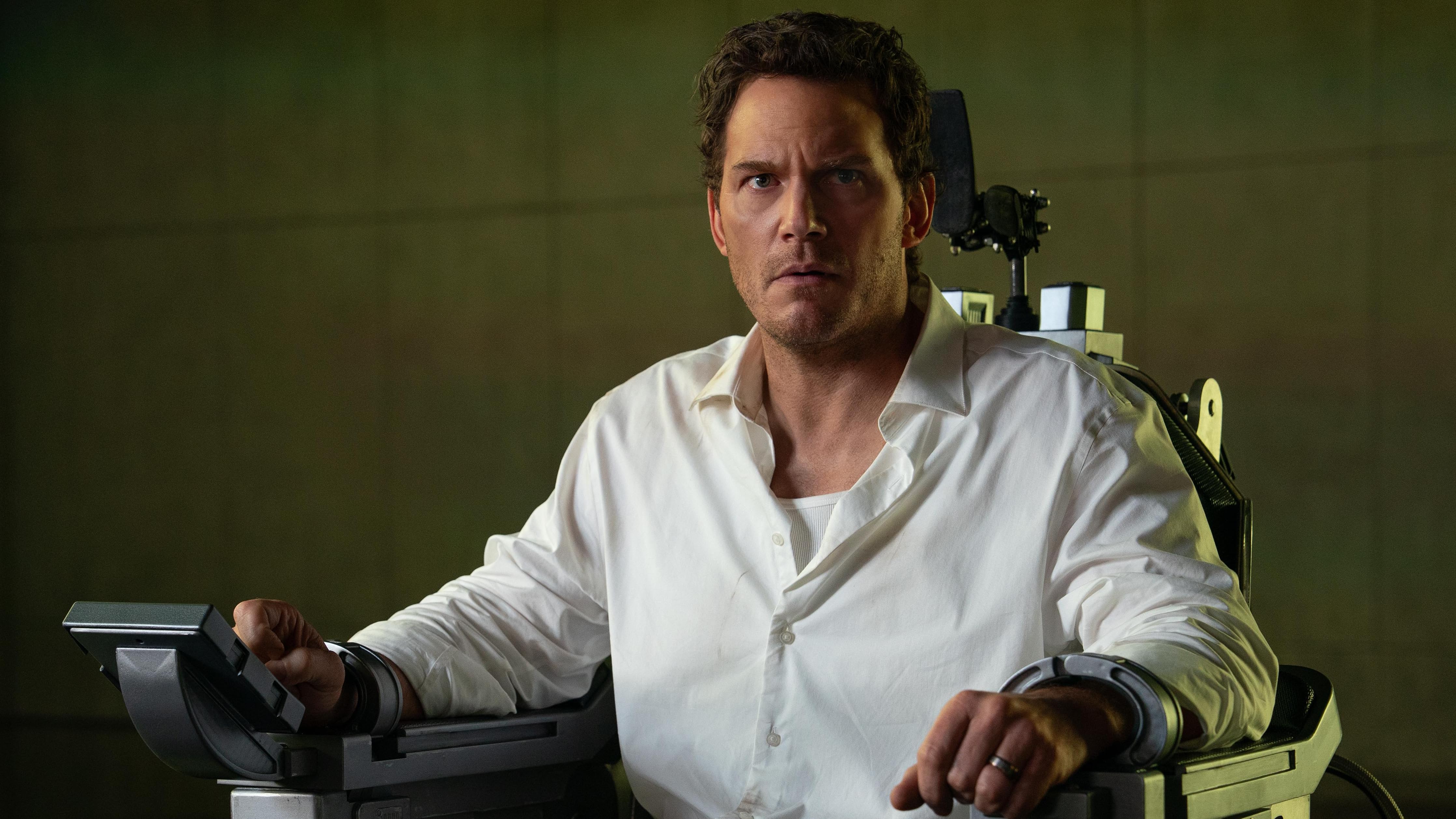
Review: Dinosaurs, you just can’t keep these prehistoric creatures off the big screen. Three years ago, much spectacle was made of the third and supposed final chapter in the Jurassic World franchise to be the one to close the curtain on a franchise 65 million years in the making. Having brought the past and the present together and stomped its way to another billion dollars at the worldwide box office, it seemed as though every last morsel of dino DNA had been extracted, and it was time to let it rest once and for all. But, in the immortal words of Jeff Goldblum’s Dr Ian Malcolm from the first film, “life finds a way”, and well, the franchise found a way to resurrect itself once more.

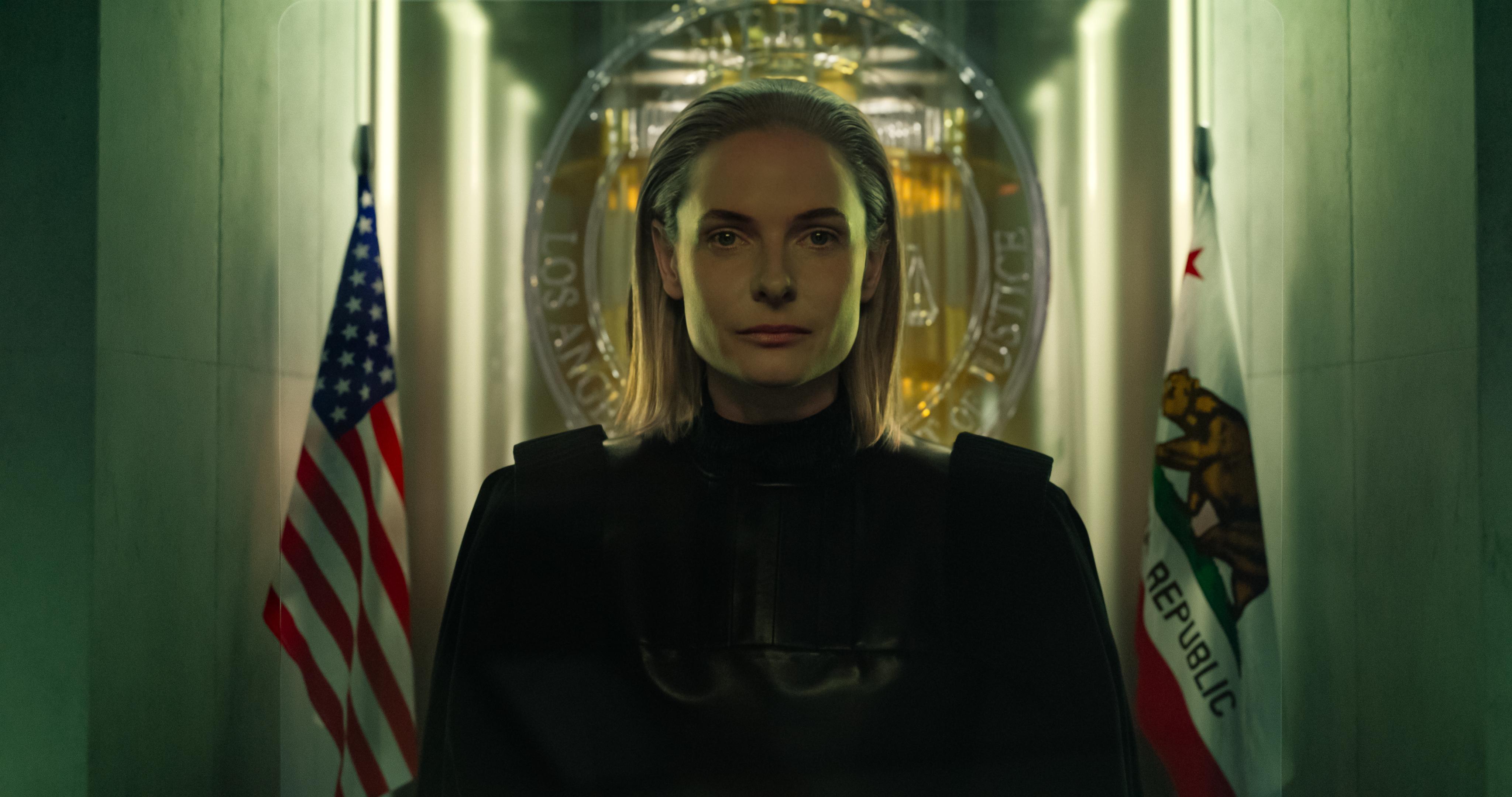
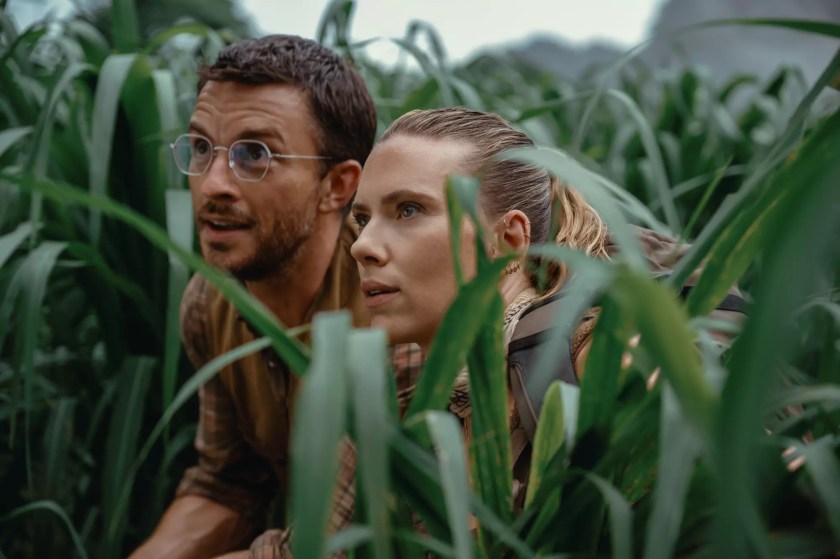
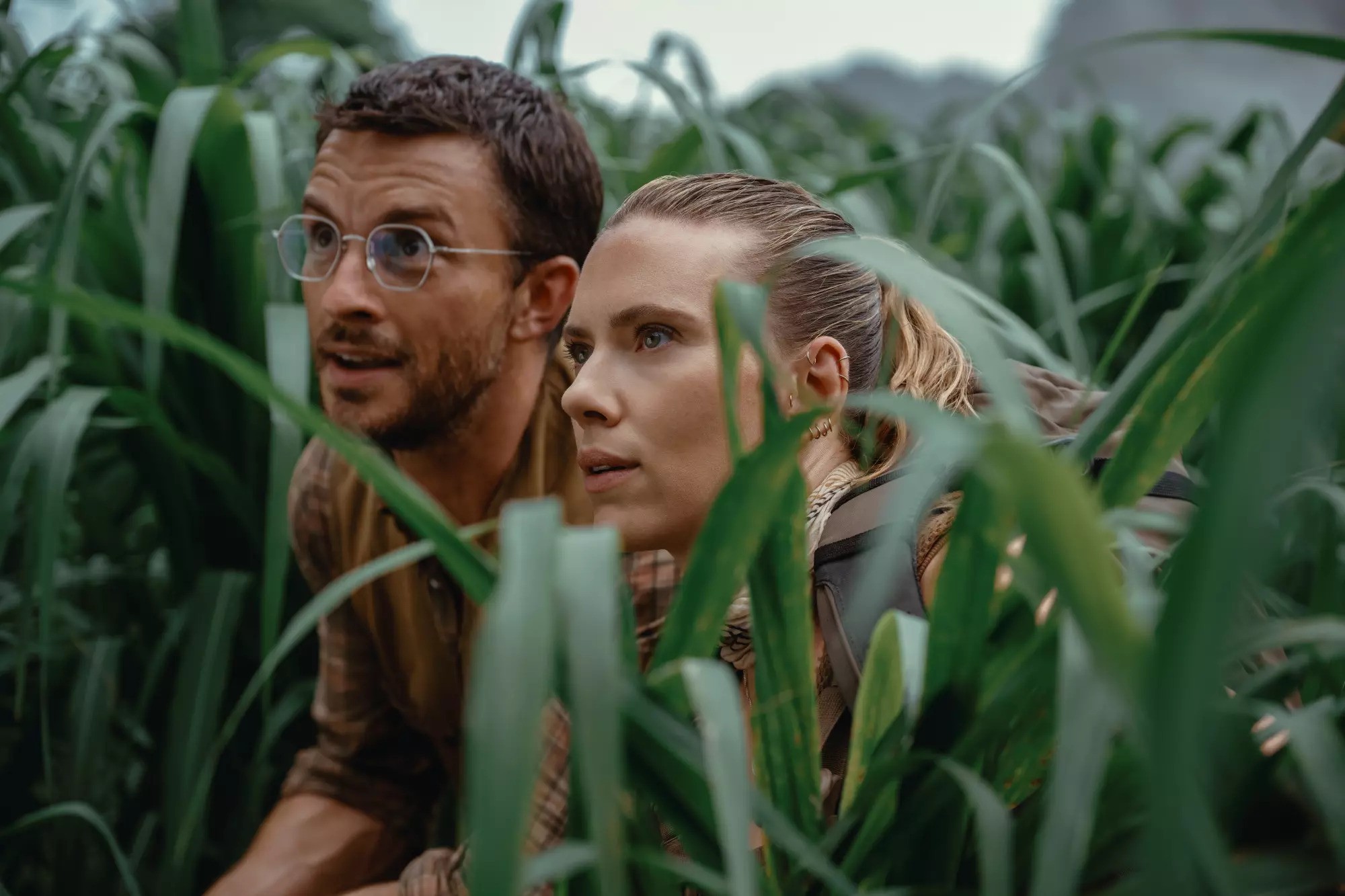
It has been five years since the events of Dominion, where dinosaurs and humanity were forced to co-exist alongside each other. However, due to climate change, the majority of the planet’s surface has become inhospitable to dinosaurs, except for a few areas around the equator. Consequently, these areas have become no-go zones for humans. It is discovered that the DNA of the creatures is the key to a potential new treatment for heart disease, which could be very profitable if brought to the mass market. Therefore, pharmaceutical company executive Martin Krebs (Friend) recruits Zora Bennett (Johansson) and palaeontologist Dr. Henry Loomis (Bailey) to lead a mission to the island of Île Saint-Hubert to retrieve these samples of dino-DNA and bring them back. Though when venturing into the land of dinosaurs, you know that things are not going to go as planned, and it becomes a desperate bid for survival.

In some ways, the subtitle of Rebirth is an apt one because the slate has been totally wiped clean in that no one from any of the previous six films shows up, even for the briefest of cameos. Given franchise films have in the past often tried to mine and utilise the nostalgia in place of telling a good story, this is a welcome development. You would think that with a whole new collection of characters, this would offer original Jurassic Park screenwriter David Koepp and director Gareth Edwards, himself no stranger to tackling films with gargantuan-sized monsters, the opportunity to take the franchise in an exciting new direction.

Alas, while there is enjoyment to be found, it is broadly more of what you would come to expect from a Jurassic adventure, with our protagonists setting off to this island to fulfil their mission, only for things to go wrong and for the dinosaurs to start eyeing up these humans as their next meal. Of course, the film also doesn’t pass by the opportunity to use John Williams’ theme from the original film for a predictable but effective blast of nostalgia, because who doesn’t get emotional hearing that incredible theme from the greatest musical maestro cinema has ever seen?

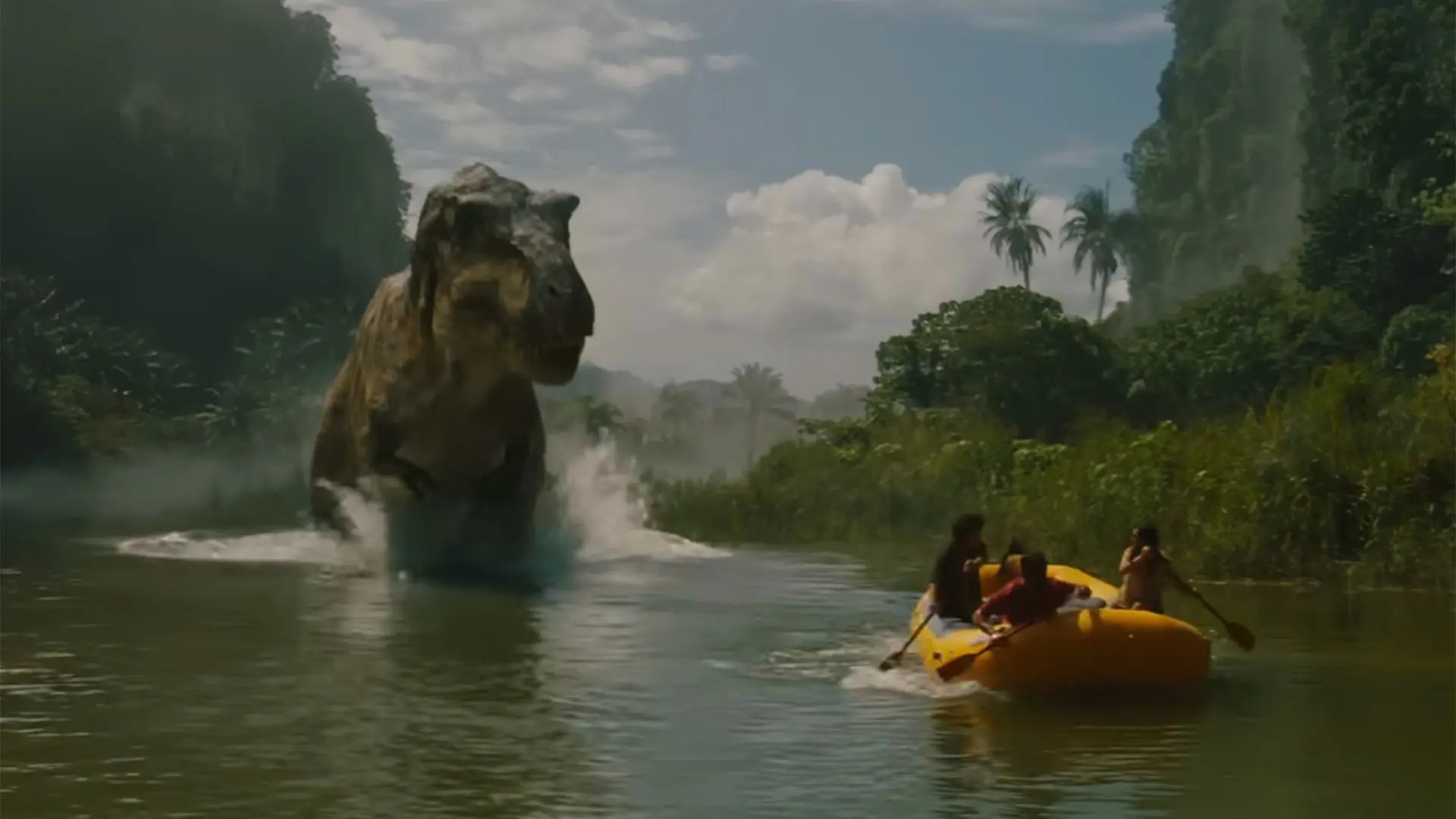
In Edwards’ capable hands, having also ventured to a galaxy far far away, the action sequences are unquestionably spliced with some Spielbergian DNA. However, they certainly get the blood pumping and the adrenaline flowing, including an enthralling sequence where the crew is in a race against time to extract the DNA from a Mosasaurus and a mission to save a family whose boat has drifted into some dino-dwelling waters. Compelling as these scenes are, such is the threadbare and minimal development of these characters that it becomes hard to be fully invested in their quest.

Even with such talented actors, like Johansson, Ali and Bailey turning in reliably solid performances, the material they are given lacks sufficient meat on its bones to make them as compelling as characters from previous films in the franchise, severely lacking in a memorable line or, indeed anything at all. You want to see them accomplish their mission and avoid a fate that has befallen many characters in this franchise. Yet, since the attachment the audience has to them is so threadbare, it is of little significance who makes it out of the island alive.

It is remarkable that in the 30 years since Spielberg first brought dinosaurs to life in a truly captivating way that will forever remain timeless, every sequel has attempted to replicate that magic, yet none have managed to accomplish that goal. The results have varied from entertaining to the bizarre sight of a dinosaur saying “Alan” to Sam Neill’s Alan Grant. While dinosaurs will always have an inherent appeal, it’s clear that this franchise has run out of fresh ideas. Given the inconsistency of the films over such a long period, perhaps it is time to consider letting it go the way of the dinosaurs once and for all.

Despite offering some entertaining moments, Rebirth fails to offer anything new and instead regurgitates well-worn tropes from previous films. A franchise that once roared has become stale, toothless and in need of fossilisation.    

Posted in 2020-2029, Film Review

The Wild Robot (2024)

© DreamWorks Animation and Universal Pictures

The Wild Robot– Film Review

Cast: Lupita Nyong’o, Pedro Pascal, Kit Connor, Bill Nighy, Stephanie Hsu, Mark Hamill, Catherine O’Hara, Matt Berry, Ving Rhames

Director: Chris Sanders

Synopsis: After being shipwrecked on a deserted island, a robot must learn to adapt to its new surroundings and is put to the test when it has to care for an orphaned baby chick…

Review: Our world is home to a diverse range of fascinating wildlife and plant life. This may sound like something you’d hear in a nature documentary narrated by Sir David Attenborough (try reading that first sentence in his voice), but as those series demonstrate, the wonders of nature can be discovered anywhere on this magnificent planet. Since the dawn of humanity, we have explored and uncovered the marvels that the natural world has to offer. Now, imagine yourself as an outsider who has never encountered these wondrous sights or experienced nature’s beauty for the first time. You are a robot programmed to assist humanity, only to find yourself surrounded by an assortment of wildlife. The challenge of assimilation and finding your place in the world is beautifully captured in one of the year’s most compelling films.

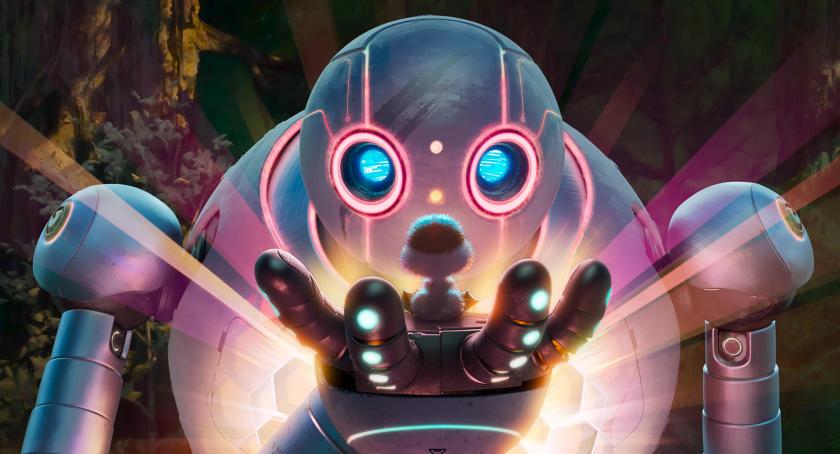
Set on an unnamed island, the Universal Dynamics ROZZUM Unit 7134 (Nyong’o) washes up on the beach after a storm. Upon booting up, Roz, as she quickly becomes known, attempts to adapt to her new surroundings and offers to assist the island’s inhabitants. Unfortunately, the locals are immediately hostile towards her arrival and reject her help. After Roz comes under attack from a frightening predator, she inadvertently destroys a goose’s nest, resulting in the death of the mother goose and leaving only a single egg remaining. Overcome with guilt, Roz decides to raise the surviving gosling, whom she names Brightbill until he is ready to join the rest of his kind for migration. Although she admits that this task is “not in her programming,” Roz becomes determined to work tirelessly until Brightbill can swim, eat, and fly, and gain the strength to take his place among his own kind.

As the relationship between humanity and machines, specifically artificial intelligence (AI), is increasingly scrutinized, The Wild Robot offers a fascinating perspective on how a robot might interact in a natural environment devoid of human presence. Adapted from the book series by Peter Brown, having beautifully brought to life the journey of one boy who learns how to train his dragon, Chris Sanders’ script delves deeper than just the exploration of nature’s struggle against AI. In this touching and heartfelt story, Roz often finds herself at odds with her programming as she works to protect Brightbill, a gosling vulnerable to other animals in their habitat. This conflict only strengthens Roz’s determination to help Brightbill gain acceptance in his community. Throughout their journey, Roz and Brightbill encounter various unique creatures, including Fink (Pascal), a sly and cunning fox with a peckish who sees Brightbill as his prey. However, Roz’s persistence and determination to raise Brightbill as her own leaves a lasting impression on Fink, and Pinktail (O’Hara) and her legion of adorable little babies.

Even if someone has never had children, anyone and everyone will be acutely aware of the difficulties and challenges that come with parenthood and raising children, because let’s be honest, we’ve all done things when we were young with the sole intention to annoy our parents. Therefore Roz’s battle to become a mother, something she has no prior experience of, will undoubtedly strike a chord with those undertaking the most difficult task any living creature could put themselves through. Though parenthood is an immensely difficult challenge, it has its own rewards and the film chooses to celebrate those as well as a pertinent reminder of the healing power that community and togetherness can bring, because as Roz herself puts it: “Sometimes, to survive, you must become more than you were programmed to be.”

Speaking of Roz, a robot is not usually the most expressive and emotional being, on account of it being a robot. It therefore takes an extremely talented actor to bring such warmth and emotion to a life form designed with one specific purpose in mind. In Academy Award winner Lupita Nyong’o, you have the perfect actor to bring those qualities and more. Nyong’o radiates warmth and compassion, even though it goes completely against what the nameless corporate bigwigs at Universal Dynamics clearly intended Roz to be. Nyong’o is the unquestioned star of the show, but she is given excellent support in a glittering voice cast from the likes of one the internet’s favourite personalities, Pedro Pascal who is equally charming and delightful as Fink. The bond between a parent and their child can be a loving one, but it is usually not without its fraught moments, and Kit Connor’s voice performance as Brightbill captures this balance of that very complex and loving relationship that develops between himself and his surrogate mother.

With the likes of Sony’s Spider-Verse films, and last year’s Puss In Boots: The Last Wish, the bar for high-quality animation has been considerably raised in recent years by breaking new ground in what audiences thought possible, as well as combining 2D and 3D styles. Sanders and the animation wizards at DreamWorks have outdone themselves here, with utterly breathtaking visuals that feel so lifelike and realistic, if you didn’t know any better, also feel like they could easily have been pulled straight from one of those nature documentaries. In an increasingly hostile and chaotic world, if an outsider like Roz can against all odds, go against her programming and find her place in the world and work with the community around her, a lesson for all of us to take heed to.

Beautifully animated, with a powerfully resonant and emotional message at its core, Roz and her array of furry friends will charm their way into your hearts and never let go. 

Posted in 2020-2029, Film Review

Borderlands (2024)

© Lionsgate Films, Summit Entertainment, Media Capital Technologies, Arad Productions, Picturestart, Gearbox Studios and 2K

Borderlands   – Film Review

Cast: Cate Blanchett, Kevin Hart, Jack Black, Edgar Ramírez, Ariana Greenblatt, Florian Munteanu, Gina Gershon, Jamie Lee Curtis

Director:  Eli Roth

Synopsis: A bounty hunter is tasked by a powerful businessman to find and rescue his daughter on an inhospitable planet…

Review: Film adaptations of video games offer filmmakers so much potential. There is no shortage of games that are developed with such scope in their world-building and their richly developed characters to represent ripe material for them to translate these incredible adventures to the big screen and introduce these stories to a wider audience. It is a fundamental aspect for anyone who sets about this task that they honour its source material and adapt it in a manner that delivers thrills for both fans of the games and wider audiences in general. Who knows, perhaps it could inspire some to pick up a controller and dive into the world on which it was inspired? While recent video games such as The Last of Us, Fallout and the two Sonic movies succeeded, Eli Roth’s adaptation of Gearbox Software’s Borderlands fails and fails miserably.

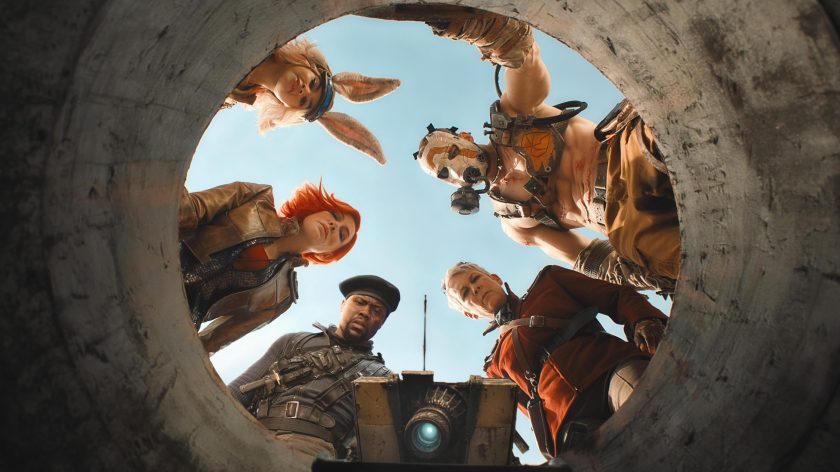
After a massive dump of exposition about the world of Pandora (sadly not that one) and why everyone in this world might be interested in this mysterious vault, we meet infamous bounty hunter Lilith (Blanchett) on some other planet whose name you almost certainly won’t remember once the credits have rolled. Lilith is approached by a powerful businessman named Atlas (Ramirez) who tasks her with finding and rescuing his daughter Tiny Tina (Greenblatt) as Tina may hold the key to unlocking whatever is being kept in this vault. Lilith reluctantly returns to Pandora to find Tina. Along the way, she encounters and joins forces with a mercenary named Roland (Hart) and the brutish Krieg (Munteau) with a rag-tag group of characters on a quest to find some MacGuffins on a quest so generic you have seen a million times before, and also done so much better. You will wish you were watching that movie and not this derivative pile of junk.

“Somewhere down here is a better script than the one we used…”

A rag-tag, oddball collection of personalities brought together by circumstances on a mission with significant consequences at stake. It cannot be denied that Roth is trying to channel the Guardians of the Galaxy vibe, with tonnes of mic-drops to boot. Unfortunately, unlike what James Gunn accomplished with his trilogy of the Galaxy’s most lovable collection of a-holes, the script, credited to Roth and Joe Crombie, does absolutely nothing to put a shred of development on any of these characters or why you should even remotely care about their mission and whether they succeed. The film, which initially went into production in 2021, later carried out reshoots in early 2023 overseen by Deadpool director Tim Miller.  Craig Mazin – the showrunner of Chernobyl and co-showrunner of The Last of Us  – later had his name removed from the project. One look at Mazin’s resume and he seems like the perfect writer to help adapt a video game franchise from the console to the screen. Yet he didn’t want his name anywhere near it. Go figure.

With a lazy and mind-numbingly boring script and painfully obvious green screen, things do not get much better when it comes to the performances. Even with ridiculously talented actors, the dialogue delivery is monotone, bland and tedious to sit through, with attempts at humour extremely juvenile and unfunny. Blanchett tries her best, but not even she can elevate this insipid material and neither can her fellow Oscar winner Jamie Lee Curtis. Kevin Hart as Roland the mercenary is completely ineffective and Florian Munteau’s Krieg comes across as an inferior, considerably less amusing version, of a certain Drax the Destroyer. Ariana Greenblatt can be thankful she has her great performances in projects like Barbie and Ahsoka to fall back on because, like just about everything else in the film, she comes across as obnoxious and annoying. Though, nothing is as nearly as annoying as Claptrap the robot, voiced by Jack Black. Clearly intended to be the comedic sidekick, he is excruciatingly unfunny and makes you wish someone would deactivate him and then blow him to smithereens several times over.

One can only speculate, but given Roth is known for his work in horror films, it could be reasonably assumed the film initally tried to go for a more R-rated tone in keeping with the source material only for the studio to stipulate that they stick to a PG-13 rating, hence the reshoots. An R-rating may have marginally improved matters, but when a film is this lazily written, shoddily edited and put together, it is beyond redeemable. With more than 77 million games sold (as of November 2022), the Borderlands games franchise is clearly doing something right. Fans of the games would be wise to stick to the world that exists on their consoles because this dull and uninspired mess deserves to be banished to the apocalyptic wasteland it came from and never heard from ever again.

Despite its talented cast, this substandard adaptation of the popular game franchise is devoid of a shred of personality and thoroughly deserves its place on the scrapheap of worst video game adaptations. A complete and total misfire. 

Posted in 2020-2029, Film Review

Kingdom of the Planet of the Apes (2024)

© 20th Century Studios, Jason T. Reed Productions and Oddball Entertainment

Kingdom of the Planet of the Apes – Film Review

Cast: Owen Teague, Freya Allan, Kevin Durand, Peter Macon, William H. Macy, Travis Jeffery, Lydia Peckham, Neil Sandilands, Eka Darville,

Director: Wes Ball

Synopsis: Many generations after the events of War for the Planet of the Apes, a young ape goes on a journey of discovery after his clan comes under attack…

Review: When the Planet of the Apes franchise came roaring back to life after a near decade of absence in 2011, it was the foundation on which arguably the best trilogy of the 2010s was built. Centred on Caesar, a genetically advanced ape who in his lifetime, rose up and led the apes in a revolution, saw his authority challenged by a rogue ape, and later led the apes into a war against the humans before he succumbed to his injuries. Portrayed by the master of motion capture by Andy Serkis, this rebooted trilogy set an exceedingly high bar for any future films. It is a bar that this new instalment swings for but ultimately falls short of matching those lofty standards.

Set hundreds of years after Caesar’s passing, apes have become the planet’s most dominant species, with humans regressing into a more primitive and feral-like state. The apes are divided into clans, with one clan developing a strong bond with eagles, including young ape Noa (Teague) who’s being prepped by his father for an important ceremony and must complete a significant ritual beforehand. However, after his clan comes under attack from a military-minded clan, Noa must go on a journey to find any survivors and establish the motivations of this combative clan. Along the way, he encounters a human (Allen), who is being hunted by the clan as they believe she is smarter than all the other humans and has crucial knowledge to access something of great significance to the clan.

Such was the enormous cultural impact of Caesar during the previous films, a list of the best characters of the 2010s would be incomplete without his inclusion. Caesar’s shadow looms large over this new generation of apes, even several hundred years after his passing. With the passage of such a long time, Josh Friedman’s screenplay takes its time to introduce the new Eagle clan and their peaceful existence, which stands in unique contrast to the more warmongering apes. The latter have taken Caesar’s teachings and misinterpreted them as a means to perpetrate violence against both other ape clans and humans. By contrast, the likes of orangutang Raka (Macon), who is fighting hard to preserve Caesar’s teachings and their true meanings. This puts Noa in a tricky position as to what he should do with this human, and whether he should trust her, or leave her to the warmongering apes.

Teague brings a likeable presence to Noa and imbues him with a sense of honour and a determination to do what is right and to honour his family and his tribe. Unfortunately, though no one else at least in his tribe is as memorable or given nearly as much development as Noa. However, as far as the other ape characters go, Macon as Raka brings no shortage of wisdom and imparts valuable knowledge to Noa as he proceeds on his journey to rescue his family, who have fallen into the servitude of the militaristic tribe and its leader Proximus Caesar (played with a blend of charisma and arrogance by Kevin Durand). His name would suggest he is a descendant of Caesar, and while he certainly echoes Caesar’s prominent “Apes. Together. Strong” mantra, Proximus is a far cry from the legendary leader he idolises. He possesses a messiah complex and is driven by the belief that not only what he is doing is right, but precisely what Caesar would have wanted the apes to do, making the audience wish the great Caesar’s ghost would reincarnate and give him a sharp and thorough rebuking.

Having done the visual effects work for the previous instalments, the craftwork on display from the geniuses at Weta is once again nothing short of extraordinary with such photorealistic visuals, it completely makes you forget that these are human actors in some rather unusual-looking suits bringing these apes to life. Unfortunately, outside of the apes, the only human character who is given a substantial amount of development is Freya Allan’s mysterious character, whom Noa and Raka name Nova (in a callback to the character of the same name from War for the Planet of the Apes). There’s an element of mystery to her, but as the film progresses and we learn more about her, certain decisions she makes are extremely perplexing and ultimately leave the audience with more questions than answers as to her motivations. The script could have fleshed these out more.

At 145 minutes, Kingdom is also the longest movie in the series to date. While this runtime is sometimes necessary to establish this world generations after the events of the previous film, it can also be to its detriment, particularly in the latter half. With this being reported as the first journey in a brand new trilogy, it has laid solid but imperfect foundations for future films to build upon. Time will tell if this new group of apes prove to be as strong or as memorable as Caesar’s remarkable journey from genetically modified ape to messianic primate.

Retaining the visual splendour of its previous instalments, Kingdom goes for some big swings with weighty themes about legacy and differing interpretations of teachings but doesn’t quite hit the heights of Caesar’s trilogy.


Posted in 2020-2029, Film Review

Dune: Part Two (2024)

© Legendary Pictures and Warner Bros. Pictures

Dune: Part Two – Film Review

Cast: Timothée Chalamet, Zendaya, Rebecca Ferguson, Josh Brolin, Austin Butler, Florence Pugh, Dave Bautista, Christopher Walken, Léa Seydoux, Souheila Yacoub, Stellan Skarsgård, Charlotte Rampling, Javier Bardem

Director: Denis Villeneuve

Synopsis: After joining forces with the Fremen in the deserts of Arrakis, Paul Atriedes vows revenge on those who conspired against his family and murdered his father…

Review: “This is only the beginning”, as those words spoken by Fremen warrior Chani (Zendaya), with Hans Zimmer’s incredible score, rang in our ears by the conclusion of the first half of this adaptation of Frank Herbert’s revolutionary 1965 novel, it was a tantalising tease of what was to come. However, it might have all been for nought, as a second film was not guaranteed due to the decision to give it a simultaneous cinematic release and a day-and-date release on streaming. With a $400m haul at the box office (a mightily impressive feat given the pandemic) and viewed by 1.9 million households in the US on its opening weekend on streaming. The audiences spoke, as did the Academy with six Oscars, and the Spice Gods greenlit a sequel. After a few delayed release dates, the time has come to return to Arrakis, and  Denis Villeneuve has again defied the odds to deliver another magnificent demonstration of desert power.

Set immediately after the events of Part One, Paul Atreides (Chalamet) and his mother Lady Jessica (Ferguson) have fled to find shelter with the Fremen after his father Duke Leto and the majority of his House were murdered in a coup orchestrated by the villainous Baron Vladimir Harkonnen (Skarsgård) aided by the Sardaukar troops provided by the Emperor Shaddam Corrino (Walken). Though Paul is determined to get revenge, he initially opts to put this to one side and seeks to learn the ways of the Fremen to gain their trust as they see him and his mother as outsiders. Meanwhile, given her status as Bene Gesserit, the Fremen give Jessica an extremely important role within their community. While Paul learns the ways of the Fremen, the work of the Bene Gesserit has convinced some Fremen that Paul is the Lisan Al Gaib or “Voice from the Outer World”. This puts Paul in a moral quandary as to whether he is the prophesied messiah for the Fremen as he simultaneously continues to have horrifying visions for what the future might lead to.

Adapting the first novel in Frank Herbert’s legendary series was always considered to be an unfilmable task, just ask David Lynch. It just goes to show that betting against Denis Villeneuve is never a good idea because he thoroughly proved all the naysayers wrong. With seriously impressive world-building to give any epic franchise of the like a run for its money, Part One immersed the audience in this universe as if you were walking on the sand dunes of Arrakis themselves. However, this was a mere prelude for what Villeneuve and returning screenwriter Jon Spaihts have in store.

Part One walked so Part Two could, like a native Fremen, ride a sandworm in tremendous style. Across 165 spice-fuelled minutes, Villeneuve and Spaiths take all the world-building and the foundations laid by the first film and turbocharge them to deliver an equally epic, but considerably darker, emotionally charged and more action-packed second chapter. Alongside Paul learning the ways, and language of the Fremen, Chani and Paul begin to develop a romance and furthermore, all-out war between the Fremen and House Harkonnen as the former works to disrupt the latter’s spice production. On another side of the Universe, the Emperor’s daughter Princess Irulan (Pugh), who is also a disciple of the Bene Gesserit, begins to grapple with the consequences of the Harkonnen’s attack on the Atreides and the part her father played in engineering their downfall.

Despite the extensive and star-studded cast, such epic franchises can live or die based on the central character at the centre of this journey. Once again, Chalamet demonstrates why he is one of the finest actors of his generation as he gives what could well be a career-defining performance. Part One was very much about Paul striving to learn from leaders around him, such as his father and others he looked up to. Now, he is very much thrust into the spotlight of becoming not just a leader of the Fremen, but something much more. Chalamet magnificently balances Paul’s desire to lead the Fremen to victory against the Harkonnens, but also shows hesitancy to embrace the path that has been put at his feet by the Bene Gesserit. Fremen leader Stilgar (Bardem) is only too eager to believe this notion of a messiah, much to Chani’s chagrin. Zendaya is thankfully given much more to do this time around, beyond the extended cameo she had in Part One. The chemistry between her and Paul, like the dunes of Ararakis,  is scorching hot, though there is a lingering doubt in her mind as to whether Paul could be this messiah-like figure and if he is willing to embrace that destiny.

Like Gurney Halleck playing the baliset, there is not a false note in any of the performances. Though out of all the new cast members, the standout by far is the ruthless and psychotic Feyd-Rautha played by Austin Butler, another actor whose rise to stardom is also on an unstoppable trajectory. The perfection of the cast’s performances is matched by the incredible work of Villeneuve and his crew. Whether it’s the roar of the sandworms or the thrum of a thumper, the work of the sound design team makes you feel these sounds with maximum force, especially in IMAX. Likewise, Greig Fraiser’s cinematography be it the bright oranges of Arrakis deserts or the harsh black-and-white palette of the Harkonnen homeworld of Giedi Prime never fails to dazzle. The VFX work once again reinforces what happens when artists are given time to perfect their craft, and of course, Hans Zimmer once again delivers another impeccable and evocative score.

It would be easy to get lost down the wormhole of lore the film throws at the audience and while it does teeter on the brink of buckling under all of the weight of said lore, one cannot deny the spectacle and visual majesty of what Villeneuve has brought to the screen. Ever since he broke into the Hollywood mainstream – with a run stretching from 2013’s Prisoners to now –  each passing film has shown Villeneuve to be a master at combining emotional human struggles, with the sort of spectacle which is absolutely worth the price of a ticket and a reminder of the sheer power that cinema can have. Villeneuve has made no secret of the impact the novel had on him in his youth and one that also changed science fiction forever. In what is an already superb filmography, this magnificent two-part adaptation will (like its source material) stand the test of time, as one of the most epic sci-franchises ever and perhaps the pièce de résistance of Villeneuve’s mightly impressive filmography so far. Power over spice is power over all, indeed.

Building on the epic foundations laid by its predecessor, this magnificent sequel is another visually majestic reminder of the unstoppable force of desert power and the force of nature behind the camera that is Denis Villeneuve.

a

Posted in 2020-2029, Film Review, London Film Festival 2023

Poor Things (2023)

© Searchlight Pictures, Film4, TSG Entertainment and Element Pictures

Poor Things – Film Review

Cast: Emma Stone, Mark Ruffalo, Willem Dafoe, Ramy Youssef, Christopher Abbott, Jerrod Carmichael, Margaret Qualley, Kathryn Hunter

Director: Yorgos Lanthimos  

Synopsis: In Victorian Europe, a young woman is brought back to life by an unorthodox scientist…

Review: The task of boiling down the filmography of any director to just one single word would be a challenge, to say the least. However, if one were to apply this challenge to the filmography of Yorgos Lanthimos’s career, the most suitable word would unquestionably be idiosyncratic. From the unique and absurdist romantic drama The Lobster, the unnerving psychological revenge thriller Killing of a Sacred Deer and a period drama unlike any other in The Favourite. Every time he steps behind the camera, the final product is alwas something unique, and he emphatically continues that streak with his quirkiest, funniest and quite possibly best film to date.

Set in Victorian times, after a young pregnant woman (Stone) commits suicide, the unorthodox scientist Dr Godwin Baxter (Dafoe), resurrects her by transplanting the brain of her still-born baby into her body. Now going by the name of Bella, a fully grown woman with all the behaviours and characteristics of a toddler, Bella is keen to grow and learn more about the world. However, Godwin or “God” as Bella affectionately calls him, wants to keep his Frankenstein-esque creation inside to study her. Yearning for freedom and autonomy from her “father”, she runs off with the sleazy and debauched lawyer Duncan Wedderburn (Ruffalo) where she becomes increasingly curious about the beautiful, mad and complicated world around her.

Adapted from the 1992 novel of the same name by Alasdair Gray, within the first few minutes, it becomes immediately apparent as to how perfectly suited the source material is to the Greek filmmaker’s quirky and unique style. Reuniting with Tony McNamara, who co-wrote The Favourite, the script balances the dark and let’s be honest, horrifying nature of Bella’s origin story with some of the blackest and outrageously funny humour, with some of the most hilarious euphemisms you will have ever heard. Seeing a character, essentially a child in the body of a full-grown woman, acting in the unfiltered manner she does, is uproariously entertaining.

She will blurt out anything and everything that comes to her mind, with no concept of manners or whether what she is saying is foul-mouthed or taboo while being blissfully unaware of the societal constraints that would have been expected of women at that time. As if that wasn’t hilarious enough, as her brain rapidly develops, the film gleefully extracts humour from the efforts of the men around her, particularly Wedderburn, from desperately trying to stop Bella from discovering herself. The film is unashamedly feminist and liberating in its celebration of empowerment and social discovery.

A bold and out-of-the-ordinary premise, featuring a character’s unique journey through the complexities of life could have completely fallen apart had the casting not been pitch-perfect. Fortunately, in Emma Stone’s hands, she rises to the challenge magnificently with one of the finest performances of her career, further reinforcing why she and Lanthimos have seemingly become each other’s muses. With her mannerisms and struggle to enunciate properly in the early stages, she expertly sells the early stages of Bella’s journey as a naïve and innocent soul who has effectively just been born. Furthermore, as the film progresses and her brain’s rapid development takes hold, to see her stifle the attempts of those around her to control her as she becomes her own woman who is firmly in control of her own destiny is endlessly satisfying.

Alongside Stone’s sublime leading performance, every member of this cast fully understands their assignments and are fully in tune with the film’s peculiar vibe. Having spent years as the calm and measured scientist in the MCU, who occasionally loses his cool and becomes a green rage monster, Ruffalo’s Wedderburn is worlds away from that. A slimy and rascally lawyer who seeks to use Bella as nothing more than an object to engage in sex to control his raging libido, only to become exasperated when her desires for education and discovery become too much for him to control is hilarious to watch. Meanwhile, Dafoe, who is no stranger to playing an eccentric scientist (albeit one is not quite so disfigured), is also on reliably excellent form with the screentime that he has.

Embracing the quirky madness of this dark and twisted fairytale (of sorts), Robbie Ryan’s cinematography visually dazzling blend of black-and-white and an extremely vivid colour palette, while regularly deploying fish-eye lenses (which is rather appropriate for this fish-out-of-water story) left the audience feeling disorientated through this fever dream of a journey through Victorian Europe. A journey that is beautifully complemented by Holly Waddington’s immaculate costume design and the production design by Shona Heath and James Price. The oddity of this odyssey from the perspective of one of the most unique characters will almost certainly rub some people up the wrong way. Yet, one cannot dispute that the world of Hollywood filmmaking is a better place with directors such as Lanthimos bringing one-of-a-kind films to the table, in every sense of the word.

Unabashedly bizarre and filled with riotous and offbeat dialogue, Lanthimos has made his most eccentric, darkest and funniest film yet, while getting a career-best performance from Emma Stone.

Posted in 2020-2029, Film Review

Avatar: The Way of Water (2022)

© 20th Century Studios, TSG Entertainment and Lightstorm Entertainment

Avatar: The Way of Water – Film Review

Cast: Sam Worthington, Zoe Saldana, Sigourney Weaver, Stephen Lang, Kate Winslet, Cliff Curtis, CCH Pounder, Jamie Flatters, Britain Dalton, Trinity Jo-Li Bliss and Jack Champion

Director:  James Cameron

Synopsis: After several years of peace, Jake Sully must do all he can when his adopted planet of Pandora comes under attack from a familiar foe…

Review: From an 80-page script drafted in 1994 to spending years crafting a constructed language and working with designers to design the world which came to be the planet of Pandora, James Cameron’s Avatar was a project long in the making. When it was finally released to the world in 2009, it became an instant cultural phenomenon, smashing box office records here, there and everywhere on its way to becoming the highest-grossing film of all time, a record it temporarily lost, but has since reclaimed after a brief tussle with the MCU. Such an accomplishment meant a sequel was inevitable, but as was the case with its predecessor, the sequel’s journey to the big screen has been beset with delays. Now, after a 13-year wait, it is finally time for audiences to return to Pandora, but was it worth the wait?

At least a decade has passed since the first film’s events, Jake (Worthington) having been permanently transferred into his Na’vi form, has started a family with Neytiri (Saldana), living peacefully raising their four children: Neteyam, Kiri, Lo’ak and Tukitrey. However, their peace is interrupted as the Sky People have returned, still desperate to utilise Pandora’s resources to save Earth. However, the mission has some added personal stakes for the humans as they are also out for revenge against Jake after he led the Na’vi to victory against them. Left with no choice, Jake and Neytiri are forced to relocate to take their family to a new region of Pandora, where they meet another Na’vi clan who, unlike the Omticaya, make their homes and livelihoods in the waters of Pandora.

When Avatar first came out, the one thing no one could deny was its utterly breathtaking visual effects combined with the pioneering motion capture technology. Combined together, these incredible feats of filmmaking brought the beauty of Pandora, its majesty, the Na’vi and the incredible array of characters which call this world home to life in a manner so vivid and fully realised, it could (almost) convince you Pandora is a planet which exists somewhere in the vast array of the universe.  Yet, having played his card of wowing audiences with astounding immersive visuals once, surely Cameron and his team of visual effects artists could not outdo themselves to create even more impressive visual effects this time around?

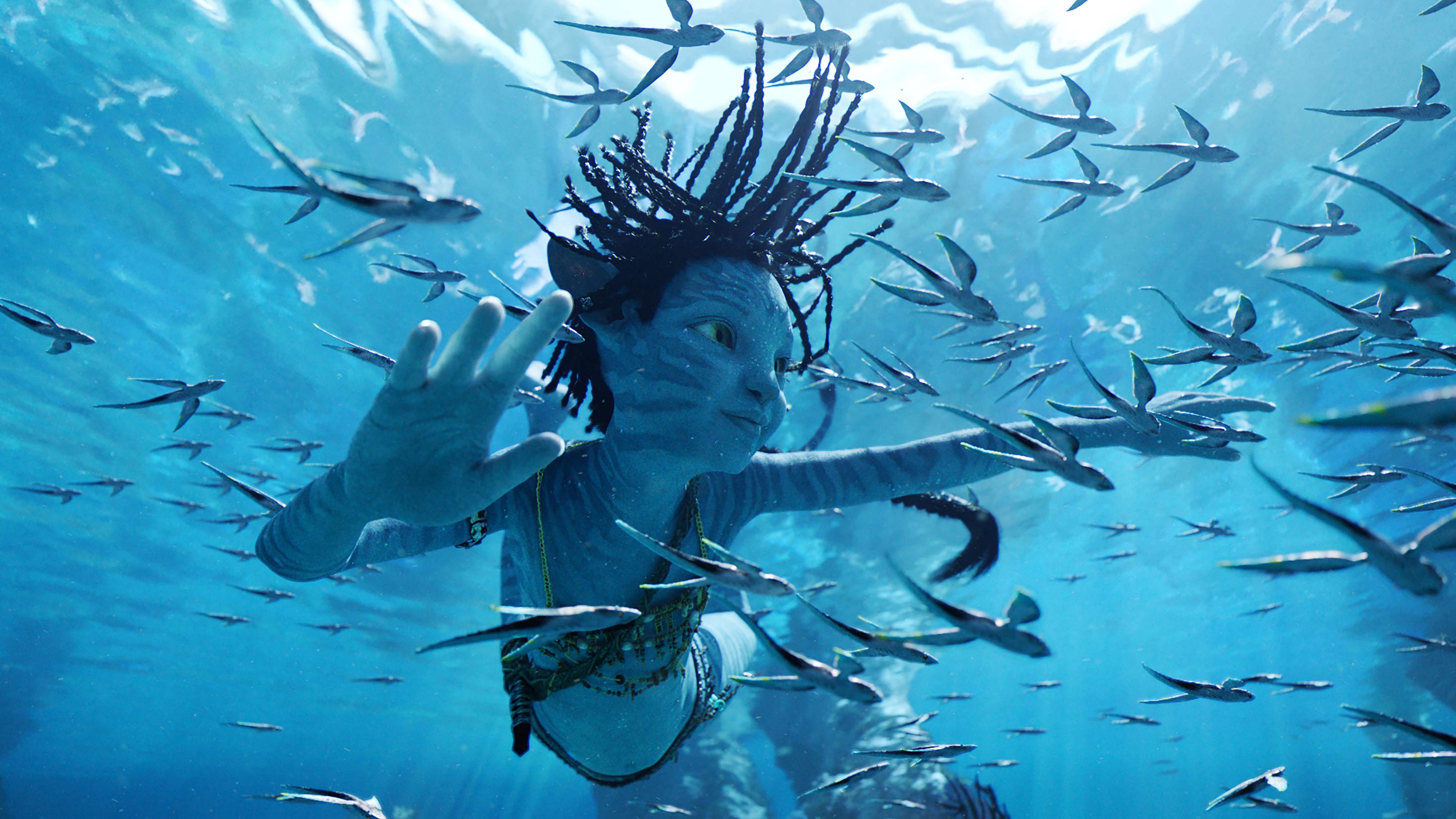
Srane (Na’vi for yes), srane they can! By taking this sequel to a whole new section of Pandora, it gives them what is essentially a whole new world to play in and the cast and crew dive (pun definitely intended) straight into the opportunity. The world of performance capture has come a long way since Avatar was released, but Cameron once again goes one better by pioneering incredible technology with visual effects company Weta, enabling the cast and crew to utilise motion capture technology, while actually filming scenes underwater. These scenes illustrate the incredible power of this technology and are so stunning and mesmerising to look at, illustrating there aren’t many better companies than Weta when it comes to crafting stunning visual effects. No words in the English (or Na’vi) language can do justice to how immaculate these visuals look on screen, and they deserve to be seen on the biggest screen you can find in order to appreciate them in all of their stunning glory. They might as well start engraving the names of the artists on the respective visual effects awards trophies now.


While the film’s visuals certainly leap off the screen, they cannot do all the heavy lifting and there’s still a need for the cast to deliver the performances required to drive the narrative forward.  The screenplay by Cameron, Rick Jaffa and Amanda Silver, by expanding our horizons of what we know of Pandora, proved to be a smart decision, not just for the technology but for the story too. It puts the characters in a difficult position where they must learn to adapt to the ways in which this water-based Na’vi clan live their lives, which is especially hard for Jake and Neytiri’s children as their lives in the forest are all they have ever known. It is through their eyes that we see this acclimatisation to the new clan and their ways unfold. Each of these young actors’ performances (Jamie Flatters, Britain Dalton and Trinity Jo-Li Bliss) shines through motion capture technology.

However, the biggest revelation here is the portrayal of Kiri by frequent Cameron collaborator Sigourney Weaver as Kiri. It might have seemed an odd choice to have the legendary actor play a 14-year-old Na’vi child, but through the magic of seemingly Eywa herself, it works wonders. Also returning from the first film (in a slightly different role) is Stephen Lang’s villainous Quaritch, now taking the form of the Na’vi to utilise their speed and strength as a weapon against them as he leads the charge for the humans in seeking revenge against Jake.

While the change in location serves the story up to a point, with the film coming in with a run time of 192 minutes, the film does struggles to justify such a lengthy run time with an imperfect second act. Furthermore, by putting the focus to such an extent on the young Na’vi children, certain important characters are relegated to bit-part roles. There is undoubtedly a familiarity in terms of the narrative, but when it is time for the Na’vi and the humans to clash once more, it remains utterly compelling and reinforces Cameron’s credentials as a master of crafting action. It might have taken a bit longer to return to Pandora than he would have liked. Still, when you have a director like Cameron in his element, pioneering ground-breaking performance capture and visual effects,  all in the name of our entertainment, you just have to take your hat off to him and say, irayo (thank you).

While it can feel a bit repetitive in terms of its story, the long-awaited return to Pandora goes to extraordinary depths with stunningly immersive visuals which surpass its predecessor, reinforcing Cameron’s reputation as a master blockbuster filmmaker.


Posted in 2020-2029, Film Review

Jurassic World Dominion (2022)

© Universal Studios and Amblin Entertainment

Jurassic World Dominion  – Film Review

Cast: Chris Pratt, Bryce Dallas Howard, Isabella Sermon, Laura Dern, Jeff Goldblum, Sam Neill, DeWanda Wise, Mamoudou Athie, BD Wong,

Director:  Colin Trevorrow

Synopsis: With humanity and dinosaurs now being forced to co-exist on the planet, the fate of both species is left hanging in the balance when a terrifying new threat to the food chain emerges…

Review: “I wanted to show them something that wasn’t an illusion. Something that was real, something that they could see and touch.” In many ways, these memorable words spoken by Richard Attenborough’s John Hammond during the original Jurassic Park film explaining his thought process for the creation of the attraction could reflect the vision of Steven Spielberg. Dinosaurs were creatures we all learned about in school and Spielberg’s genius vision for that very first film brought these magnificent creatures to life in ways that had never been previously imagined on the big screen, undoubtedly inspiring the imaginations of millions of audience members across the world. It’s a vision that, despite the best efforts of Hollywood, has never been fully replicated in spite of five films across nearly three decades.

Set four years after the events of Jurassic World Fallen Kingdom, dinosaurs are now living alongside humanity on Earth, threatening humanity’s position as the dominant species on the planet. Owen Grady (Pratt) and Claire Dearing (Howard) are trying their best to protect their adoptive daughter Maisie (Sermon) and the super-smart raptor Blue. However, upon the discovery of a horrifying new threat to the world’s global food chain, coinciding with a sinister plot by a mysterious new organisation to kidnap Blue, Owen and Clare must work together to uncover this plot and save the planet and humanity from extinction, which captures the attention of a trio of very familiar faces in Drs Alan Grant (Neil), Ellie Satler (Dern) and Ian Malcolm (Goldblum).

Ever since this franchise came roaring back onto our screens with Jurassic World, it has always delivered one thing to the best of its ability, and that is the thing that most people come to these films for: namely, the dinosaurs. While nothing will ever top the moment we saw a dinosaur for the very first time in Spielberg’s classic (especially with that iconic John Williams score) the film finds new ways to incorporate these prehistoric beasts into play. Whether it is the wonder of seeing dinosaurs for the first time, the thrill of discovering new dinosaurs, or dinosaurs escaping a volcanic eruption, the franchise has consistently delivered enthralling dino action.

With this closing chapter clocking in at 146 minutes, Trevorrow and Emily Carmichael’s screenplay does little to justify to warrant such a runtime. The first act is a little rough as it tries to juggle one too many different plot threads, with what could have been some interesting ideas getting quickly discarded. However, once it finds its feet, it delivers the exciting dinosaur popcorn fun you’ve come to expect from the franchise. The standout moment comes in a particularly thrilling chase sequence that feels like a hybrid combination of Jurassic World meets Mission Impossible meets the Bourne franchise. You could very easily pick some enormous dinosaur-shaped holes in the plot, but there is no denying that it delivers some gargantuanly fun popcorn entertainment.

While Chris Pratt and Bryce Dallas Howard once again give serviceable performances as the franchise’s leads, the franchise has some exciting new blood in the form of DeWanda Wise’s Kayla, a badass pilot who lends her skills to help rescue Blue and uncover this threat to the word’s food supply, while Mamoudou Athie also injects some exciting new blood as an employee at what is essentially InGen mark II. However, by far and away, the joyful aspect of the film is the returns of the beloved original trio of Dern, Goldblum and Neil. While Dern and Neil haven’t been seen since the franchise’s nadir (Jurassic Park III, in case you were wondering) it is so pleasing to see this beloved trio reunite once more, and especially for Goldblum’s Ian Malcolm, who is thankfully given a lot more to do this time around and once again proves himself to be this franchise’s MVP with his wit and humour.

With such a magnificent start to the franchise, it is a shame that in all the three decades since that game-changing first film, there has never been a film that has come nearly as close to recapturing that majesty, and the one who arguably came closest was Spielberg himself with The Lost World: Jurassic Park. While this closing chapter is an improvement on its predecessor, it is getting to the point where you think that they have accomplished all that they can and that now it might be time to let this franchise rest.

While the whole film could have been devoured by an unfocused first act, once it finds its claws and with the delightful return of the beloved cast of the first film, this concluding chapter to the Jurassic franchise found a way to reach an imperfect, but satisfying conclusion.

Posted in 2020-2029, Film Review

Everything Everywhere All At Once (2022)

© A24

Everything Everywhere All At Once – Film Review

Cast: Michelle Yeoh, Stephanie Hsu, Ke Huy Quan, Jenny Slate, Harry Shum Jr., James Hong, Jamie Lee Curtis

Directors: Daniel Kwan and Dan Scheinert

Synopsis: Staring at the looming possibility of her business being forcibly closed down and amid rocky relationships with her family, a woman discovers she has the ability to travel through the multiverse…

Review: Humanity has long had a fascination with the concept of the multiverse, which has often found its way into the media that we consume. Most notably with science fiction and the realm of superhero movies, particularly the Marvel Cinematic Universe. It does make you wonder, what if there was an alternative version of you living in a universe in conjunction with this mad world we find ourselves living in? How would their life be different from the one you currently have and how different their world would be compared to ours? The answers to those questions, and so much more, can be found in one of the best explorations of this concept that’s ever been put to film.

Evelyn (Yeoh) is a Chinese-American woman who owns a laundromat whilst living in a tiny cramped flat above the laundromat with her husband Waymond (Quan). Her business is currently under audit by the IRS and Evelyn is up to her eyeballs in paperwork to sift through. To make matters worse, she’s presently enduring some troubled relationships with her family. Her marriage is teetering on the brink of divorce, her ailing father (Hong) is coming to visit and her relationship with her daughter Joy (Hsu) is breaking down to potentially the point of no return. Everything comes to a head when Evelyn realises, whilst in a crucial meeting with the IRS, that she has the power to travel through the multiverse. She’s able to see the various different lives she could have led, and as it turns out, is humanity’s last hope as a grave threat threatens to destroy not just her universe, but every single universe in existence.

If you have seen the previous film from Daniel Kwan and Dan Scheinert, collectively known as Daniels, where a farting corpse discovers the meaning of life and friendship, you know to expect the unexpected. But even with that caveat, nothing can truly quite prepare the audience for the breathtaking film that they are about to experience. Effortlessly combining multiversal travel, with flawlessly executed kung-fu inspired action scenes, absurd moments of brilliant comedy and a very sincere heartfelt story sounds like an impossible job for one film to accomplish. It would be very easy for any film dealing with multiverses to get lost in the madness and for things to spiral hopelessly out of control to the point where it’s nought but an incoherent mess that has scrambled your brain. Fortunately, Daniels’ screenplay is extremely airtight. The imagination to have come up with such a brilliantly realised story is beyond impressive. However, to go into much more detail and to give away some of the hilarious jokes and gags would be a disservice to the genius of Daniels’ brilliantly bonkers vision.

Michelle Yeoh has always been a very prominent figure across a plethora of Hollywood movies, from her memorable turns as a Bond lady in Tomorrow Never Dies to her scene-stealing work in Crazy Rich Asians, but it’s usually been from a supporting perspective. So, to see her given her first leading role in a Hollywood film is so immensely satisfying, because it is what an actor of her immense talent truly deserves. Yeoh throws everything she has into this role, doing all of her own stunts, and in turn, gives the many different lives of Evelyn that we see on screen so much depth. She demonstrates just why she’s such a revered actor and Yeoh gives the performance of her career. While the film belongs to Yeoh, the work of the supporting cast must not be discounted.

Having had a very small role in last year’s Shang-Chi, Stephanie Hsu gets her chance to shine as Evelyn’s disgruntled daughter Joy and she seizes that opportunity with both hands. There is so much depth and nuance to Joy and the relationship between Joy and her mother. Ke Huy Quan, who shot to fame with his early performances in Indiana Jones and the Temple of Doom and The Goonies had been away from the acting game for a while, so it is fantastic to see him return and give such a brilliant performance as Evelyn’s goofy husband Waymond. The icing on the cake is Jamie Lee Curtis’s hilarious turn as the grumpy IRS agent who’s leading the audit into Evelyn’s business.

Regardless of the medium, an exploration of the multiverse offers filmmakers/showrunners so many possibilities. However, the film doesn’t lose sight of its core story about the importance of family and finding one’s place in the world. It gives the audience that and an enthralling ride along the way that they are unlikely to forget any time soon. Films like Everything Everywhere All At Once don’t come around too often, but when they do, they demand to be celebrated and cherished. For as long as the cinematic art form exists, films like this one are a powerful reminder of the wonder that this medium can accomplish.

Taking a plethora of genres and throwing them all into one film could have very easily backfired. However, with a career-best performance from Michelle Yeoh, this cinematic masterpiece fully lives up to its title by being hilarious, exhilarating and heartfelt all at once.

a

Posted in 2020-2029, Film Review

Belle (2022)

© Studio Chizu and Toho

Belle  – Film Review

Cast: Kaho Nakamura, Ryō Narita, Shōta Sometani, Tina Tamashiro, Lilas Ikuta, Kōji Yakusho, Takeru Satoh

Director: Mamoru Hosoda

Synopsis: When a shy teenage high school student discovers the online world of “U”, she disappears under her online persona of talented singer Bell, where she soon becomes a viral sensation…

Review: Life in the 21st-century has very much become a society where the internet and social media has become entrenched in just about every aspect of modern life. Having a presence on social media is of paramount importance, especially for younger generations. Social media can be a wonderful place, giving any individual the chance to connect with like-minded individuals and to offer an escape from the madness of the real world. While this vast digital platform does offer plentiful opportunities, it is not without its perils. For his latest film, Mamoru Hosada has crafted an exquisite piece of storytelling that examines this digital universe, whilst also providing a modern update for the tale as old as time.

Suzu is a high school student living in a rural village with her father. She has a passion for singing, but ever since an extremely traumatic incident when she was a child, she has struggled to rediscover that passion that she once had for singing and song-writing. Despite his best efforts, Suzu’s father is unable to connect with her, and their relationship has become extremely distant. When she discovers the vast virtual world of “U”, it’s a place that enables Suzu to disappear into a brand new digital world. In this world, she is able to rediscover her voice and adopts the online persona of Belle, where she quickly becomes a viral sensation with her incredible singing talent, attracting the attention of the entire population of “U”. Whilst enjoying the adulation and the spotlight, Belle discovers the mystery of another avatar, known only as The Dragon. She becomes intrigued and strives to know more about him.

The vast digital world that we have at our fingertips today is an incredible one that offers anyone a plethora of opportunities to follow and meet like-minded people and to express themselves creatively. This can be a positive outlet for people, which can help boost their creative sparks. However, it can also be an exceedingly dangerous place where people can be subjected to unspeakable cruelty and callousness. Hosoda’s screenplay is hugely ambitious in this respect, as it attempts to take a thorough exploration of both the positives and negatives when it comes to this vast digital platform. Marvelling at the power that such a digital world can do for a person’s morale, whilst simultaneously highlighting the dangers and dark sides that come with internet fame and popularity, such as trolls and cyberbullying.

However, this is merely scratching the surface of the story that Hosoda has penned. It is also a profound examination of the effect that bereavement can have on a child. Not only that, but it explores the adverse effect that this can have when it comes to a child’s creative outlets and how they want to express themselves. As if that wasn’t ambitious enough, the reinvention of the classic fairy-tale of Beauty and The Beast for a 21st-century audience, adds another fascinating layer to the story. In this world of “U”, Belle strives to understand who this beastly character is. Is he really is the terrible, and evil monster that the world of U portrays him as? Or could it be that he’s just misunderstood? With such an ambitious screenplay that has numerous different concurrent plot threads being weaved together, the film could have got convoluted very quickly. However, Hosada’s expertise shines through, and his screenplay weaves them all together in a thoroughly profound and emotionally resonant manner.

When it comes to modern animation, the technology that animators have at their disposal is so advanced that audiences have come to expect the best quality animation every time. Yet such effort takes a lot of work, and even with that weight of expectation, the work that the animation team accomplishes to make the world of “U” feels like a fully realised place is absolutely astounding. Using a perfect combination of more traditional hand-drawn animation, with CG animation, the work done by every animator is absolutely astounding. On top of which, the character designs for each of the avatars in “U” is absolutely extraordinary. From Belle’s long pink hair, to her freckles, to the extraordinary detail on the Dragon. Every character in this world feels less like they are an online persona, and more like a real person. If at the mere touch of a button, there was such a vast digital world that offers a wealth of opportunities for individuals to reinvent themselves, it’s surely an opportunity that anyone would surely seize with both hands.

 An emotional and profound examination of the wonders and perils of the digital age, intertwined with a beautiful reimagining of a classic fairy-tale. Mamoru Hosoda has crafted a stunning and heart-wrenching masterpiece.

a