Posted in 2020-2029, Film Review, London Film Festival 2022

The Whale (2022)

© A24 and Protozoa

The Whale  – Film Review

Cast: Brendan Fraser, Hong Chau, Sadie Sink, Samantha Morton, Ty Simpkins

Director:  Darren Aronofsky

Synopsis: A recluse English professor makes an attempt to reconnect with his estranged teenage daughter…

Review: Back in the early 90s and mid-2000s, there was an immensely popular actor who was beloved in Hollywood, particularly with his leading role in The Mummy franchise. He seemed like someone who would go on to enjoy a very prolific career in Hollywood. Unfortunately, a mixture of personal tragedies and a sexual assault accusation levelled against the then President of the Hollywood Foreign Press Association in 2018, led to him reportedly being blacklisted from Hollywood. Now, after many years from the limelight, Brendan Fraser is making his long overdue comeback in the most heartbreaking way possible.

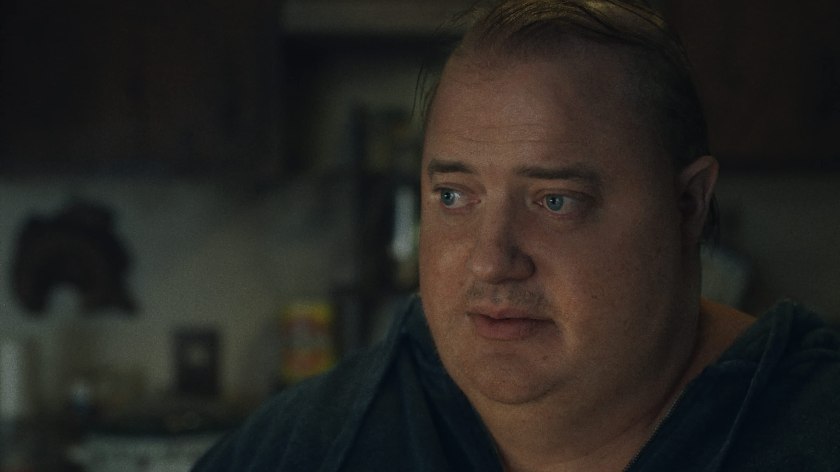
Charlie (Fraser) is an English professor who, due to a deeply personal tragedy, has allowed himself to be stricken and overwhelmed by the grief which has driven the rest of his family away. Consequently, to help him cope with the emotional torment of his situation, he has eaten to such an extent he has since become obese. He holds his classes online, with his camera off to avoid being seen by his students, which enables him to remain in his flat all the time hidden away from the rest of the world. He recognises in his condition, he may not have much time left in his life and so when his estranged daughter Ellie (Sink) shows up unexpectedly one day, he makes an attempt to reestablish a relationship with her.

Based on the play of the same name by Samuel D. Hunter, there’s always a risk when a film is set in one singular location, it will find itself unable to escape the limitations of being confined to the same four walls and hold the audience’s attention. However, when you have actors putting in phenomenal performances, especially Fraser, the film can escape that confinement. Fraser’s performance is so powerful, with every word of dialogue, you can feel the raw pain and torment within him and how guilty he feels for driving his family away. Actors being buried under piles of make-up and or prosthetics can sometimes become a distraction where this becomes the singular focus and the performance is forgotten about, but this is emphatically not the case here. The process of grieving when we’ve lost someone we love affects everyone in different ways, but for Charlie, it has left such a devasting impact on him to the point where he has accepted his fate.

While Charlie is resigned to the inevitable, there are individuals in his life who do their utmost to convince him that life is worth living. The most prominent is Liz (Chau) who assists Charlie as a nurse with his medical needs and also serves as his main source of company. While she pleads, in vain, with Charlie to seek medical treatment, she remains unwavering in her commitment to care for Charlie despite her pleas falling on deaf ears. There is Charlie’s estranged daughter Ellie, who turns up on Charlie’s door out of the blue after a long time because she wants her father’s help with her studies. It is an extremely difficult role to pull off as she understandably harbours a lot of bitterness and resentment towards her father for the significant period he was absent from her life, but Sink rises to the challenge in magnificent style.

The decision to have the entire film in a 4:3 ratio is an inspired creative choice on the part of Aronofsky. as it encapsulates both Charlie’s confinement to the four walls of his flat and his refusal to venture outside of those walls. Characters in previous Aronofsky films have often found themselves either at their moment of triumph or in some cases at their utmost lowest ebb. Given the circumstances of its main character, The Whale is definitely the latter, but through the bleakness of which Charlie finds himself, come plenty of moments of touching humanity and emotional gravity. It will be a minor miracle if you’re not at least holding back the tears by the time the credits begin to roll.

A simplistic, scaled-back story of redemption told with compassion, elevated with an extremely powerful lead performance at its core. Welcome back Brendan Fraser, we have missed you.

Posted in 2020-2029, Film Review, London Film Festival 2022

She Said (2022)

© Universal, Annapurna Pictures and Plan B

She Said – Film Review

Cast: Zoe Kazan, Carey Mulligan, Patricia Clarkson, Jennifer Ehle, Angela Yeoh, Samantha Morton, Andre Braugher, Ashley Judd

Director:  Maria Schrader

Synopsis: Telling the true story of the two reporters from The New York Times whose reporting uncovered the truth behind the sexual assault allegations that sparked a worldwide movement…

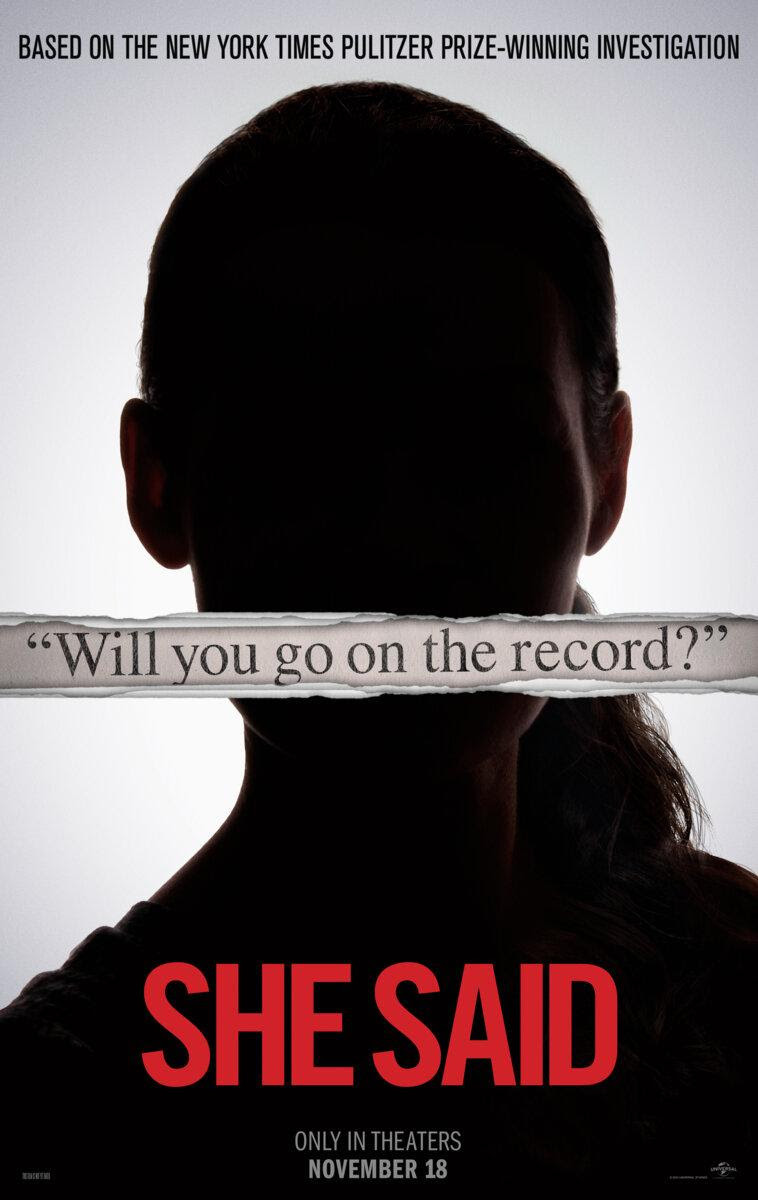
Review: 5th October 2017, a date that will go down as the day that not just the film industry, but the world changed forever. It is the date when the shocking truth behind the repeated abuse and sexual misconduct committed by numerous powerful men, most notably Harvey Weinstein, against countless women came to light in an exposé published by The New York Times. A story that sparked a global movement of women to come forward to report their own allegations against numerous high-powered individuals who used their positions of power to sexually assault women in multiple industries. However, what is not nearly as well known is the tireless and vital work done by the heroic journalists whose courageous and resolute reporting helped to spark the Me Too and Time’s Up campaigns, and ignite a much-needed conversation about sexual harassment and treatment of women the world over.

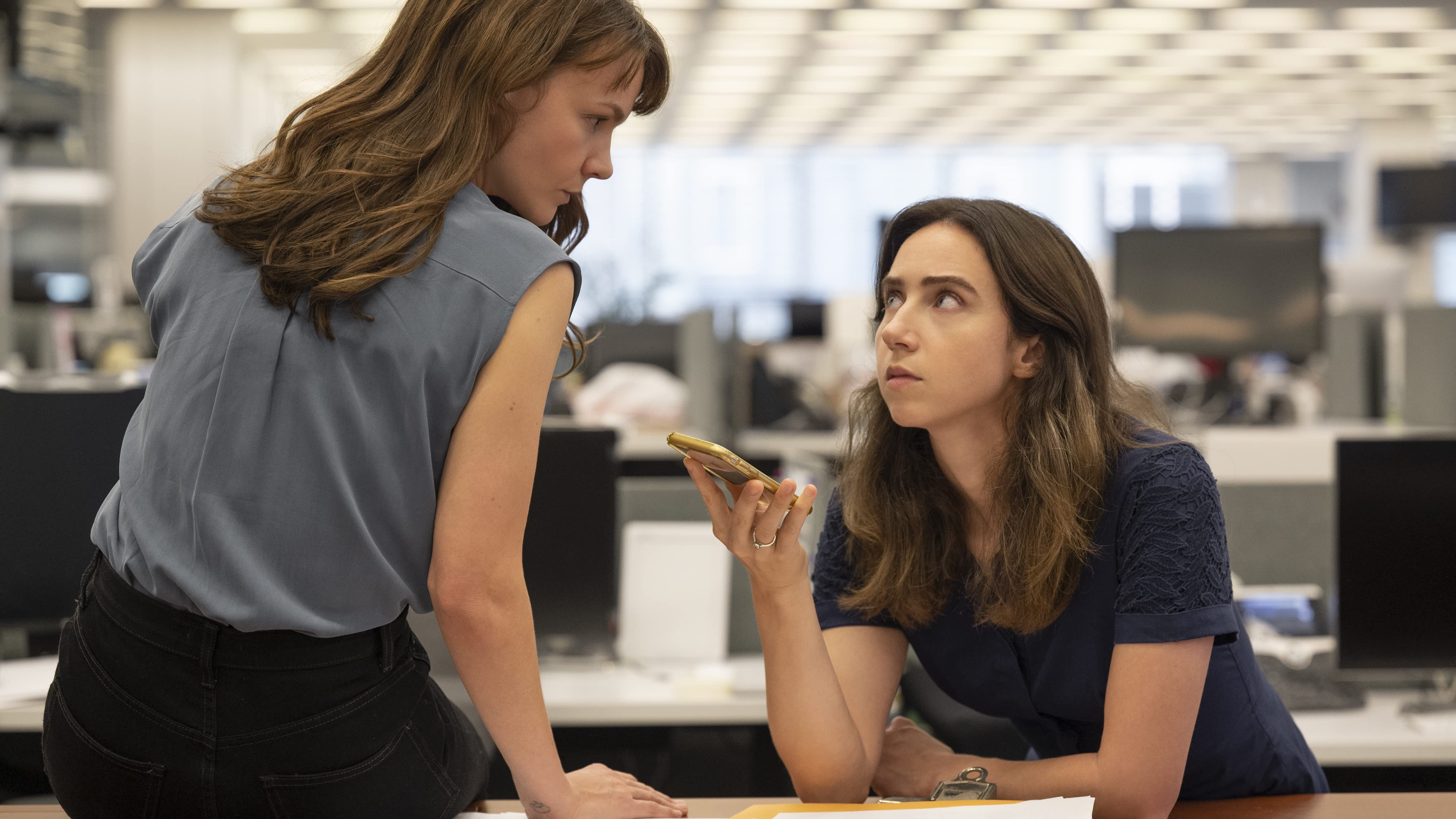
The film opens in 2016, with investigative reporters Jodi Kantor (Kazan) and Megan Twohey (Mulligan) reporting on the 2016 US Presidential election, the sexual assault allegations made against the then-Republican presidential candidate Donald Trump, and later when similar accusations against prominent Fox News TV host Bill O’Reilly came to light. Flash forward several months, and the two of them are assigned to investigate allegations of appalling misconduct perpetuated by Weinstein against several women that worked for one of his studios. The two soon uncover a shocking system that protects high-profile individuals committing these horrific abuses by bullying the women into silence, either through cash settlements or non-disclosure agreements and any attempts to publicise the story are derailed by Weinstein and his lawyers. Consequently, Kantor and Twohey become even more determined to speak to victims and attempt to persuade them to go on the record to tell their story to bring down someone whose rampant abusive behaviour had been left unchecked for decades.

Given that the rise of the Me Too and the Time’s Up Movements represent very recent history, it was of critical importance for the film to approach this story and subject matter with the utmost respect. It would have been so easy for the film to devolve into a puff piece where the reporters pat themselves on the back for a report that brought to an end the system abuse by a man who was regarded as one of the most powerful producers in Hollywood, but Rebecca Lenkiewicz’s screenplay (based on the book: She Said: Breaking the Sexual Harassment Story That Helped Ignite a Movement by Kantor and Twohey) is having none of it. In a similar manner to the Oscar-winning Spotlight, the film expertly walks the line between demonstrating the pain-staking work that went into the investigation, and the effect that such work has on the personal lives of these journalists, whilst paying tribute to these courageous victims who came forward to speak out and help bring down someone who wrought so much devastation on the lives of countless women.

Kazan and Mulligan are both exceptional as the journalists at the centre of this investigation. As their investigation progresses and they uncover more and more evidence through speaking to these witnesses, the emotional weight of the horror that these people experienced, begins to take a hefty toll, especially when it comes to their personal lives. However, they remain undeterred, because they know the importance of the work that they are carrying out and amid the threat hanging over them that Weinstein might bury the story before they have a chance to publish. The supporting performances of everyone most notably Samantha Morton, Angela Yeoh, Jennifer Ehle, and Ashley Judd, the latter of whom plays herself, help ground the film in reality and provide a significant amount of emotional heft as they recount the horrific nature of their experiences.

Nicholas Britell’s stripped-back score captures the gravity of the situation and when necessary shifts gear to the urgency of the reporters attempting to get their story into the public domain. The work of the Me Too campaign is an ongoing struggle, and much more work will need to be done. However, the brilliant work of Maria Schrader and her predominantly female crew represents another timely reminder of the importance of investigative journalism, and the hugely essential stories it can bring to a global audience, stories that may well have never seen the light of day had certain people got their way. But it is much more than that, it is also the essential fact that when it comes to telling these stories, it is imperative that the voices of women come to the fore when telling these stories. It is a testament to those who would not let themselves be intimidated, and who raised their voices when it mattered the most.

Emotionally riveting, with compelling performances across the board in a vitally important film that pays tribute to journalistic integrity and the extraordinary combined with the bravery of those who came forward to spark an incredibly important movement.

a