

Posted in 2020-2029, Film Review

Sinners (2025)

© Warner Bros Pictures and Proximity Media

Sinners – Film Review

Cast: Michael B. Jordan, Hailee Steinfeld, Miles Caton, Jack O’Connell, Wunmi Mosaku, Jayme Lawson, Omar Benson Miller, Li Jun Li, Delroy Lindo

Director: Ryan Coogler

Synopsis:  Looking to leave their troubled lives behind them, twin brothers look to start a news business in their hometown. However, they soon discover that a sinister presence is waiting to welcome them back…

Review: Ever since Ryan Coogler made his directorial debut with the harrowing Fruitvale Station, his career has only gone from strength to strength. A fantastic re-invention of the Rocky franchise and leaving his mark on not one, but two Marvel Cinematic Universe films. The first of which became the first MCU film to win Academy Awards, and the latter was made in the most unimaginably difficult circumstances following the tragic passing of Chadwick Boseman. Throughout Coogler’s journey to becoming a household name, Michael B. Jordan has been with him every step of the way. Their fifth collaboration takes them both into uncharted territory, a pulsating edge-of-your-seat descent into the supernatural world of horror.

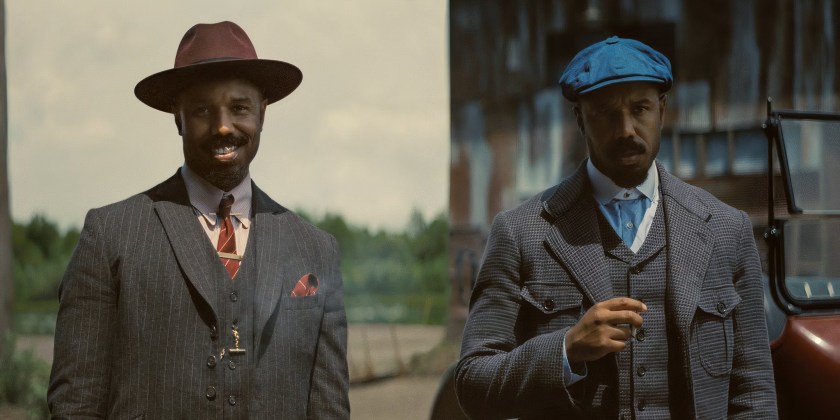
Deep in the Jim Crow south of the United States, twin brothers Smoke and Stack (Jordan) have returned home to their home town of Mississippi after working as prohibition gangsters in Chicago for a certain Al Capone. Upon their return, they set about acquiring a property and turning it into a juke joint, while simultaneously seeking to drum up interest among the town’s residents ahead of the opening night. With the opening night in full swing, the drinks flowing and the blues music ringing out, it soon becomes clear that there is an ominous and foreboding presence terrorising certain members of the community. Over the course of one night, what started as a party becomes a desperate and bloody fight for survival against this menacing threat.

Double Michael B. Jordan trouble…

Now, depending on what marketing material you might have seen, you may or may not be aware of the exact nature of this supernatural threat. So, for the benefit of those who may not know, the nature of the evil threat at the centre of this shall remain a mystery. He may have worked within the confines of the well-oiled MCU machine for his last two films, but there was never any doubt that Coogler stamped his authority over those two films with deeply personal and powerful themes that resonated with audiences worldwide. A delve into the world of the supernatural, and this mysterious presence that is terrorising this town, is also very well-trodden. However, an effective combination of richly developed characters, some truly soulful blues music and an impeccably well-shot and designed film that hooks its teeth into you from the outset and never lets up. Coogler’s screenplay is patient, bides its time to build up these characters, establish the key relationships, and what makes each character tick. You come for the supernatural element, but Coogler once again brings layers and richly explored themes to his story, ahead of a very tense and enthralling showdown at the brothers’ juke joint, where the blood flows in plentiful supply.

Through his collaborative partnership with Coogler, Jordan has portrayed characters ranging from the tragic to the motivated to one of the MCU’s most fleshed-out and ruthless villains. In a year where we have already seen an actor play two different roles, or another actor playing cloned versions of himself, Jordan takes the crown for the most effective use of one actor to play numerous characters. The differences are subtle, with Smoke being more refined and calmer than the brash Stack, yet both retain an intimidating presence. Cross them at your peril. The rest of the ensemble are all sublime in their roles too, from Stack’s ex-girlfriend Mary (Steinfeld), Smoke’s former lover Annie (Wunsu) with whom he shares a painful and tragic past, and Delta Slim (Lindo) a musician with a penchant for drinking who brings a surprising amount of humour.


However, aside from the twins, the centrepiece of this riveting story is Miles Caton’s Sammie Moore, a local preacher’s son, and the twins’ cousin. A fantastically gifted musician and singer, though his father warns him about the temptation of playing music is akin to “dancing with the devil”, with the power to conjure spirits. Sure enough, such is Sammie’s power and fantastic talent, the presence lures the evil presence to the party, led by the sinister Remick (O’Connell). Yet, Sammie remains undeterred and lets his passion for the music shine through in his performances of several songs before the epic showdown at the brothers’ juke joint. It is an incredibly confident and assured performance, all the more impressive considering it marks his acting debut. You would be wise to remember the name.

It would be easy for Coogler to establish this as a supernatural battle of good vs evil, but weaving the music and the celebration of the impact that music had on the culture of the time is a critical aspect of the story that unfolds across the 147-minute runtime. Aside from Caton’s incredible vocal performances, regular Coogler collaborator Ludwig Göransson once again delivers a vibrant and memorable score heavily inspired by the Blues music of the period and his personal connection to the genre, in the shape of his blues guitarist father. The production design by Hannah Bleachler and Ruth E. Carter’s costumes expertly transports us to the time period, captured in all their glory by Autumn Durald Arkapaw’s fantastic cinematography, which demands to be seen in IMAX.

At a time when Hollywood is grappling with several threats, not least of which being the risk to originality and creativity, Sinners is a reminder of the kind of brilliance that can be brought to the table when singular filmmakers like Coogler are given the full backing to realise their vision. When the results are this spectacular and a complete feast for the eyes and the soul, it is enough to convince you to go dancing with the devil every day of the week.

An exhilarating and blood-spattered supernatural descent into horror that ups the stakes with thematic examination of US history, soulfully stirring music and a cast firing on all cylinders. Ryan Coogler has firmly established himself as a true modern visionary director.

Posted in 2010-2019, Film Review

Little Women (2019)

Image is property of Columbia Pictures, Regency Enterprises and Sony Pictures

Little Women – Film Review

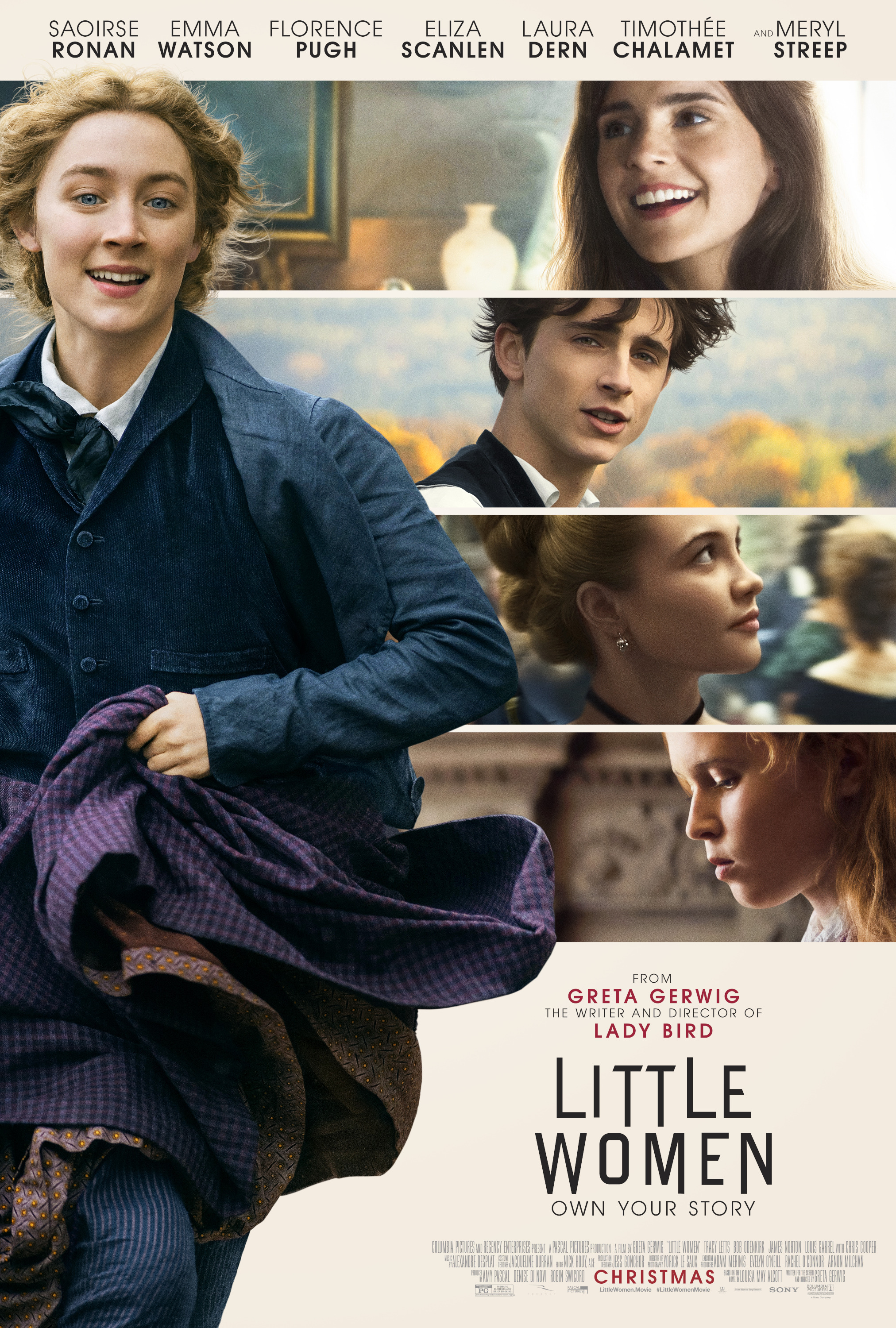
Cast: Saoirse Ronan, Emma Watson, Florence Pugh, Eliza Scanlen, Laura Dern, Timothée Chalamet, Meryl Streep, Tracy Letts, Bob Odenkirk, James Norton, Louis Garrel, Chris Cooper

Director: Greta Gerwig

Synopsis: Telling the lives of the March sisters as they navigate the transition from adolescence to adulthood in a post-Civil War USA…

Review: After the storming success of her unique and original debut film, which added her name to the select few women to have been nominated for an Oscar for directing, the world was the oyster for Greta Gerwig. For her sophomore feature, she would have likely had the green light to make anything that she so desired. Therefore, to give the beloved novel by Louisa May Alcott another adaptation seemed to be unnecessary. However, Gerwig has taken on this adaptation and breathed new life into this beloved story, in magnificent style.

In a post-Civil War United States, we meet the March sisters: Jo (Ronan), Meg (Watson), Amy (Pugh) and Beth (Scanlen). We see their lives from two different time periods, firstly in a post-Civil War setting, mixed in with flashbacks to their time spent growing up together in Massachusetts. Jo is determined to make her own way in the world to pursue a career as a writer, Amy wishes to become an artist, Meg dreams of becoming an actress, and Beth aspires to be a musician. They assist their mother (Dern) in any way they can while their father is away fighting in the war. Growing up, the sisters spend a lot of their time together, supporting their mother in any way they could, as their lack of money meant that luxuries were extremely hard to come by.

Straight away, the chemistry between the four sisters leaps off the screen. There is a warm feeling that comes off in the relationships that they have with each other. Their chemistry feels very sincere and genuine, which is a credit to the talent of the actresses playing them. As anyone who grew up with one or more siblings will tell you, they love and care for each other. Yet, at any given moment, that can flip on its head, and that love can turn to loathing. Every member of this cast delivers delightful performances, from Meryl Streep’s hilarious turn as their snidey (but hilarious) Aunt, to Laura Dern as their steadfast and extremely patient mother, to Timothee Chalamet as their childhood friend, who becomes the man that they all would dream of marrying.

However, the stars of the show (as they should be), are the titular little women, the March sisters. Gerwig’s screenplay explores in great detail the pressures that women like the sisters would have faced during that time period. Finding themselves in a position where they would love nothing more than to follow their hearts, but they are frustrated due to the constraints that society placed on women at the time. The strength of the screenplay ensures that Gerwig gives each of her stars excellent material to work with. It enables each of their personalities to shine through, and though each of them all give a sincere performance, the performances by Saoirse Ronan’s Jo and Florence Pugh’s Amy shine the brightest.

The score by Alexandre Desplat is befitting of the warm and delightful ambience that the film generates. Similarly, Jacqueline Durran’s wonderful costumes perfectly illustrate the calibre of such an esteemed, Oscar-winning costume designer. The film adopts a non-linear approach to its storytelling, which can perhaps be a little jarring at first to any viewers who may be unfamiliar with the source material. It’s a testament to Alcott’s novel that it can still resonate with people over a century and a half after it was first published, proving it to be a timeless piece of storytelling. Furthermore, it has proved to be a springboard for a talent like Greta Gerwig to adapt it once again for the big screen so beautifully. She retains those powerful core messages that will especially resonate with everyone, regardless of their gender, but especially for women who grew up with sisters.

One might have argued that this beloved novel did not need yet another adaptation. However, a terrific ensemble cast led by Ronan and Pugh, combined with Gerwig’s excellent screenplay, ensures that this latest adaptation will charm its way into your heart.

Posted in 2010-2019, Film Review

Mary Queen of Scots (2018)

Image is property of Working Title, Focus Features, and Universal Studios

Mary Queen of Scots – Film Review

Cast: Saorise Ronan, Margot Robbie, Joe Alwyn, David Tennant, Guy Pearce, Gemma Chan

Director: Josie Rourke

Synopsis: After the death of her first husband, Mary Stuart returns to her Scotland where she is crowned Queen,  posing a threat to the crown of her cousin, Queen Elizabeth I…

Review: The time of the Tudors was, as perhaps its most well known ruler Henry VIII is any example, an interesting period in history. Squabbles with the Pope and the Catholic Church, half a dozen different wives for one particular monarch, a few hundred Protestants being burnt at the stake for another, and quite a few people literally losing their heads. An interesting period then for a director who has a wealth of theatre experience, Josie Rourke to make her cinematic debut, and it’s a transition one she makes remarkably well.

In this period piece however, we focus on the final monarch of the Tudor dynasty, Elizabeth I and specifically her struggles that she endured when a younger Queen, namely Mary Stuart, arrives in Scotland and poses a very serious challenge to the English throne. Mary, meanwhile has her own problems to deal with as being a Catholic, some do not approve of her religion and hence do not see her as being the rightful ruler. And so begins a power struggle, with the two Queens competing to rule.

Being the regal women that they are (both in life and in this film), Saorise Ronan and Margot Robbie are both on excellent form as Mary and Elizabeth respectively. Ronan brings a real fiery feminist nature to her portrayal of Mary, fierce but determined to succeed when there are men, such as John Knox (an excellent David Tennant) who view her with pure contempt due to her Catholic faith, not to mention her gender. For Robbie, she is not quite as fierce as her Scottish counterpart, but she possesses some steely determination when, with the years passing, her inability to produce an heir to her throne, start to take their toll.

The screenplay by Beau Willimon of House of Cards fame does take a little bit of time to get going in the initial stages, but when it gets going, it successfully weaves politically scheming and conniving, mixed in with some romantic drama and political squabbling. That being said, what with there being so much history in the period of Elizabeth I alone, the film tries to cram a substantial amount into its run time, which can leave things feeling a little uneven in terms of its story. Rourke’s direction is remarkably confident for someone making their cinematic debut, and she clearly shows that she has the talent to further her career as a film director.

When bringing any period piece to the screen, it’s imperative that the costumes and production design are resplendent and both are equally so, with Alexandra Byrne’s costumes especially going some way to add that extra layer of authenticity. Their brilliant work is complimented by the gorgeous cinematography provided by two time Oscar nominee John Mathison. For sure the film takes some liberties with its source material, but so long as it serves the story, which in this case it does, then all the better for it. Given the times we are living in, the film reminds its audience, that women, no matter who they are, where they come from or what time they lived in, deserve to have their voices heard.

Offering an intriguing look at the workings of Tudor politics, mixed in with two excellent performances from its leading ladies, ensures that this biopic packs some royal ferocity.

Posted in 2010-2019, Film Review

The Favourite (2018)

Image is property of Fox Searchlight and Film4

The Favourite – Film Review

Cast: Olivia Colman, Rachel Weisz, Emma Stone, Nicholas Hoult

Director: Yorgos Lanthimos

Synopsis: In 18th Century England, with the country at war with France, a frail Queen (Colman) relies on her confidante (Weisz) to run the country. However when a new woman (Stone) arrives at court, a battle for the Queen’s attention ensues.

Review: If you encounter someone who complains about Hollywood becoming too dominated by superheroes, reboots , prequels etc., you should encourage them to seek out the filmography of Yorgos Lanthimos. If you are after something unconventional, he is your man. Eccentric to the extreme, having dabbled in a dark love story, and a wholly unique spin on the classic revenge tale. Now Lanthimos takes his idiosyncratic style to the realm of period dramas, and combines it with some very dark comedy, and a riotous romp ensues.

At the centre of this royal feud is Queen Anne, who is in rather poor health at this moment in time that means she finds it difficult in terms of being the Queen and governing her country. Instead, the Queen likes to fill her time with some rather obscure past-times so her confidante Lady Sarah is effectively ruling in her stead. This is until a new arrival at court, Lady Sarah’s cousin Abigail arrives seeking employment to turn around her own fortunes, and gain favour with the Queen, giving rise to a feisty battle between the two women to be the Queen’s “Favourite.”

Though not written by him, this feels of similar ilk to Lanthimos’s previous filmography, simple because of how out of the ordinary it is, Downton Abbey this most certainly isn’t. Telling a story in chapters is nothing new, but it’s done in a manner that feels extremely innovative. The screenplay by Deborah Davis and Tony McNamara packs in a copious amount of expletives which go hand in hand with some very sharp and witty dialogue that just works so fluently between these engaging characters who seem to be continuously scheming. There are more than a few extremely humorous exchanges that should get those laughter muscles moving.

Though every member of this cast are on top form, including a brilliant turn from Nicholas Hoult, it is the performances of the three central women that are by far the standouts. Colman as Queen Anne is delightful when she wants to be, screaming at those who dare look at her. Yet she is at other times melancholic, given the tragic nature of her past. As the Queen’s confidante/lover, Sarah can be a bit bossy when push comes to shove, but Weisz plays her so brilliantly that you sympathise with her in what she is trying to do. It is however the fierce rivalry that ensues between Lady Sarah and Emma Stone’s Abigail that is the driving force of this story. This is a far cry from her work in La La Land, but Stone takes to this role like a duck to water, and just bosses it from the moment we are first introduced to her, after she has fallen face first into a pile of mud.

As he demonstrated with his previous films, Lanthimos brings a very unique visual style to this film which includes a considerable use of wide shots. The gorgeous cinematography provided by Robbie Ryan only adds to the visual flair of the film. No expense was spared when it came to the production design or the costumes as both are just absolutely exquisite, very befitting for a Queen mind you. Though the film does start to lose its way a little bit in and around the third act, it is only dips momentarily. Lanthimos is certainly different in terms of what he brings to the big screen. While different doesn’t always mean great, it has just the right amount of idiosyncrasy that makes it such a riot to watch.

Raunchy to the maximum, but an extremely witty screenplay with a trio of terrific performances from its leading ladies cement this as a period drama that revels in its eccentricity.