Posted in 2020-2029, Film Review

Materialists (2025)

© 2AM, Killer Films, A24 and Stage 6 Films

Materialists – Film Review

Cast: Dakota Johnson, Pedro Pascal, Chris Evans, Zoë Winters

Director: Celine Song

Synopsis: In the hustle and bustle of New York City, a matchmaker finds herself torn between a wealthy and charming financier and her ex…

Review: What if two people who at one time in their lives were deeply in love and were seemingly destined to be together, only for their trajectories to split? This was the philosophical question that beat at the heart of Celine Song’s reflective and heart-achingly beautiful directorial debutPast Lives, and how those two people reckon with what might have been had their lives taken a different direction. Love is very much at the centre of her follow-up, grounded in the world of dating and matchmaking, with the vibrant and lively atmosphere of the city that never sleeps again serving as the backdrop.

Lucy Mason (Johnson) is a self-proclaimed “eternal bachelorette” matchmaker working for ADORE, providing dating services for high-paying clientele. She has seen incredible success in her career, having matched nine couples who tied the knot. However, she insists she won’t walk down the aisle herself unless she meets someone wealthy. At a client’s wedding, she encounters the groom’s brother Harry (Pascal) and also runs into her ex-boyfriend, John, who works as a waiter for a catering firm while trying to become an actor. Lucy faces a dilemma between starting a promising new relationship with Harry or rekindling the romance with her old flame.

As was the case with her directorial debut, Song delves much deeper beyond the surface of what one might expect from a typical romantic comedy where two souls meet and fall in love with each other. This is encapsulated through an unconventional opening scene that is bound to catch some people off guard, yet it completely illustrates the nature of the story. Humanity’s age-old adventure to find connection, passion, romance and the hope of finding the special person we would like to fall head over heels in love with and wish to spend the rest of our lives with. Sometimes it’s a case of being in the right place at the right time and everything falls effortlessly into place.

However, in the modern world, finding a partner often reduces to persistent scrolling through apps, all in the hope of discovering that elusive dream match. But what truly defines the “perfect someone”? Is it their job, height, hobbies, or the music they listen to? Or perhaps even more specific criteria than that? The dating world is competitive and cutthroat, where everything on a profile has to be flawless in a world where people are filled to the brim with flaws and imperfections. Can a matchmaker really effectively use these various criteria to connect individuals with their ideal partners? This is the central question that Song addresses with unwavering honesty.

Johnson is an actor whose choice of projects (as she herself will tell you) has left a lot to be desired in recent years. It was clear that she had talent, but just needed the right script, and with those aligning, she gives one of her best performances as Lucy. Working in the field of matchmaking requires someone to be cool, calm and collected and the ultimate professional, even when dealing with picky and demanding clients. However, she remains unflustered in her attempts to find partners for that “check all the boxes”. Yet despite her success, she struggles to find the right partner for herself, even when someone as charming and downright handsome as Harry enters her life and goes out of his way to woo her. Pascal makes full use of his limited screentime and brings effortless suave and smouldering good looks. John may not have the same level of wealth as the other man trying to win Lucy’s heart, but Evans also brings charisma and charm aplenty.

When depicting love triangles on screen, human nature often leads us to root for one side to prevail over the other. However, Song’s script takes a balanced approach and allows the audience to understand the perspectives of all parties involved. It would be easy to assume Lucy would go for the man who has all the wealth in the world, but it is considerably more nuanced and complicated. There is, however, a subplot featuring one of Lucy’s clients, Sophie (Winters), which highlights the challenges and all too real dangers women, in particular, can face when dating a male partner and the risk of that partner getting abusive and or violent. While this may hit too close to home for some, it needed to be addressed, and more screentime could have been given to exploring this peril of the dating minefield.

It doesn’t quite pack the emotionally devastating punch as Past Lives, but take nothing away from what Celine Song has achieved. With only her second film, here is a director quickly gaining a reputation for bringing thoughtful and mature romances to the screen. Stories filled with resonant storytelling that make us pause and reflect on our lives, the people we love, and how do we possibly go about finding the one we are looking for in such a crazy, chaotic world where people are motivated by money and material possessions? A universal struggle that humanity has been grappling with throughout the aeons of human history, even for folks as mesmerisingly attractive as its three leading characters.

Bolstered by three excellent performances from its bewitchingly beautiful cast, Materialists offers a sincere and unflinching look at the complicated maze of online dating and humanity’s eternal quest to find romance in an increasingly avaricious world.

Posted in 2020-2029, Film Review

The Fantastic Four: First Steps (2025)

© Marvel Studios

The Fantastic Four: First Steps – Film Review

Cast: Pedro Pascal, Vanessa Kirby, Ebon Moss-Bachrach, Joseph Quinn, Julia Garner, Natasha Lyonne, Paul Walter Hauser, Ralph Ineson

Director: Matt Shakman

Synopsis: On a retro-futuristic parallel Earth, the Fantastic Four must defend the world against the sinister planet-eating threat known as Galactus…

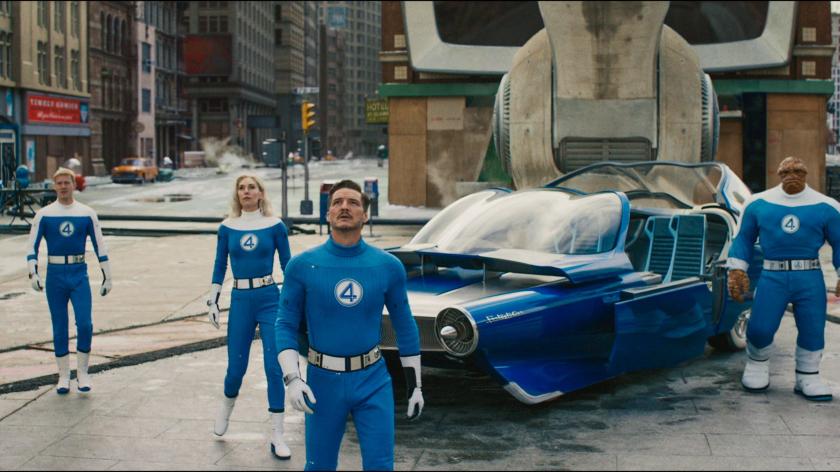
Review: In such a golden age for superhero storytelling as the one we’re currently experiencing, we have seen all manner of comic book characters successfully adapted for both the big and small screens, from the massive ensemble team-up films to the most obscure characters, who have since become household names. Yet despite numerous attempts, the Fantastic Four has never achieved such success. We have seen the fun but flawed movies of the noughties to the unmitigated disaster that was Fant4stic. You would have been forgiven for thinking that someone had placed a curse on Marvel’s First Family, that they would never get an adaptation that would do them justice. After having done such wonderful work with the first (and you could make the argument for the best) TV show in WandaVision, enter Matt Shakman to well and truly break clobber that curse.

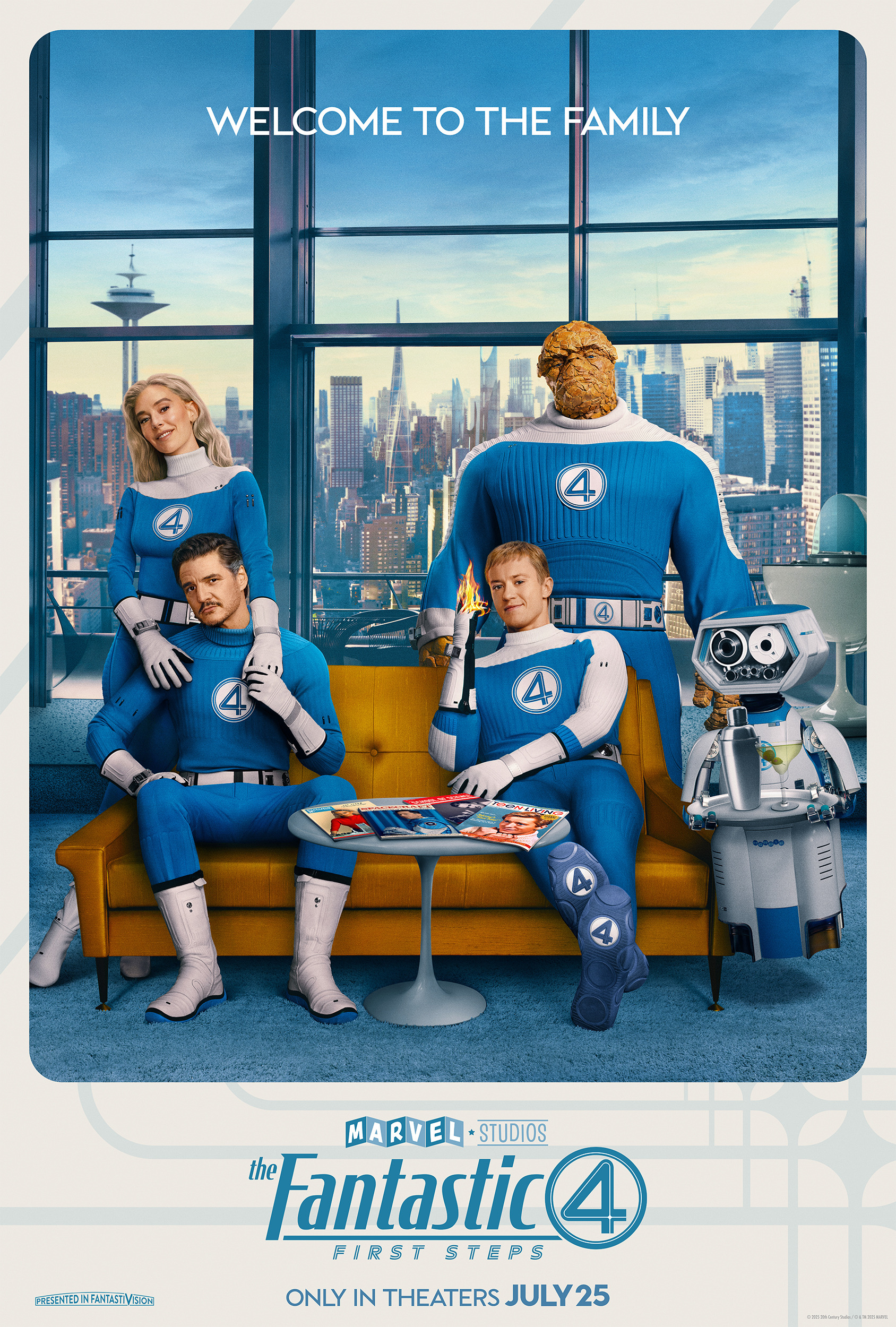
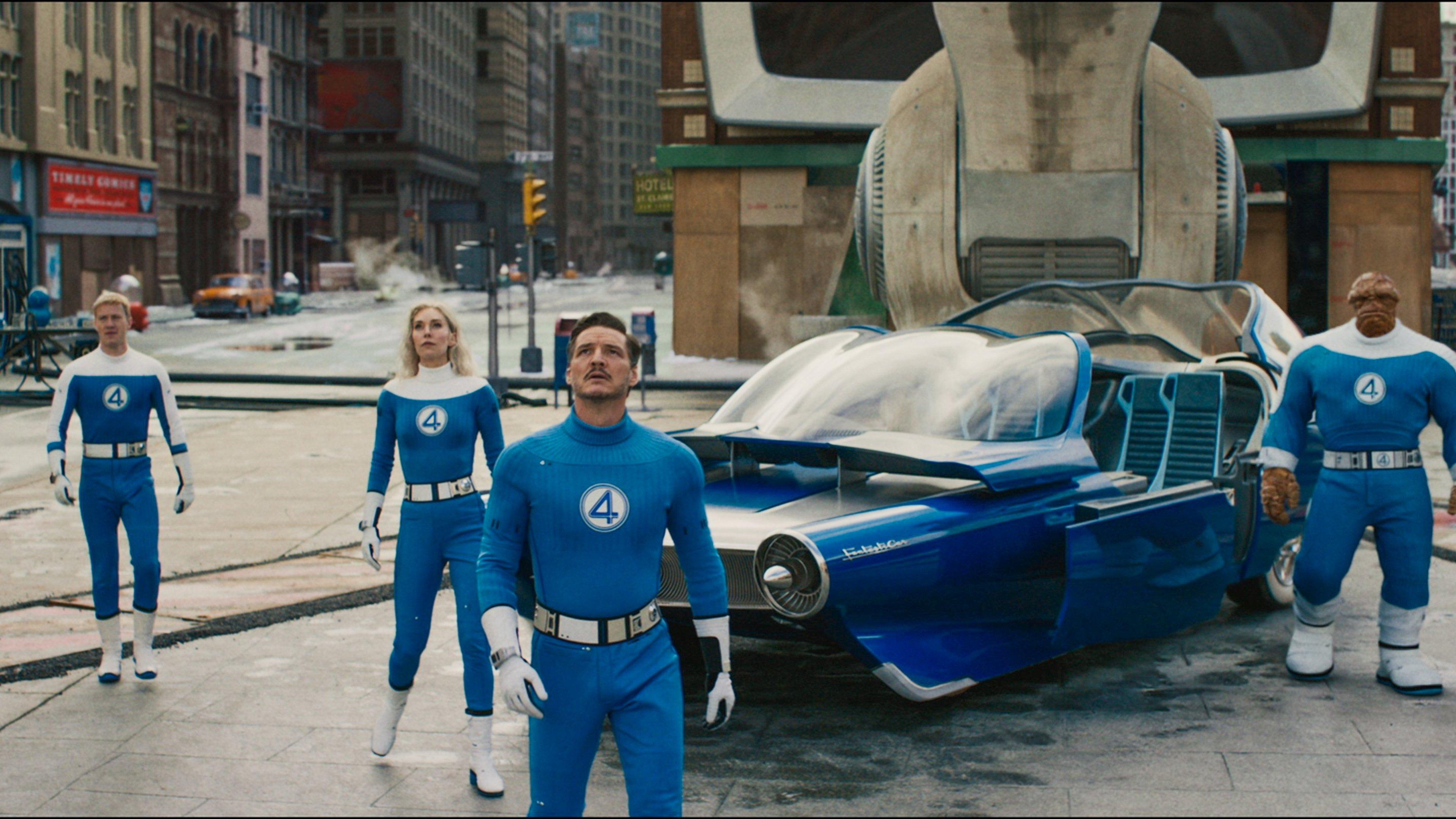
In a futuristic parallel world separate from the main Marvel timeline (Earth-828 to be exact) filled with advanced technology like flying cars and cool personal robot companions like H.E.R.B.I.E (an adorable scene-stealer), we learn through a series of newsreels it has been four years since our titular heroes blasted off into space on a mission where they were exposed to cosmic rays, which granted each of them superhuman powers. The supersmart Reed Richards (Pascal), who can stretch any part of his body, his brilliant wife Sue (Kirby) who can create force fields and turn invisible, Reed’s loyal best friend Ben Grimm (Moss-Bachrach) whose skin has been transformed into orange rock that grants him superstrength and durability. Last but certainly by no means least, Sue’s hot-headed brother Johnny (Quinn) can control fire and fly.

They are the planet’s sole protectors, and through their heroism, they have become celebrities whose ingenuity has enabled advances in technology and brought stability and peace to the world. With Reed and Sue preparing for the life-changing milestone that is parenthood, the four of them must deal with the arrival of the Herald, the Silver Surfer (Garner) who tells them their planet is “marked for death” with the impending arrival of the planet-eater Galactus (Ineson).

After a Phase Five that had some high points and arguably the lowest of the lows for the franchise (looking at you Quantumania), it makes sense to begin Phase Six with something of a reset and to establish Marvel’s first family in their own universe before their world collides with the main timeline as we know it. The script by Josh Friedman, Jeff Kaplan, Eric Pearson and Ian Springer keeps things focused squarely on the quartet and their dynamic, with no chance of any other superhero crashing into this world. There will be plenty of time for that in future Phase Six films. Having seen the origin story done before in the Fox era films, the decision to quickly bypass this allows the film time to explore Reed and Sue’s loving relationship, the camaraderie/playful banter between Johnny and Ben, and indeed, the togetherness and warm family embrace between the entire team is sincere and genuine.

With such pitch-perfect chemistry between the team, it’s a credit to the casting director that they absolutely nailed each casting choice (hurrah that the Oscars will at long last be giving these people their dues in next year’s ceremony). Pascal, continuing his bid for cinematic domination, expertly balances Reed’s intelligence and scientific nous while preparing for the enhanced responsibility of becoming a father. Moss-Bachrach’s Ben, despite his hard-as-rock exterior, comes off as very kind and gentle, particularly when demonstrating his strength to a group of schoolchildren. Quinn as Johnny exudes charm and charisma in flaming abundance. However, the MVP of the team is unquestionably Kirby’s Sue. A woman balancing impending motherhood, a heroic feat of endurance in itself, but all while leading diplomatic efforts on the international stage. This, combined with the true power she possesses, means she is a force to be reckoned with.

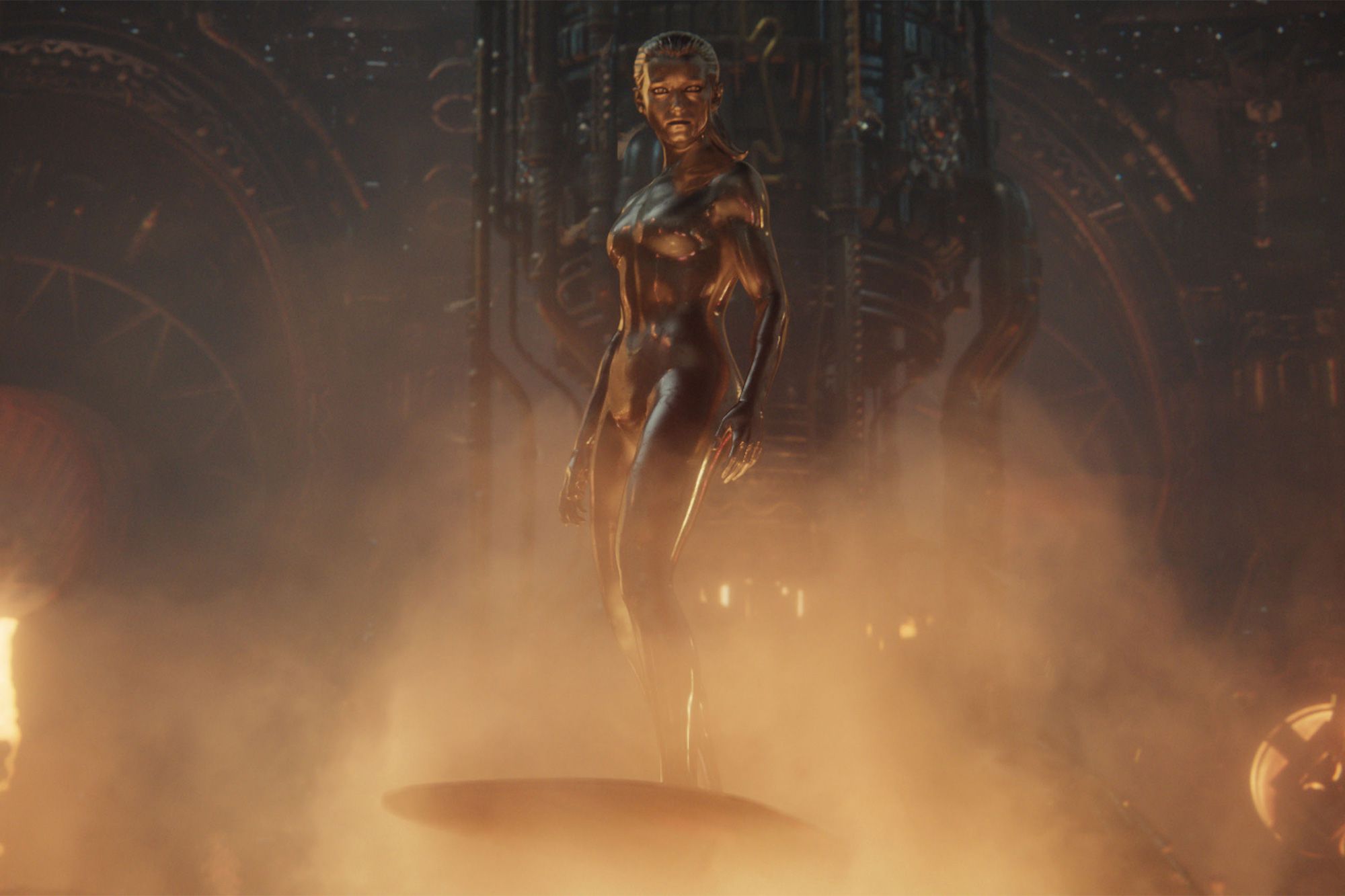
Speaking of forces to be reckoned with, while she doesn’t get a vast amount of screentime, the Silver Surfer remains a mysterious presence that Johnny cannot help himself be drawn to. Perhaps in this alternate universe, flames are attracted to metal, or beings with metallic skin? The Surfer, or Shalla-Bal to give her name, gives the team plenty to worry about. Yet, it is the gargantuan cosmic entity Galactus who poses an even greater threat. 2007’s Rise of the Silver Surfer reduced him to a cosmic cloud that feasts on planets. This iteration very much retains his desire to feast on worlds, but through an effective combination of practical costumes, CGI and Ineson’s imposing voice, the menacing factor is turned to the maximum and does justice to a fan favourite.

Having worked wonders with the MCU’s first (and arguably best) TV show, WandaVisionShakman brings that quirky vision to this universe through some brilliant worldbuilding. The sets of this alternative 1960s New York feel lived-in, and the technological advancements on display are so wonderfully realised, it is almost enough to make you green with envy that such a world doesn’t actually exist. With another fantastic score by Michael Giacchino (seriously, does this man ever miss?) Marvel’s first family have taken their first steps into the MCU, and at long last, have been given their well-deserved moment in the spotlight. Now, all roads lead to Doomsday. Set your countdown clocks accordingly.

With pitch-perfect chemistry between its leads and the perfect retro-futuristic setting to introduce them in, Marvel’s first family’s foray into the wider MCU is a roaring and flaming success! 

Posted in 2020-2029, Film Review

Gladiator II (2024)

© Paramount Pictures, Scott Free Productions and Lucy Fisher/Douglas Wick Productions

Gladiator II – Film Review

Cast: Paul Mescal, Pedro Pascal, Joseph Quinn, Fred Hechinger, Lior Raz, Derek Jacobi, Connie Nielsen, Denzel Washington, Yuval Gonen, Matt Lucas, Tim McInnerny

Director: Ridley Scott

Synopsis: After his home is invaded and conquered by the Roman army, Lucius Verus is forced to follow in the footsteps of the legendary Maximus and become a gladiator…

Review: “What is your Roman Empire?” is a question you may have noticed has popped up a lot in interviews recently, thanks to a trend on social media in which men are asked how often they think about the Roman Empire. If one were to put this question to Sir Ridley Scott, the answer would probably be a fair bit due to the fact among the legendary director’s distinguished filmography, many could point to 2000’s Gladiator as his magnum opus, and for good reason. The story of a Roman General who is betrayed and sees his family murdered on the orders of a corrupt emperor, then becomes a gladiator to seek vengeance, in this life or the next, has stood the test of time for its epic scope, an incredible array of characters, enthralling action sequences, and one of maestro Hans Zimmer’s greatest scores of all time. After nearly a quarter of a century, the Roman Empire evidently wasn’t far from Scott’s mind because, like a triumphant gladiator, he returns to the Colosseum, in thrilling style.

Sixteen years after the death of Maximus in the arena following a personal bout with his uncle Commodus, Lucius Verus, going by the alias “Hanno”, lives in the Roman province Numida with his wife Arishat, a far cry from his early life by his mother Lucilla’s side in preparation for a very regal future. In the years since, Lucius’s grandfather Marcus Aurelius’s dream that was Rome is a distant memory, with the twin Emperors Geta (Quinn) and Carcella (Hechinger) presiding over corruption and political turmoil.  This has left some in the Roman army, such as General Acacius (Pascal) increasingly disillusioned with their rule. When his home is conquered by the Roman army, Lucius follows in the footsteps of Maxiums and becomes a gladiator after being sold into slavery. He soon comes to the attention of former slave Macrinus (Washington) who senses Lucius’s rage and looks to offer him a path to satisfy the rage he has against those who invaded his homeland and murdered his family.

It’s remarkable that even at 86 years old, Ridley Scott shows no signs of slowing down and continues delivering spectacular films, particularly in the swords-and-sandals and historical epic genres, in a way few directors can match. However, creating a sequel to such a beloved and iconic masterpiece is undoubtedly a daunting and risky endeavour for this legendary director. Reteaming with his Napoleon screenwriter, David Scarpa’s screenplay wisely chooses to follow the narrative beats of the original. In this continuation, the protagonist experiences a significant loss, which drives him to channel his grief and intense rage against those responsible for inflicting great pain, for the loss of those he held dear and for those who cost He takes his vengeance to the Great Colosseum of Rome, where he must fight in several bloody battles to the death, while trying to convince anyone who will listen of his grandfather’s dream. However, as Lucius will soon find out, the depravity that went on while his uncle held the throne is nothing compared to what has been allowed to unfold in the nearly two decades since under the reign of the two men who sit on the throne that by all rights, should have been his.

Like a fatal blow in the Colosseum, the film’s powerful central message – that will strike deep and echo in eternity – lies in its damning indictment of modern-day politics. In recent years, the world has seen numerous figures rise to power on the back of populist rhetoric. When these charlatans rise to power, with their unchecked egos demanding loyalty from anyone and everyone while never giving anything in return, they leave considerable damage in their wake and show little to no thought or consideration for the harm they have inflicted with their arrogance and pomposity. It serves as a damning reminder of what can happen when such dangerous and unqualified demagogues are allowed to assume positions of power.

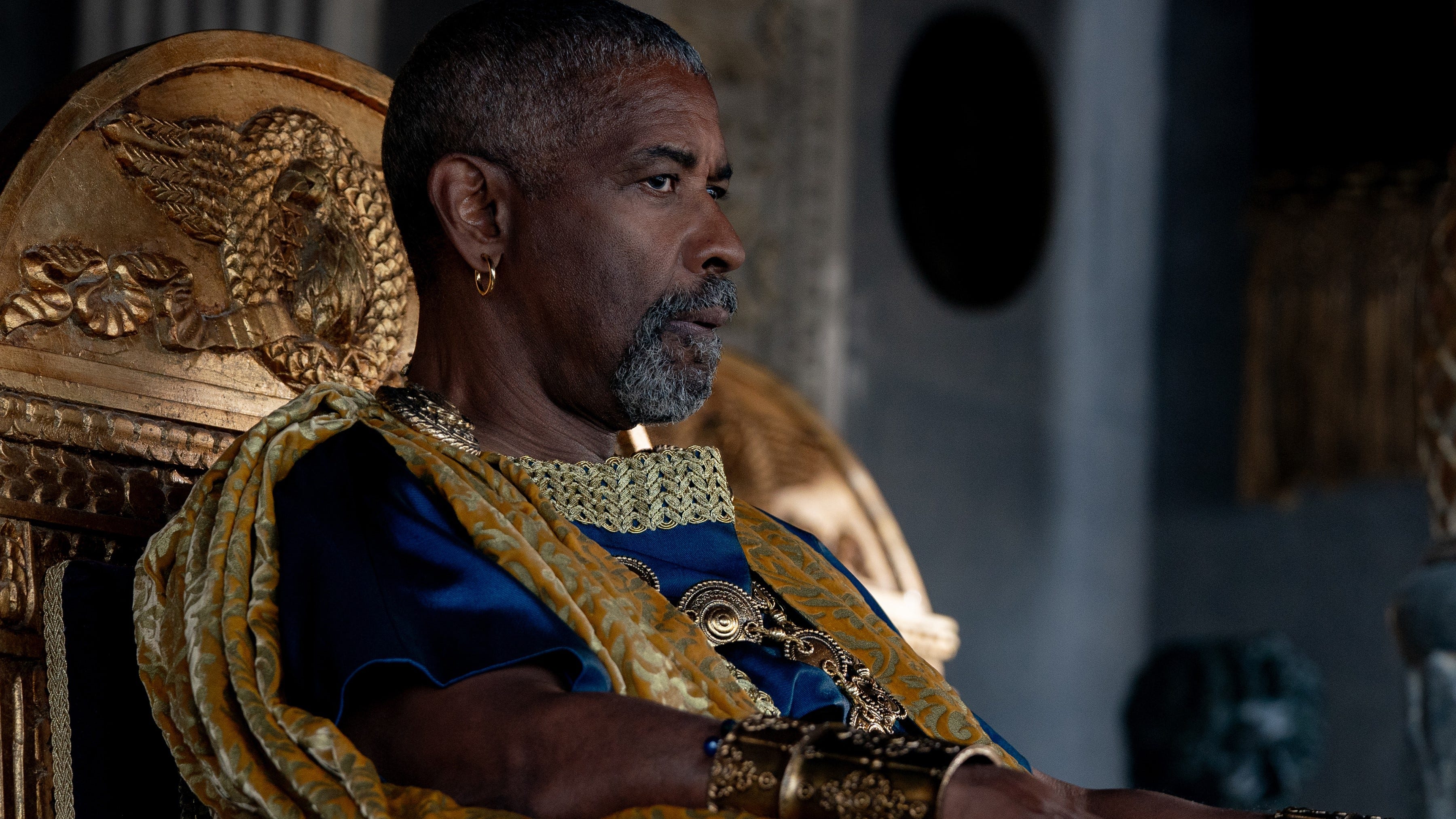
Such political chaos and turmoil allow for some savvy and cunning figures to exploit the corruption to get ahead, and this is where Macrinus thrives. Washington, the legend that he is, is clearly having a ball with this role and he captivates every time he’s on screen, so much so it matters not that he is speaking with his natural accent. Filling Maximum’s armour is a tough ask, but Lucius’s arc makes for a compelling one, and Mescal gives a suitably wounded and gritty performance, his anger and fury with those in power never too far from the surface. Meanwhile, Quinn and Hechinger are suitably deranged and loathsome as the maniacal emperors, channelling Commodus’s wickedness and being accompanied by a pet monkey, as you do.

Some of the action scenes in the original could very easily lay claim to some of the best action of Scott’s long and glittering career as a director. So how does the octogenarian director top what he accomplished 24 years ago, by putting the history book to the sword and refusing to give a damn whether or not the events depicted in the Colosseum have any foundation in historical fact. Battles with manic baboons, and rhinos, and filling the Colosseum with water to recreating a great naval battle. It’s all utterly bonkers and wild, how can you not be entertained and give a thumbs up and watch the carnage and bloody battles unfold on screen in all their bloody glory. Yet, given the film’s exorbitant $250m budget, some of the VFX looks lacklustre and merits a thumbs down. Matching the lofty standards set by the first film was always going to be a tall order, but with Scott committed to delivering swords to the wall action and the political machinations that are all too relevant today, gives this sequel the strength and honour it needs for the audience to say: We who love Gladiator salute you, Sir Ridley.

It could have been an almighty risk to return to the Colosseum 24 years after Gladiator conquered everything before it, but with a scathing critique of modern-day politics and a memorable Denzel Washington performance, this sequel will leave you more than entertained. 

Posted in 2020-2029, Film Review

The Wild Robot (2024)

© DreamWorks Animation and Universal Pictures

The Wild Robot– Film Review

Cast: Lupita Nyong’o, Pedro Pascal, Kit Connor, Bill Nighy, Stephanie Hsu, Mark Hamill, Catherine O’Hara, Matt Berry, Ving Rhames

Director: Chris Sanders

Synopsis: After being shipwrecked on a deserted island, a robot must learn to adapt to its new surroundings and is put to the test when it has to care for an orphaned baby chick…

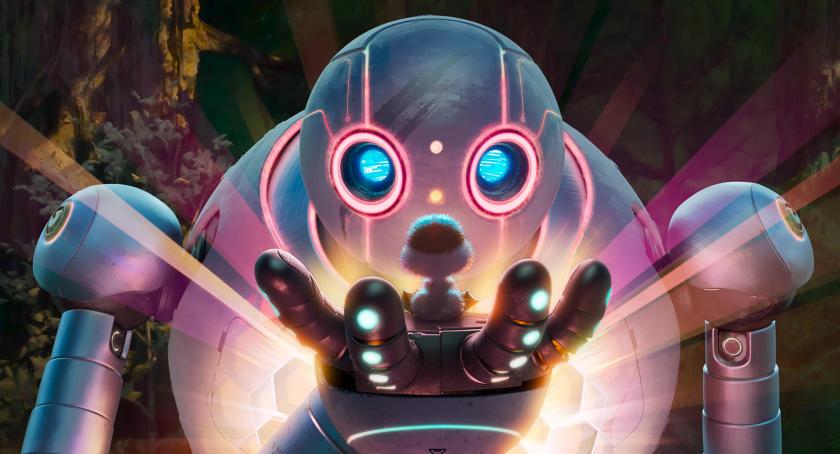
Review: Our world is home to a diverse range of fascinating wildlife and plant life. This may sound like something you’d hear in a nature documentary narrated by Sir David Attenborough (try reading that first sentence in his voice), but as those series demonstrate, the wonders of nature can be discovered anywhere on this magnificent planet. Since the dawn of humanity, we have explored and uncovered the marvels that the natural world has to offer. Now, imagine yourself as an outsider who has never encountered these wondrous sights or experienced nature’s beauty for the first time. You are a robot programmed to assist humanity, only to find yourself surrounded by an assortment of wildlife. The challenge of assimilation and finding your place in the world is beautifully captured in one of the year’s most compelling films.

Set on an unnamed island, the Universal Dynamics ROZZUM Unit 7134 (Nyong’o) washes up on the beach after a storm. Upon booting up, Roz, as she quickly becomes known, attempts to adapt to her new surroundings and offers to assist the island’s inhabitants. Unfortunately, the locals are immediately hostile towards her arrival and reject her help. After Roz comes under attack from a frightening predator, she inadvertently destroys a goose’s nest, resulting in the death of the mother goose and leaving only a single egg remaining. Overcome with guilt, Roz decides to raise the surviving gosling, whom she names Brightbill until he is ready to join the rest of his kind for migration. Although she admits that this task is “not in her programming,” Roz becomes determined to work tirelessly until Brightbill can swim, eat, and fly, and gain the strength to take his place among his own kind.

As the relationship between humanity and machines, specifically artificial intelligence (AI), is increasingly scrutinized, The Wild Robot offers a fascinating perspective on how a robot might interact in a natural environment devoid of human presence. Adapted from the book series by Peter Brown, having beautifully brought to life the journey of one boy who learns how to train his dragon, Chris Sanders’ script delves deeper than just the exploration of nature’s struggle against AI. In this touching and heartfelt story, Roz often finds herself at odds with her programming as she works to protect Brightbill, a gosling vulnerable to other animals in their habitat. This conflict only strengthens Roz’s determination to help Brightbill gain acceptance in his community. Throughout their journey, Roz and Brightbill encounter various unique creatures, including Fink (Pascal), a sly and cunning fox with a peckish who sees Brightbill as his prey. However, Roz’s persistence and determination to raise Brightbill as her own leaves a lasting impression on Fink, and Pinktail (O’Hara) and her legion of adorable little babies.

Even if someone has never had children, anyone and everyone will be acutely aware of the difficulties and challenges that come with parenthood and raising children, because let’s be honest, we’ve all done things when we were young with the sole intention to annoy our parents. Therefore Roz’s battle to become a mother, something she has no prior experience of, will undoubtedly strike a chord with those undertaking the most difficult task any living creature could put themselves through. Though parenthood is an immensely difficult challenge, it has its own rewards and the film chooses to celebrate those as well as a pertinent reminder of the healing power that community and togetherness can bring, because as Roz herself puts it: “Sometimes, to survive, you must become more than you were programmed to be.”

Speaking of Roz, a robot is not usually the most expressive and emotional being, on account of it being a robot. It therefore takes an extremely talented actor to bring such warmth and emotion to a life form designed with one specific purpose in mind. In Academy Award winner Lupita Nyong’o, you have the perfect actor to bring those qualities and more. Nyong’o radiates warmth and compassion, even though it goes completely against what the nameless corporate bigwigs at Universal Dynamics clearly intended Roz to be. Nyong’o is the unquestioned star of the show, but she is given excellent support in a glittering voice cast from the likes of one the internet’s favourite personalities, Pedro Pascal who is equally charming and delightful as Fink. The bond between a parent and their child can be a loving one, but it is usually not without its fraught moments, and Kit Connor’s voice performance as Brightbill captures this balance of that very complex and loving relationship that develops between himself and his surrogate mother.

With the likes of Sony’s Spider-Verse films, and last year’s Puss In Boots: The Last Wish, the bar for high-quality animation has been considerably raised in recent years by breaking new ground in what audiences thought possible, as well as combining 2D and 3D styles. Sanders and the animation wizards at DreamWorks have outdone themselves here, with utterly breathtaking visuals that feel so lifelike and realistic, if you didn’t know any better, also feel like they could easily have been pulled straight from one of those nature documentaries. In an increasingly hostile and chaotic world, if an outsider like Roz can against all odds, go against her programming and find her place in the world and work with the community around her, a lesson for all of us to take heed to.

Beautifully animated, with a powerfully resonant and emotional message at its core, Roz and her array of furry friends will charm their way into your hearts and never let go. 

Posted in 2020-2029, Film Review

The Unbearable Weight of Massive Talent (2022)

© Lionsgate

The Unbearable Weight of Massive Talent – Film Review

Cast: Nicolas Cage, Pedro Pascal, Sharon Horgan, Ike Barinholtz, Alessandra Mastronardi, Jacob Scipio, Neil Patrick Harris, Tiffany Haddish

Director: Tom Gormican

Synopsis: Faced with the prospect of a declining career, actor Nick Cage (Nicholas Cage) is offered the chance by a wealthy super-fan to revive his career, which gets him entangled with the CIA…

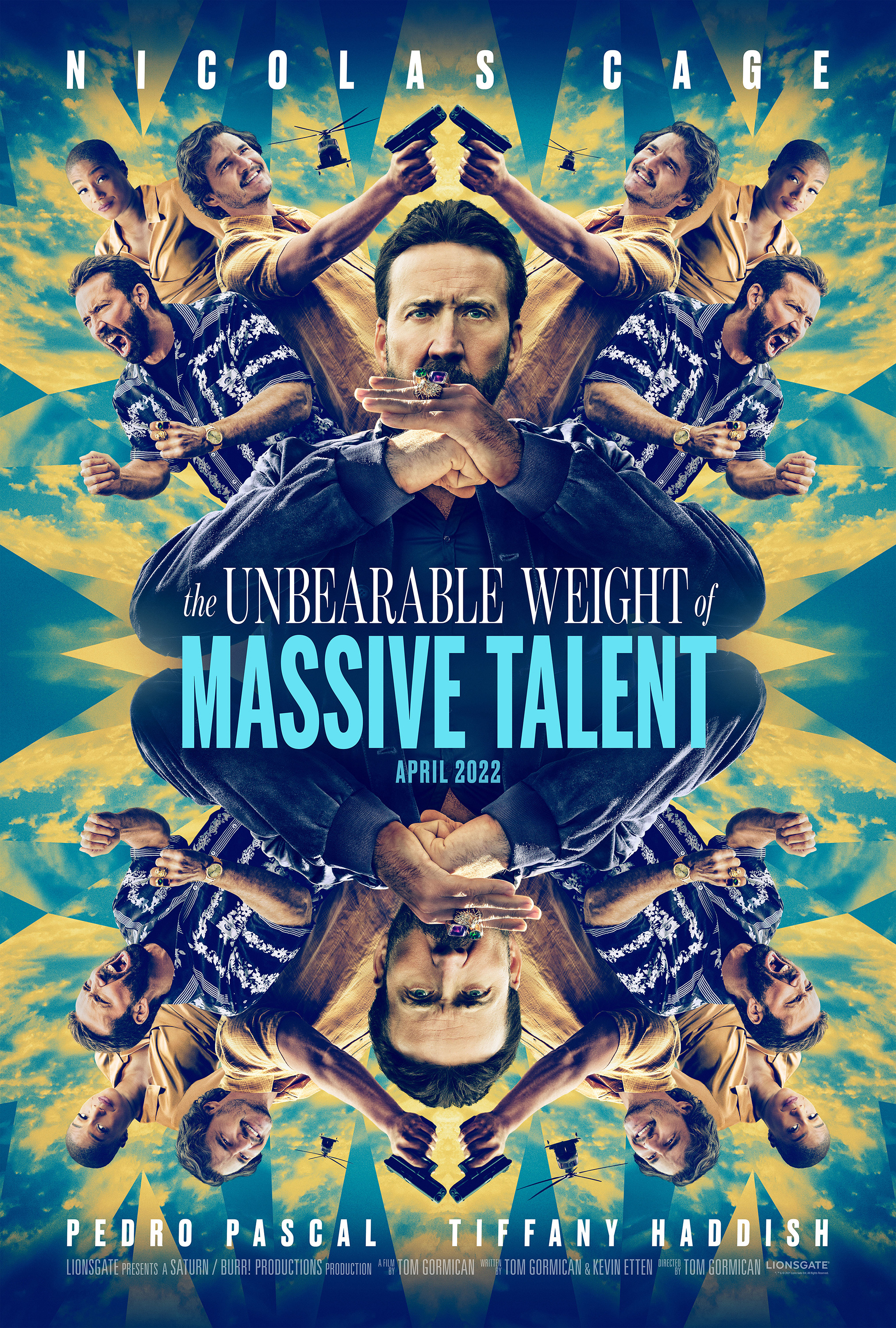
Review: For any actor, there is likely to be that one role that they dream of getting in their career. A role that will perhaps win them a prestigious award, or one that goes on to define their career. In the case of Nicolas Kim Coppola, or to give him the name many will undoubtedly know him by Nicolas Cage, pinpointing such a role is hard to nail down. For a career that began in 1981, he’s an actor that has gained a reputation, particularly in recent years, for his over-the-top and eccentric performances. Some of which, in the age of the internet and meme culture, become forever immortalised. But perhaps, the role that will define his career, is the one he’s playing here: a fictionalised version of himself.

Nick Cage is facing a career crisis. He’s trying hard to get major roles, but no one is willing to offer him the parts he’s going for. As such, he fears that his career as an actor may be coming to a close. As he has been solely focused on his career, his relationships with his ex-wife and daughter have become distant. However. when Javi (Pascal), a wealthy Nick Cage super fan, offers him one million dollars to be the guest of honour at his birthday party, it’s an offer he cannot refuse. The two men begin to strike up a friendship, bonding over their shared love of movies. This is until Cage soon finds himself unexpectantly working with the CIA when it’s revealed that Javi is a dangerous drug kingpin who they suspect could be behind a high profile kidnapping.

Pitching such a premise that is reliant on a very meta premise like this could have very easily gone horribly wrong and looked like the ultimate ego-driven and narcissistic vanity project for the actor at the centre of it. But fortunately, Tom Gormican and Kevin Etten’s script doesn’t come across that way at all. It is instead a tribute to an actor whose roles have given audiences so much over the years, from the award-worthy to the performances in films that are so bad they’re good. For passionate fans of Cage and his work, there are references aplenty to some of his most iconic performances of the past that die-hard Cage fans will absolutely love. But it would be easy for the film to just point out a previous performance and call back to it for some nice and easy nostalgia. The film finds plentiful amounts of humour in the situation that Cage finds himself in.

Speaking of Cage, having had something of a resurgence with his brilliant performance in last year’s Pig, this is yet another reminder of the man’s talents as an actor. Sure, playing yourself (or a somewhat fictionalised version) is not the most challenging of tasks, but Cage is clearly having a blast with this material and by consequence so will the audience, especially if you’re a fan of Cage’s filmography. Alongside Cage, Pedro Pascal is equally brilliant in his role as Nick’s new best friend/number one fan. The bromance the two of them strike up, bonding over their favourite movies is heart-warming, especially if you share that deep love of movies that these guys do. Furthermore, with some of the misadventures they get up to whilst Cage is staying at his home provides for plenty more moments of hilarity. The Cage/Javi bromance takes centre stage, which unfortunately means that the CIA side plot does feel tacked on, and both Tiffany Haddish and Ike Barinholtz do the best they can with what limited screen time they have.

The film does lose a bit of steam at various points when it deviates away from the central bromance. However, it’s not long enough to drag the movie down, especially given the man and the legend at the centre of it all. The funniest film of the year by far, and it will take some beating for another film to pip this one to the honour of the best title of the year as well. Two more worthy accolades in the career of someone whose work has already brought so much joy to so many. Long may that continue.

Brilliantly self-aware and doesn’t take itself too seriously, with a hilarious buddy comedy at its centre, a worthy celebration of the legend that is Nicolas Cage.


Posted in 2020-2029, Film Review

Wonder Woman 1984 (2020)

Image is property of Warner Bros and DC Comics

Wonder Woman 1984  – Film Review

Cast: Gal Gadot, Chris Pine, Kristen Wiig, Pedro Pascal, Robin Wright, Connie Nielsen

Director: Patty Jenkins

Synopsis:  Having spent several decades quietly living among humanity in Washington DC, Diana Prince must spring into action as Wonder Woman when a nefarious businessman threatens to reap chaos across the world….

Review: Ever since superhero films have enjoyed a surge in popularity from the late 2000s onwards, the number of films which had women at the front and centre of them were few and far between. It wasn’t until 2017, that a major Hollywood studio produced a female-led superhero film. That film was of course, Wonder Woman, which brought the DCEU back from a likely early demise, whilst blazing a trail for other studios to follow in DC’s wake. With the same creative minds returning to helm this sequel to its trailblazing predecessor, it’s extremely disheartening to say that having worked wonders with the first film, these creative minds have returned to offer a sequel that is a colossal disappointment.

Swapping the trenches of World War I, for the bright lights of 1984 USA, Diana Prince has now settled down in Washington DC quietly living amongst humanity. Whilst occasionally suiting up as Wonder Woman, to protect humanity in any way she can, her life is quite a lonely one without her fellow Amazonians for company. However, whilst helping to collect rare artefacts as part of her job working for the Smithsonian Museum in Washington DC, she befriends Barbara Minerva (Wiig) a shy and awkward geologist. The pair of them encounter a rare artefact that intrigues them both but also captures the attention of Maxwell Lord (Pascal), a business tycoon who wants this artefact for his own selfish purposes, and threatens to unleash catastrophic consequences for humanity.

One of the few saving graces for this sequel is that of Gal Gadot’s performance as the titular heroine. Once again, she proves what an inspired casting choice she was to play this role, as she has no shortage of charisma and charm to make the audience want to root for her. The dynamic between her and Chris Pine’s Steve Trevor proved to be one of the strongest aspects of the first film, as well as being ripe material for comedy. While it is good to have Pine back in this role, and the role reversal in their relationship is intriguing, the explanation for his return is merely given the most fleeting of mentions, which makes his whole return feel really undeserved and sloppily written.

This feeds into what amounts to be the film’s biggest problem, namely that the film’s script, written by Jenkins, Geoff Johns and David Callaham is extremely clichéd and shockingly lacklustre. While the first film, touched on fascinating themes of humanity, and the ugliness and devastation of war, the themes explored here are nowhere near as interesting. The plot goes in such a nonsensical and frankly ridiculous convoluted direction, that it feels like it would be far more appropriate for some kind of low-budget horror film, not befitting for one of the most iconic superheroes in comic book history.  Furthermore, despite the best efforts of talented actors like Kristen Wiig and Pedro Pascal, the motivations for the film’s antagonists are extremely weak and are not given time to be properly explored and developed. Additionally, while Wiig tries her hardest to make Barbara/Cheetah a compelling villain, Pascal’s performance is so extremely hammy, that it dials the cheesiness to such an absurd degree that he’s more comical than threatening. While he was far from the perfect villain, the shortcomings of the antagonists here make Ares seem like the most cunning and ruthless villain ever seen in a comic book film to date.

While the action is once again competently directed by Jenkins, there’s nothing here that comes anywhere close to recapturing the thrills and the sheer awesomeness that is the No Man’s Land sequence in the first film. While that film’s climax came in for criticism for an overly CGI third act, there was heart to it that made it compelling to watch. That heart is nowhere to be found for WW84‘s anti-climatic third act, which is compounded by some inexcusably poor CGI for Cheetah. While Hans Zimmer doesn’t disappoint with his score, it’s a great shame that the film surrounding it falls woefully short of recapturing the wonder of the film’s predecessor.

Even with a stellar leading performance from Gal Gadot, Wonder Woman 1984 is an incredibly disappointing sequel falling far below the standards set by the first film, due to a messy script, and extremely nonsensical plot.

Posted in 2010-2019, Film Review

If Beale Street Could Talk (2019)

Image is property of AnnaPurna Pictures and Plan B

If Beale Street Could Talk – Film Review

Cast: KiKi Layne, Stephan James, Regina King, Ed Skrein, Brian Tyree Henry, Colman Domingo, Teyonah Parris, Michael Beach, Dave Franco, Diego Luna
Pedro Pascal

Director: Barry Jenkins

Synopsis: After finding out she is expecting a baby with her partner, a young woman and her family seek to clear her lover’s name after he is arrested for a crime he did not commit…

Review: What do you do when only your second feature length directorial feature wins you an Academy Award for its screenplay, as well as (eventually) the Academy Award for Best Picture? This was the quandary for Barry Jenkins, the writer/director of Moonlight, having been catapulted him into the spotlight by the film’s incredible success. The answer to that question, is to make something that’s cut from a similar cloth as Moonlight, a story that tells a very human, emotional journey.

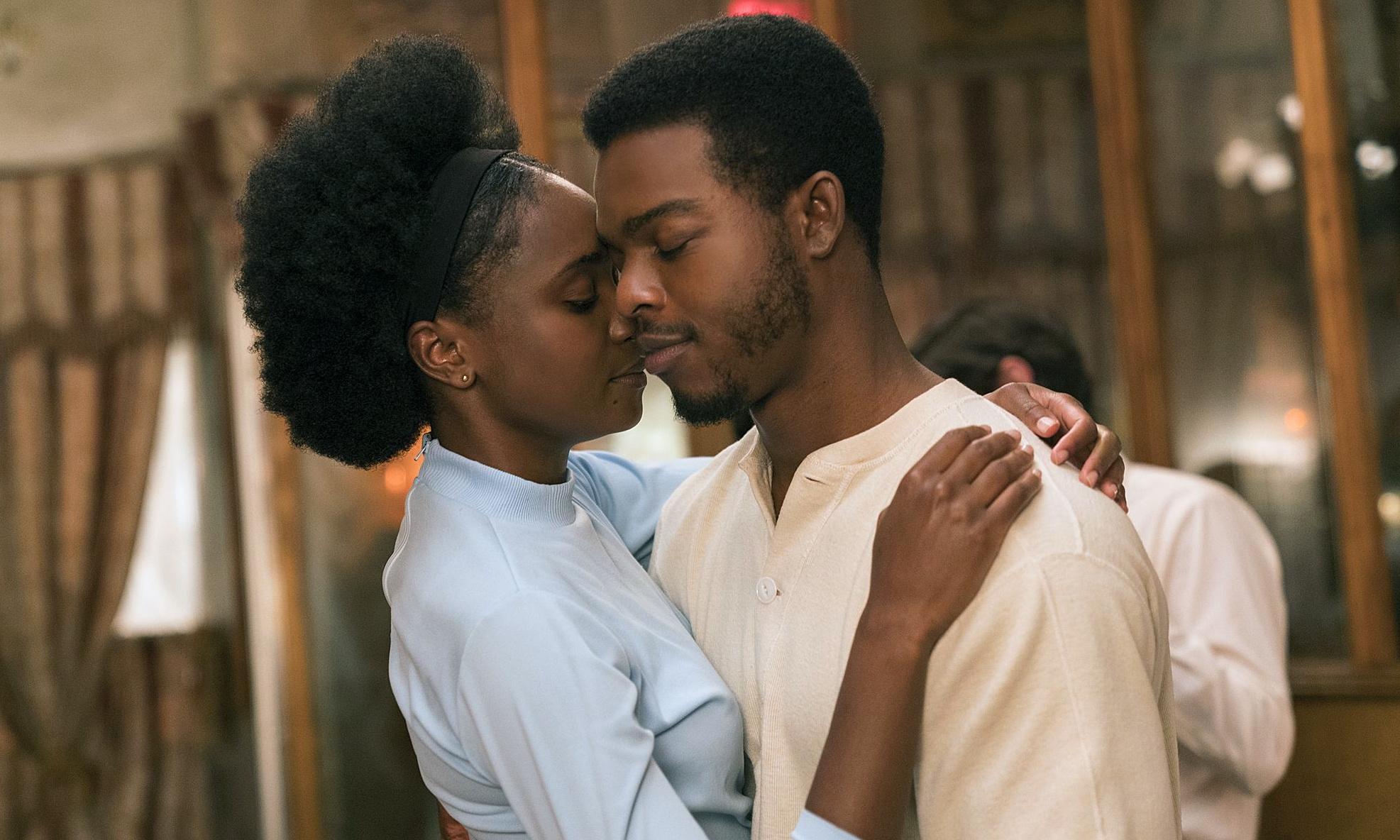
Adapted from the novel of the same name by James Baldwin, we are taken back to 1970s Harlem, where we meet Tish (Layne) and Alfonso (or Fonny as Tish affectionately calls him), two beautiful young people who, having been very close as children, have since become a blossoming couple, seemingly made for one another. However, their romantic bubble is burst when when Fonny is arrested and charged with a horrific crime that Tish insists he is innocent of, and Tish and her family must do whatever they can to clear Fonny of these charges.

On the surface, this would appear to be a simple story about the love that two young people have for each other, and the desperate bid to prove her husband-to-be innocent of the crime he is being accused of. And while it is undeniably beautiful and romantic to watch these two fall in love with each other, much like his work with Moonlight Jenkins’s screenplay goes much deeper than that exploring a variety of themes such as racism, family and the brutal horrors of the justice system that can bring such an unfair injustices to Black communities and devastate these families across America, even when people may be innocent of the crimes they are being accused of.

As the main couple, KiKi Layne and Stephan James are both excellent. Their chemistry is just so honest and authentic that you completely buy them as a couple. You revel in their moments of love and affection for one another, and are equally devastated when they are torn away from one another. As Tish’s mother Sharon, Regina King is just utterly marvellous as she leads the fight to win her prospective son-in-law’s freedom, even in the face of extremely long and difficult odds, and indifference from some members of Fonny’s family to Tish’s plight.

The cinematography from James Laxton is once again sumptuous to look out, even when the circumstances may be extremely bleak, his cinematography shines a hopeful light on the situation of this couple. Nicholas Britell also returns to provide the score, and once again, the work he does to add to the romanticism and by contrast, the heartbreak of this story is remarkable. For those who might have had issues with Moonlight’s pacing, they could well run into some issues again here as Jenkins does take his time to slowly build up Tish and Fonny’s relationship. Though some scenes do feel necessary, others do drag on perhaps for a tad longer than they really need to.

For characters depicted in the 1970s, Jenkins’s characters feel very contemporary and the story and the themes are very topical, but the film never gets preachy with the events depicted on screen. It is above all else, a very sweet story about the love two people have for one another, and the challenge that the human spirit faces when facing the going up against the cruel nature of the world and its institutions, Barry Jenkins has once again crafted something that, in these very emotionally charged times, he has made a film that will speak something to everyone who sees it.

Beautiful and melancholic,sometimes in the same shot, with a fantastic ensemble of well realised characters, Jenkins once again crafts a moving tale of love and hope in the face of terrible adversity.