
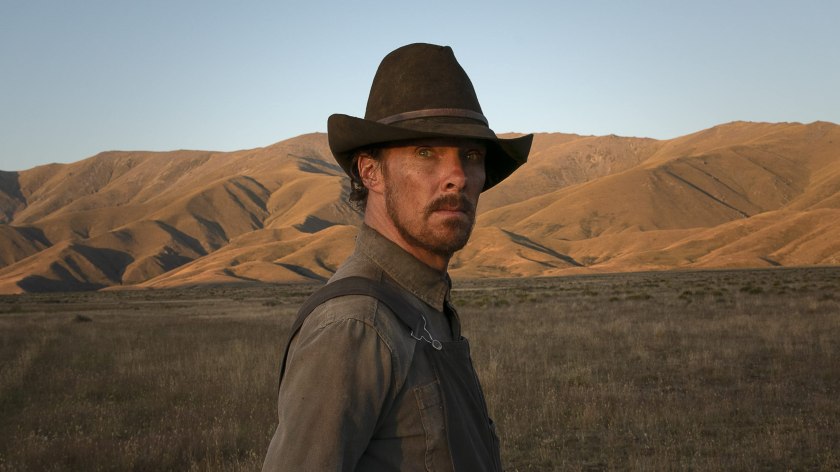

The Power of the Dog – Film Review
Cast: Benedict Cumberbatch, Kirsten Dunst, Jesse Plemons, Kodi Smit-McPhee, Thomasin McKenzie, Genevieve Lemon, Keith Carradine, Frances Conroy
Director: Jane Campion
Synopsis: The relationship of two brothers in 1920s Montana is put to the test when one brother settles down and introduces his new wife, and her son, to the other brother…
Review: What does it to be a man? Even in modern times, the stereotype of the masculine man is someone who is expected to be hard, tough, and forbidden from displaying any sort of emotion that might deem them as being “weak” and “unmanly”. While someone on the outside may present themselves as tough and strong, inside they can easily be the polar opposite. They could potentially be hiding some pretty big insecurities. While we have broken down some of those absurd barriers of men being unallowed to express emotions, back in the 1920s, such an idea was unheard of. In her first film for 12 years, Jane Campion explores the concept of toxic masculinity from the perspective of two very different people.
The setting is Montana in 1925, and brothers Phil (Cumberbatch) and George Burbank (Plemons) are very successful ranch owners. Phil is the tough, masculine, and considerably more cruel brother. He regularly likes to throw around insults, especially towards George. George, by contrast, is in every sense, the polar opposite to Phil, who is considerably more friendly, gentle, and hospitable. When George meets Rose (Dunst), he becomes instantly smitten with her, and the two marry. When George brings Rose and her son Peter (Smit-McPhee) home to the Burbank ranch, it doesn’t sit well with Phil at all. Phil becomes determined to do all he can to make Rose’s and Peter’s lives a misery, which will only add further strain to the tense relationship that already exists between the two brothers.
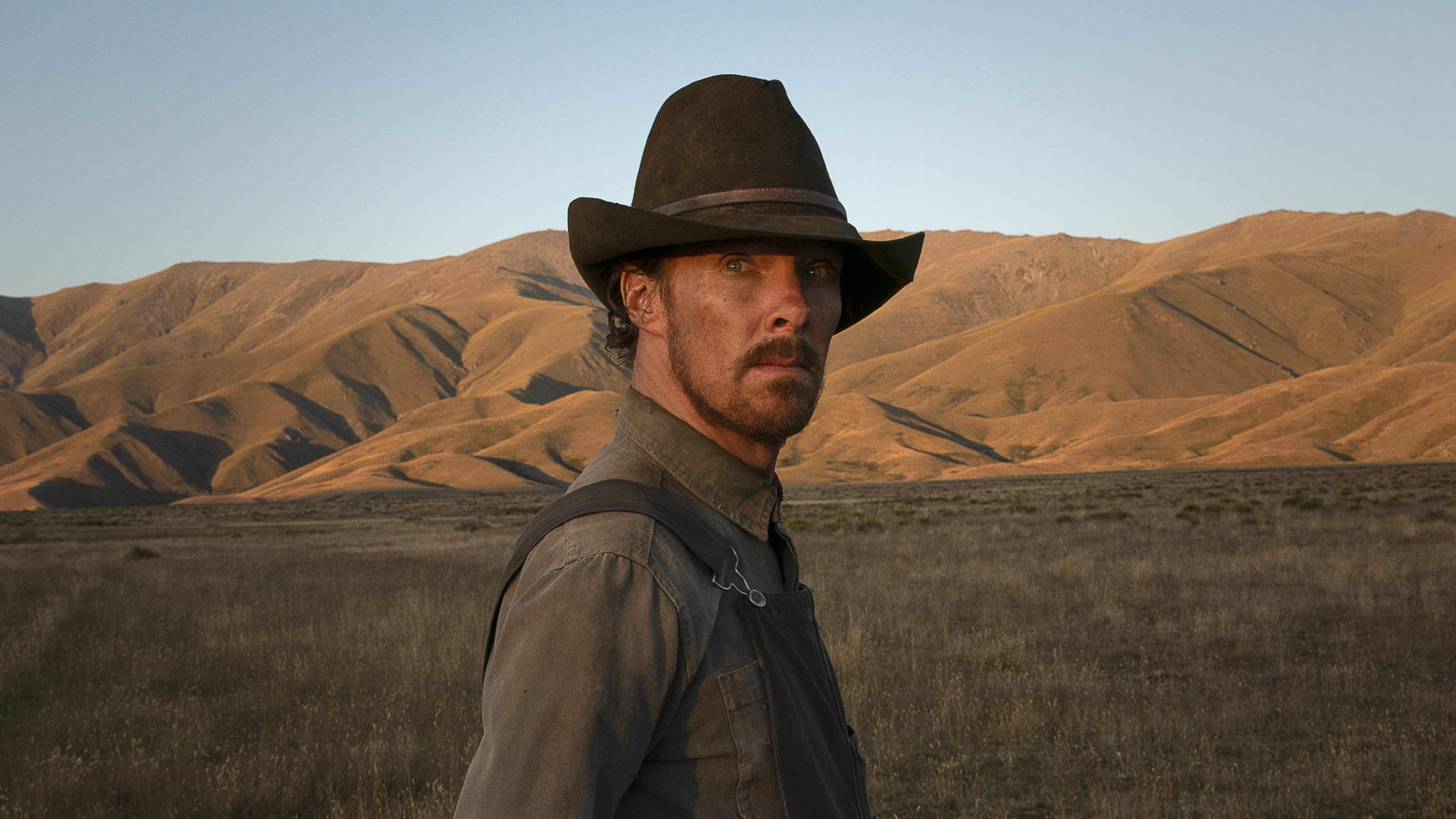
When you picture the average Western, you may picture a scene that depicts cowboys standing outside a saloon with their guns drawn in some rural town in the Wild Wild West. While the setting is sort of the same (substitute the majestic hills of New Zealand for those of rural USA), Campion instead takes a considerably different approach to this story. Adapted from the 1967 novel of the same name by Thomas Savage, her screenplay takes a considerably slow-burn approach to the story, that’s bathed in the gorgeous cinematography from Ari Wegner. Campion is clearly not interested in those tense shootouts, and is instead more focused on who the characters are as human beings. This is a personal, emotionally character-driven piece that thrives by taking its time to thoroughly examine the internal conflicts that are brewing inside these characters, and how these can spill over into their relationships with the other characters.
As the man at the centre of this story, Benedict Cumberbatch gives a terrific performance as Phil Burbank. Due to his tendency to willfully bully and insult others around him, he is definitely not the easiest character to spend some time with. He takes great satisfaction and joy in the mistreatment of others. Yet, as the film progresses, that brash and cruel exterior is peeled away, as not everything is what appears to be with Phil, and Cumberbatch’s nuanced performance captures this superbly. There’s an internal struggle within himself, and with some of the other characters that keep you invested as the film goes on, especially between Phil and Peter. Initially, one of the targets of Phil’s cruel insults due to his lisp and some of his mannerisms, it becomes fascinating to see how the relationships change once certainly layers are peeled back. Like Phil, there’s more to Peter than what you see at first glance, and Smit-McPhee’s performance is as equally nuanced as Cumberbatch’s.
As the dynamic between Phil and Peter is the one that is given the most screentime, it does mean that some of the others, most notably between Phil and George and Rose are not given enough screentime as they maybe could and should have. Plemons is severely underutilised once we reach the second half of the film. What’s more, for all of her strengths as an actress, Dunst also doesn’t have much to do except cower in fear whenever she comes face to face with Phil. This fear of her brother-in-law leads her down a dark path of addiction. While Dunst excels with the material she’s given, there was scope for a further exploration of the demons that she’s facing. Nevertheless, Campion’s slow-burn approach to this story and to the characters ensures that the mysteries that are at the centre of the film are extremely compelling to watch as they unravel. The Power of the Dog packs plenty of both bark and bite in equal measure.
A Western unlike any other. Campion’s long-awaited return to the director’s chair bides its time with its story, which makes the film’s atmospheric journey, and the mysteries contained within, all the more enthralling to watch.



 Through the Silver Screen