Posted in 2020-2029, Film Review

Oppenheimer (2023)

© Universal Pictures and Syncopy

Oppenheimer – Film Review

Cast: Cillian Murphy, Emily Blunt, Matt Damon, Robert Downey Jr., Florence Pugh, Josh Hartnett, Casey Affleck, Rami Malek, Kenneth Branagh, Alden Ehrenreich, Benny Safdie, Jason Clarke, Dane DeHaan, David Dastmalchian

Director:  Christopher Nolan

Synopsis:  Telling the story of the theoretical physicist J. Robert Oppenheimer and how he helped to develop the atomic bomb during World War II…

Review: The filmography of Christopher Nolan has always had a fascination with science and the impact advances in science could have on society. Interstellar travel, a globe-trotting time-bending/inverting mission, the exploration of a fierce rivalry between a pair of magicians blowing minds with their impressive tricks, and of course, a certain caped crusader fighting crime with an array of scientific gadgets. Therefore, given the direct namecheck in Tenet, it felt inevitable that Nolan would sooner or later turn his attention to the story of the scientist regarded as one of the most influential people to have ever lived, during one of the most defining moments of the 20th century. A man known as the father of the atomic bomb, one of the deadliest scientific creations in human history, J. Robert Oppenheimer.

Based on the 2005 biography American Prometheus: The Triumph and Tragedy of J. Robert Oppenheimer by Kai Bird and Martin J. Sherwin, Nolan’s screenplay is extensive in its scope and ambition in how it chooses to depict the life of its eponymous theoretical physicist. Though in typical Nolan fashion, he doesn’t do things by the book regarding what one might expect from a biopic. Split between two perspectives, “Fission” depicts how events were seen from Oppenheimer’s point-of-view, while “Fusion” opts for a black-and-white colour palette and depicts the latter stages of Oppenenheimer’s career, specifically when his security clearance was up for renewal and the intense scrutiny which surrounded him and his Communist links. Links, given the USA at the time was entering the Cold War with the Soviet Union and at the height of McCarthyism, are of enormous concern to the government, which became of particular interest to Lewis Strauss (Downey Jr.), the former chair of the Atomic Energy Commission, who later sought a top position in the US government.

As one would expect from Nolan, the film takes a non-linear approach to the story by continuously jumping between the two timelines throughout. However, what follows over the course of the next three hours is a fascinating exploration of a pivotal moment in history, a complex character study of the man at the centre of the creation of this deadly weapon and the impact it had on his conscience, the immediate and far-reaching consequences of the bombs being dropped on Hiroshima and Nagasaki bringing World War II to an end. Yet, in doing so, ignited the arms race between the world’s two superpowers which would define global politics for the next several decades and still has an effect on world politics to this very day. It is unquestionably a very dialogue-driven film, but Nolan’s screenplay never fails to keep events on screen engaging with the dialogue every so often interjected with scenes of atoms colliding, and Jennifer Lame’s editing ensures the film’s pacing remains brisk.

Having worked with Nolan numerous times across his career in supporting roles, Cillian Murphy finally gets his chance in the leading role and he seizes it with both hands. Through those piercing blue eyes, Murphy’s extraordinary performance takes us deep into the mind of this man and allows him to fully exhibit a range of emotions. From a brief look at his academic life, his early days as a university professor teaching quantum physics, a triumphant moment following the end of World War II, to his haunting guilt over creating a deadly weapon that has wrought unspeakable horror and devastation on countless lives.  Alongside Murphy’s incredible leading performance, Nolan has arguably assembled the all-star cast to end all-star casts, with everyone giving an excellent performance. In a cast this stacked, it is hard to stand out from the crowd, but the one who shines brightest is Robert Downey Jr. as Lewis Strauss. For years, he charmed audiences as the genius, billionaire, playboy, and philanthropist Tony Stark. This is a very different role, but as he did throughout his tenure in the MCU, Downey shows off his incredible talents and portrays Strauss as a very driven individual who is at the forefront of the pushback against Oppenheimer following the conclusion of WWII and will find anything he can to discredit the physicist.

On the subject of the Manhatten Project, which dominates the second act of the film and is where Nolan’s renowned technical wizardry comes to the fore. Through Hoyte van Hoyetma’s stunning cinematography and incredible sound work, the recreation of the testing of atomic devices ensures the audience feels the effects of these blasts. It all acts as a prelude to the nerve-shredding Trinity Test sequence, which Oppenheimer feared could cause a chain reaction that would destroy the world. The audience knows it won’t have that effect, but Ludwig Gorannsson’s score masterfully captures that nerve-shredding tension that would have undoubtedly raced through the minds of these scientists until the explosion. An explosion which, incredulously, is fully captured in camera without the assistance of special effects, a mind-blowing cinematic accomplishment.

However, while the technical mastery on display cannot be denied, what has been Nolan’s Achilles heel throughout his career has been writing female characters. Unfortunately, the female characters leave much to be desired. Florence Pugh makes the most of her limited screen time as Communist Party member Jean Tatlock, Oppenheimer’s mistress. Though, while they serve the narrative to an extent, a handful of her scenes feature full-frontal nudity and they ultimately come across as gratuitous. Emily Blunt’s turn as Kitty Oppenheimer could have very easily gone in a similar direction in which she is barely utilised and falls into the stereotype of the supporting housewife, but she avoids that with a memorable and fiery exchange with lawyer Roger Robb (Jason Clarke) during her husband’s security clearance hearings. While Nolan’s fascination with science in his previous films gave him theoretical scientific premises to explore, what he put under his cinematic microscope here is a world away from what he has previously accomplished in his career. The impact of this scientific breakthrough, the psychological effect it had on the man who developed it, and the long-lasting consequences of what can happen when one man, and indeed a whole country choose to play God, consequences which are still reverberating on the world stage today.

Under the vision of its masterful director, with a packed all-star cast led by an incredible awards-worthy performance from Cillian Murphy, gives Nolan the requisite materials required to craft a riveting and forensic character study of a man whose work changed the course of human history forever. 

a

Posted in 2020-2029, Film Review, London Film Festival 2021

Belfast (2021)

© TKBC, Northern Ireland Screen, Focus Features and Universal Pictures

Belfast  – Film Review

Cast: Jude Hill, Caitríona Balfe, Jamie Dornan, Lewis McAskie, Judi Dench, Ciarán Hinds, Colin Morgan

Director: Kenneth Branagh

Synopsis: Telling the story of the lives of one family living in Belfast during the 1960s…

Review: Irrespective of where we’re born, there’s a universal truth to the saying: “Home is where the heart is.” No matter who you are or where you come from, there’s likely to be a particular place on this Earth that means a great deal to you. Perhaps it is the town where you were born, or perhaps it is the place where you made those first memories that will shape you and who you are for the rest of your life? That special ode to your hometown and the immeasurable impact it can have on your life during your formative years is the heart beating at the centre of this deeply personal film from Kenneth Branagh.

Buddy (Hill) is a young boy living in Belfast during the late 1960s. He’s surrounded by his loving family, which consists of Ma (Balfe), Pa (Dornan), his brother (McAskie), and his paternal grandparents (Dench and Hinds). Like any child, Buddy goes to school, works hard in class, and seeks to win the heart of a girl in school who he has a crush on. Outside of school, playing on the street with his friends, and going to the pictures with his family, all with the carefree innocence that any child would have. It should be the perfect family life, but it’s about to be turned upside down. The country is about to be engulfed in political tension and violence which, will bring much uncertainty to this tight-knit Northern Irish family.

Given that we see the entire film from Buddy’s perspective, there’s a lot riding on Hill’s shoulders. Fortunately, he carries the film beautifully, balancing the naivety of youth, with an acute awareness of the tricky situation that’s developing. Alongside a brilliant leading performance from Hill, the rest of the cast are faultless in their performances. As Buddy’s parents, Ma and Pa are faced with an increasingly difficult choice of what to do and how best to raise their children in the politically charged circumstances that they find themselves in. Pa’s job in England is the main source of income for the family, hence money is tight. It’s a dilemma that puts a strain on their relationship, which is only compounded by the fact that he’s away for so much of the time.

Plus with the ongoing political tension that Belfast is engulfed in, there’s a dilemma as to whether they should leave the city that means so much to both of them behind? Do they want to uproot their two children from the lives that they have built in the city? Special mentions must go to Catriona Balfe and Jamie Dornan, both of whom give career-best performances. They clearly both love one another and care deeply for their children. So, they want to do what is best for them. Furthermore, due to his father’s absence, Buddy’s mother has quite the job to raise both him and his brother, mostly by herself. As such, Ma has a tendency to be quite overprotective of both her sons, but especially Buddy. They’re not on screen together a lot, but when they are, Balfe and Dornan’s wonderful chemistry helps add so much depth and layers to their characters. It’s always the sign of a quality performance that you no longer see the actor, instead, you see the character that they are playing, and this is true across the entire cast.

For a film that’s set in a time where political tensions are on a knife-edge, where violence could erupt at any given moment, it seems unlikely that the story would allow for much humour. Yet, Branagh’s screenplay allows for plenty of humorous moments to shine through. A lot of the humour comes from the dynamic between Buddy and his grandparents. Both of them impart their wisdom and knowledge to Buddy as he negotiates this difficult period in his life. This is where Ciaran Hinds, in particular, really excels. As well as being the kind and gentle grandfatherly figure, be a little cheeky and share a humorous moment with Buddy.

Branagh’s screenplay expertly walks the line between the dark and tense nature of the political tension of the time, with the family dynamic. It would be easy for Branagh’s screenplay to get bogged down by the intense nature of the politics of the time. However, the film avoids this by keeping it focused on seeing the world, and the ongoing situation, from Buddy’s perspective. Branagh has crafted a story that anyone will be able to connect with. No matter where you are from, or no matter how far you go in this world we live in, you never forget your roots.

The most personal film that Branagh has ever made, and quite possibly his best. A beautiful celebration of childhood, the places and the people that make us who we are.

Posted in 2020-2029, Film Review

Tenet (2020)

Image is property of Warner Bros and Syncopy

Tenet – Film Review

Cast: John David Washington, Robert Pattinson, Elizabeth Debicki, Kenneth Branagh, Michael Caine, Aaron Taylor-Johnson,

Director: Christopher Nolan

Synopsis: A CIA Agent is recruited into a top secret program of international espionage on the trail of the possession of technology that can invert time…

Review: 2020 will certainly go down as one of the most unprecedented years in recent memory, as cinemas and many other businesses lay empty for many months. However, in those long months that the projectors were switched off and the screens remained dark, there was one film that was continuously being talked about as the film that would trigger a revival for the cinema industry. The new film, from a director who is a firm champion of the big screen, was being pitched as the film to goad audiences back to the cinema. While its taken its time to arrive, with a few shuffled release dates en route, in a world that will remain uncertain for the foreseeable future, one thing remains abundantly clear. Christopher Nolan hasn’t lost his ability to create a completely unique piece of cinema.

In a world of international espionage, the Protagonist (Washington), armed with only the use of a single word “Tenet”, must venture into this dangerous and complex world, with the goal of preventing a global catastrophe from occurring. While this sounds like your typical spy/espionage thriller, but in Nolan’s hands this is anything but. The key twist is that in this world, it’s one where cutting edge technology to invert objects through time has been invented, threatening the world with as one character says “something worse” than a nuclear Armageddon.

With Nolan’s previous filmography, he has shown a liking for dabbling with the concept of time and all of the mind-bending possibilities that these offer. Memento was his original head-scratching masterpiece, and amid further exploration of time with the ambitious Interstellar, and the ingenious inter-weaving of three inter-connected events of Dunkirk. Though with Tenet, this is perhaps is most ambitious exploration of time to date, if this was somehow even possible. Packing a lot into its running time, the plot keeps things moving at a fairly brisk pace. However, there are times when so much happening at once that the audience barely has time to stop for breath. Hence, keeping up with the film’s super complex time-bending narrative will almost certainly be a challenge.

Yet, for all the complexities that Nolan’s script throws at the audience, it is a challenge, but it is a rewarding one. The director’s previous films have certainly gone ambitious with many of its action set pieces, and Nolan does his best to outdo himself with a number of extremely ambitious, and well-directed set pieces that’s certainly going to get the pulses racing, and make the audiences’ brains go haywire. In terms of his cast, Nolan has once again delivered an exquisite collection of characters. Following his star turn in BlacKkKlansman, John David Washington delivers another excellent leading performance as the film’s Protagonist. Possessing his father’s charisma in abundance, he brings his own suave almost 007-esque charm to this leading role in a tentpole blockbuster, that will only further his reputation as a leading man. Alongside him, Robert Pattinson continues to forge his own exciting career path. Much like Washington’s Protagonist, he carries a likeable presence, whilst boasting charisma and charm to boot.

While the protagonists certainly carry likeable auras, Kenneth Branagh’s turn as the intimidating Russian oligarch who’s seeking the time-twisting technology, is anything but likeable. His performance is fittingly ominous and menacing, there’s a dark and scary history to this man, which is substantially explored in his abusive relationship with his wife Kat (Elizabeth Debicki). On paper, This is a role that could have been extremely problematic, as it runs the risk of making her into a tired and cliched damsel-in-distress. However, with an actor of Debicki’s immense talent, she gives an excellent performance. There’s no shortage of substance to her character and she’s thankfully given enough material so that she has doesn’t fall into that damsel-in-distress cliche.

With long time collaborator Hans Zimmer unavailable, Ludwig Goransson steps in to fill that void, and he does so in spectacular style with a score that fits the fast paced nature of the film. Though impressive as it maybe, it can at times be almost too overpowering, making the dialogue difficult to understand in places. While its plot is undeniably complex, with a lot to digest, there’s no denying that Christopher Nolan remains one of the most unique and visionary directors working today. When the day comes that we’re all freely able to go back to the cinema without any risk, the work of these visionaries must be supported and championed. We’ll just need to make sure we don’t run into any time inverted traps along the way.

It wouldn’t be a Christopher Nolan film if it wasn’t mind-bendingly complex. Yet through it all, the visionary director has once again crafted something extremely unique and compelling. The film industry is certainly a much more interesting place with directors like Nolan in the business.

Posted in 2010-2019, Film Review

Thor (2011)

Image is property of Marvel Studios

Thor – Film Review

Cast: Chris Hemsworth, Tom Hiddleston, Natalie Portman, Anthony Hopkins, Idris Elba, Rene Russo, Jaime Alexander

Director: Kenneth Branagh

Synopsis: When the God of Thunder Thor, the next in line to the throne of Asgard, is exiled on Earth, he must learn the error of his ways and prove himself worthy to retain his power…

Review: Norse Mythology is something that has certainly made an impression on pop culture. As J.R.R Tolkien himself has admitted, his works such as Lord of the Rings had their influences from the Nordic myths and legends. Indeed, Marvel Comics certainly decided to utilise said mythology in some of their comics, and thus the character of Thor came into being, first debuting in 1962. Back when Marvel was establishing the foundations of their cinematic Universe, Thor and the realm in which he dwells became a part of that all encompassing world, and what must have been quite the challenge to adapt for the big screen was pulled off quite spectacularly.

Thanks to some narration style backstory from the King of Asgard Odin (Hopkins) we learn that Thor is due to succeed his father as King, but a sinister threat approaches in the form of the Frost Giants, who threaten to turn Asgard and indeed everywhere into a cold dark place. When Thor decides to take matters into his own hands, his actions have dire consequences and at Odin’s behest, Thor is banished to Earth as a mere mortal and must learn from his mistakes if he is ever to take his place at Asgard again. Despite the grandiose setting, the themes of this film are at their core very Shakespearean, which means Kenneth Branagh is right at home having done a great many Shakespearean plays. Sibling rivalry, squabbling, betrayal and all that, mixed in with of course Norse Gods and magic of course (or is that science we just don’t know yet?) It might sound mad, it all blends brilliantly.

thor
This man definitely didn’t skip leg day…

Being one of the key players of the Avengers, casting the right man to play Thor was essential and Chris Hemsworth was certainly the right man. He carries the brash arrogance and swagger that one might expect from a man who wields a mighty hammer, Mjolnir as his weapon. Yet when he’s banished to Earth, he also shows his humility and compassion particularly for his love interest Jane (Portman). The chemistry between a demi-god and a mere mortal human shouldn’t really work but it does. The casting all round genuinely is flawless, Sir Anthony Hopkins certainly has the imposing presence required to play one of the most powerful beings in all the realms. Tom Hiddleston as Loki is also perfect, whilst he appears initially to be innocent, it doesn’t take long for his mischievous streak to emerge. You really feel the family dynamic between these characters and the  family disagreements  intense to say the least, one scene with Loki and Odin in particular stands out among the rest.

Family feuding aside, Branagh also helms the action scenes tremendously well and they are a visual treat to watch. When Thor is laying it down, he is one badass hero that would be pretty hard to stop. Which again when he’s stripped of his powers, makes him so much more vulnerable. When you have a hero as powerful as Thor is, to see him be stripped of his power and go on an important and significant journey to discover what it really means to have the power he possesses. Like a great many Marvel movies, the film weaves humour so effortlessly, despite all the family drama that’s occurring, there’s plenty of moments to laugh out load. That being said, the story is not perfect as there are some moments that do feel a bit rushed. In addition the Frost Giants, and in particular their leader, whilst menacing, do not stand out as very memorable villains, as that dastardly Loki is the one you want to keep your eye on.

At this point, the MCU was very much in its infancy, and so getting this aspect of its universe right was paramount for its future success. Thankfully the nine realms converged perfectly , everything was weaved together perfectly. the God of Thunder took flight and landed in the MCU, with an almighty crash.

Incorporating this aspect of the universe was undoubtedly a challenge, but Branagh steers this ship so skilfully that Thor’s MCU debut was as mighty as the God of Thunder himself.

Posted in 2010-2019, Film Review

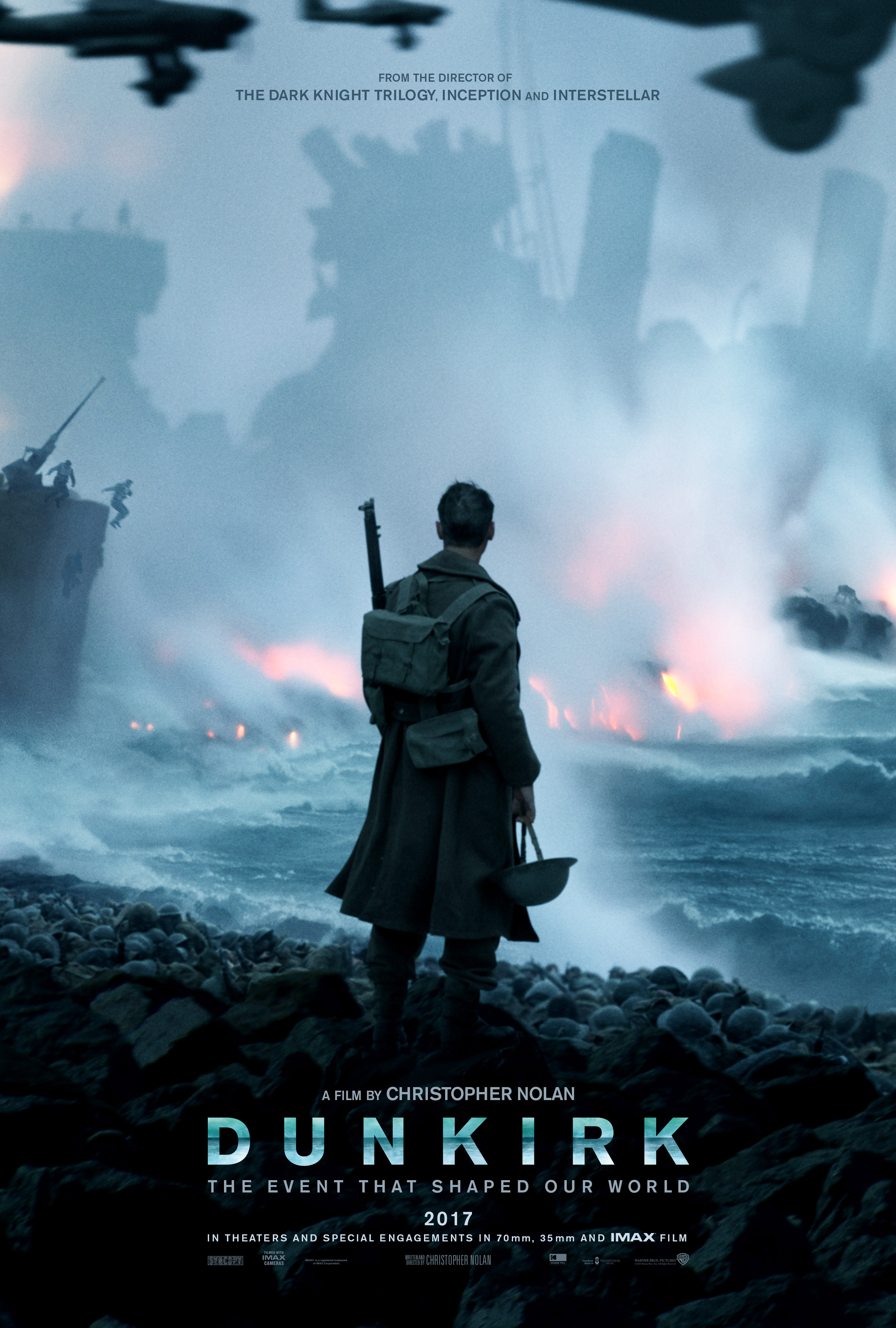
Dunkirk (2017)

Image is property of Warner Bros and Syncopy

Dunkirk – Film Review

Cast: Fionn Whitehead, Mark Rylance, Tom Hardy, Kenneth Branagh, Cillian Murphy, Harry Styles

Directors: Christopher Nolan

Synopsis: With the enemy surrounding them and closing in, the Allied forces are stranded on the beaches of Dunkirk, and their hopes of survival appear completely remote, barring an astonishing miracle…

Review: As a director, Christopher Nolan’s films have explored a variety of genres and topics, from deep space exploration, to dreams within dreams, within dreams, to a man who dresses up as a bat to clean up his city from crime. So for his next project, Nolan clearly fancied straying into new waters by making a war movie, one that specifically focuses on one small week in the heart of the Second World War, focusing on what has become known as the Miracle of Dunkirk. It was naturally intriguing to see what a director who has become so revered could do with this topic. With any project he directs, Nolan manages to leave a lasting impression on the audience, and with his latest, it’s another masterclass from Nolan.

It is May 1940, and with a total of around 400,000 men stranded on this beach, with boats to rescue them in scarce supply, their situation looks bleaker and bleaker with every hour that passes. Nolan chooses to tell this story from three different perspectives: Air, sea and land. And through what is what a remarkably short running time for a Nolan film (106 minutes) we watch as these three differing story-lines witness what is a defining moment in British history. Through sparse dialogue, Nolan takes his audience on an intense gripping journey as we watch these characters either battling for survival, doing whatever they can to save as many lives as possible, or flying a plane trying to down enemy planes.

CGI has become very prominent in modern day movie making, but Nolan here uses practical effects as much as he can, and it really adds so much authenticity to the story he is trying to tell. The planes, the boats and the like are all ones that were used in World War II, and filming in practical locations, including Dunkirk itself only adds so much more to the authenticity. The cinematography from Hoyte van Hoyetma, re-teaming with Nolan after Interstellar is flawless once again. The film’s editing is also terrific, it heightens the tension. And of course the score provided by Hans Zimmer is of the superb standard that one would expect from one of the world’s greatest film composers.

The extensive research that Nolan made on the operation ensures historical accuracy up to a point, but as the characters are not based on any real life people. Yet the characters that Nolan does use to tell this story are not as well utilised as they could have been. With such talented actors such as Mark Rylance, Cillian Murphy and Tom Hardy among others, the development on these characters is kept to a minimum, which is undeniably frustrating, but for the sake of the story, it does make sense. Though having said that, Fionn Whitehead has the most development, and for all the intrigue and raised eyebrows that followed when he was cast, Harry Styles demonstrated that he could definitely have a future in acting, with a very impressive debut performance.

Above all though, Nolan really demonstrates what is meant by the term “Dunkirk Spirit,” fierce determination in the face of very long odds. The story is perhaps not as thorough on the specifics of the evacuation but it certainly provides you with enough detail that will make you eager to go home and do some research. The lack of character development is frustrating, and the acting is not on par with say an Imitation Game. However, for nail biting intense war scenes, Nolan certainly gives such other WW2 films like Hacksaw Ridge and Saving Private Ryan a damn good run for their money, with an important history lesson thrown in for good measure.

Telling a story that needs to be told, and telling it with real authenticity that is gripping throughout, whilst conveying important themes, and a great attention to historical detail.