Posted in 2020-2029, Film Review

The Fantastic Four: First Steps (2025)

© Marvel Studios

The Fantastic Four: First Steps – Film Review

Cast: Pedro Pascal, Vanessa Kirby, Ebon Moss-Bachrach, Joseph Quinn, Julia Garner, Natasha Lyonne, Paul Walter Hauser, Ralph Ineson

Director: Matt Shakman

Synopsis: On a retro-futuristic parallel Earth, the Fantastic Four must defend the world against the sinister planet-eating threat known as Galactus…

Review: In such a golden age for superhero storytelling as the one we’re currently experiencing, we have seen all manner of comic book characters successfully adapted for both the big and small screens, from the massive ensemble team-up films to the most obscure characters, who have since become household names. Yet despite numerous attempts, the Fantastic Four has never achieved such success. We have seen the fun but flawed movies of the noughties to the unmitigated disaster that was Fant4stic. You would have been forgiven for thinking that someone had placed a curse on Marvel’s First Family, that they would never get an adaptation that would do them justice. After having done such wonderful work with the first (and you could make the argument for the best) TV show in WandaVision, enter Matt Shakman to well and truly break clobber that curse.

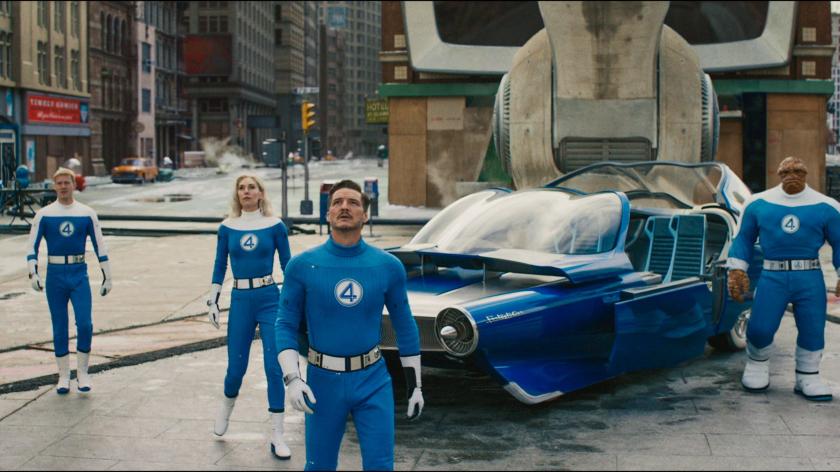
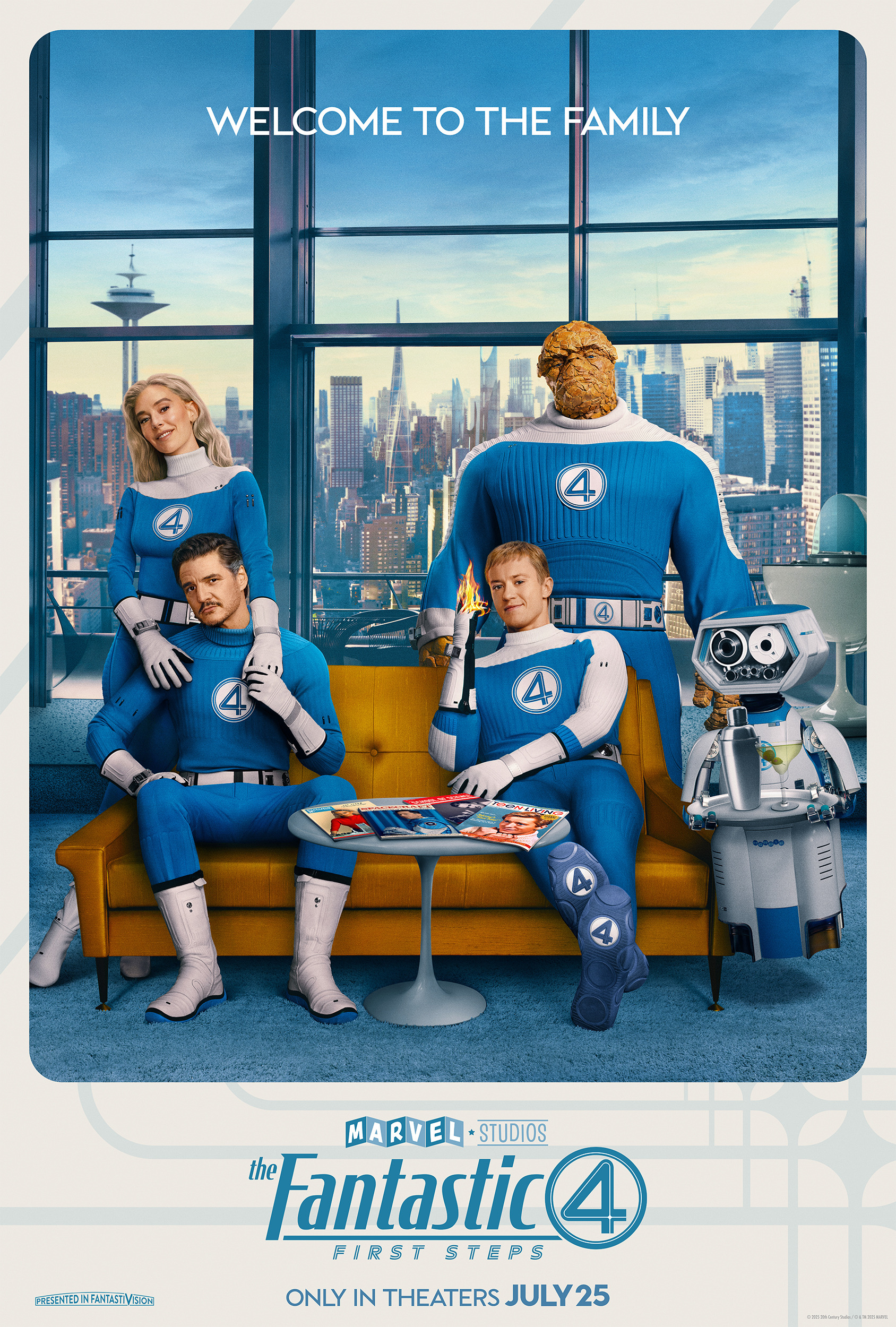
In a futuristic parallel world separate from the main Marvel timeline (Earth-828 to be exact) filled with advanced technology like flying cars and cool personal robot companions like H.E.R.B.I.E (an adorable scene-stealer), we learn through a series of newsreels it has been four years since our titular heroes blasted off into space on a mission where they were exposed to cosmic rays, which granted each of them superhuman powers. The supersmart Reed Richards (Pascal), who can stretch any part of his body, his brilliant wife Sue (Kirby) who can create force fields and turn invisible, Reed’s loyal best friend Ben Grimm (Moss-Bachrach) whose skin has been transformed into orange rock that grants him superstrength and durability. Last but certainly by no means least, Sue’s hot-headed brother Johnny (Quinn) can control fire and fly.

They are the planet’s sole protectors, and through their heroism, they have become celebrities whose ingenuity has enabled advances in technology and brought stability and peace to the world. With Reed and Sue preparing for the life-changing milestone that is parenthood, the four of them must deal with the arrival of the Herald, the Silver Surfer (Garner) who tells them their planet is “marked for death” with the impending arrival of the planet-eater Galactus (Ineson).
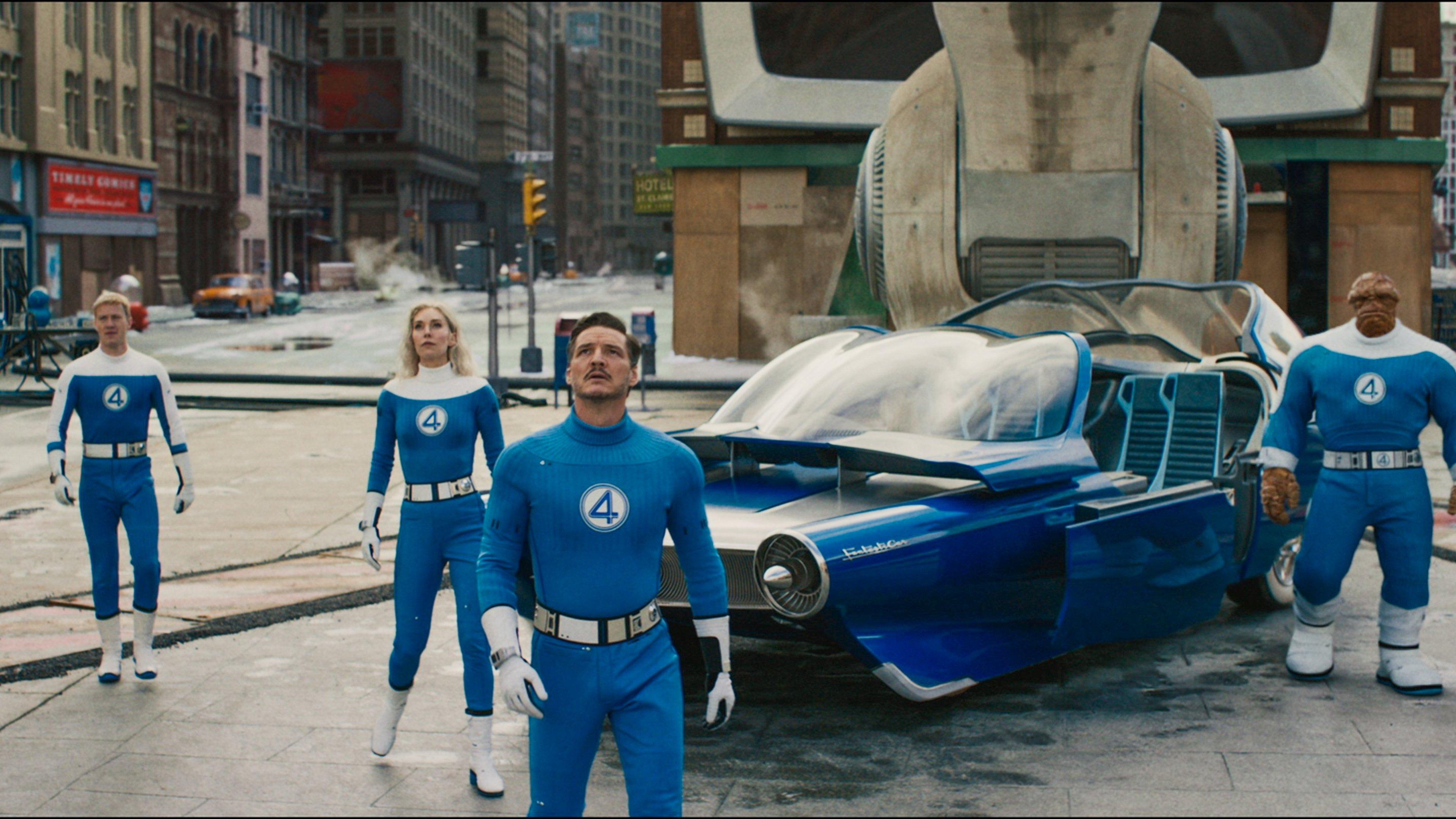
After a Phase Five that had some high points and arguably the lowest of the lows for the franchise (looking at you Quantumania), it makes sense to begin Phase Six with something of a reset and to establish Marvel’s first family in their own universe before their world collides with the main timeline as we know it. The script by Josh Friedman, Jeff Kaplan, Eric Pearson and Ian Springer keeps things focused squarely on the quartet and their dynamic, with no chance of any other superhero crashing into this world. There will be plenty of time for that in future Phase Six films. Having seen the origin story done before in the Fox era films, the decision to quickly bypass this allows the film time to explore Reed and Sue’s loving relationship, the camaraderie/playful banter between Johnny and Ben, and indeed, the togetherness and warm family embrace between the entire team is sincere and genuine.

With such pitch-perfect chemistry between the team, it’s a credit to the casting director that they absolutely nailed each casting choice (hurrah that the Oscars will at long last be giving these people their dues in next year’s ceremony). Pascal, continuing his bid for cinematic domination, expertly balances Reed’s intelligence and scientific nous while preparing for the enhanced responsibility of becoming a father. Moss-Bachrach’s Ben, despite his hard-as-rock exterior, comes off as very kind and gentle, particularly when demonstrating his strength to a group of schoolchildren. Quinn as Johnny exudes charm and charisma in flaming abundance. However, the MVP of the team is unquestionably Kirby’s Sue. A woman balancing impending motherhood, a heroic feat of endurance in itself, but all while leading diplomatic efforts on the international stage. This, combined with the true power she possesses, means she is a force to be reckoned with.
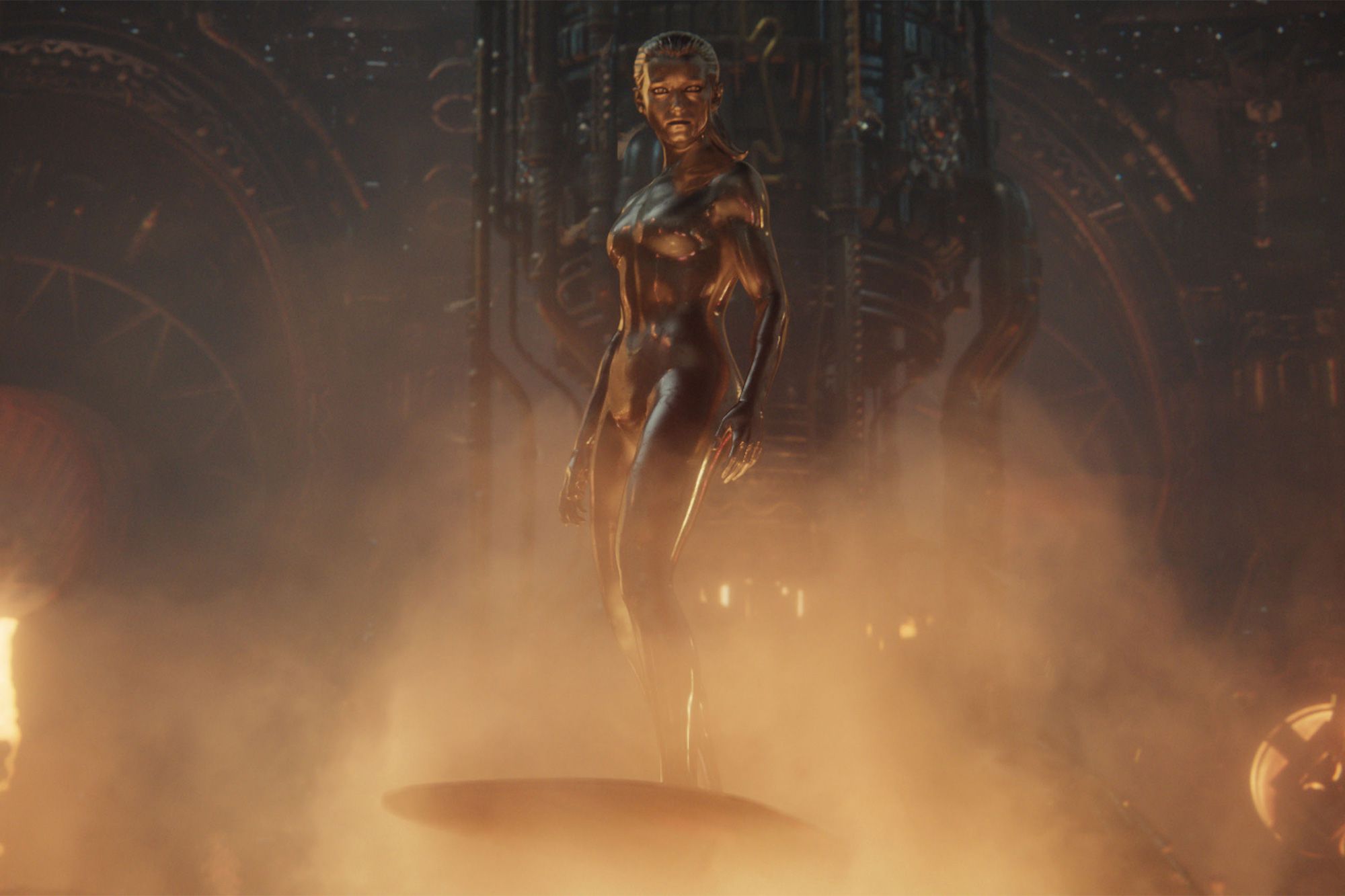
Speaking of forces to be reckoned with, while she doesn’t get a vast amount of screentime, the Silver Surfer remains a mysterious presence that Johnny cannot help himself be drawn to. Perhaps in this alternate universe, flames are attracted to metal, or beings with metallic skin? The Surfer, or Shalla-Bal to give her name, gives the team plenty to worry about. Yet, it is the gargantuan cosmic entity Galactus who poses an even greater threat. 2007’s Rise of the Silver Surfer reduced him to a cosmic cloud that feasts on planets. This iteration very much retains his desire to feast on worlds, but through an effective combination of practical costumes, CGI and Ineson’s imposing voice, the menacing factor is turned to the maximum and does justice to a fan favourite.

Having worked wonders with the MCU’s first (and arguably best) TV show, WandaVisionShakman brings that quirky vision to this universe through some brilliant worldbuilding. The sets of this alternative 1960s New York feel lived-in, and the technological advancements on display are so wonderfully realised, it is almost enough to make you green with envy that such a world doesn’t actually exist. With another fantastic score by Michael Giacchino (seriously, does this man ever miss?) Marvel’s first family have taken their first steps into the MCU, and at long last, have been given their well-deserved moment in the spotlight. Now, all roads lead to Doomsday. Set your countdown clocks accordingly.

With pitch-perfect chemistry between its leads and the perfect retro-futuristic setting to introduce them in, Marvel’s first family’s foray into the wider MCU is a roaring and flaming success! 

Posted in 2020-2029, Film Review

Gladiator II (2024)

© Paramount Pictures, Scott Free Productions and Lucy Fisher/Douglas Wick Productions

Gladiator II – Film Review

Cast: Paul Mescal, Pedro Pascal, Joseph Quinn, Fred Hechinger, Lior Raz, Derek Jacobi, Connie Nielsen, Denzel Washington, Yuval Gonen, Matt Lucas, Tim McInnerny

Director: Ridley Scott

Synopsis: After his home is invaded and conquered by the Roman army, Lucius Verus is forced to follow in the footsteps of the legendary Maximus and become a gladiator…

Review: “What is your Roman Empire?” is a question you may have noticed has popped up a lot in interviews recently, thanks to a trend on social media in which men are asked how often they think about the Roman Empire. If one were to put this question to Sir Ridley Scott, the answer would probably be a fair bit due to the fact among the legendary director’s distinguished filmography, many could point to 2000’s Gladiator as his magnum opus, and for good reason. The story of a Roman General who is betrayed and sees his family murdered on the orders of a corrupt emperor, then becomes a gladiator to seek vengeance, in this life or the next, has stood the test of time for its epic scope, an incredible array of characters, enthralling action sequences, and one of maestro Hans Zimmer’s greatest scores of all time. After nearly a quarter of a century, the Roman Empire evidently wasn’t far from Scott’s mind because, like a triumphant gladiator, he returns to the Colosseum, in thrilling style.

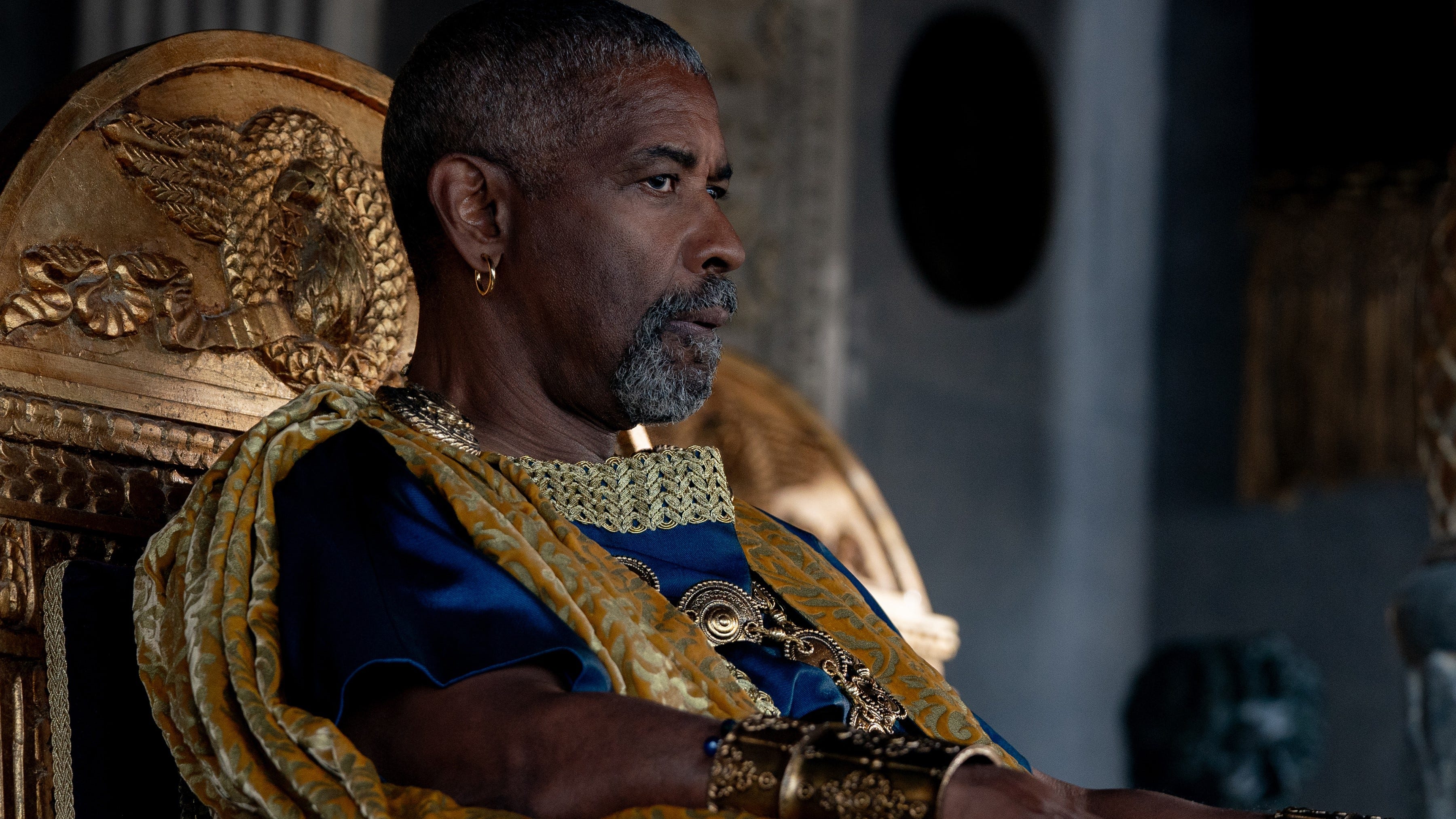
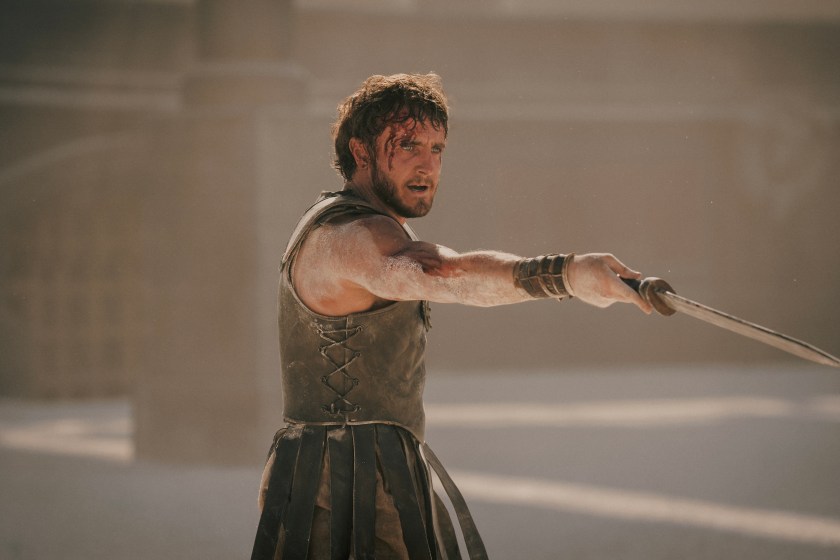
Sixteen years after the death of Maximus in the arena following a personal bout with his uncle Commodus, Lucius Verus, going by the alias “Hanno”, lives in the Roman province Numida with his wife Arishat, a far cry from his early life by his mother Lucilla’s side in preparation for a very regal future. In the years since, Lucius’s grandfather Marcus Aurelius’s dream that was Rome is a distant memory, with the twin Emperors Geta (Quinn) and Carcella (Hechinger) presiding over corruption and political turmoil.  This has left some in the Roman army, such as General Acacius (Pascal) increasingly disillusioned with their rule. When his home is conquered by the Roman army, Lucius follows in the footsteps of Maxiums and becomes a gladiator after being sold into slavery. He soon comes to the attention of former slave Macrinus (Washington) who senses Lucius’s rage and looks to offer him a path to satisfy the rage he has against those who invaded his homeland and murdered his family.

It’s remarkable that even at 86 years old, Ridley Scott shows no signs of slowing down and continues delivering spectacular films, particularly in the swords-and-sandals and historical epic genres, in a way few directors can match. However, creating a sequel to such a beloved and iconic masterpiece is undoubtedly a daunting and risky endeavour for this legendary director. Reteaming with his Napoleon screenwriter, David Scarpa’s screenplay wisely chooses to follow the narrative beats of the original. In this continuation, the protagonist experiences a significant loss, which drives him to channel his grief and intense rage against those responsible for inflicting great pain, for the loss of those he held dear and for those who cost He takes his vengeance to the Great Colosseum of Rome, where he must fight in several bloody battles to the death, while trying to convince anyone who will listen of his grandfather’s dream. However, as Lucius will soon find out, the depravity that went on while his uncle held the throne is nothing compared to what has been allowed to unfold in the nearly two decades since under the reign of the two men who sit on the throne that by all rights, should have been his.

Like a fatal blow in the Colosseum, the film’s powerful central message – that will strike deep and echo in eternity – lies in its damning indictment of modern-day politics. In recent years, the world has seen numerous figures rise to power on the back of populist rhetoric. When these charlatans rise to power, with their unchecked egos demanding loyalty from anyone and everyone while never giving anything in return, they leave considerable damage in their wake and show little to no thought or consideration for the harm they have inflicted with their arrogance and pomposity. It serves as a damning reminder of what can happen when such dangerous and unqualified demagogues are allowed to assume positions of power.

Such political chaos and turmoil allow for some savvy and cunning figures to exploit the corruption to get ahead, and this is where Macrinus thrives. Washington, the legend that he is, is clearly having a ball with this role and he captivates every time he’s on screen, so much so it matters not that he is speaking with his natural accent. Filling Maximum’s armour is a tough ask, but Lucius’s arc makes for a compelling one, and Mescal gives a suitably wounded and gritty performance, his anger and fury with those in power never too far from the surface. Meanwhile, Quinn and Hechinger are suitably deranged and loathsome as the maniacal emperors, channelling Commodus’s wickedness and being accompanied by a pet monkey, as you do.

Some of the action scenes in the original could very easily lay claim to some of the best action of Scott’s long and glittering career as a director. So how does the octogenarian director top what he accomplished 24 years ago, by putting the history book to the sword and refusing to give a damn whether or not the events depicted in the Colosseum have any foundation in historical fact. Battles with manic baboons, and rhinos, and filling the Colosseum with water to recreating a great naval battle. It’s all utterly bonkers and wild, how can you not be entertained and give a thumbs up and watch the carnage and bloody battles unfold on screen in all their bloody glory. Yet, given the film’s exorbitant $250m budget, some of the VFX looks lacklustre and merits a thumbs down. Matching the lofty standards set by the first film was always going to be a tall order, but with Scott committed to delivering swords to the wall action and the political machinations that are all too relevant today, gives this sequel the strength and honour it needs for the audience to say: We who love Gladiator salute you, Sir Ridley.

It could have been an almighty risk to return to the Colosseum 24 years after Gladiator conquered everything before it, but with a scathing critique of modern-day politics and a memorable Denzel Washington performance, this sequel will leave you more than entertained. 

Posted in 2020-2029, Film Review, London Film Festival 2020

Mangrove (2020)

Image is property of BBC Studios, EMU Films and Turbine Studios

Mangrove – Film Review

Cast: Letitia Wright, Shaun Parkes, Malachi Kirby, Rochenda Sandall, Gershwyn Eustache Jnr, Gary Beadle, Jack Lowden , Alex Jennings, Llewella Gideon, Nathaniel Martello-White, Richie Campbell, Jumayn Hunter, Sam Spruell, Joseph Quinn, Derek Griffiths

Director: Steve McQueen

Synopsis: Telling the true story of the Mangrove Nine who after protesting against a series of racially motivated Metropolitan Police raids, were put on trial at the Old Bailey…

Review: There’s no getting away from the fact that a watershed moment for the peaceful Black Lives Matter movement happened in 2020. A movement of people across the world demanding equality for black communities, garnered seismic momentum following a handful of appalling acts of blatant racial prejudice, amidst the backdrop of a society that is deeply entrenched in racism and segregation. In the same year that a fiercely powerful and furiously relevant piece of filmmaking from Spike Lee reminded the world of the challenges the black communities face in the USA. It’s important to remember, that it’s not just confined to the USA where black communities have, for far too long, been dealing with the ugly nature of racism. Steve McQueen continues that trend, as Mangrove, the first of his Small Axe anthology films, brings into sharp focus that like the USA, Britain has been dealing with institutionalised racism for decades.

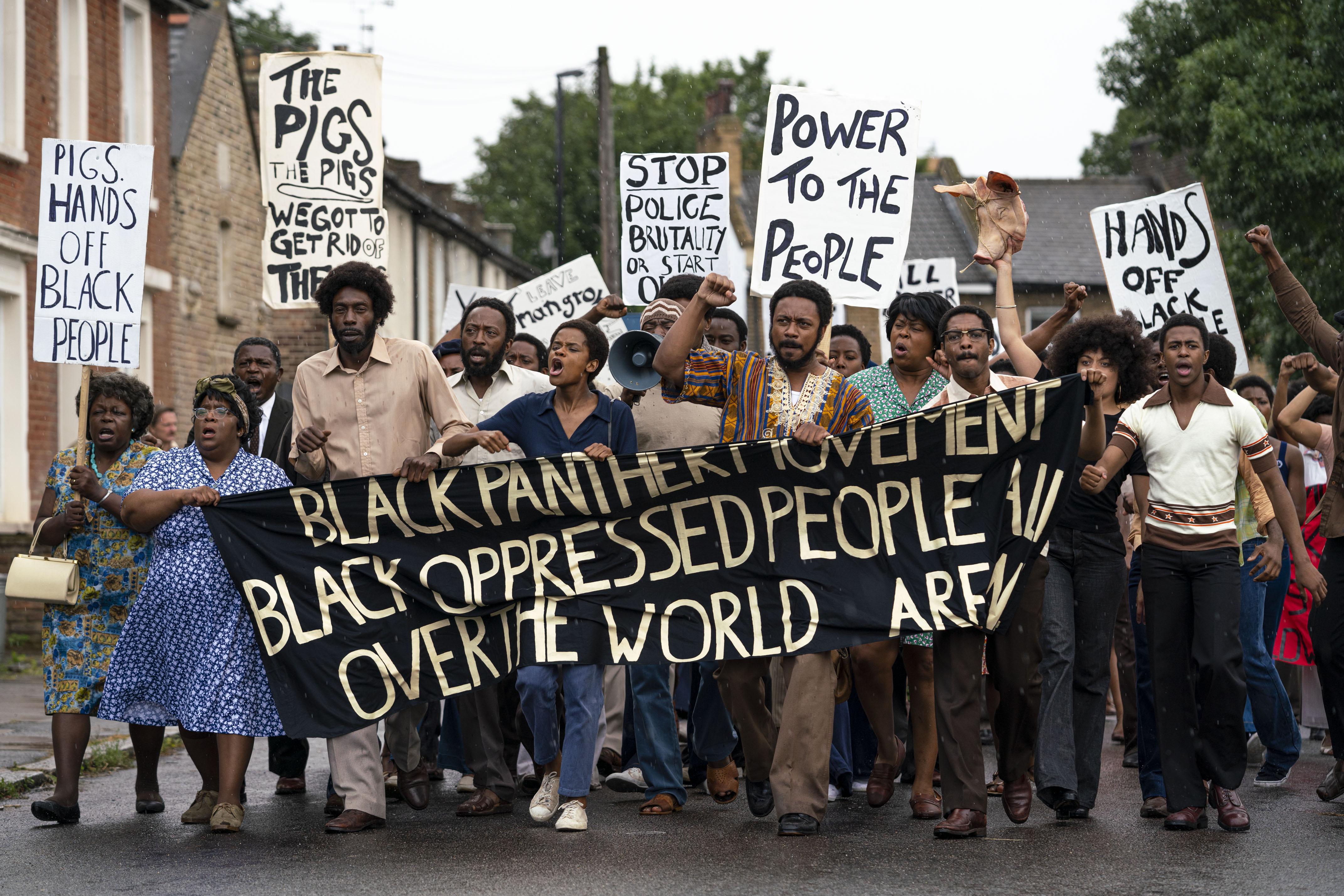
Set in 1960s London, Frank Crichlow (Parkes) runs the Mangrove restaurant, serving the finest Caribbean cuisine for the Notting Hill community. Yet despite no wrongdoing whatsoever, the restaurant is constantly being watched, and raided by the Police who are supposedly searching the business for drugs. Having become utterly and justifiably fed up of the constant and deliberately racially charged assault on the business, the black community protest against the Metropolitan Police and their appalling prejudice and bigotry. However, after the peaceful protest escalates into violence (due to the heavy handling of the demonstration by the police), the leaders of this new resistance find themselves in legal peril. Incredulously, they, not the police, are facing hefty criminal charges that could lead to substantial prison sentences.

Within the first few minutes of the film, McQueen establishes the Mangrove restaurant as a vibrant place to experience some excellent cuisine and enjoy the wonderful culture. With a thriving black community living in the area, for many people, the Mangrove restaurant represents their home away from home. Yet McQueen makes it disturbingly clear that not everyone in the community shares the love for the restaurant, its manager or its patrons. The first half of the film is an unflinching look at the institutionalised racism that the Metropolitan police bring down on this community, using blatantly fictitious excuses to carry out raids and stopping people in this community for no justifiable reason, purely down to the colour of their skin.

When the second half and the much publicised trial begins, it’s at this point that the film gets even better, and becomes considerably more tense. Every single one of these performances shine, but special mention must go to Shaun Parkes, Letitia Wright and Malachi Kirby. As the man who’s at the centre of this battleground, Parkes’s performance as Frank is initially quiet and reserved. He’s a man who just wants to run his business peacefully. Though understandably, when it comes under constant attack, he gets very animated when it comes to defending his business and his customers. Letitia Wright’s work with the Marvel Cinematic Universe has garnered her popularity across the world. However with this heart-breaking performance as Altheia Jones-LeCointe, the leader of the British Black Panther movement and a figurehead for those standing up against a system that is rigged against them, she gives the performance of her career. Likewise for Malachi Kirby’s Darcus Howe, a prominent Black Panther activist.

It’s hard to watch the trial unfold and and not be thoroughly disgusted at the blatant racism being depicted. From the treatment of the Mangrove restaurant to certain decisions made during the trial, as well the behaviour of some individuals during the trial. It’s indicative of the appalling nature of the crooked and corrupt system that they were up against. As events in 2020 have demonstrated, the issue of racism and equality for black and ethnic minority communities is one that feels more timely than ever. At one point a character utters the memorable line “Together we become stronger.” In this one of the most turbulent of years in living memory, this line of dialogue speaks volumes of the power of unity and togetherness, one that we as humanity, the single species that we are, must continuously unite behind.

Flawlessly acted, with a powerful and timely message at its heart, Mangrove shines an urgent spotlight on the deep rooted institutional racism that’s sadly still relevant in modern society.