Posted in 2020-2029, Film Review

Civil War (2024)

© A24

Civil War – Film Review

Cast: Kirsten Dunst, Cailee Spaeny, Wagner Moura, Stephen McKinley Henderson, Nick Offerman, Sonoya Mizuno, Jesse Plemons

Director: Alex Garland

Synopsis: A team of photojournalists document events on the ground as the United States is in the midst of a brutal civil war…

Review: “A date which will live in infamy”, the words of US President Franklin D. Roosevelt after the US naval base of Pearl Harbour came under attack on December 1941. However, they could just as easily have been words uttered in the wake of January 6th, 2021, when the world recoiled in horror as supporters of the disgraced former President Donald Trump, attacked the US Capitol in a violent insurrection after being told straight-up falsehoods about the Presidential election held just a few months prior. As the world watched, the ugliness and the depravity of those scenes were scarred into our memories as a moment where it felt like the US was at a tipping point and could very easily descend into the second Civil War in its history. This moment, an unprecedented one in history seems to have inspired this grounded and harrowing tale of war in a bitterly divided nation from Alex Garland.

Set in the near future, the country is in the midst of a civil war with multiple factions locked in a brutal fight against the other. On one side stands the Loyalist states which have stood by the President (Offerman), who it’s vaguely suggested has become something of a dictator as he is serving his third term in office. On the other side of the battlefield, stand numerous other factions which have seceded from the union, including the New People’s Army consisting of states in the north-west of the country, the Florida Alliance and crucially the Western Alliance consisting of the states of California and Texas. As the Western Alliance prepares for an offensive against Washington DC, war photojournalist Lee (Dunst), journalist Joel (Moura), and veteran journalist Sammy (McKinley-Henderson) prepare to make the perilous journey to the capital to document the events on the ground and in the hope of interviewing the president. They are joined by aspiring photojournalist Jessie (Spaeny), who idolises Lee’s work.
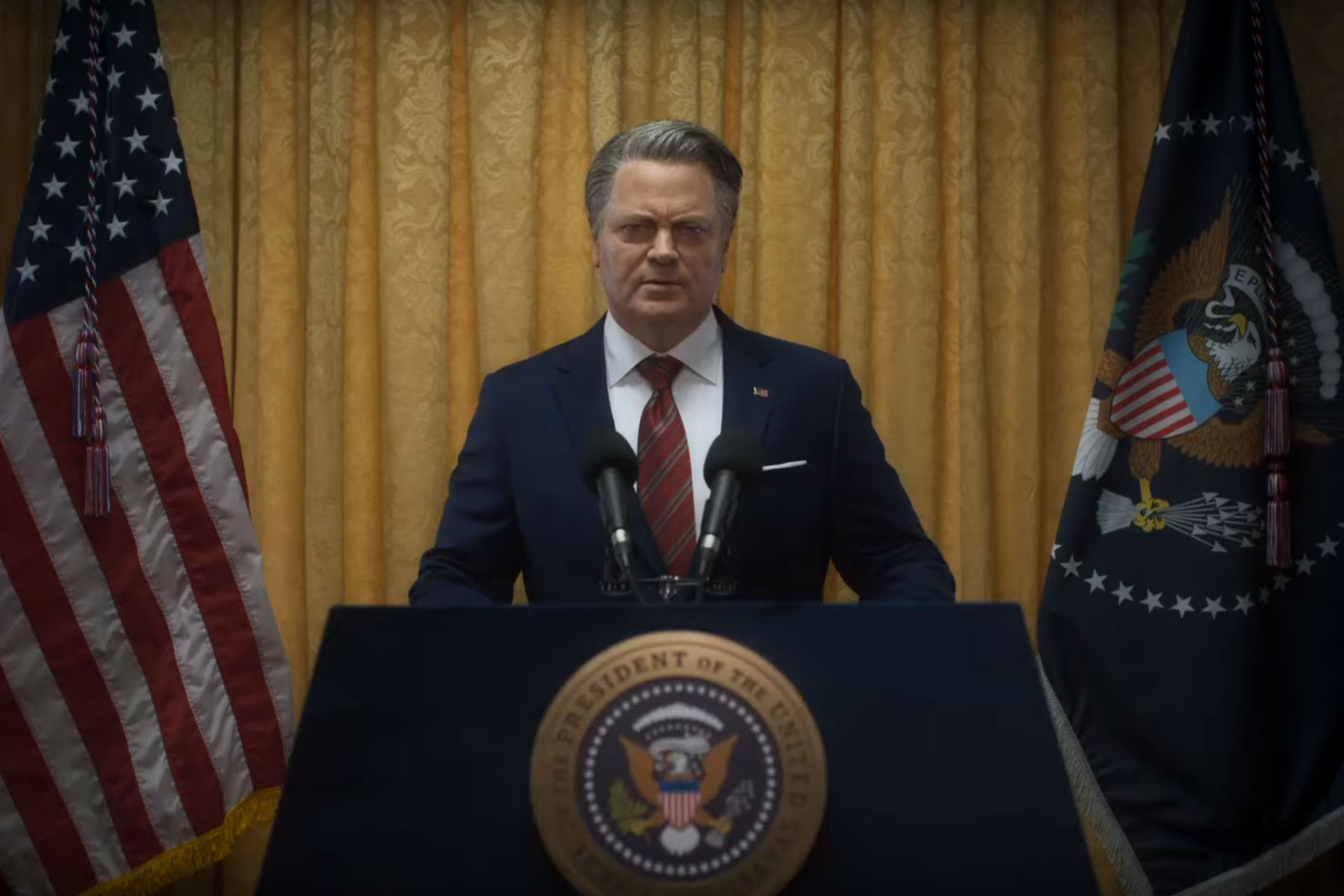
One would have to have been living under a rock to not know that in recent times, particularly since 2016, the United States has become a very divided nation, fraught with bitter political tension. Therefore, Garland’s script chooses to not pick a side in this conflict and instead frames the hostilities from the perspective of the journalists. Brave men and women who risk their lives to document the hostility objectively in the face of any conflict. The decision to frame the film from the perspective of the journalists is a pointed one, particularly given the fact their jobs have become considerably more challenging in recent years, stemming from certain former world leaders using their platform to viciously attack the media for simply doing their jobs and bringing the facts to light, even as such spurious terms like  “fake news” have become rampant. It is a sharp and necessary reminder of the essential jobs of the media, particularly in fraught times where conflict is raging, certain politicians who are only too eager to launch attacks on them as the foundations of society have crumbled, and civilisation as we know it has completely fallen into ruin.

Garland also uses this as a means to examine how the humanity of such journalists would be impacted when they have been in such close proximity to brutality and death for extended periods, particularly Dunst’s Lee. Within minutes of meeting her, you get the impression this is someone who has been through and witnessed more barbaric acts of violence and horror than any person should have over their lifetime. Dunst’s performance exudes a sense of world-weariness and exhaustion, yet despite this, she knows she must plough on, particularly given Jessie’s adoration for her and her work. Lee recognises Jessie’s potential, which prompts her to take Jessie under her wing, in a similar vein to how Sammy took Lee under his wing when Lee first started out. All the while Jessie, while keen to learn under her idol, is left severely shaken by some of the horrifying sights she sees while the group makes the journey to Washington DC.
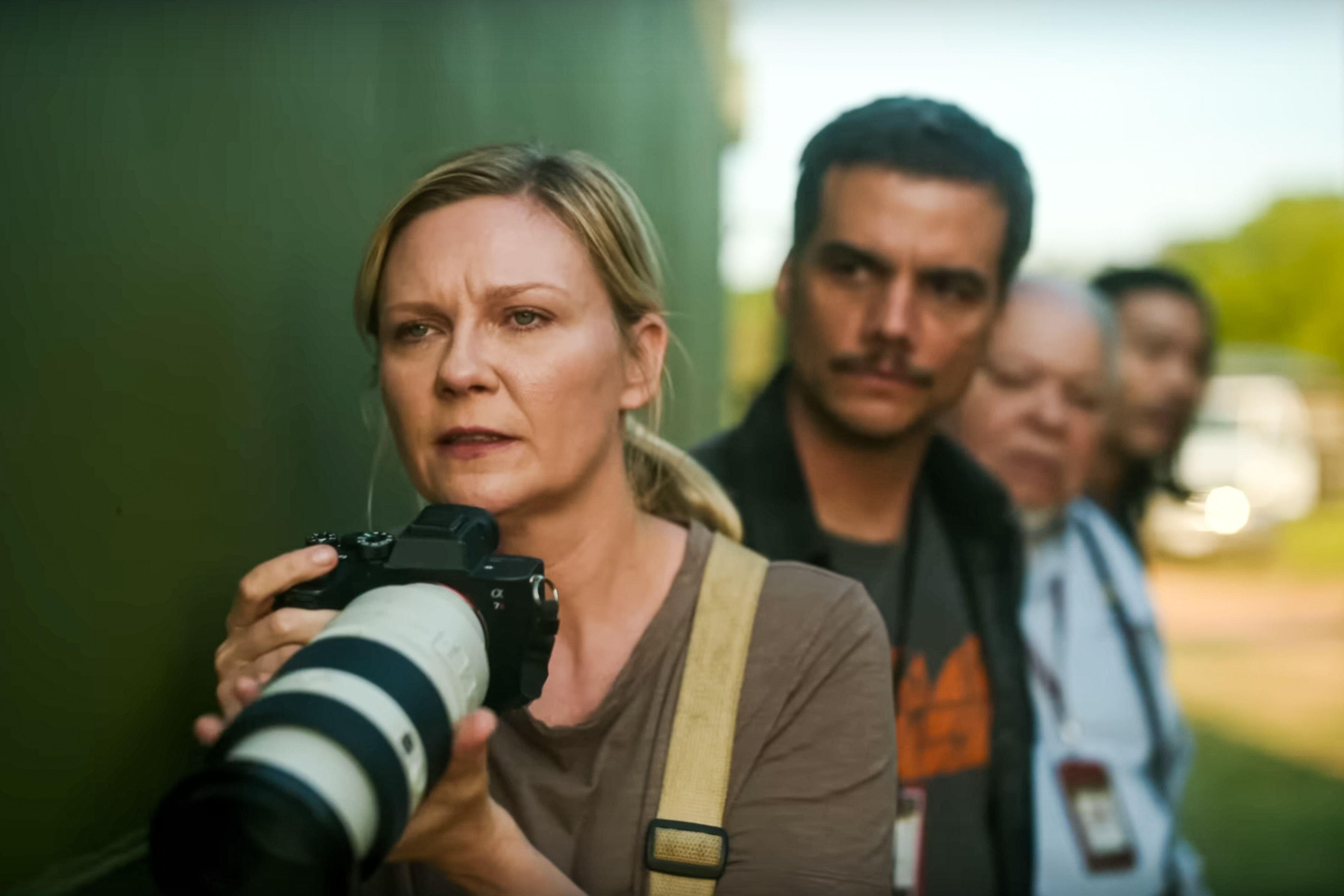
To say this is a perilous journey would be a severe understatement, as Garland does not hold back with depictions of what a modern-day Civil War in the States could look like. Striking images of former metropolises once teeming with life, reduced to barren wastelands with buildings smouldering in smoke. Shopping centres are left totally abandoned. Hostilities break out in broad daylight, with bodies strewn across the streets, and in some instances, soldiers proudly displaying their victories as a warning to the opposing forces. It is, at times, disturbing to watch and Garland’s direction is gritty and captures the brutality and ugliness of what would likely happen if a Civil War broke out on the streets of the US in the modern era. One scene is so fraught with tension and anxiety, that you could cut it with a knife, and will send audiences’ heart rates soaring.

In a time when the news cycle is dominated by seeing numerous regions the world over and utterly grim and heartbreaking stories emerging on a daily basis, Garland’s film is topical, to say the least about the horrors and devastation of war. However, while it drops hints here and there as to the causes, with Offerman’s President spouting very Trumpian rhetoric and the flashbacks to the Capitol insurrection, the key context for the events that led to the breakout of the war is left to the audience’s interpretation. You could certainly make the case the film had plenty more to say about the state of US politics. However, in an election year, with political tension showing no sign of letting up amid an ever-chaotic and violence-stricken world, the overarching message that war is hell is received loud and clear.

While it could have had more to say about the state of politics in our world today, Civil War remains a tense and gritty look at a society torn apart by conflict and the pivotal role of the media. 

Posted in 2020-2029, Film Review, London Film Festival 2023

Killers of the Flower Moon (2023)

© Apple Films, Paramount Pictures and Imperative Entertainment

Killers of the Flower Moon – Film Review

Cast: Leonardo DiCaprio, Robert De Niro, Lily Gladstone, Jesse Plemons, Tantoo Cardinal, Cara Jade Myers, Jillian Dion

Director: Martin Scorsese

Synopsis: Telling the true story of what became known as “The Reign of Terror” where a series of murders of members took place in the 1920s against of the Osage Native American tribe in the 1920s, sparking a major law investment investigation…

Review: The 1920s, or the Roaring Twenties, was defined by economic prosperity across Western society where certain sections of the population gained enormous wealth. However, as history has shown us time and time again, for some people, the wealth they have acquired is somehow never enough. They are driven by insatiable greed, which as the trailer summarised is “an animal that hungers for blood” and will be willing to commit appalling acts of violence to obtain such wealth. It is this greed and corruption, as well as a series of brutal murders which forms the basis for the latest epic from one of cinema’s greatest living directors.

Ernest Burkhart (DiCaprio) returns to Osage County, Oklahoma after serving in the First World War. In 1898, the discovery of huge quantities of oil underneath the land belonging to the Osage Native American tribe instantaneously made them some of the richest people in the world. Yet, the possession of this wealth provokes the Caucasian members of the community to conspire against the Osage tribe, to swindle them out of this money so that the wealth can come to them. To that end, Burkart is persuaded by his ruthless uncle William Hale (De Niro), to marry Osage member Mollie Kyle, so that were anything to happen to Mollie’s family, the lucrative wealth of this oil money would be passed on to Burkhart, and by extension, Hale.

Based on the book of the same name by David Grann, the screenplay by Scorsese and Eric Roth frames its story from the perspective of the Osage people. We see through their eyes how the viciousness, corruption, greed, as well as white supremacy, drove people to systematically kill off the Osage community. As one Osage leader puts it “they’re like buzzards circling our people”. Over 206 enthralling minutes, the film combines the love story between Mollie and Ernest, the central plot to eliminate the members of the Osage community, and the ensuing Bureau of Investigation (BOI) inquiry into the murders.

Marking the sixth collaboration between himself and Scorsese, DiCaprio is excellent as Burkhart. On the surface, he comes across as a bit dim-witted and extremely naive. Yet, he is also ambitious and is spurred on by his uncle to do some truly terrible things all in the name of acquiring more wealth. Even though she could sense from the start what his ulterior motive was, the romance between him and Mollie is genuine and causes Burkhart to be severely conflicted about the plans his uncle has put in place. In what is De Niro’s tenth feature film collaboration with his long-time friend, he is as thoroughly loathsome and reptilian as Hale. On the outside, he comes across as this charming and friendly soul towards the Osage. Yet, on the inside, he spouts white supremacist ideology which feels eerily reminiscent of modern times. It’s a scaled-back performance in many respects, as he does not need to raise his voice to cause other characters, especially Ernest, to be immensely afraid of a deadly reprisal given the power he holds in the region. Both actors have become Scorsese’s muses over the course of his glittering career, and to see them act opposite each other in a feature film for the first time is a special sight to see.

However, both are outshone by the film’s heart and soul, Lily Gladstone’s Mollie. She initially displays a quiet and restrained performance, even as members of her family and the Osage are being killed. Yet, as the film progresses, that restraint turns into something much more potent and fiercer when it comes to seeking justice for those Osage members who have been cruelly murdered, which results in the Bureau of Investigation sending agent Tom White (Plemons) down from Washington D.C. to lead an inquiry into the murders.

Having been given the largest-ever budget on a Netflix film with his previous film, Scorsese has followed suit with his move over to Apple (with a reported budget of $200m) and the results are as immaculate as one would expect. The filmmakers worked extensively with the Osage tribe to ensure authenticity and were permitted to shoot in areas where the events depicted happened. Similarly, the length gone to recreate genuine Osage costumes, particularly the blankets, demonstrates the tremendous level of care which went into the production. It gives the Osage community a voice which history has often tried to silence. Under the trusted eye of his regular collaborator Thelma Schoonmaker, the film’s editing is meticulous and keeps the film’s pace briskly moving along so that those 206 minutes whistle by, reinforcing the idea that no film is too long if it is paced correctly. Having served as cinematographer on his films since The Wolf of Wall Street, Rodrigo Prieto’s cinematography is visually striking in capturing the Oklahoma oil fields bathed in sunshine and when required,  shifts gear when it comes to the abject horror the Caucasian community wrought upon the Osage.

He might have now reached the age of 80, but for Scorsese age is clearly just a number. He continues to not let his age get in the way of producing stunning pieces of cinema which can shine a spotlight on an important piece of US history that should never be forgotten. It reminds the audience of the horrors and evils that can come with rampant corruption and greed, a lesson which still holds true in modern society. Cinemagoers across generations have been able to watch a master at work for over 60 years, and for that, we can be immensely grateful.

An epic and all-encompassing rumination on the perils of rampant greed, the ugliness of white supremacy and the US’s shameful history when it comes to the treatment of the Native American people. Another stunning achievement from one of the best directors cinema has ever seen. 

a


Posted in 2020-2029, Film Review, London Film Festival 2021

The Power of the Dog (2021)

© Netflix

The Power of the Dog  – Film Review

Cast: Benedict Cumberbatch, Kirsten Dunst, Jesse Plemons, Kodi Smit-McPhee, Thomasin McKenzie, Genevieve Lemon, Keith Carradine, Frances Conroy

Director: Jane Campion

Synopsis:  The relationship of two brothers in 1920s Montana is put to the test when one brother settles down and introduces his new wife, and her son, to the other brother…

Review: What does it to be a man? Even in modern times, the stereotype of the masculine man is someone who is expected to be hard, tough, and forbidden from displaying any sort of emotion that might deem them as being “weak” and “unmanly”. While someone on the outside may present themselves as tough and strong, inside they can easily be the polar opposite. They could potentially be hiding some pretty big insecurities. While we have broken down some of those absurd barriers of men being unallowed to express emotions, back in the 1920s, such an idea was unheard of. In her first film for 12 years, Jane Campion explores the concept of toxic masculinity from the perspective of two very different people.

The setting is Montana in 1925, and brothers Phil (Cumberbatch) and George Burbank (Plemons) are very successful ranch owners. Phil is the tough, masculine, and considerably more cruel brother. He regularly likes to throw around insults, especially towards George. George, by contrast, is in every sense, the polar opposite to Phil, who is considerably more friendly, gentle, and hospitable. When George meets Rose (Dunst), he becomes instantly smitten with her, and the two marry. When George brings Rose and her son Peter (Smit-McPhee) home to the Burbank ranch, it doesn’t sit well with Phil at all. Phil becomes determined to do all he can to make Rose’s and Peter’s lives a misery, which will only add further strain to the tense relationship that already exists between the two brothers.

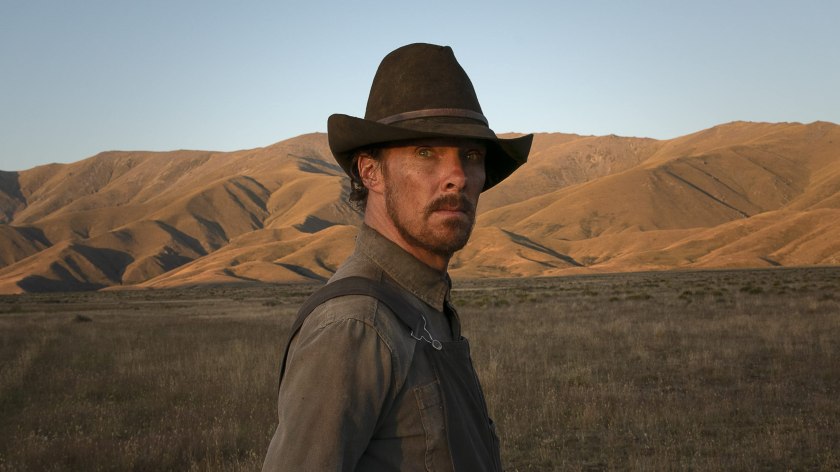
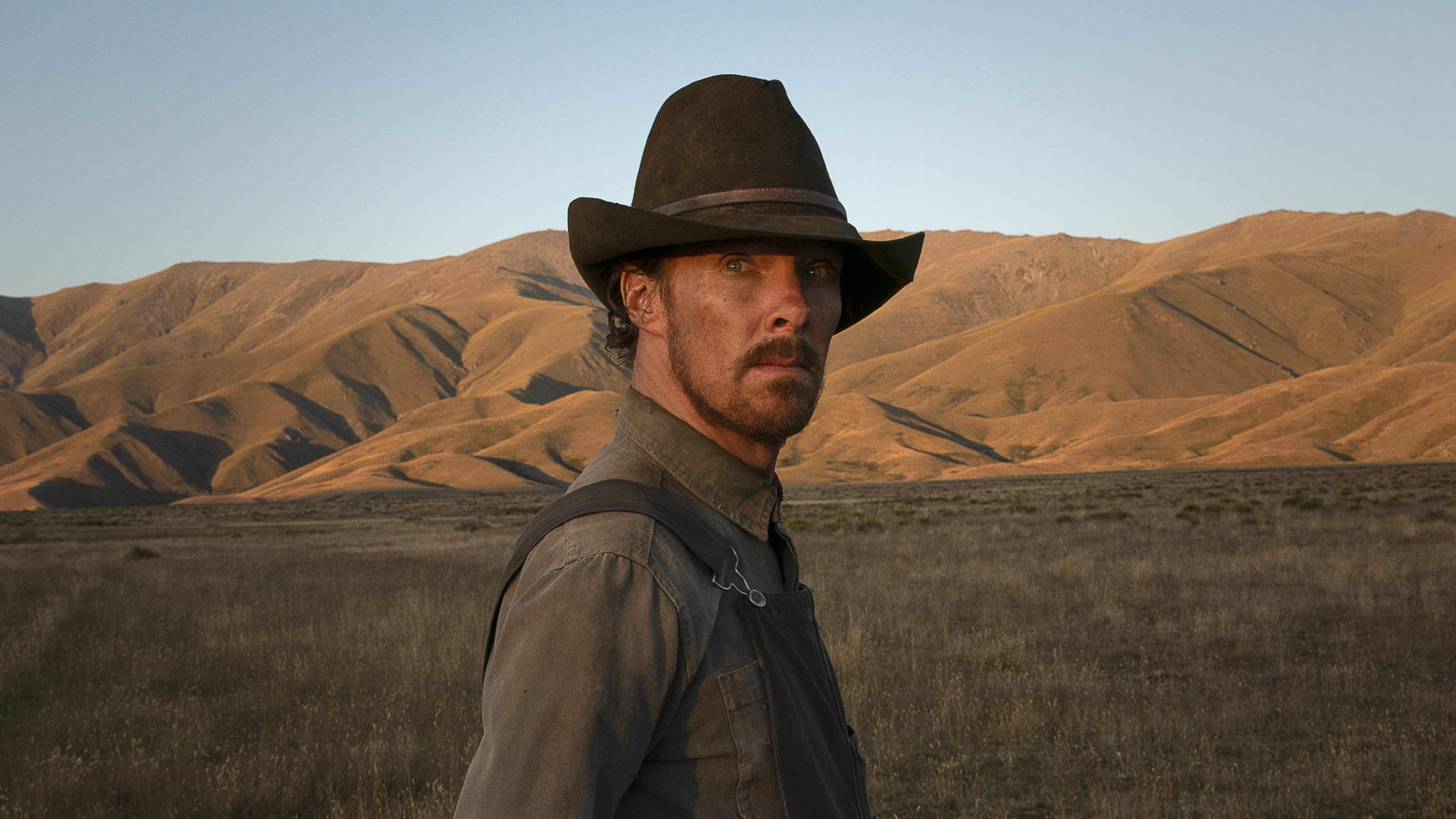
When you picture the average Western, you may picture a scene that depicts cowboys standing outside a saloon with their guns drawn in some rural town in the Wild Wild West. While the setting is sort of the same (substitute the majestic hills of New Zealand for those of rural USA), Campion instead takes a considerably different approach to this story. Adapted from the 1967 novel of the same name by Thomas Savage, her screenplay takes a considerably slow-burn approach to the story, that’s bathed in the gorgeous cinematography from Ari Wegner. Campion is clearly not interested in those tense shootouts, and is instead more focused on who the characters are as human beings. This is a personal, emotionally character-driven piece that thrives by taking its time to thoroughly examine the internal conflicts that are brewing inside these characters, and how these can spill over into their relationships with the other characters.

As the man at the centre of this story, Benedict Cumberbatch gives a terrific performance as Phil Burbank. Due to his tendency to willfully bully and insult others around him, he is definitely not the easiest character to spend some time with. He takes great satisfaction and joy in the mistreatment of others. Yet, as the film progresses, that brash and cruel exterior is peeled away, as not everything is what appears to be with Phil, and Cumberbatch’s nuanced performance captures this superbly. There’s an internal struggle within himself, and with some of the other characters that keep you invested as the film goes on, especially between Phil and Peter. Initially, one of the targets of Phil’s cruel insults due to his lisp and some of his mannerisms, it becomes fascinating to see how the relationships change once certainly layers are peeled back. Like Phil, there’s more to Peter than what you see at first glance, and Smit-McPhee’s performance is as equally nuanced as Cumberbatch’s.

As the dynamic between Phil and Peter is the one that is given the most screentime, it does mean that some of the others, most notably between Phil and George and Rose are not given enough screentime as they maybe could and should have. Plemons is severely underutilised once we reach the second half of the film. What’s more, for all of her strengths as an actress, Dunst also doesn’t have much to do except cower in fear whenever she comes face to face with Phil. This fear of her brother-in-law leads her down a dark path of addiction. While Dunst excels with the material she’s given, there was scope for a further exploration of the demons that she’s facing. Nevertheless, Campion’s slow-burn approach to this story and to the characters ensures that the mysteries that are at the centre of the film are extremely compelling to watch as they unravel. The Power of the Dog packs plenty of both bark and bite in equal measure.

A Western unlike any other. Campion’s long-awaited return to the director’s chair bides its time with its story, which makes the film’s atmospheric journey, and the mysteries contained within, all the more enthralling to watch.

Posted in 2020-2029, Film Review

Judas and the Black Messiah (2021)

Image is property of Warner Bros, Participant and Bron Creative

Judas and the Black Messiah  – Film Review

Cast: Lakeith Stanfield, Daniel Kaluuya, Jesse Plemons, Dominique Fishback, Ashton Sanders, Darrell Britt-Gibson, Lil Rel Howery, Algee Smith Martin Sheen

Director: Shaka King

Synopsis: After being caught committing a crime, a man is given a chance by law enforcement to become an FBI informant as they seek to infiltrate the Illinois chapter of the Black Panther Party, and keep tabs on its chairman, Fred Hampton…

Review: If someone were to ask you about the influential leaders of the Civil Rights Movement of the 1950s and 1960s, names like Martin Luther King Jr, Malcolm X, Muhammad Ali and Rosa Parks may jump to mind.  These are the names of extremely influential individuals who are the subject of curriculums worldwide, and have been the subject of numerous films, so that just about everyone on Planet Earth is likely to know who they are. Yet, there are certain influential figures that may not garner quite the level of attention, but when you learn more about them, it’s a wonder why they are not as well known as some of the the other influential leaders of this movement. This is most definitely applicable in the case of Frederick Allen Hampton, the chairman of the Illinois branch of the Black Panther Party, and the deputy chairman of the national BPP.

Having been caught committing a crime by the police, Bill O’Neal (Stanfield) finds himself in a very perilous position. If he’s charged, he faces almost certain prison time. However, there’s another option for him, as he’s given a chance to escape a jail sentence by becoming an FBI informant. The FBI are seeking to infiltrate the Illinois chapter of the BPP, to keep tabs on the activities of Fred Hampton and do whatever they can to suppress the party and Hampton’s agenda to help the lives of numerous people oppressed by the society they’re living in. Yet in the eyes of the government, and the FBI under J. Edgar Hoover, they consider Hampton to be a radical figure, and a substantial threat. Having had the most fleeting of appearances in last year’s The Trial of the Chicago 7, this is 100% Hampton’s story, and, from the very first minute, it’s an informative, exhilarating and extremely maddening chapter of US history that demands to be told.

Daniel Kaluuya is an actor who has been consistently pulling amazing performances over the last few years. From a run that started with his Oscar nominated turn in Get Out, to last year’s Queen & Slim, he has consistently proved why he is one of the best actors currently in the business. With this transformative turn as Hampton, it’s another absolutely magnetic performance to add to that list. Every time he speaks, his words captivate the crowds he’s talking to, which extends to the audience. You see a man who’s passionate about helping people who are oppressed by a government and a society that is built upon systemic racism. While Kaluuya’s performance is absolutely worthy of all the superlatives in the world, the equally impressive work of Lakeith Stanfield must not be overlooked, as it is, and an integral part of what makes the film work. We watch through his eyes as he initially is forced into this role of infiltration, and it’s a role that makes you want to hate him. Yet, as he spends more time by Hampton’s side, it’s plain to see that he’s starting to believe in the causes that Hampton and the Black Panthers are championing.

Alongside the outstanding performances of Stanfield and Kaluuya, are an equally impressive collection of supporting characters that includes, Dominique Fishback’s beautiful performance as Deborah, the most important person in Fred’s personal life. Additionally, there’s a great performance from Jesse Plemons as Roy Mitchell, the slimy and manipulative FBI agent who’s keeping tabs on O’Neal as he goes about his task of infiltration. With every word spoken in the film, it is clear what screenwriters, Shaka King, the Lucas brothers, and Will Berson are hoping to accomplish with this film. A clip plays near the beginning of the film of news reels from the time says “Those are not riots, they are rebellions, people are rebelling because of the conditions, and not because of individuals, no individual creates a rebellion.” When you watch the film’s events play out, it is fairly easy to connect the dots between the 1960s and the 21st century.

Given the horrifying events that the world saw in 2020, Shaka King’s film provides an urgent message that demands everyone’s attention. It is a damning indictment that in the decades since Hampton fought against this unjust society, that not nearly enough progress has been made. Furthermore, the events of not just last year, but of many years gone by, have shown that it is infuriatingly plain for all to see that the systemic oppression against people of colour in our society has not been dismantled. The rebellion that people like Hampton fought for, is one that must continue. “You can kill a revolutionary, but you can’t kill the revolution.” It is a testament to Hampton that in the years since he uttered those famous words: that they ring truer now more than ever. The fires of revolution are burning stronger than perhaps ever before, and long may that continue.

With a powerful and informative screenplay, combined with its two towering central performances, Shaka King’s film ensures that not only the world will know Fred Hampton’s name, they will never forget it.

Posted in 2010-2019, Film Review, London Film Festival 2019

The Irishman (2019)

Image is property of Netflix

The Irishman  – Film Review

Cast: Robert De Niro, Joe Pesci, Al Pacino, Ray Romano, Anna Paquin, Stephen Graham, Jesse Plemons, Harvey Keitel

Director: Martin Scorsese

Synopsis: An account of the life of Frank Sheeran, charting how he rose through the ranks of the mob, eventually arriving at the top where he meets the charismatic Jimmy Hoffa, and the circumstances that surrounded Hoffa’s disappearance…

Review: There’s no two ways about it, Martin Scorsese is the Godfather of gangster movies. With six of them to his name, the ones he has made rank as some of the very best films of this genre. They sit alongside the many incredible films that he has made throughout his long and illustrious career as a director. Though with his latest gangster epic, one of the most expensive Netflix productions to date, he has incredibly managed to surpass himself, by making one of the best crime/gangster films of the decade.

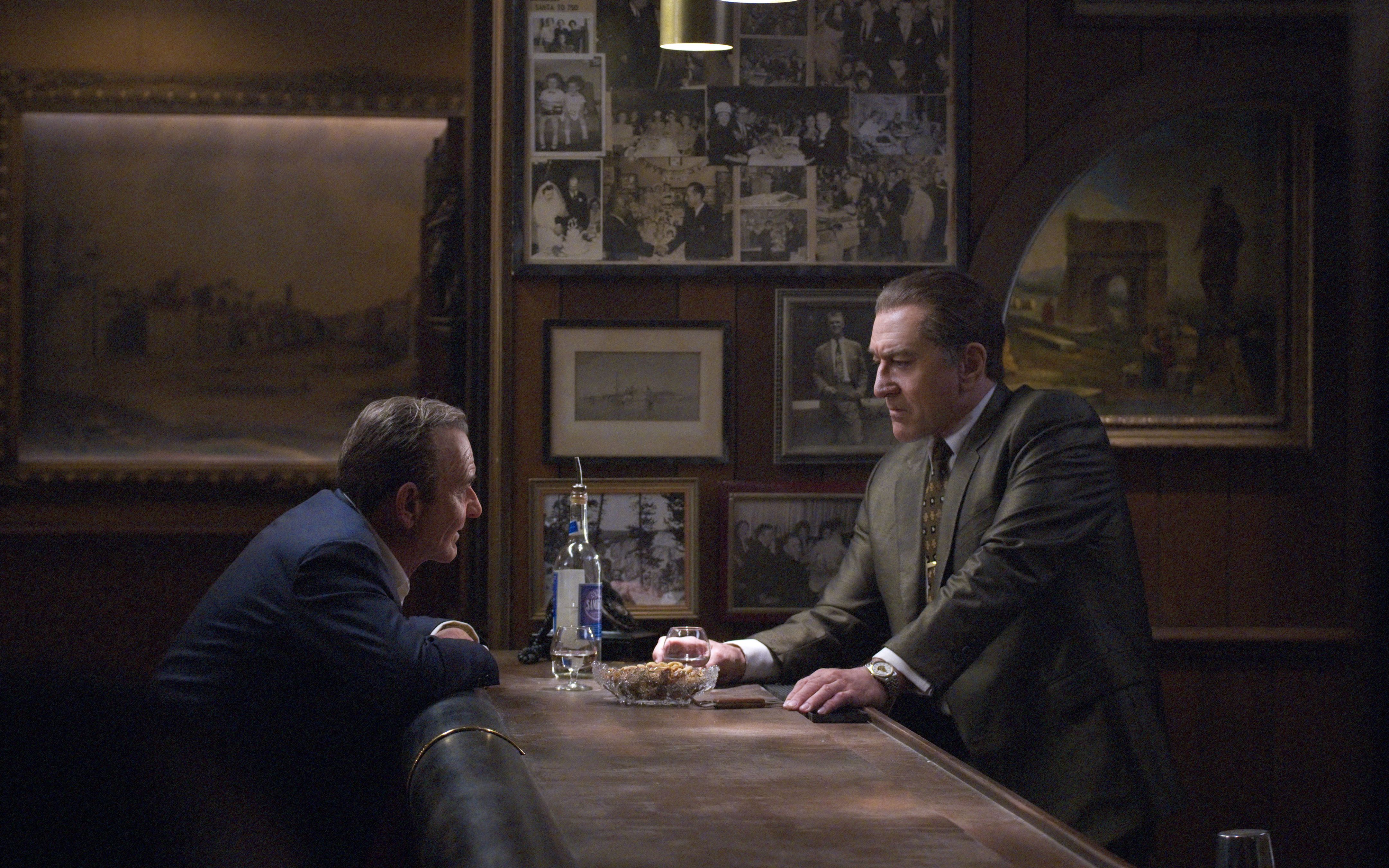
Spanning multiple decades, the film is told from the perspective of Frank Sheeran (De Niro). It begins with a flashback look at his early life, and how as a young man how he went from a soldier to becoming a hitman for the mob. Eventually, as he rises up the ranks gradually becoming more powerful and gaining more influence in the higher echelons, he meets and becomes close with the charismatic Union Leader Jimmy Hoffa (Pacino). Whilst simultaneously exploring how Frank became entwined in the circumstances that surrounded Hoffa’s disappearance.

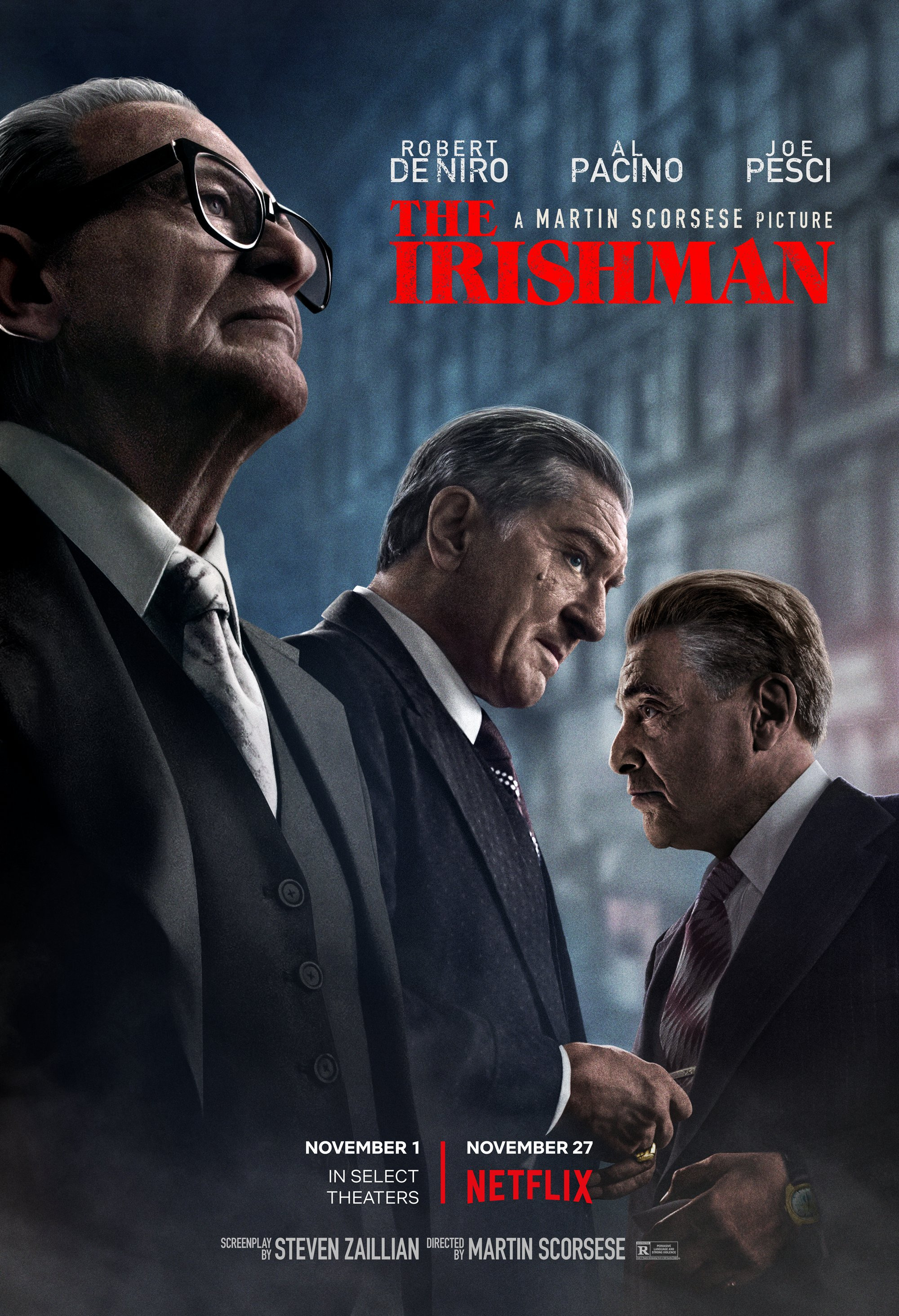
It should come as no surprise given the stature of the three leading men, and the four Oscars between them, that each and every one of them give powerhouse performances. Marking his ninth collaboration with Scorsese, Robert De Niro gives his best performance in a long time as Frank Sheeran. He’s far from a good guy, yet with an actor of De Niro’s immense charisma, there are sympathetic elements to Sheeran’s character. Though he might have retired from acting in the late 1990s, Scorsese reunites with Joe Pesci, to wonderful effect as crime boss Russell Buffalino. Though, it is Al Pacino’s magnificent, arguably career-best turn as Jimmy Hoffa that deserves the most plaudits. In a film with his fellow masters such as De Niro and Pesci, he steals the spotlight from just about every one of them.

With the three leading men, all on outstanding form, there’s an excellent group of supporting characters to give them capable support. Stephen Graham’s mobster underling, who is definitely not afraid to offer a piece of his mind during meetings. Likewise for Ray Romano’s hilarious turn as a Buffalino family lawyer. On the other hand, there are a number of supporting characters who are criminally underutilised. This is best exemplified by Anna Paquin, one of Sheeran’s daughters, especially as there was scope to explore her character in considerably more detail.

Coming in at just under three and a half hours, there’s extra pressure for a film of that length to hold the audience’s attention and justify that run time. With his trusted editor Thelma Schoonmaker once again by his side, she ensures that the film is riveting enough to hold the audience’s attention. Though it’s necessary to help set the latter parts of the film, the first act of the film does take its time to get into its stride. However, once the years have gone by and the endgame gradually comes into view, the thrills never let up once we arrive at the second and, especially the third act. Given that this is the shady underworld of the mob, violence is almost certainly commonplace. However, for the purposes of the story, Scorsese deploys a clever technique to let the audience know of the fate that befell some of these characters. Instead, he utilises the on-screen violence sporadically, for maximum impact.

Given the large amount of time that’s covered, the passage of time is illustrated through an excellent combination of hair and makeup and the de-ageing technology that has been popularised by the likes of the Marvel Cinematic Universe. Though there’s one scene where it looks a bit iffy, it’s well done and effective to tell the ambitious nature of the story. For all those who may write off Netflix and its eligibility for the big prizes during award seasons, one thing is for sure, is that they aren’t afraid to spend the big money on their productions. Furthermore, when you’re bankrolling a high-calibre director like Scorsese, you simply can’t put a price when it comes to telling riveting cinema, featuring stories that absolutely deserve to be seen on the largest screen possible.

With three impeccable leading performances at its core, under the masterful vision of the Godfather of the Gangster movie, The Irishman is an ambitious, enthralling, and poignant triumph for a legendary filmmaker still at the top of his game.