

Don’t Worry Darling – Film Review
Cast: Florence Pugh, Harry Styles, Olivia Wilde, Gemma Chan, KiKi Layne, Nick Kroll, Chris Pine
Director: Olivia Wilde
Synopsis: A housewife living in an idyllic neighbourhood in the 1950s with her husband begins to suspect not everything is as it appears to be in their perfect community…
Review: It is always interesting to see what happens when an actor opts to move from in front of the camera to try their hands at directing. In the case of Olivia Wilde, her directorial debut Booksmart proved to be an uproarious comedy which explored what happens when two studious high school students opt to swap their books for one night of raucous partying. Unfortunately in the run-up to the release of her sophomore feature, much has been made of the reported drama that has seemingly plagued the film in the build-up to its release. From reported arguments between cast members during the production, reported arguments between cast members, and even more drama during its premiere at the Venice Film Festival which has all cast a very large shadow over the project. With this in mind, one would have hoped all the drama would fade into the background had Wilde followed up her wonderful directorial debut with another roaring success. Unfortunately, it doesn’t quite live up to that billing.
In 1950s America, in the picturesque but isolated neighbourhood of Victory, lives Alice (Pugh) and her husband Jack (Styles). In this community, while all the men go off to work on their mysterious jobs during the day, overseen by Frank (Pine), all of the women are expected to be at home doing chores enjoying all of the comforts the community of Victory has to offer. While at night, the couples mingle and throw lavish parties. However, Alice soon begins to experience strange events which lead her to question her existence in this community and suspect something may be amiss with their idyllic lives.

Without any question of a doubt, the greatest asset of the movie is another incredible performance from Florence Pugh. An actor who continues to demonstrate every time she’s on-screen why she is one of the most popular, and best, actors working today. She commits everything to her performance and we watch how this seemingly perfect lifestyle, where she has everything she could possibly want, slowly begins to crumble around her. It leads her down a dark and disturbing path where she soon starts to question everything, including what it is that Jack and all of the other men are really doing at Victory HQ, leading some of the other residents of Victory to dismiss her as paranoid and delusional. After his incredible debut performance in Dunkirk, Harry Styles had the unenviable task of acting alongside his talented co-star. While he can’t quite make up his mind about his character’s accent, he does a solid enough job and has decent chemistry with his co-star, but Pugh outshines him, and everyone else. Furthermore, aside from a rather menacing turn from Chris Pine as the leader of this community, the rest of the cast is severely underutilised, particularly Gemma Chan and KiKi Layne.
Matthew Libatique’s superb cinematography expertly juxtaposes the sun-drenched tranquillity of Victory with the dark and sinister imagery of burlesque dancers hinting at something deeply sinister at the heart of this community. Wilde steps up her game as a directing and brings a unique visual flair to this contrasting imagery, while she also delivers some pulsating chase sequences in the third act. However, what ultimately really lets the film down is its severely lacklustre script. Reteaming with Katie Silberman, one of the co-writers of Booksmart, it starts on a strong footing as it maintains the intrigue as Alice begins to investigate what is really happening in this perceived utopia these people find themselves. Furthermore, the unnerving score from John Powell maintains the suspense as some rather disturbing truths soon come to light. Without getting into spoiler territory, the film’s exploration of pertinent themes, namely the patriarchal nature of society and the male gaze is to be commended. Unfortunately, once certain details about the world of Victory and its inhabitants have come to light in the third act, the reveals are wholly unsatisfying as they fail to fully develop and expand on them. It all amounts to sheer frustration that by the time the credits begin to roll, the audience is left with more questions than answers.
Despite these shortcomings, Wilde cannot be faulted for her bravery in following up her extremely successful directorial debut with an ambitious sophomore effort which reinforces her as a director to keep an eye on. It is ultimately a real disappointment given the scope of the project and the talent in front of and behind the camera, that potential has frittered away by the time the credits begin to roll. A real shame, darling.
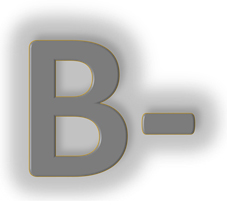
Despite a premise bursting with ideas and promise, not even a stellar performance from Pugh can prevent Wilde’s follow-up to her brilliant directorial debut from failing to capitalise on its vast potential.



 Through the Silver Screen