Posted in 2020-2029, Film Review

The Long Walk (2025)

© Lionsgate and Vertigo Entertainment

The Long Walk – Film Review

Cast: Cooper Hoffman, David Jonsson, Garrett Wareing, Tut Nyuot, Charlie Plummer, Ben Wang, Roman Griffin Davis, Joshua Odjick, Judy Greer, Mark Hamill

Director: Francis Lawrence

Synopsis: In a dystopian United States, 50 teenage boys must walk until only one is left standing…

Review: Throughout the long history of the United States, the notion of the country descending into a nightmarish hellscape ruled by an authoritarian regime should not feel relevant in modern times. Yet, given its current leader and the state of the world in general, it remains an all-too-familiar reality. A 1979 novel written by the one and only Stephen King (under the pseudonym Richard Bachman) feels more pertinent than ever, given the hellish state of the country today. In Francis Lawrence, a director who knows a thing or two about helming multiple films set in a dystopian US devastated by civil war, having directed all but one of the films in The Hunger Games franchise. A franchise which also featured brutal contests where participants fought for survival until only one remained, there couldn’t be a more apt director to translate a depressingly relevant visualisation of the US to the big screen.

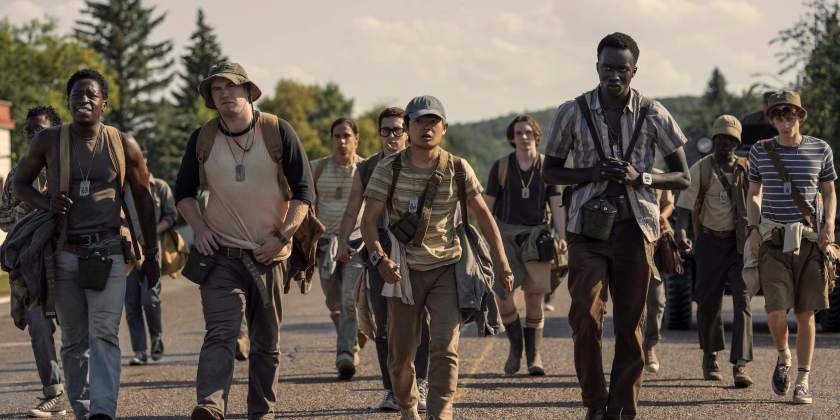
Set in an alternate 20th century, in an attempt to inspire patriotism and imbue a work ethic among its citizens amid a severe economic downturn, the brutal totalitarian military regime in charge of the country set up an annual competition known as The Long Walk. 50 teenage boys, one from each state, are selected to compete. The rules are simple: they must walk for hundreds of miles across an open road at a pace of three miles per hour until there is only one competitor left standing. Any competitor who falls below that pace is given three warnings to get back up to speed. If they fail to do so after the third warning, they will have their “ticket punched” by the armed soldiers patrolling the route, with a bullet.

Four dozen impoverished souls walking for miles across nothing but flat terrain, occasionally breaking through the sparse pockets of civilisation, could quickly become tedious and monotonous. However, over 108 utterly absorbing and tense minutes, JT Mollner’s screenplay keeps the proceedings moving swiftly and remains intensely gripping by focusing on these young men, pushed into this dangerous and gruelling trek, as they cling to the hope of being the victor. In a contest where the winner will claim a substantial cash prize and the chance to have one wish granted, it seems unlikely that any bonds will form among the walkers. Yet, this is precisely what makes the film so compelling. Some choose to form alliances, while others resort to antagonistic tactics. As the miles pass and day turns into night, then into the next day, the sound of gunfire as numerous competitors are eliminated shocks those remaining into continuing to put one foot in front of the other. It never once loses momentum.

Such is the strong brotherhood that forms between a handful of these young men, it wouldn’t nearly be as impactful if it were not for excellent performances across the board. As the central protagonist, Cooper Hoffman’s Ray Garraty is motivated to partake in the walk due to deeply personal circumstances. The bond he forms, particularly with David Jonsson’s Peter McVries, is the relationship that drives the film forward. Jonsson, once again proving what a phenomenal talent he is, exudes charisma and determination even in the face of such gruelling and unforgiving circumstances that the other boys, including Ben Wang’s Hank, Charlie Plummer’s Gary and Garrett Wareing’s Billy, rally around him. The boys are also united by their burning hatred for the callous Major, an extremely effective villainous performance by Mark Hamill, channelling the ruthlessness and gruffness of Full Metal Jacket’s Sergeant Hartman.

Having been somewhat held back by the constraints of The Hunger Games franchise in portraying the violence of the games, Lawrence faces no such restrictions here. The manner in which those who fall behind and, for whatever reason, be it injury, a need to relieve themselves, or just plain exhaustion, do not get back up to speed is unflinching and brutally violent. It is uncompromising in the depiction of a regime which will not hesitate to use military violence and intimidation to keep people in line, an ominous parallel to the 21st-century America, where the so-called leader of the free world has demonstrated his desire to deploy military force against his own people.

While the film could have offered more context about the war that led to the fall of democracy and the rise of authoritarianism, it also could have done without such an abrupt and rushed ending. Nevertheless, the relevance of this story, first written by King nearly 50 years ago, strikes a powerful chord in today’s political climate. It serves as a vital reminder that, even in the face of brutal authoritarian rule, humanity must persist, continue, and fight on, even if you have walked for hundreds of miles, and the temptation to give up may be overwhelming.

Bolstered by a pair of gripping performances from Hoffman and Jonsson, The Long Walk is a tense and powerful tale of the human spirit and the necessary struggle to take a stand in the fight against oppression and authoritarianism. 


Posted in 2020-2029, Film Review

Civil War (2024)

© A24

Civil War – Film Review

Cast: Kirsten Dunst, Cailee Spaeny, Wagner Moura, Stephen McKinley Henderson, Nick Offerman, Sonoya Mizuno, Jesse Plemons

Director: Alex Garland

Synopsis: A team of photojournalists document events on the ground as the United States is in the midst of a brutal civil war…

Review: “A date which will live in infamy”, the words of US President Franklin D. Roosevelt after the US naval base of Pearl Harbour came under attack on December 1941. However, they could just as easily have been words uttered in the wake of January 6th, 2021, when the world recoiled in horror as supporters of the disgraced former President Donald Trump, attacked the US Capitol in a violent insurrection after being told straight-up falsehoods about the Presidential election held just a few months prior. As the world watched, the ugliness and the depravity of those scenes were scarred into our memories as a moment where it felt like the US was at a tipping point and could very easily descend into the second Civil War in its history. This moment, an unprecedented one in history seems to have inspired this grounded and harrowing tale of war in a bitterly divided nation from Alex Garland.

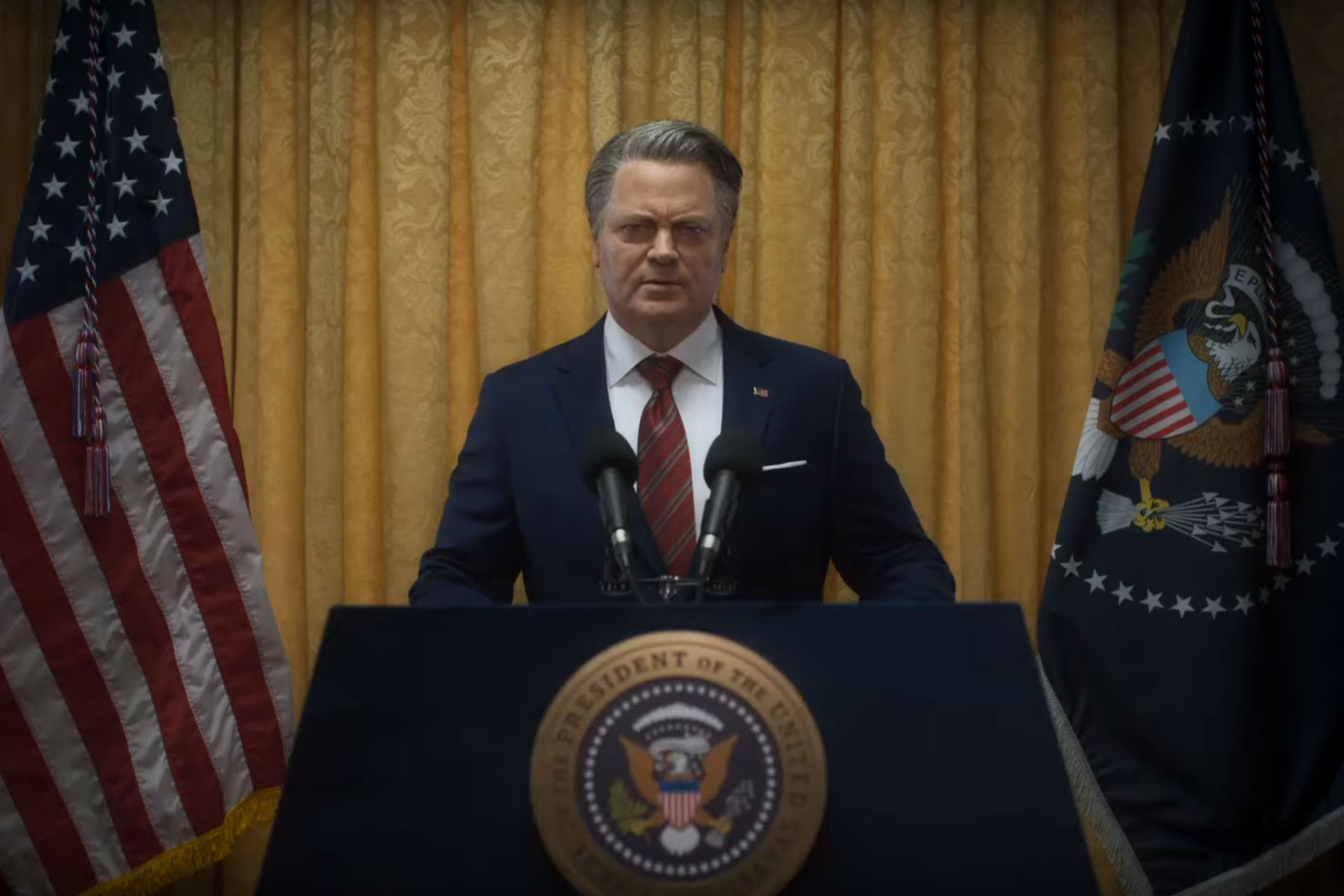
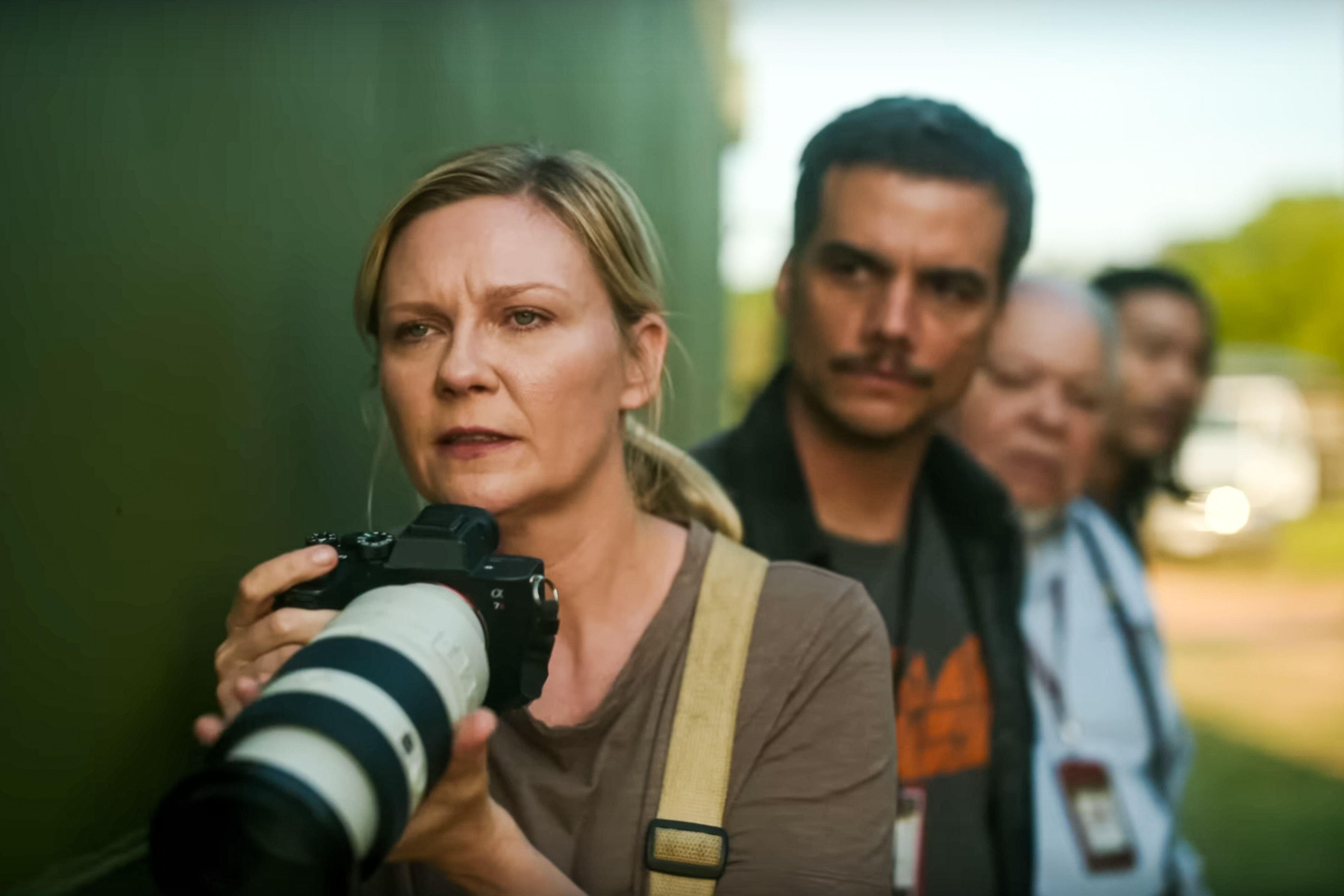
Set in the near future, the country is in the midst of a civil war with multiple factions locked in a brutal fight against the other. On one side stands the Loyalist states which have stood by the President (Offerman), who it’s vaguely suggested has become something of a dictator as he is serving his third term in office. On the other side of the battlefield, stand numerous other factions which have seceded from the union, including the New People’s Army consisting of states in the north-west of the country, the Florida Alliance and crucially the Western Alliance consisting of the states of California and Texas. As the Western Alliance prepares for an offensive against Washington DC, war photojournalist Lee (Dunst), journalist Joel (Moura), and veteran journalist Sammy (McKinley-Henderson) prepare to make the perilous journey to the capital to document the events on the ground and in the hope of interviewing the president. They are joined by aspiring photojournalist Jessie (Spaeny), who idolises Lee’s work.

One would have to have been living under a rock to not know that in recent times, particularly since 2016, the United States has become a very divided nation, fraught with bitter political tension. Therefore, Garland’s script chooses to not pick a side in this conflict and instead frames the hostilities from the perspective of the journalists. Brave men and women who risk their lives to document the hostility objectively in the face of any conflict. The decision to frame the film from the perspective of the journalists is a pointed one, particularly given the fact their jobs have become considerably more challenging in recent years, stemming from certain former world leaders using their platform to viciously attack the media for simply doing their jobs and bringing the facts to light, even as such spurious terms like  “fake news” have become rampant. It is a sharp and necessary reminder of the essential jobs of the media, particularly in fraught times where conflict is raging, certain politicians who are only too eager to launch attacks on them as the foundations of society have crumbled, and civilisation as we know it has completely fallen into ruin.

Garland also uses this as a means to examine how the humanity of such journalists would be impacted when they have been in such close proximity to brutality and death for extended periods, particularly Dunst’s Lee. Within minutes of meeting her, you get the impression this is someone who has been through and witnessed more barbaric acts of violence and horror than any person should have over their lifetime. Dunst’s performance exudes a sense of world-weariness and exhaustion, yet despite this, she knows she must plough on, particularly given Jessie’s adoration for her and her work. Lee recognises Jessie’s potential, which prompts her to take Jessie under her wing, in a similar vein to how Sammy took Lee under his wing when Lee first started out. All the while Jessie, while keen to learn under her idol, is left severely shaken by some of the horrifying sights she sees while the group makes the journey to Washington DC.

To say this is a perilous journey would be a severe understatement, as Garland does not hold back with depictions of what a modern-day Civil War in the States could look like. Striking images of former metropolises once teeming with life, reduced to barren wastelands with buildings smouldering in smoke. Shopping centres are left totally abandoned. Hostilities break out in broad daylight, with bodies strewn across the streets, and in some instances, soldiers proudly displaying their victories as a warning to the opposing forces. It is, at times, disturbing to watch and Garland’s direction is gritty and captures the brutality and ugliness of what would likely happen if a Civil War broke out on the streets of the US in the modern era. One scene is so fraught with tension and anxiety, that you could cut it with a knife, and will send audiences’ heart rates soaring.

In a time when the news cycle is dominated by seeing numerous regions the world over and utterly grim and heartbreaking stories emerging on a daily basis, Garland’s film is topical, to say the least about the horrors and devastation of war. However, while it drops hints here and there as to the causes, with Offerman’s President spouting very Trumpian rhetoric and the flashbacks to the Capitol insurrection, the key context for the events that led to the breakout of the war is left to the audience’s interpretation. You could certainly make the case the film had plenty more to say about the state of US politics. However, in an election year, with political tension showing no sign of letting up amid an ever-chaotic and violence-stricken world, the overarching message that war is hell is received loud and clear.

While it could have had more to say about the state of politics in our world today, Civil War remains a tense and gritty look at a society torn apart by conflict and the pivotal role of the media.