Posted in 2010-2019, Film Review

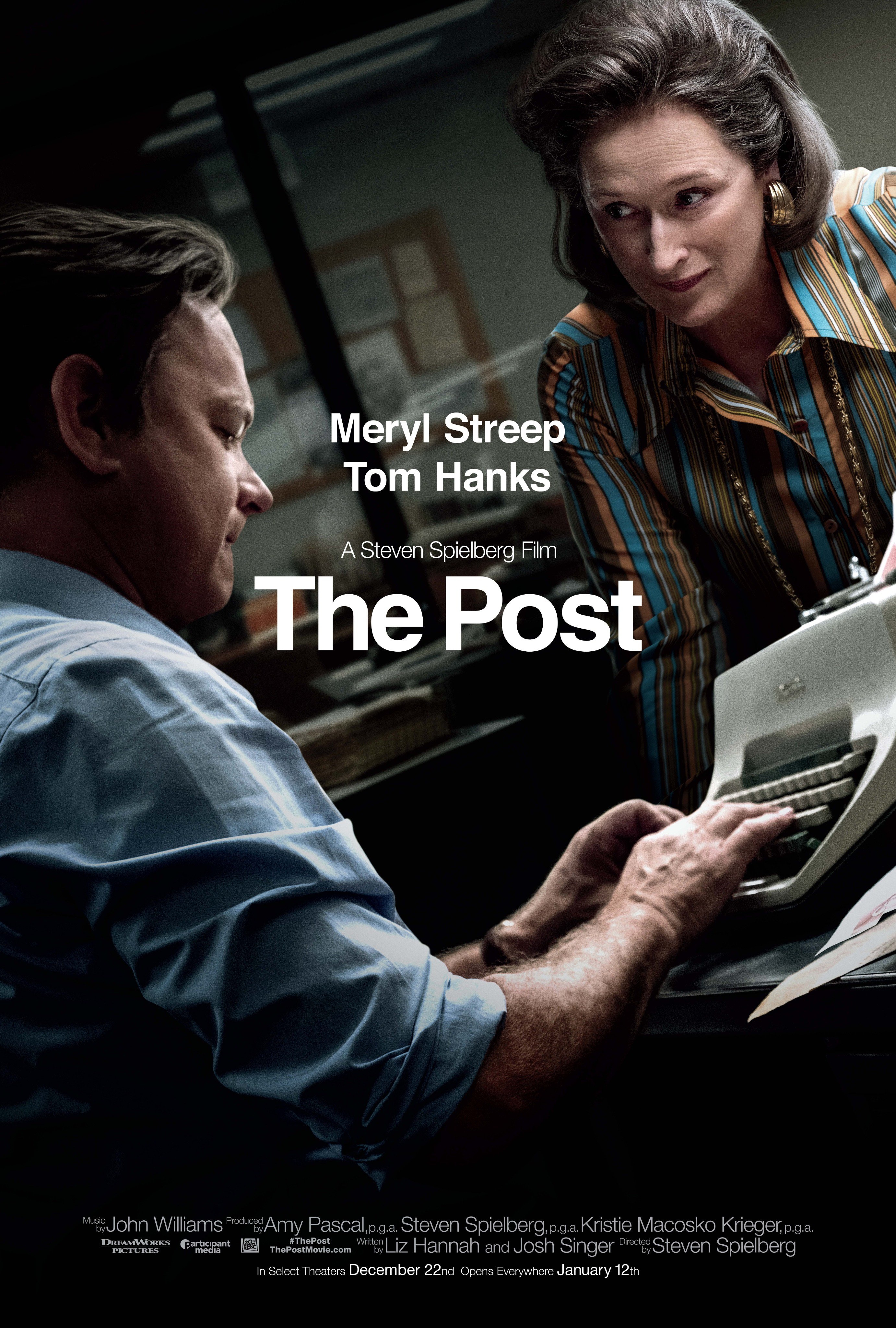
The Post (2018)

Image is property of DreamWorks Pictures, Universal and 20th Century Fox

The Post – Film Review

Cast: Meryl Streep, Tom Hanks, Bob Odenkirk, Sarah Paulson, Jesse Plemons

Director: Steven Spielberg

Synopsis: When classified government documents concerning the Vietnam War end up in the hands of journalists for The Washington Post, they must decide whether to risk their careers and the paper’s legacy and publish these documents, whilst risking the wrath of the United States Government.

Review: There is something to be admired about those people who go above and beyond to try and report the facts in this crazy world we live in, especially at a time when journalists in this day and age find themselves under intense scrutiny. As so many people, especially certain world leaders, just dismiss stories about them that paint them in a negative light. Yet, the work these people do plays such a vital role in our society, and that cannot be ignored, especially when the work of journalists .

Indeed, the work of journalists has helped to break some pretty major stories like the enormous scandal that engulfed the Catholic Church, making films such as this and 2015’s Spotlight feel extremely relevant in today’s society. When some government secrets that reveal some shocking truths concerning the US Government and the Vietnam War fall into the hands of The New York Times, the US Government forbids them from running any further stories. When the same documents fall into the hands of The Washington Post, the editor Ben Bradlee debates with the paper’s first female owner Katharine Graham as to whether these documents should be published.

In much the same way that Spotlight was a very dialogue driven film, The Post follows in that manner. Therefore the screenplay has to be of a very high calibre, and that quality is ably provided by Spotlight’s scribe Josh Singer as well as Liz Hannah, marking her first foray into screenplay writing. Though the first half of the film delves into newspapers and business, it does mean that unless you’re extremely well versed in the worlds of newspapers, business, stocks and shares, then this could feel a little bit over-whelming. However, once we get to the small matter of whether the story should become front page news, is where it becomes very intriguing to watch.

Under the guidance of such a masterful director like Spielberg, the performances of everyone really shine. Yet in news that should not be surprising to anyone, the limelight belongs to Meryl Streep and Tom Hanks (more the former than the latter though). It is fascinating two of the biggest actors in the business, who had never worked together prior to this film, engage in some deep discussions about whether or not the decision is made to go to print. With this role banking her a 21st Oscar nomination, it’s little wonder that Streep is regarded as one of the finest women to ever grace the big screen, as no matter what the role is, she never fails to impress. Much like Streep, Hanks almost always impresses and as Ben Bradlee, the man who helped break the infamous Watergate scandal, he’s a man who is absolutely committed to telling the public what he feels they have the right to know.

Though the script doesn’t fully portray the important role that The New York Times played in the leaking of the documents, it does remind everyone that at such times when the press is under such fierce criticism, that this industry and indeed these people serve a role that needs to be respected. Otherwise politicians would try to  to sweep certain things under the rug. Though the film doesn’t carry the emotional sucker punch like Spotlight did, the key message about journalism integrity and the commitment to the truth retains its indispensable value to our society and our democracy.

Assured direction from Spielberg, and strong performances from Streep and Hanks ensure this trio of extraordinary talents provide a timely reminder of the power of the press and the fundamental aspects of a democracy.

Posted in 2010-2019, Film Review

I, Tonya (2018)

Image is property of AI Film and Neon

I, Tonya – Film Review

Cast: Margot Robbie, Sebastian Stan, Allison Janney, Julianne Nicholson, Bobby Cannavale

Directors: Craig Gillespie

Synopsis: Telling the story of controversial ice skater Tonya Harding who, whilst competing for her country in the Winter Olympics, becomes embroiled in a scandal following on attack on a fellow competitor Nancy Kerrigan.

Review: The lives of sports stars and professional athletes, are so often very glamorous, particularly when they enjoy success in their field and acquire incredible wealth and fame on a global scale. However, every once in a while, an athlete finds themselves in the public eye for all the wrong reasons. Take for instance, ice skater Tonya Harding. In the build up to the 1994 Winter Olympics, after an attack on her rival Nancy Kerrigan was carried out, a massive public scandal ensued, and the fallout was quite extensive.

This infamous incident is not the focus of the whole movie though. Indeed director Craig Gillespie chooses to focus on Tonya’s entire life, from her early upbringing and being forced into ice-skating by her pushy/over-bearing mother LaVona Golden (Janney) to her marriage to Jeff Gillooly (Stan) to of course the infamous attack on Nancy Kerrigan. He chooses to tell this story in a very unique way, by having the characters as if they were being interviewed by us the audience, and then flashing back to the key moments in Tonya’s life. Constantly jumping back and forth in this manner can be problematic but the film is edited together tremendously well, ensuring it flows coherently.

In a performance that has landed her her first Oscar nomination, Robbie really shines as Tonya Harding. Despite some of her less than pleasant mannerisms and behaviour, she is in many ways a very tragic character. Clearly very talented, she never quite fully realised that potential, this is perhaps more down to factors beyond her control. Of course she isn’t perfect but, her extremely difficult mother and her topsy-turvy home life certainly didn’t help matters. Janney as Tonya’s mother is also getting some well deserved recognition. Almost every word out of her mouth is profanity or a derogatory utterance directed if not at her daughter, at someone else. Though she strives to do what’s best for her daughter, it certainly doesn’t yield the right results, and she certainly wouldn’t win any Best Mother of the Year Awards.

For a person who had more than a few dark and bleak moments in her lifetime, the screenplay does manage to inject some humour into this picture, which is in no small part down to LaVona’s outbursts, and the bumbling incompetence of some of the characters who played a key role role in the attack on Kerrigan. The aforementioned use of editing in the interviews to tell the story, intertwined with some frequent fourth wall breaking keeps the plot moving for the most part along as briskly as an ice skater who’s right in the middle of their routine would.

The film does suffer from a few pacing issues though, as it seems unsure as to which element it really wants to focus on at least in the first act.  There’s also the not-so-small matter of the ice skating scenes themselves. While the camerawork to make them happen is impressive, there are a few scenes in which it is very apparent that we are looking at a stunt double, and not Robbie herself, which can be just a little bit jarring. Yet once we reach the third act and the now infamous attack on Kerrigan becomes the main focus, it becomes wildly entertaining, and serves a reminder of how even the smallest action can have devastating consequences on people’s lives and careers.

Unconventional in how it chooses to tell its ultimately tragic story, but with excellent performances from Robbie and Janney in particular fused with some very dark comedy ensures this biopic has some legs (or should that be skates?)

Posted in 2010-2019, Film Review

Darkest Hour (2017)

Image is property of Universal, Working Title and Focus Features

Darkest Hour – Film Review

Cast: Gary Oldman, Kristin Scott Thomas, Lily James, Ben Mendolsohn, Stephen Dillane

Director: Joe Wright

Synopsis: In the early days of World War II, with the rest of Europe falling under the iron grip of the Nazis, Winston Churchill ascends to the role of Prime Minister, with the country seemingly on the brink of almost certain defeat…

Review: In periods of war, strong leadership from those who hold positions of power can be the difference between victory and defeat. Never is this more applicable than for the United Kingdom in the early years of the Second World War, which like the film’s title success was truly some of the darkest days for the country. The Nazis closed in having swiftly conquered the majority of Western Europe, and there seemed to be no one capable of stopping Hitler from his mission of total domination across the continent. This is of course, until one man came to the fore, and that man is of course Winston Leonard Spencer-Churchill.

Being one of, if not the most prominent Prime Ministers in UK history, there has been a great many actor to play Churchill, and Gary Oldman becomes the latest man to assume the role, and it is one that he fully commits to, giving an absolutely incredible performance that has rightfully installed him as a hot favourite to finally scoop a Best Actor Oscar this year. His performance captures Churchill and his mannerisms so well that at times you forget that it is indeed Oldman under all that makeup.

Having seen his predecessor Neville Chamberlain being forced into resignation, Churchill assumes office and immediately realise the enormity of the task facing him as the British forces find themselves stranded on the French coast with the Germans closing in fast. While Churchill favours a more guns blazing approach, there are those who would prefer to negotiate a peace treaty with Hitler and as one character calls him, his “lackey” Mussolini. As the days go by and the situation worsens, pressure and indeed opposition towards him grows stronger, but Churchill will not yield.

Given the gravity of the situation, it would be easy for the script to be completely dreary. However, the screenplay by Anthony McCarten allows for plenty of humour, of which Churchill is of course front and centre. Aside from Oldman’s towering performance, the rest of the supporting cast all deliver assured performances. Chief among these are Kristin Scott Thomas as Churchill’s wife Clementine and Lily James as his secretary Elizabeth Layton, while neither are given extensive amounts of screentime, they both make their mark on Churchill and are figures of support as he battles his opponents who are calling for him to negotiate for peace, led by the stern Viscount Halifax, who is expertly portrayed by Stephen Dillane.

With meticulous production design by Sarah Greenwood, director Joe Wright and cinematographer Bruno Delbonnel capture 1940s London in intriguing visual style. The scenes in Parliament especially stand out in the way Wright shoots them, using lighting that gives the scenes an almost melancholic feel to them, which to be fair wouldn’t entirely be out of place in war time. Yet it is here where Oldman shines brightest, giving the rousing “We shall fight them on the beaches” speech that has taken its deserved place as one of the best speeches in history.

In what is almost a companion piece to the gripping retelling of the Dunkirk evacuation from Christopher Nolan, while that film focuses on the evacuation itself, Darkest Hour focuses on the man who at a time when his country needed him most, rose to the challenge and helped to make it all possible. In the darkest hour that perhaps the UK has ever faced, one man showed us the light.

A gripping story of a country on the brink at its centre, with a magnificent performance from Oldman at its core, this is Wright’s and Oldman’s finest hour.

Posted in 2010-2019, Film Review

All the Money in the World (2017)

Image is property of Tristar Pictures and Scott Free Productions

All the Money in the World – Film Review

Cast: Michelle Williams, Christopher Plummer, Mark Wahlberg, Charlie Plummer

Director: Ridley Scott

Synopsis: After his grandson is kidnapped and held for ransom, billionaire businessman John Paul Getty refuses to negotiate, while his mother works tirelessly to secure his release.

Review: It became one of the biggest stories in the world of film in 2017. When allegations of sexual misconduct were made against Kevin Spacey, it had far-reaching consequences. With Spacey having completed filming for the role of John Paul Getty, amid fears that having him in the final film would be financially catastrophic, it prompted Ridley Scott to hurriedly axe Spacey from the role of John Paul Getty and instead replace him with Christopher Plummer, at a reported cost of £7.5 million. It was an enormous gamble, but one that definitely paid off.

Based on the incredible true story, as he’s walking around Rome, John Paul Getty III is whisked away by some kidnappers who demand a lofty ransom from his super rich grandfather. This sets in motion a tense battle between Getty and the mother of his grandson Gail (Michelle Williams) to ensure his safe release. While Gail is doing all she can to secure her son’s release, Getty remains defiant, refusing to submit to the demands of his grandson’s kidnappers, whilst being extremely cold and distant towards Gail. This sets off a chain of events that trigger a race against time to ensure that her son makes it back home alive, whose life it would be fair to say, is hanging in the balance.

For what it is worth, those pricey reshoots certainly made everything worthwhile as Plummer is tremendous and steals the show. It is hard to imagine anyone else playing this role. In spite of his vast riches,  and despite caring for all of his grandchildren, he simply refuses to negotiate or cave to the kidnappers demands, and though it seems heartless, you understand why he refuses to give in to the demands of his grandson’s kidnappers. The screenplay by David Scarpa, adapted from Painfully Rich: The Outrageous Fortunes and Misfortunes of the Heirs of J. Paul Getty (quite the long title!) tells this remarkable story in a manner that is extremely gripping. Though the film does suffer from some pacing issues where not a great deal is happening, the back-and-forth between Getty and Gail makes for some tense magnificently acted family drama.

Speaking of, Michelle Williams as Gail is also superb. In spite of the extreme difficulties she faces in getting Getty to cough up, she pursues every avenue that she can, possessing a relentless motherly drive to be reunited with her child, who is brought to the screen tremendously well by Charlie Plummer (no relation to Christopher). Wahlberg certainly doesn’t steal the show like Plummer or Williams, but he gets the job done as the man who Getty hires to assist Gail in her desperate quest to find her son.

Ridley Scott is a director who has had quite the career, but with Alien: Covenant receiving a decidedly mixed reaction among many cinema goers, it is pleasing to see him bounce back here. The film is directed tremendously well and Scott brings out some excellent performances from his cast, which is impressive given how little time he had to complete the reshoots to make the film’s release date. The third act especially is where Scott really turns the tension up a few levels and delivers a pulsating conclusion to a film that might have gone down in the history books for all the wrong reasons if Scott had chosen to not do anything. Thankfully, and indeed all the money in the world (well not quite) to help pay for those reshoots ensured it is another remarkable entry into Ridley Scott’s remarkable filmography, and given the circumstances, that is some achievement.

An incredible true story told with sincerity by Scott and boosted by the superb award worthy performances of Williams and Plummer, all the more remarkable given the circumstances that necessitated the latter’s last minute involvement in the project.


Posted in 2010-2019, Film Review

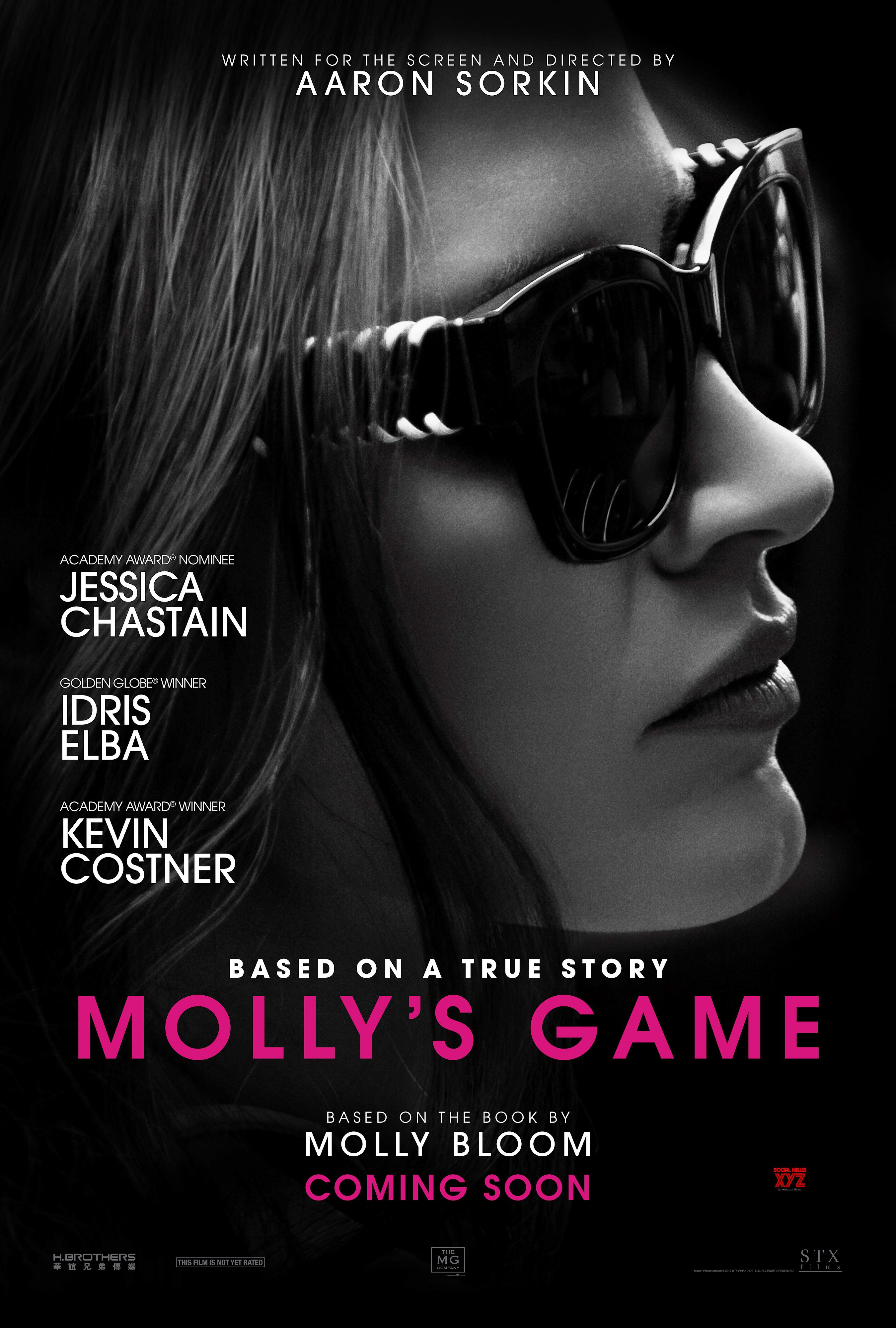
Molly’s Game (2017)

Image is property of STXfilms

Molly’s Game – Film Review

Cast: Jessica Chastain, Idris Elba, Michael Cera, Kevin Costner

Director: Aaron Sorkin

Synopsis: After her professional sports career lies in tatters, a young woman named Molly Bloom sets up and runs high stakes poker games, but it isn’t long before she finds herself at risk of running into trouble with the law…

Review: When it comes to a screenplay that is written by the one and only Aaron Sorkin, you’re going to get extremely well written and extremely engaging dialogue. In addition, the characters on screen will be talking in a fast pace that keeps you completely focused on the words that they are saying, whilst moving the plot forward in a timely manner. With Sorkin he can take almost any aspect such as the inner workings of baseball, or the lives behind the founders of Apple and Facebook and turn them into extremely entertaining, very character driven pieces that yield exceptional performances. Except this time, having for so long been the master of the screenplay, he makes his first venture in the world of directing.

His debut feature tells the story of Molly Bloom, a budding young athlete in her early life with dreams of going professional. This was until a horrendous incident ruined those dreams for good. Seeking a new venture, she finds herself working as for want of a better word, a secretary for a man who runs poker games. After acquiring the experience and developing the skills, she becomes extremely good at this, to the point where she decides to set up her own business running extremely high stakes poker games for some A list celebrities. However it isn’t long before she finds herself dealing with some much more scary sort of clientele that soon lands her in some hot water.

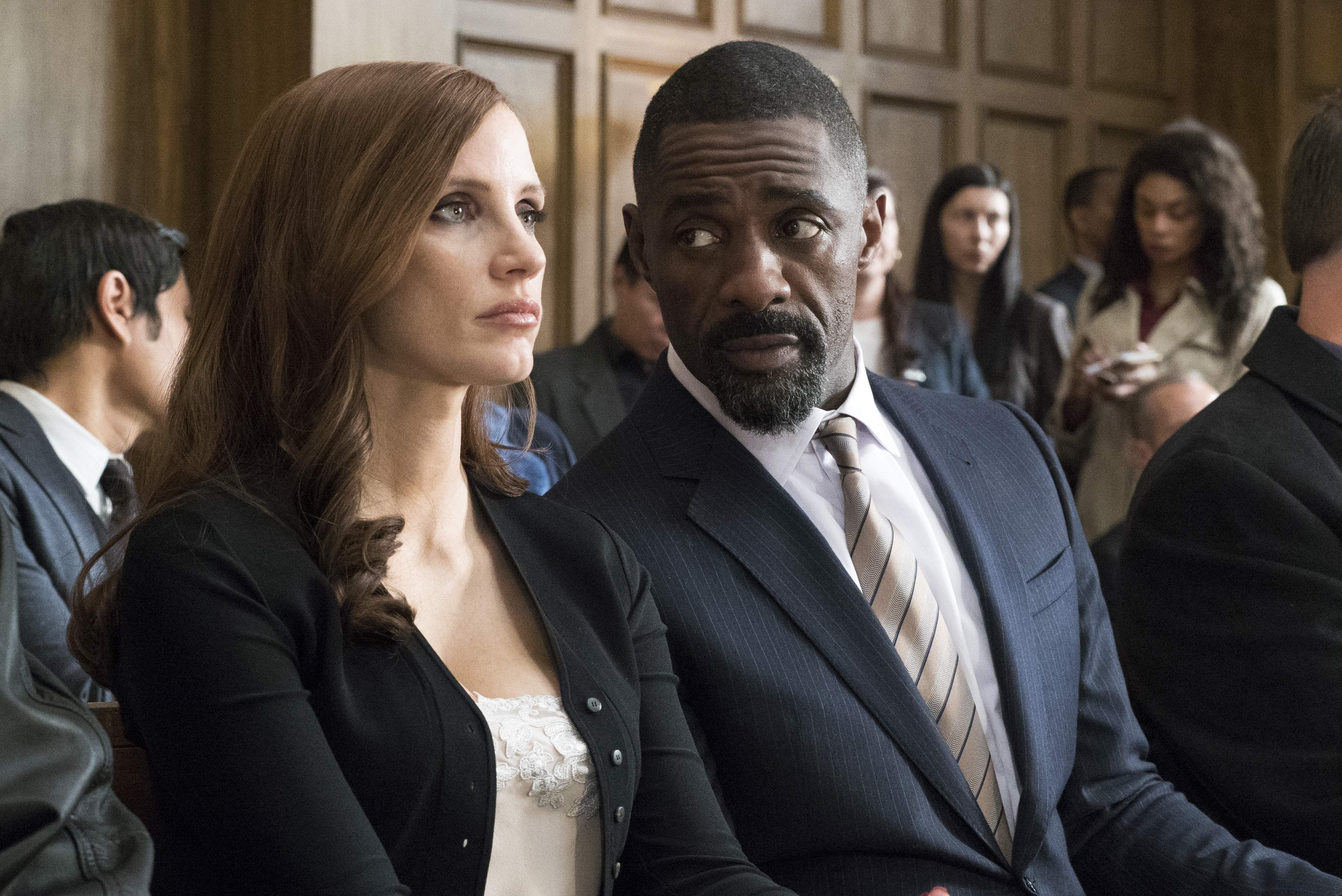
Sorkin chooses to tell Molly’s story by focusing on her fraught meetings with her lawyer (Idris Elba) and then flashes back to her past and how she went from an athlete with shattered dreams to running high stakes poker games for some truly A list clients. Among these clients include some very high calibre Hollywood actors, though the real identities of these people have been deliberately obscured. The script is filled with Sorkin’s familiar sort of very fast paced dialogue, with extremely watchable characters who definitely have a story to tell, and in the case of Molly Bloom, hers is certainly one that will have your interest in from the word go.

As she so often is Chastain is fantastic in this role that has already bagged her a few award nominations. She displays dogged determination to succeed in spite of some people giving her some rough treatment, whilst crucially giving the character strong emotional weight when she’s tussling and arguing with her lawyer, and even more so when the effects of her glamourous lifestyle really begin to take their toll on her. Elba, as said lawyer is also excellent as he tries his best to determine the best course of action for Molly to take in this precarious situation.

Sorkin is undeniably a master when it comes to screenwriting, as a director he shows himself to be equally adept combining his signature dialogue and making the film cohesive and structurally on point. The weaving together of two timelines can lead to a messy outcome, but thankfully the film doesn’t collapse and fall apart like a poker player might if they had a terrible hand.  Even if you have no clue whatsoever when it comes to poker, the story is told in such a way that keeps you engaged and interested in this woman and her truly fascinating story from the depth of despair to a remarkable rise to riches, and back again.

Anchored by an electric performance from Chastain, with superb work from Elba, Molly’s Game ensures that Sorkin’s directorial debut has plenty of aces up its sleeve.


Posted in 2010-2019, Film Review

The Killing of a Sacred Deer (2017)

Image is property of A24, Curzon Artificial Eye and Film4

The Killing of a Sacred Deer – Film Review

Cast: Colin Farrell, Nicole Kidman, Barry Keoghan, Raffey Cassidy, Sunny Suljic, Alicia Silverstone

Director: Yorgos Lanthimos

Synopsis: A skilled surgeon meets a young man whom he befriends, but when strange things start happening to his family, he is left facing a terrible and heartbreaking decision…

Review: Sometimes, a film lets you know right off the bat that the story you’re about to witness is unconventional to say the least, and not like anything you have ever seen before. The dominance of certain genres in mainstream cinema mean that such pieces of idiosyncratic cinema can be most welcome interludes. Indeed, these types of unique storytelling can almost be deemed necessary. Following in the wake of The Lobster, director Yorgos Lanthimos certainly continues on down that path of peculiar storytelling.

Of course, we have already seen an example of this type of out of ordinary storytelling in the form of Darren Aronofsky’s mother!, a film that it would be fair to say polarised audiences massively. And though not quite as shocking as that film was, Lanthimos certainly aims to unsettle the audience in this tale of Steven, a renowned heart surgeon who encounters a teenage boy named Martin whom he befriends. Everything seems fine and dandy between Steven and Martin, he introduces him to his wife Anna (Kidman), his son Bob, (Suljic) and daughter Kim (Cassidy).

Yet as time goes on and mysterious, unexplained things start happening to Steven and his family, and something suggests that the root cause of these events is Martin, who has a grudge against Steven for something that he might have done in the past. The story is certainly very unconventional and the characters are not exactly the most likeable bunch of people you’re ever likely to meet in your life. Farrell plays Steven as your loyal family man who loves his family more than anything, but despite all that, there’s some dark undertones to his character. Kidman is perhaps the most likeable of the bunch, but even she is sucked into this murky situation that is enveloping this family, and the duo certainly shine in these roles that are certainly designed to test the actors to the maximum.

Perhaps giving the best performance of them all though is Keoghan as Martin. Initially he starts off as quite a friendly young man, but it isn’t long before you notice the very troubling and sinister occurings that are going on with him, and perhaps the root cause behind all of this psychological, nightmarish horror that is unfolding. Lanthimos’s directing style, including long shots of panning down ominous looking hallways certainly helps add to the uncomfortable vibe of the film, not to mention the very dreary colour palette. Lanthimos’s script (co-written by Efthymis Filippou) is shrouded in themes that are designed to haunt the audience. It opts to explain certain things, but not others, and it’s up to the audience to fill in the gaps.

There is certainly a lot of mystery surrounding, which you would think keeps the plot moving along at a brisk pace, yet this doesn’t prevent the film from suffering pacing issues. It is a very slow burn, particularly in the first act as you watch all the the pieces fall into place. However, once it reaches the second half and in particular the climax, it pays off, but not in a way that is going to leave the audience at all satisfied. Not because the climax doesn’t pay off, it pays off alright, but the pay off is not exactly going to leave you blissfully happy once the credits begin to roll. No, it is instead going to mess with your mind.

 Unnerving to the maximum, but tremendous performances across the board result in an intriguing but ultimately extremely uncomfortable experience that doesn’t lend itself to repeat viewings.


Posted in 2010-2019, Film Review

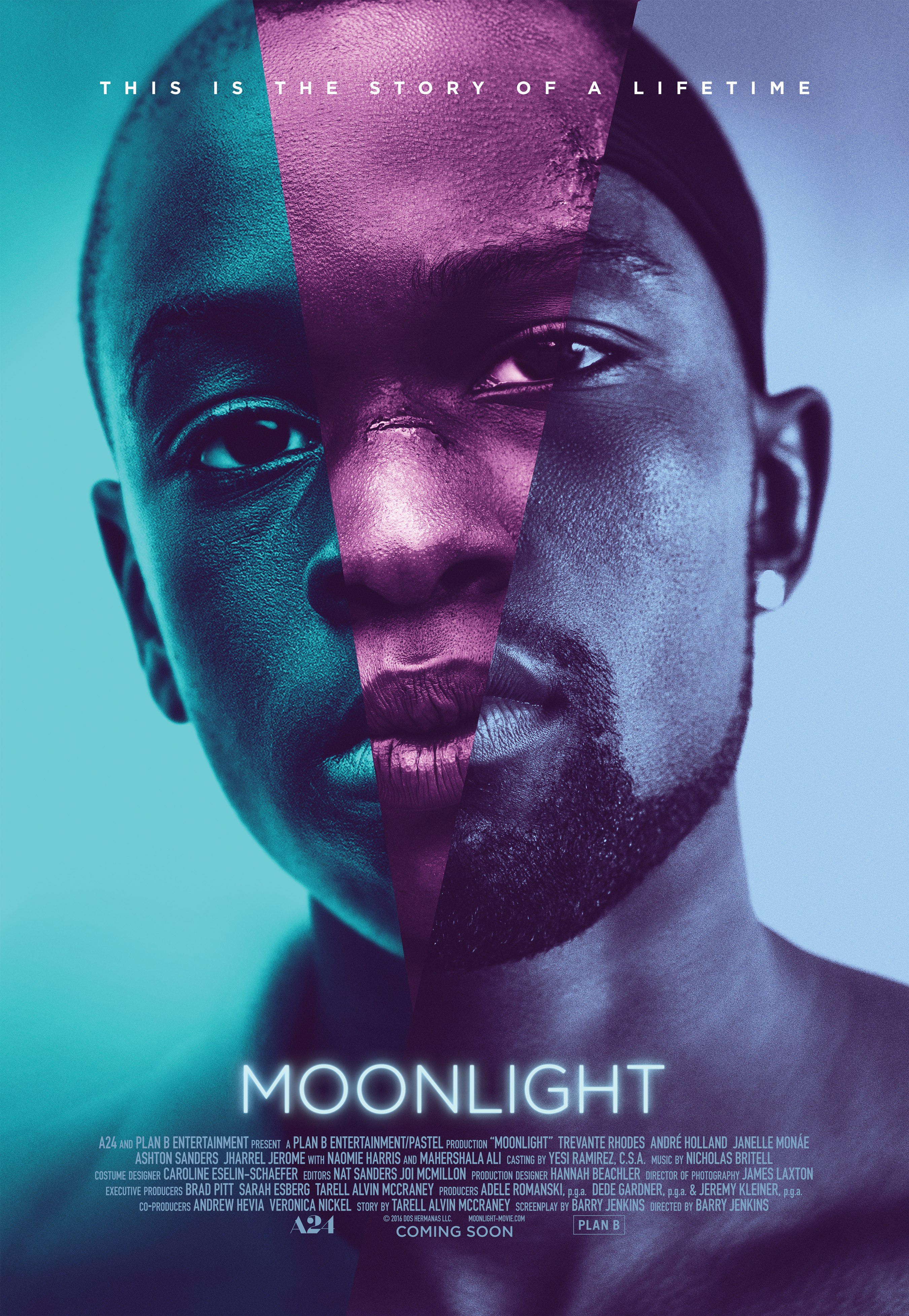
Moonlight (2017)

Image is property of A24, Plan B Entertainment and Pastel Productions

Moonlight – Film Review

Cast: Trevante Rhodes, Ashton Sanders, Alex Hibbert, Naomie Harris, Janelle Monáe, Mahershala Ali

Director: Barry Jenkins

Synopsis: Set in three distinct acts, chronicling the life of a young black boy growing up in Miami, charting his childhood, teenage years and finally his growth to adulthood.

Review: Growing up no matter who you are can be extremely difficult, no matter the circumstances. However, there is in certain parts of the world, a massive stigma that is attached towards people who are homosexual, which for any person in that situation, can be extremely difficult to come to terms with who you are. This makes Barry Jenkins’s coming of age drama about a young black boy growing up in a difficult Miami neighbourhood feel particularly relevant and poignant, what with the extremely delicate racial tensions occurring in the USA right now.

Adapted from In Moonlight Black Boys Look Blue, an unfinished play by Tarell Alvin McCraney, we follow young Chiron in three stages of his life: childhood, adolescence and adulthood (played in each by Hibbert, Sanders and Rhodes respectively). To say he leads a difficult life is an extreme understatement. Picked on at school, an absent father whose whereabouts are never disclosed,  a mother who is addicted to drugs (Harris) and facing questions about his sexuality. In comes Juan, a father figure to Chiron who fills that void that so desperately needed filling. With the help of Juan, Chiron seeks to find his place in the world.

YE-Film-Top 10

With three distinct acts, the film chooses to not do what Boyhood did and narrow its focus to a few quite specific points in this three very different stages of life. This first act is the Mahershala Ali show, he’s the figure that Chiron needs in his life right now and there are a few scenes in particular that feel raw and emotional. With the move to adolescence, Juan is now out of the picture and although Sanders’s performance feels very raw, Juan is sorely missed as his absence is really felt. Jenkins script and direction helps to capture that struggle that it’s quite possible every teenager goes through, which is only compounded when you’re getting ruthlessly picked on because of your sexuality.

However, despite the delicate themes that the film seeks to explore, there is something in Jenkins’s screenplay that feels absent. As emotionally impactful as the subject matter may be, there isn’t really enough to really engage the audience or to get them to care about Chiron perhaps as much as they should. The dialogue at times feels drawn out and aimless in its direction, and though there is some character development, there is not sufficiently enough to the point where you feel completely invested in the life of this young man as you really ought to, and the final act in particular drifts painfully aimlessly to an extremely melancholic conclusion.

Alongside Ali, Naomie Harris gives perhaps her best ever performance as Chiron’s drug addicted mother. A woman who clearly loves her son, but though she tries so hard to show it, her addiction really harms their relationship. Harris rightfully scooped an Oscar nomination for her impact performance, and Ali went one step further and also very deservedly became the first Muslim actor to win an acting Oscar.

Nicholas Britell’s accompanying score is also worthy of immense praise, adding to the raw emotion really effectively in particular scenes. The Best Picture gong at the 89th Academy Awards indicates that there is no shortage of admirers for Moonlight, but for a film that has such delicate subject matter, there was a real opportunity to make a powerful statement, but with such an uninspiring third act, it feels like a glorious opportunity squandered.

With great performances from Ali and Harris, there’s something to be admired about tackling such tricky subject matter, but the end result is just not as compelling in a way that it could, and perhaps ought to be.

Posted in 2010-2019, Film Review

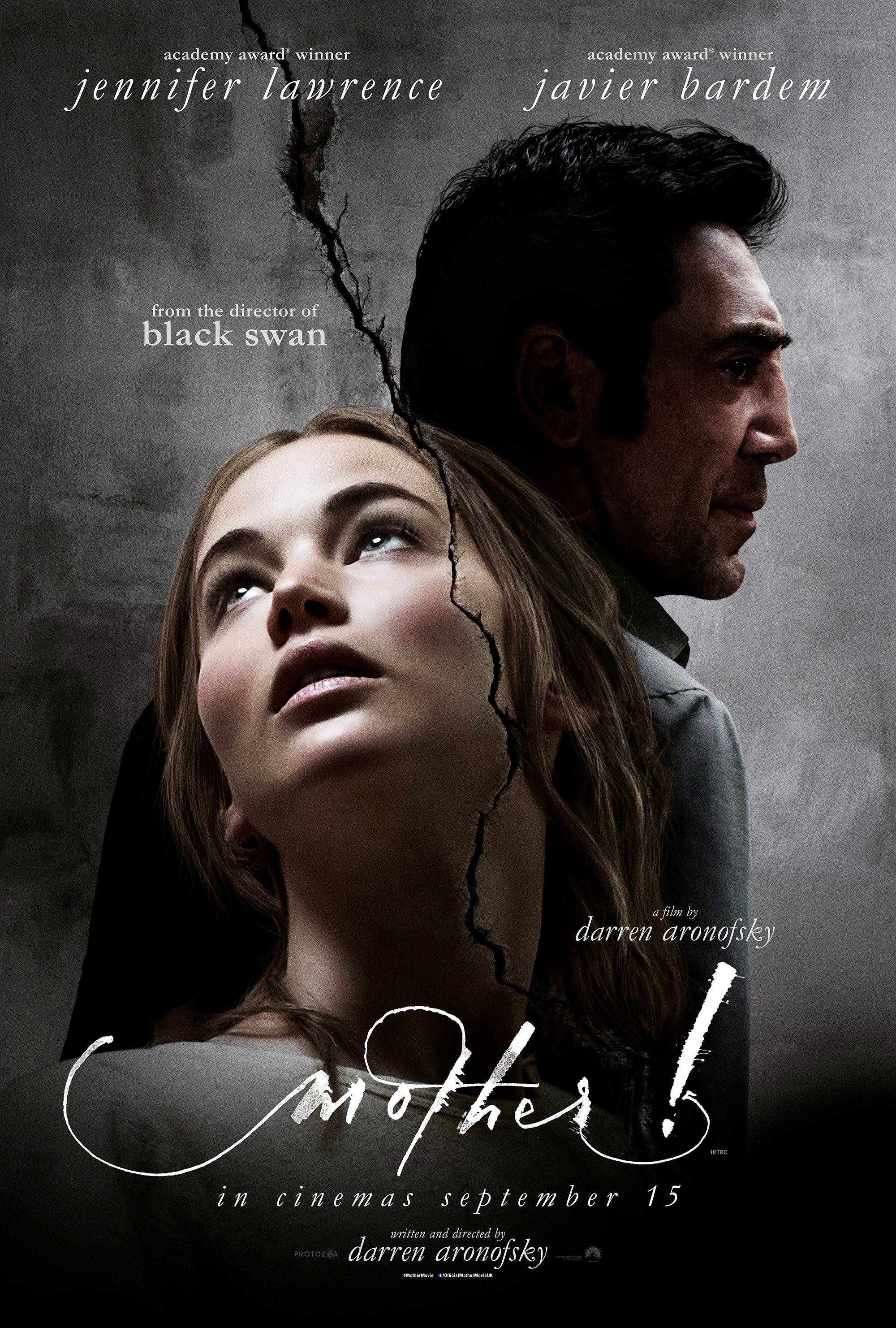
mother! (2017)

Image is property of Paramount Pictures and Protozoa Pictures

mother! – Film Review

Cast: Jennifer Lawrence, Javier Bardem, Ed Harris, Michelle Pfeiffer

Director: Darren Aronofsky

Synopsis: A married couple are in the middle of redecorating their home, living a quiet peaceful life, yet when some uninvited guests show up, their tranquil  lifestyle is changed forever…

Review: The wonder of film is that it can generate a considerable array of responses among audiences. A film can be inspirational viewing, it can leave you speechless in shock, it can make you very angry, and it can leave you wondering what on earth you just watched, leaving you thinking about the film for days afterwards. In the case of Darren Aronofsky, here’s a director who is not afraid to make some psychologically damaging stories that leave their mark on their audiences.

In his latest film, Jennifer Lawrence and Javier Bardem play a wife and husband, neither of whom are really properly identified, known only as Mother and Him respectively. In a large house that is far too big for just the two of them, they live in quiet harmony with Mother decorating their house while Him is a poet, struggling to find his muse. However, their peaceful existence is ruined when a guest, Man (Harris) turns up unannounced. Mother is uncertain, but Him welcomes this visitor into their home. And when Man’s wife shows up (Pfeiffer) this is where everything gets really sinister.

To say this film is strange would be a severe understatement. Aronofsky reportedly wrote the screenplay in five days, which could imply that the story maybe a bit rushed, but this is for the most part, not the case. Though a slow burn in the initial act, once the guests start to arrive is when things go south very quickly. Right from the first shot, the tone is creepy and sinister with some very vivid imagery, and metaphors that can be open to many different interpretations. Be warned, some of the imagery is macabre,and deeply unsettling at times. The very unequivocal undertone that is at the centre of this story will either infuriate or mesmerise, as is evident by the boos and cheers that greeted the movie in equal measure at its Venice Film Festival debut. Divisive in every sense of the word.

With her Hunger Games days now long behind her, Jennifer Lawrence continues to show her considerable acting credentials by giving a haunting , wounded performance, an Oscar nomination wouldn’t feel out of place. She is front and centre of the film, we witness many of the horrors in this film from her perspective. Bardem has shown in the past that he can portray a terrific villain but here, he’s a bit more nuanced, but still also gives an unsettling performance given the role he plays in the developing horror that we witness in this film. The rest of the cast also do their best to add to the ensuing tension, and that makes said tension almost palpable.

Aronofsky helms the film in a way that makes it deeply unsettling to watch, which is clearly what he was going for. The camerawork certainly helps to build the tension. However, the screenplay is so engaging it will ensure that you will be transfixed by the events you see on screen, and equally aghast. Yet at the same time, there’s something so intriguing behind the themes and ideas that drive this film. With metaphors about a plethora of topics aplenty, Aronofsky has made something that certainly will not be to everyone’s taste. Nevertheless, what he has crafted has ensured it will be dissected and analysed at films schools for years and years to come, and that’s no mean achievement.

You will probably either love it or hate it, bold but dark and unsettling storytelling with two haunted performances at its heart, a film that will leave a lasting impression on its audience, for better or for worse.


Posted in 2010-2019, Film Review

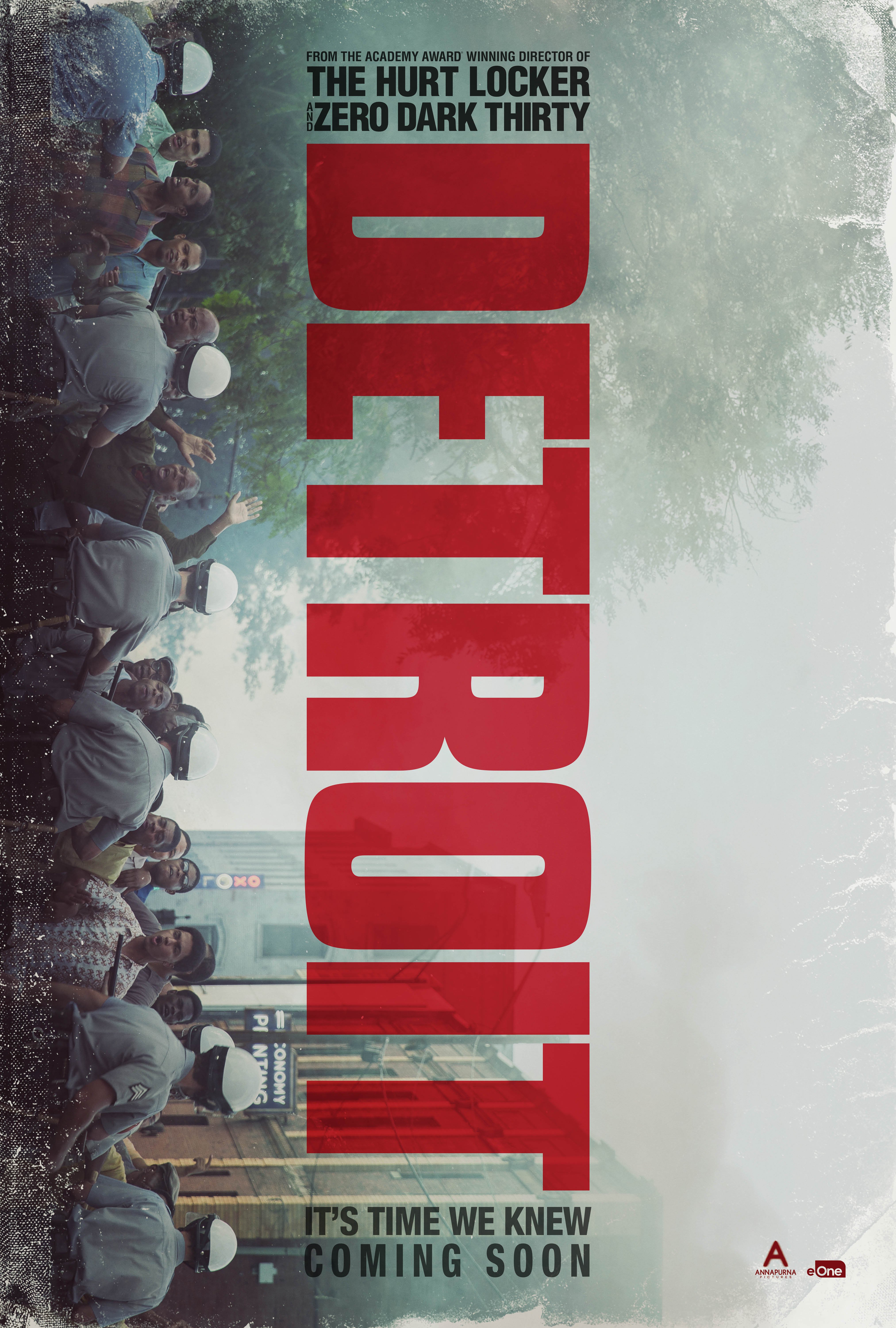
Detroit (2017)

Image is property of Annapurna Pictures, Metro-Goldwyn-Mayer and Entertainment One

Detroit – Film Review

Cast: John Boyega, Will Poulter, Algee Smith, Jason Mitchell, John Krasinski, Anthony Mackie, Hannah Murray

Director: Kathryn Bigelow

Synopsis:  1967,Detroit, USA. With riots threatening to tear the community apart, Police enter a hotel on the hunt for a sniper, which leads to a horrifying ordeal for the residents.

Review: It kind of goes without saying that for a long time that in the United States of America, the issues of racism and police brutality have unfortunately been dominant in American society, and recent events in 2017 certainly indicate that these issues are very much prevalent in modern America, as relevant today as they were half a century ago. As such, to tackle such a tricky and emotional subject for a film requires a director whose previous films have shown she is not afraid to tackle such controversial subject matter, step forward Oscar winning director Kathryn Bigelow.

Her first film since Zero Dark Thirty, which focused on the hunt for Bin Laden, drew criticism for being almost pro-torture. Furthermore, controversy has arisen over whether Bigelow is the right director to tell this story, but given her immense directorial portfolio, this was never in doubt. However, right from the off, Bigelow throws you right into the heart of the riots and the tensions that were building right across America. With a screenplay from long time collaborator Mark Boal, the tension is there right from the first shot as you watch communities being torn asunder. There was a gritty, almost documentary like manner to which Bigelow told the story of Zero Dark Thirty, and here, she does replicates that method again to tell the story. The script is uncompromising and absolutely brutal when it wants to be. Yet the first act is a little choppy as we’re introduced to a lot of characters which means you’re unsure which characters to really focus on.

It’s at the film’s second act where things really start to get tense and scary. After a prank weapon is fired, the cops descend onto the Algiers Motel and several of the cops led by Philip Krauss (Poulter) begin to terrorise the frightened residents of the motel by demanding who it was that shot what they believed to be sniper fire. As time wears on and no one gives them any answers, the cops take matters into their own hands, and it is not pretty for those residents. The version of events displayed on screen are somewhat dramatised as it is not fully known what actually transpired that night, but Bigelow showed that when it comes to building tension, she is an absolute pro. This is unflinching storytelling and it makes you almost gawk at the screen in horror at what you are witnessing.

Everyone in the film delivers great performances but by far the most standout performance is that of Will Poulter’s Krauss. Right from the moment you meet this horrifyingly bigoted cop, you just know he is bad news for all who get in his path and that includes Algee Smith’s Larry, Anthony Mackie’s as Greene and John Boyega’s Melvin Dismukes a part time security guard who witnesses all of it. After that brutal second act, the film slows down to deliver a brutal gut punch in the third act, but the script could have done with a little bit of polishing to really hammer the point home as the third act does falter a little bit.

However, by the time the credits begin to roll, and the crux of the film reaches its audience, it really will make you sit up and take notice of the problems that have existed in America for the best part of half a century. In that time that you would have thought that humanity might have move forward from that point, that things are still far from perfect with innocent folk, quite often black people, losing their lives to severe unnecessary police brutality to this very moment. It will really give you plenty of food for thought. Though these events took place fifty years ago, there are messages in this movie that are incredibly still relevant in today’s society, and society needs to immediately sit up and take notice.

Uncompromisingly brutal, tense storytelling at its finest/scariest but told with authenticity and care that makes the film’s themes as relevant today as they were 50 years ago.

Posted in 2010-2019, Film Review

Sicario (2015)

Image is property of Black Label Media, Thunder Road and Lionsgate

Sicario – Film Review

Cast:  Emily Blunt, Josh Brolin, Benicio Del Toro, Jon Bernthal, Daniel Kaluuya

Director:  Denis Villeneuve

Synopsis: In the war on drugs on the USA/Mexico border, an FBI agent is recruited as part of an undercover operation to take down a leading drug cartel.

Review: Whenever you depict war on film, chances are the results usually aren’t going to be pretty, especially the story you’re telling is focusing on the war on drugs and drug cartels near the US/Mexico border. Some folks are going to get their hands dirty and things are going to get messy very quickly, with some fatalities along the way. Though this is an ongoing conflict, and even though the events portrayed here are fictional, you would be forgiven for thinking that you are in fact watching a documentary about this struggle, and not a fictionalised version of events.

The gritty and dark nature of the story then is the perfect material for Denis Villeneuve, the director behind Prisoners, the dark and unsettling drama about a family who see their young daughters mysteriously disappear. Once again Villeneuve chooses a subject matter that will almost undoubtedly be very unsettling for some, but at the same time, it’s a story that is told with such conviction you will not want to take your eyes off the screen. The main protagonist here is Blunt’s Kate, an FBI agent who just wants to do what’s right, and that desire takes her into this conflict, and what she sees really opens her eyes. Alongside her is Josh Brolin’s Matt, an agent that is quite casual about the mission they’re on and Benicio del Toro’s Alejandro who by contrast, is not fucking around.

Don’t get in this guy’s crosshairs…

Taylor Sheridan in his debut screenplay tells the story in a very ambiguous way, is what we’re seeing right or is it wrong? There are certainly some things displayed on screen that are certainly very wrong, and not exactly pleasant, but for a film about the war on drugs, that is hardly a surprise. The film might be a slow burner, but the script keeps you hooked in the story, and Jóhann Jóhannsson’s score will keep you on the edge of your seat. The three leading actors all deliver performances of a very high award-worthy calibre, but special mention must go to del Toro who has perhaps never been better in his career and was mightily unlucky not to have received an Oscar nomination. He’s a man who is driven by his motivation, and that makes him one scary dude that you don’t want to anger, and if you have angered him, well you’re in deep trouble.

Villeneuve’s direction is masterful with some breathtaking wide shots of the FBI teams on their patrols, the camerawork is so authentic, that it really makes you feel as if you’re on patrol with these guys. It kind of goes without saying at this point but Roger Deakin’s cinematography is as beautiful to the eyes, and Johannson’s score is to the ears. Deakins’s work, as is so often the case is just mesmerising to look at, even with the depravity that you see on screen sometimes. It’s incredible to think that he has never won an Oscar across his superb career, despite amassing THIRTEEN nominations. It’s only a matter of time before he lands that coveted Oscar gold, Blade Runner 2049 perhaps?

With a pulsating final sequence that will have you biting your nails until the credits begin to roll, Villeneuve reinforced his growing reputation as a filmmaker to watch, which he further cemented with his magnificent alien invasion flick Arrival. To make a movie about such a weighty subject matter cannot be an easy task, but with Prisoners and Sicario, Villeneuve really proved more than anything when it comes to directing, he most definitely is a Sicario himself, one that is absolutely deadly and does not miss.

Dripping with gorgeous visuals combined with some heavy subject matter seems an unlikely recipe for success, but with electric performances and assured direction, this is superb tense and gritty entertainment.