Posted in 2020-2029, Film Review

Past Lives (2023)

© A24, CJ ENM, Killer Films and 2AM

Past Lives – Film Review

Cast: Greta Lee, Teo Yoo, John Magaro

Director:  Celine Song

Synopsis: Two childhood friends in Korea reconnect years later after one of their families migrated to North America…

Review: As human beings, we have all likely gone through that moment where we have imagined what would have happened had certain decisions we made in our lives been different. Could certain events, or maybe even the whole direction of our lives transpired differently than how they turned out? Would we have lived in a different place, landed on a different career path or met and fallen in love with someone else entirely? These are the questions and ruminations which beat at the heart of this quiet, thoughtful and stunning directorial debut from Celine Song.

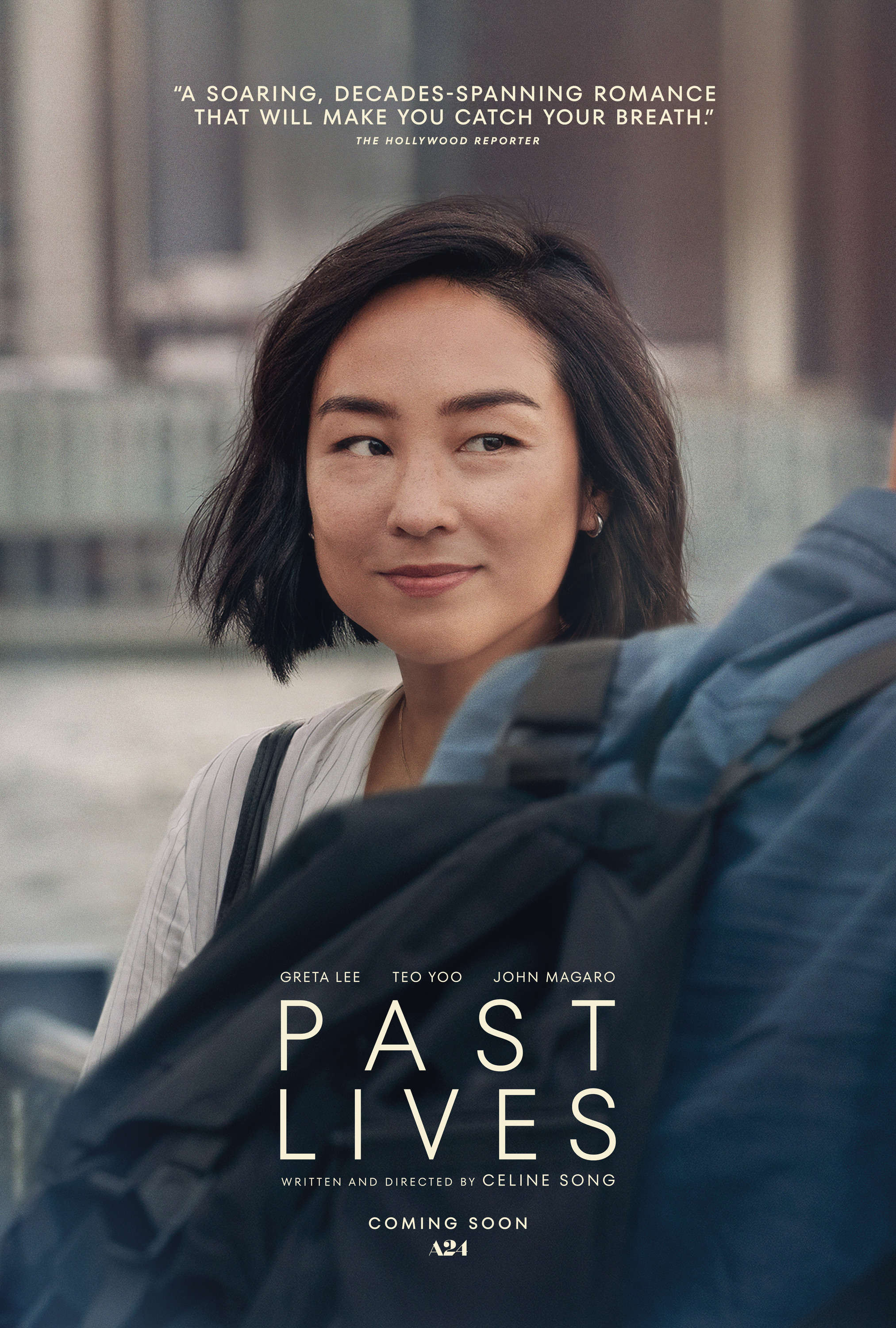
Growing up together at a school in Seoul, Na Young and Hae Sung were classmates and childhood sweethearts who seemed destined to spend the rest of their lives together. However, their lives are taken in two different directions when Na Young’s family emigrates to Canada. Flash forward 12 years and Na Young – now going by the name Nora – is a playwright living in New York, while Hae Sung remained in Korea to study engineering. A chance search on social media allows the two of them to reconnect online but, Nora chooses to cease contact so both can focus on their careers. After a further 12 years pass, Kae Sung travels to New York to meet Nora in person, where they contemplate their time together in Korea, how their lives have turned out and ponder what might have been had they stayed together.
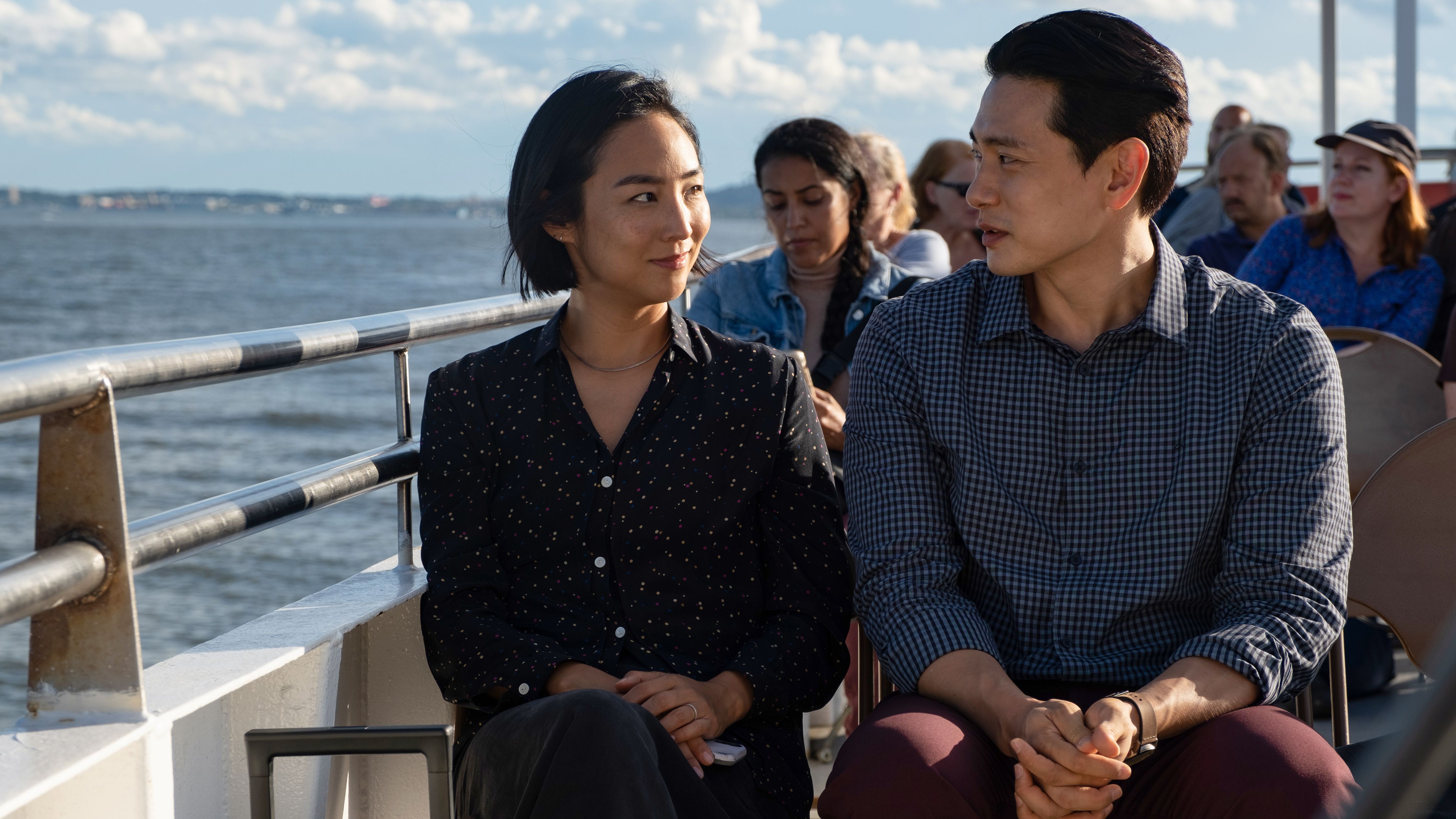
For as long as cinema has existed, there have been countless films which have explored romance, relationships and the complicated emotions that can form when two souls who seemed destined to be together are torn apart. Celine Song’s semi-autobiographical screenplay approaches its subject matter in a way which feels uniquely original and accomplishes this without coming across as overly sentimental. The exploration of a Korean concept known as “in-yeon”, where two souls during a chance encounter might have meant something much more to each other in a previous life, sounds quite soppy. Song’s script adds rich layers of emotional depth with a tinge of melancholy, to this heart-achingly beautiful story of romance, longing for a life we’ve never lived, and a rumination of the events which shape our lives.

As the central character of this exquisite love story, Greta Lee is terrific as Nora. We see how throughout her life, she is resolute in her ambition to achieve her goals as a playwright and initially seemed sure of who she would marry in the early stages of her life. However, when it comes to her personal life, she becomes torn between her childhood crush and Arthur (Magaro), the man she married after the two met on a writer’s retreat. The scenes between her and Hae are tenderly portrayed with often periods of silent reflection between them because sometimes silence says more than words ever could. Crucially, the film never strays into any melodrama particularly where Arthur is concerned as he could have been portrayed as a villain. However, Magaro’s layered performance ensures that the audience views him sympathetically as he understands the connection that once existed between his wife and Hae when they were young and doesn’t get in the way of the tender moments between these two former lovers.

The poignant score by Christopher Bear and Daniel Rossen reinforces the wistful and moving nature of the central story, to which Song bides her time and paces things deliberately slowly to allow the relationships between the central three characters to take their course. Sometimes, the most powerful stories come from our own experiences that we encounter during our journey through this mad, crazy and sometimes beautiful world that we live in. Those complicated, layered emotions from those moments where we find pastures new, meet and fall in love, and through no fault of our own, are forced to part ways are captured so succinctly by Song. Like its central characters, this is a film which will likely leave audiences deep in thought and reflection on their own lives once the credits start to roll.

A beautiful and profound character study of the complexities of the emotional and romantic bonds which shape the course of our lives. A masterful directorial debut from Celine Song. 

a

Posted in 2020-2029, Film Review

Oppenheimer (2023)

© Universal Pictures and Syncopy

Oppenheimer – Film Review

Cast: Cillian Murphy, Emily Blunt, Matt Damon, Robert Downey Jr., Florence Pugh, Josh Hartnett, Casey Affleck, Rami Malek, Kenneth Branagh, Alden Ehrenreich, Benny Safdie, Jason Clarke, Dane DeHaan, David Dastmalchian

Director:  Christopher Nolan

Synopsis:  Telling the story of the theoretical physicist J. Robert Oppenheimer and how he helped to develop the atomic bomb during World War II…

Review: The filmography of Christopher Nolan has always had a fascination with science and the impact advances in science could have on society. Interstellar travel, a globe-trotting time-bending/inverting mission, the exploration of a fierce rivalry between a pair of magicians blowing minds with their impressive tricks, and of course, a certain caped crusader fighting crime with an array of scientific gadgets. Therefore, given the direct namecheck in Tenet, it felt inevitable that Nolan would sooner or later turn his attention to the story of the scientist regarded as one of the most influential people to have ever lived, during one of the most defining moments of the 20th century. A man known as the father of the atomic bomb, one of the deadliest scientific creations in human history, J. Robert Oppenheimer.

Based on the 2005 biography American Prometheus: The Triumph and Tragedy of J. Robert Oppenheimer by Kai Bird and Martin J. Sherwin, Nolan’s screenplay is extensive in its scope and ambition in how it chooses to depict the life of its eponymous theoretical physicist. Though in typical Nolan fashion, he doesn’t do things by the book regarding what one might expect from a biopic. Split between two perspectives, “Fission” depicts how events were seen from Oppenheimer’s point-of-view, while “Fusion” opts for a black-and-white colour palette and depicts the latter stages of Oppenenheimer’s career, specifically when his security clearance was up for renewal and the intense scrutiny which surrounded him and his Communist links. Links, given the USA at the time was entering the Cold War with the Soviet Union and at the height of McCarthyism, are of enormous concern to the government, which became of particular interest to Lewis Strauss (Downey Jr.), the former chair of the Atomic Energy Commission, who later sought a top position in the US government.

As one would expect from Nolan, the film takes a non-linear approach to the story by continuously jumping between the two timelines throughout. However, what follows over the course of the next three hours is a fascinating exploration of a pivotal moment in history, a complex character study of the man at the centre of the creation of this deadly weapon and the impact it had on his conscience, the immediate and far-reaching consequences of the bombs being dropped on Hiroshima and Nagasaki bringing World War II to an end. Yet, in doing so, ignited the arms race between the world’s two superpowers which would define global politics for the next several decades and still has an effect on world politics to this very day. It is unquestionably a very dialogue-driven film, but Nolan’s screenplay never fails to keep events on screen engaging with the dialogue every so often interjected with scenes of atoms colliding, and Jennifer Lame’s editing ensures the film’s pacing remains brisk.

Having worked with Nolan numerous times across his career in supporting roles, Cillian Murphy finally gets his chance in the leading role and he seizes it with both hands. Through those piercing blue eyes, Murphy’s extraordinary performance takes us deep into the mind of this man and allows him to fully exhibit a range of emotions. From a brief look at his academic life, his early days as a university professor teaching quantum physics, a triumphant moment following the end of World War II, to his haunting guilt over creating a deadly weapon that has wrought unspeakable horror and devastation on countless lives.  Alongside Murphy’s incredible leading performance, Nolan has arguably assembled the all-star cast to end all-star casts, with everyone giving an excellent performance. In a cast this stacked, it is hard to stand out from the crowd, but the one who shines brightest is Robert Downey Jr. as Lewis Strauss. For years, he charmed audiences as the genius, billionaire, playboy, and philanthropist Tony Stark. This is a very different role, but as he did throughout his tenure in the MCU, Downey shows off his incredible talents and portrays Strauss as a very driven individual who is at the forefront of the pushback against Oppenheimer following the conclusion of WWII and will find anything he can to discredit the physicist.

On the subject of the Manhatten Project, which dominates the second act of the film and is where Nolan’s renowned technical wizardry comes to the fore. Through Hoyte van Hoyetma’s stunning cinematography and incredible sound work, the recreation of the testing of atomic devices ensures the audience feels the effects of these blasts. It all acts as a prelude to the nerve-shredding Trinity Test sequence, which Oppenheimer feared could cause a chain reaction that would destroy the world. The audience knows it won’t have that effect, but Ludwig Gorannsson’s score masterfully captures that nerve-shredding tension that would have undoubtedly raced through the minds of these scientists until the explosion. An explosion which, incredulously, is fully captured in camera without the assistance of special effects, a mind-blowing cinematic accomplishment.

However, while the technical mastery on display cannot be denied, what has been Nolan’s Achilles heel throughout his career has been writing female characters. Unfortunately, the female characters leave much to be desired. Florence Pugh makes the most of her limited screen time as Communist Party member Jean Tatlock, Oppenheimer’s mistress. Though, while they serve the narrative to an extent, a handful of her scenes feature full-frontal nudity and they ultimately come across as gratuitous. Emily Blunt’s turn as Kitty Oppenheimer could have very easily gone in a similar direction in which she is barely utilised and falls into the stereotype of the supporting housewife, but she avoids that with a memorable and fiery exchange with lawyer Roger Robb (Jason Clarke) during her husband’s security clearance hearings. While Nolan’s fascination with science in his previous films gave him theoretical scientific premises to explore, what he put under his cinematic microscope here is a world away from what he has previously accomplished in his career. The impact of this scientific breakthrough, the psychological effect it had on the man who developed it, and the long-lasting consequences of what can happen when one man, and indeed a whole country choose to play God, consequences which are still reverberating on the world stage today.

Under the vision of its masterful director, with a packed all-star cast led by an incredible awards-worthy performance from Cillian Murphy, gives Nolan the requisite materials required to craft a riveting and forensic character study of a man whose work changed the course of human history forever. 

a

Posted in 2020-2029, Film Review

Creed III (2023)

© MGM, United Artists Releasing and Warner Bros. Pictures

Creed III – Film Review

Cast: Michael B. Jordan, Tessa Thompson, Jonathan Majors, Mila Davis-Kent, Wood Harris, Florian Munteanu, Phylicia Rashad

Director: Michael B. Jordan

Synopsis: After a successful boxing career, Adonis Creed (Jordan) faces a new challenge when a former childhood friend and boxing prodigy (Majors) resurfaces…

Review: To follow in the footsteps of a cinematic icon like Rocky Balboa is far from an easy feat. Yet, with its superb blend of nostalgia, pulsating fight scenes and an unwavering determination for its lead character to honour the legacy of Apollo Creed, as well as forging his own, this is precisely what the spin-off to the Rocky franchise accomplished when its first film fought its way into cinemas to critical acclaim. With its sequel, it continued along this path by adding some deeply personal stakes for both its lead character and his coach. It might have seemed unthinkable the third film would not feature the iconic character of Rocky in any capacity. Yet even without the involvement of Sly Stallone, it has proved it has plenty of fight left in the tank.

Adonis Creed has spent years enjoying a successful boxing career. However, he has now reached a point where he has chosen to retire as a professional fighter and transfer to the role of a coach/promoter and the owner of a gym training the next generation of fighters. On top of this, Adonis also has family responsibilities parenting his daughter Amara (Davis-Kent) with his wife Bianca (Thompson). However, when a former childhood friend Damian Anderson (Majors) comes back into Adonis’s life after spending 18 years in prison, he wants his chance to become a professional fighter and make up for the time he lost while serving his sentence. Initially offering his former friend a chance to rehabilitate and train, Adonis is forced to confront his past relationship with Damian when it becomes clear Damian’s aspirations threaten to challenge the legacy Adonis worked so hard to build.

The script by Keenan Coogler and Zach Baylin, working from a story co-written with Ryan Coogler, continues to honour the theme beating at the heart of these films: legacy. The boxing aspect unquestionably plays a part in the films, but the emphasis is first and foremost on these characters and their relationships with those closest to them and the legacies they strive to build. For Adonis, he may have enjoyed a phenomenal career as a pro boxer, but the question about legacy becomes even more prescient since Adonis has hung up his gloves. With a daughter to now take care of, given the fierceness and brutality of the sport, the film explores what kind of effect will his boxing career have on her as she grows up and handles the challenges of life. A dilemma which causes tension between Adonis and Bianca. However, there are also some extremely heart-warming moments of the trio as a family, with Bianca also getting much more screen time as she is also having to balance her career and her parental responsibilities.

Yet, despite those heartwarming moments, the crunch of the film’s conflict lies in the relationship between Adonis and Damian. Through a flashback sequence, the relationship between the young Adonis and Damian is established and how events in the past have shaped the men they have become. Fast forward to the present day, and it is fair to say the relationship is complicated. There is initially respect between the two men, but it doesn’t take long for this respect to erode as Damian’s aspirations put him and Adonis on a direct collision course, which leads to an enthralling showdown. He’s certainly the man of the moment given his status as the MCU’s next big bad, and Jonathan Majors delivers a sensational performance as Damian effortlessly combing the intense physicality of the fight scenes with the more restrained emotional moments between these two friends-turned-rivals.

Taking the directorial gloves from Coogler and Steven Caple Jr in his directorial debut, Jordan follows in the footsteps of his predecessors as he puts his own stamp on the film’s fight scenes, proving his talent both in front of and behind the camera. Is there anything this man cannot do? He has made no secret of his love of anime and those influences come through in the fight scenes with intense close-ups of the fighters’ facial expressions, and slow motion before a significant blow is about to be landed. It is an effective combination and adds to the intense physicality of the fight scenes, which particularly comes through when viewed on the big screen. The Creed franchise had a lot to live up to, but through three excellent films which rarely put a foot wrong, it has honoured the legacy of the icon of Rocky Balboa and has given its star to launch himself as one of Hollywood’s newest and most exciting young directors.

Continuing to honour its central themes of family and defining your legacy, while getting another superb performance out of man-of-the-moment Jonathan Majors, ensures this threequel earns delivers the knockout blow and earns its title as a worthy successor to one of the greatest sports film franchises of all time.

Posted in 2020-2029, Film Review, London Film Festival 2022

The Whale (2022)

© A24 and Protozoa

The Whale  – Film Review

Cast: Brendan Fraser, Hong Chau, Sadie Sink, Samantha Morton, Ty Simpkins

Director:  Darren Aronofsky

Synopsis: A recluse English professor makes an attempt to reconnect with his estranged teenage daughter…

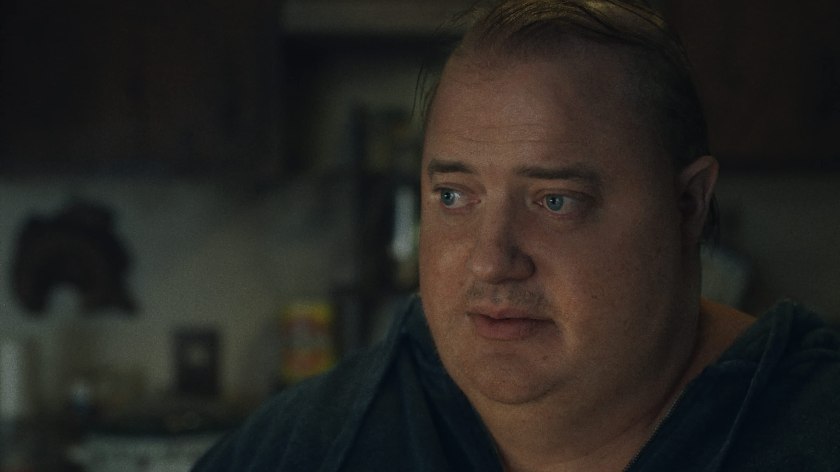
Review: Back in the early 90s and mid-2000s, there was an immensely popular actor who was beloved in Hollywood, particularly with his leading role in The Mummy franchise. He seemed like someone who would go on to enjoy a very prolific career in Hollywood. Unfortunately, a mixture of personal tragedies and a sexual assault accusation levelled against the then President of the Hollywood Foreign Press Association in 2018, led to him reportedly being blacklisted from Hollywood. Now, after many years from the limelight, Brendan Fraser is making his long overdue comeback in the most heartbreaking way possible.

Charlie (Fraser) is an English professor who, due to a deeply personal tragedy, has allowed himself to be stricken and overwhelmed by the grief which has driven the rest of his family away. Consequently, to help him cope with the emotional torment of his situation, he has eaten to such an extent he has since become obese. He holds his classes online, with his camera off to avoid being seen by his students, which enables him to remain in his flat all the time hidden away from the rest of the world. He recognises in his condition, he may not have much time left in his life and so when his estranged daughter Ellie (Sink) shows up unexpectedly one day, he makes an attempt to reestablish a relationship with her.

Based on the play of the same name by Samuel D. Hunter, there’s always a risk when a film is set in one singular location, it will find itself unable to escape the limitations of being confined to the same four walls and hold the audience’s attention. However, when you have actors putting in phenomenal performances, especially Fraser, the film can escape that confinement. Fraser’s performance is so powerful, with every word of dialogue, you can feel the raw pain and torment within him and how guilty he feels for driving his family away. Actors being buried under piles of make-up and or prosthetics can sometimes become a distraction where this becomes the singular focus and the performance is forgotten about, but this is emphatically not the case here. The process of grieving when we’ve lost someone we love affects everyone in different ways, but for Charlie, it has left such a devasting impact on him to the point where he has accepted his fate.

While Charlie is resigned to the inevitable, there are individuals in his life who do their utmost to convince him that life is worth living. The most prominent is Liz (Chau) who assists Charlie as a nurse with his medical needs and also serves as his main source of company. While she pleads, in vain, with Charlie to seek medical treatment, she remains unwavering in her commitment to care for Charlie despite her pleas falling on deaf ears. There is Charlie’s estranged daughter Ellie, who turns up on Charlie’s door out of the blue after a long time because she wants her father’s help with her studies. It is an extremely difficult role to pull off as she understandably harbours a lot of bitterness and resentment towards her father for the significant period he was absent from her life, but Sink rises to the challenge in magnificent style.

The decision to have the entire film in a 4:3 ratio is an inspired creative choice on the part of Aronofsky. as it encapsulates both Charlie’s confinement to the four walls of his flat and his refusal to venture outside of those walls. Characters in previous Aronofsky films have often found themselves either at their moment of triumph or in some cases at their utmost lowest ebb. Given the circumstances of its main character, The Whale is definitely the latter, but through the bleakness of which Charlie finds himself, come plenty of moments of touching humanity and emotional gravity. It will be a minor miracle if you’re not at least holding back the tears by the time the credits begin to roll.

A simplistic, scaled-back story of redemption told with compassion, elevated with an extremely powerful lead performance at its core. Welcome back Brendan Fraser, we have missed you.

Posted in 2020-2029, Film Review, London Film Festival 2022

Empire of Light (2022)

© Searchlight Pictures

Empire of Light  – Film Review

Cast: Olivia Colman, Micheal Ward, Monica Dolan, Tom Brooke, Tanya Moodie, Hannah Onslow, Crystal Clarke, Toby Jones, Colin Firth

Director:  Sam Mendes

Synopsis: On the south coast of England, a romance develops between two cinema employees…

Review: Where do you go after making what could feasibly be deemed your magnum opus? This would have been the question for Sam Mendes following the magnificent triumph of his captivating war film 1917.  It has been popular among big-time Hollywood directors to focus on films which illustrate the wonders of the big screen, understandable given the COVID-19 pandemic caused cinemas everywhere to remain dark for many months. Therefore, it seems a given a renowned director like Mendes would be able to bring something unique to this increasingly popular cinematic trend. Yet, despite some good intentions, Mendes’ follow-up to his World War I masterpiece is a crushing disappointment.

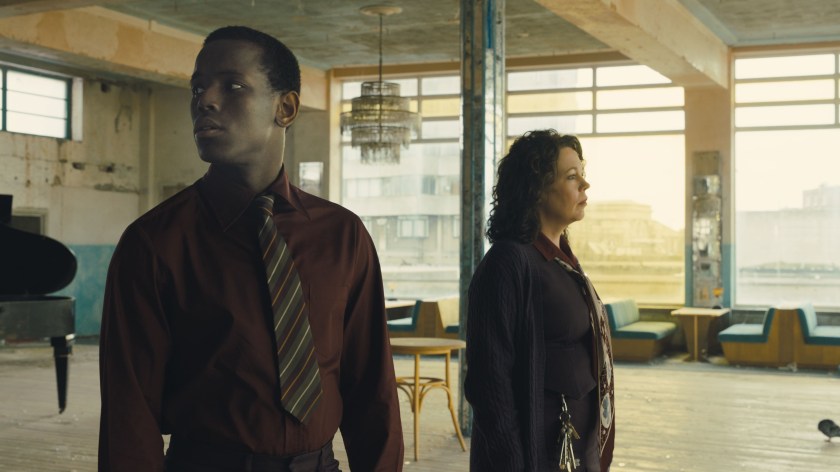
Set in the early 1980s on the South Coast of England, Hillary (Colman) is the manager of the Empire, a beautiful cinema in a prime location on the seafront. Despite being a consummate professional who is dedicated to doing her job to the best of her ability in spite of the presence of her rather unpleasant boss Mr Ellis (Firth), Hillary’s happiness is beginning to diminish as the job takes a toll on her mental health. However, with the arrival of Stephen (Ward), things initially start to seem a little brighter as the two of them develop a romance. However, it is a brief respite for Hillary as her mental health worsens, especially with the country sliding into recession, putting the cinema at risk, and the foul stench of racism clogging the seaside air.

The film marks Mendes’ first solo attempt at writing a screenplay and it is telling his efforts completely crumble under the enormous weight of the story it is trying to convey. It is all well and good to tackle important social issues such as the stigma which still surrounds mental health and the poisonous presence of racism in society. Yet, it is all rendered utterly meaningless as the attempts to tackle these issues are so hamfisted and underdeveloped, that the film feels completely unsure of what it really wants to say. In doing so, it doesn’t add anything meaningful to the issues it is trying to address, even more so considering the film is also attempting to portray a love story between two cinema employees, while also coming across as a moving ode to the magic of the big screen, the latter of which seems to be tacked on as a mere afterthought. There are simply too many different subplots happening at one time and it ultimately proves too much for Mendes to weave these together all by himself.

Since winning her first Oscar in 2019, Olivia Colman has quickly become something of an industry favourite among industry and audiences alike, given she has added two further nominations in the last two years. While both Colman and Michael Ward admirably try their hardest to elevate the poor and underdeveloped material they have both been given to work with, it proves to be too difficult a challenge for both of them to overcome. Their romance is by far and away the most developed part of the film, but even then it is not nearly given the attention it needs to flourish due to the numerous ongoing themes the film tries to explore. Furthermore, there is simply not enough chemistry between the two of them which makes it difficult to care about their romance. One of the film’s few bright sparks is the ever-reliable Toby Jones as Norman, the cinema’s resident projectionist.

Frequent Mendes collaborator Roger Deakins’s cinematography is immaculate, and Trent Reznor and Atticus Ross do not disappoint with their score. It is therefore such a shame their fine work ultimately goes to waste on a film which should have been a sure bet in such capable hands. Yet, rather than recapture the feelings of joy and wonder which often come from seeing films on the big screen in a packed auditorium, this is completely devoid of any charisma and charm, leaving nothing but an empty feeling inside. There will undoubtedly be many more films released in the coming years serving as a reminder of the power this medium can have on audiences, but this one misses the mark entirely.

Despite the best efforts of the cast and a very capable director, Empire of Light completely fails to dazzle due to its unfocused script, combining poorly developed social commentary with a half-hearted tribute to the beauty of cinema.


Posted in 2020-2029, Film Review, London Film Festival 2022

The Banshees of Inisherin (2022)

© Searchlight Pictures, Film4 Productions and TSG Entertainment

The Banshees of Inisherin – Film Review

Cast: Colin Farrell, Brendan Gleeson, Kerry Condon, Barry Keoghan

Director:  Martin McDonagh

Synopsis: Tensions arise between two friends when one of them decides to end their friendship…

Review: Friendships can be of tremendous value to us as we navigate this crazy journey that we call life. Yet, sometimes, there can be those situations where a friendship comes to an end, which can be challenging to accept for all the parties involved. What do you do? Allow yourself to accept the situation and move on? Or do you refuse to take no for an answer and make efforts to rekindle the friendship? After setting his last film in the USA, playwright-turned-director Martin McDonagh moves closer to home to deliver another hilarious black comedy, set against the backdrop of the Irish Civil War.

It is 1923 on the fictional remote Irish island of Inisherin. Padraic (Farrell) and Colm (Gleeson) were at one time in their lives, the best of friends and had been for a number of years. However, one day, Colm decides to abruptly end their friendship, which Padriac has difficulties coming to terms with and demands a reason why, which Colm refuses to acknowledge. Wondering what it was that caused Colm to end their friendship, Padriac becomes determined to make amends but these attempts only cause more tension between the two (former) friends, which threatens to boil over into something much more unpleasant that neither of them will like.

Black comedy is an extremely difficult genre to successfully pull off, yet McDonagh is one of those directors who has proven himself to be one of the best in the business when it comes to writing razor-sharp and hilarious dialogue from the bleakest subject matters you could possibly imagine. His last film was filled with some biting social commentary about racism and police brutality in the USA, set against the backdrop of the murder of a young woman.  By contrast, Banshees is a bit more dialled back in terms of the melancholic nature of the comedy, focusing on the (failed) friendship of two men. That being said, by framing this bitterness and anger, ragainst the context of the Irish Civil War, the film offers an extremely compelling analytical look at themes of nihilism, isolation and loneliness. It is perhaps not nearly as thought-provoking as Three Billboards, but it is not a million miles away.

Reuniting with McDonagh after working together to wonderful effect for In Bruges, it is a sheer joy to see both Colin Farrell and Brendan Gleeson share the screen once more. The pair of them strike comedic gold once again, even if they are not together on screen as much as you would perhaps want them to be. Farrell’s Padraic is by his own admission, a bit of a simple man who enjoys tending to his animals, whilst enjoying a good tipple in the evening. The limelight belongs to Farrell and he is truly wonderful to watch and makes the perfect contrast to Colm. The latter of whom is a cultured man without a doubt but one who makes it quite clear that he simply does not have time or willingness to be in Padraic’s presence anymore, and is willing to go to drastic measures to prove his point. The friendship that has now turned to bitterness and hostility between them gives McDonagh license to craft hilarious dialogue, and he does not disappoint, providing numerous moments that will have you howling with laughter.

While both Farrell and Gleeson are in brilliant form, it is Kerry Condon (who made the most of her small role in Three Billboards) who comes the closest to stealing the show from both of them as Siobhan, Padraic’s sister. She provides tenderness and warmth to the story, which can at times be a much-needed respite from not only the cold and detached nature of her brother and Colm’s ruined friendship but from the island of Inisherin as well. Ben Davis’s cinematography manages to simultaneously capture the beauty of the country, yet at the same time, the unwelcoming atmosphere which hangs over the majority of the island, accompanied by another excellent score from Carter Burwell. A story about two friends falling out might seem like an unlikely vessel for hilarity, but McDonagh proves once again that when it comes to crafting comedy from the dreariest of situations, there aren’t many writers/directors who can do it better.

Boasting brilliant performances from Farrell and Gleeson, combined with extremely witty and sharply written dialogue ensures The Banshees of Insherin is another masterclass of bleak hilariousness from Martin McDonagh. 


Posted in 2020-2029, Film Review, London Film Festival 2022

She Said (2022)

© Universal, Annapurna Pictures and Plan B

She Said – Film Review

Cast: Zoe Kazan, Carey Mulligan, Patricia Clarkson, Jennifer Ehle, Angela Yeoh, Samantha Morton, Andre Braugher, Ashley Judd

Director:  Maria Schrader

Synopsis: Telling the true story of the two reporters from The New York Times whose reporting uncovered the truth behind the sexual assault allegations that sparked a worldwide movement…

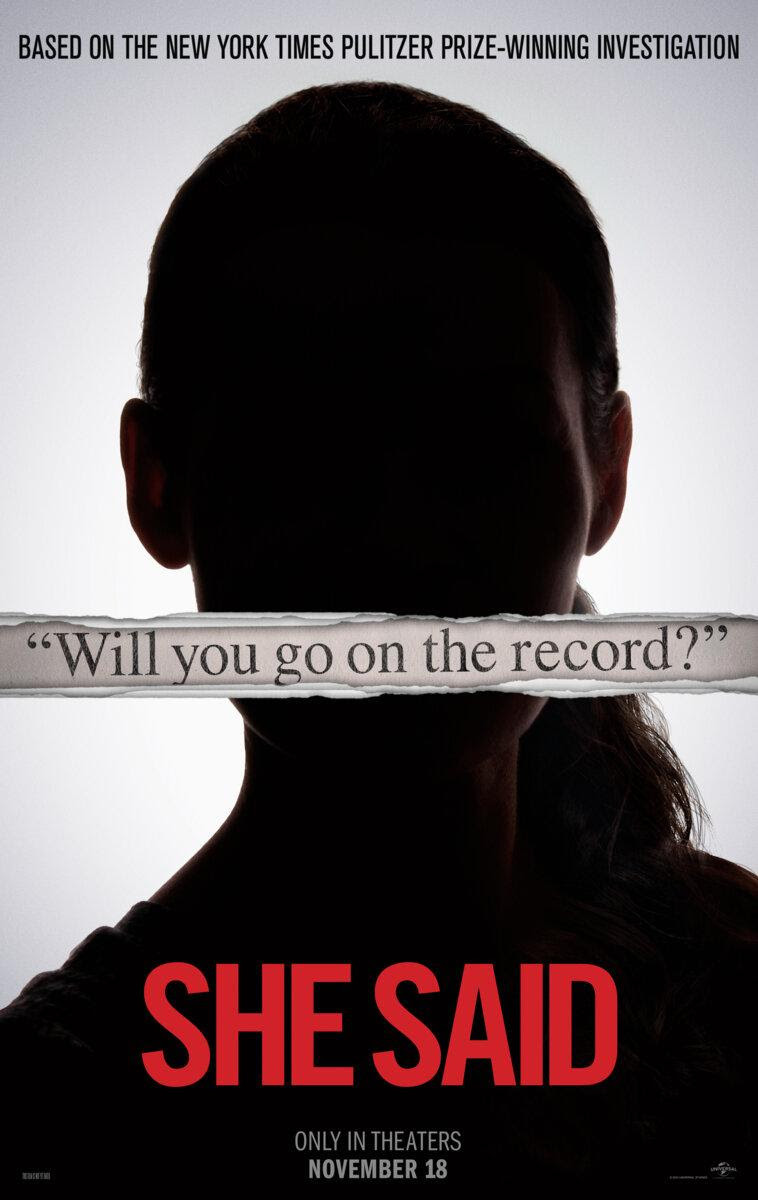
Review: 5th October 2017, a date that will go down as the day that not just the film industry, but the world changed forever. It is the date when the shocking truth behind the repeated abuse and sexual misconduct committed by numerous powerful men, most notably Harvey Weinstein, against countless women came to light in an exposé published by The New York Times. A story that sparked a global movement of women to come forward to report their own allegations against numerous high-powered individuals who used their positions of power to sexually assault women in multiple industries. However, what is not nearly as well known is the tireless and vital work done by the heroic journalists whose courageous and resolute reporting helped to spark the Me Too and Time’s Up campaigns, and ignite a much-needed conversation about sexual harassment and treatment of women the world over.

The film opens in 2016, with investigative reporters Jodi Kantor (Kazan) and Megan Twohey (Mulligan) reporting on the 2016 US Presidential election, the sexual assault allegations made against the then-Republican presidential candidate Donald Trump, and later when similar accusations against prominent Fox News TV host Bill O’Reilly came to light. Flash forward several months, and the two of them are assigned to investigate allegations of appalling misconduct perpetuated by Weinstein against several women that worked for one of his studios. The two soon uncover a shocking system that protects high-profile individuals committing these horrific abuses by bullying the women into silence, either through cash settlements or non-disclosure agreements and any attempts to publicise the story are derailed by Weinstein and his lawyers. Consequently, Kantor and Twohey become even more determined to speak to victims and attempt to persuade them to go on the record to tell their story to bring down someone whose rampant abusive behaviour had been left unchecked for decades.

Given that the rise of the Me Too and the Time’s Up Movements represent very recent history, it was of critical importance for the film to approach this story and subject matter with the utmost respect. It would have been so easy for the film to devolve into a puff piece where the reporters pat themselves on the back for a report that brought to an end the system abuse by a man who was regarded as one of the most powerful producers in Hollywood, but Rebecca Lenkiewicz’s screenplay (based on the book: She Said: Breaking the Sexual Harassment Story That Helped Ignite a Movement by Kantor and Twohey) is having none of it. In a similar manner to the Oscar-winning Spotlight, the film expertly walks the line between demonstrating the pain-staking work that went into the investigation, and the effect that such work has on the personal lives of these journalists, whilst paying tribute to these courageous victims who came forward to speak out and help bring down someone who wrought so much devastation on the lives of countless women.

Kazan and Mulligan are both exceptional as the journalists at the centre of this investigation. As their investigation progresses and they uncover more and more evidence through speaking to these witnesses, the emotional weight of the horror that these people experienced, begins to take a hefty toll, especially when it comes to their personal lives. However, they remain undeterred, because they know the importance of the work that they are carrying out and amid the threat hanging over them that Weinstein might bury the story before they have a chance to publish. The supporting performances of everyone most notably Samantha Morton, Angela Yeoh, Jennifer Ehle, and Ashley Judd, the latter of whom plays herself, help ground the film in reality and provide a significant amount of emotional heft as they recount the horrific nature of their experiences.

Nicholas Britell’s stripped-back score captures the gravity of the situation and when necessary shifts gear to the urgency of the reporters attempting to get their story into the public domain. The work of the Me Too campaign is an ongoing struggle, and much more work will need to be done. However, the brilliant work of Maria Schrader and her predominantly female crew represents another timely reminder of the importance of investigative journalism, and the hugely essential stories it can bring to a global audience, stories that may well have never seen the light of day had certain people got their way. But it is much more than that, it is also the essential fact that when it comes to telling these stories, it is imperative that the voices of women come to the fore when telling these stories. It is a testament to those who would not let themselves be intimidated, and who raised their voices when it mattered the most.

Emotionally riveting, with compelling performances across the board in a vitally important film that pays tribute to journalistic integrity and the extraordinary combined with the bravery of those who came forward to spark an incredibly important movement.

a


Posted in 2020-2029, Film Review

Top Gun: Maverick (2022)

© Paramount Pictures, Skydance Media and Bruckheimer Films

Top Gun: Maverick – Film Review

Cast: Tom Cruise, Miles Teller, Jennifer Connelly, Jon Hamm, Glen Powell, Lewis Pullman, Ed Harris, Val Kilmer, Monica Barbaro, Charles Parnell, Jay Ellis, Danny Ramirez, Greg Tarzan Davis

Directors: Joseph Kosinski

Synopsis: After decades of service in the US Navy, Captain Pete “Maverick” Mitchell is called back to train some new recruits for a dangerous new mission…

Review: What more is there to be said about Tom Cruise? For over four decades, here’s an actor who has poured his heart and soul into his projects, pulling off death-defying stunts, all to provide the audience with thrilling entertainment, which has cemented his reputation as one of the best action movie stars of his generation. While his most jaw-dropping stunt work has come in the Mission: Impossible franchise, arguably the first of the many iconic roles that he’s provided audiences with over the years was the cocky US Navy Pilot in Top Gun.  Now, somewhat much later than planned due to numerous delayed release dates, Cruise is taking audiences back to the skies once more, for an utterly enthralling sequel that will please long-time fans of the original and new fans alike.

After more than three decades of service in the US Navy, Captain Pete “Maverick” Mitchell is right where he wants to be, serving as one of the most skilled pilots whilst continuously avoiding the calling of a higher rank that would prevent him from taking flight ever again. However, upon the request of Tom “Iceman” Kazinsky (Kilmer), he’s called back to Top Gun to lead the training of a batch of new recruits, billed as the best that the Navy has to offer, for a highly perilous mission that will test their skills as pilots to the limit. However, whilst training these new recruits, Maverick must contend with the fact that one of the new recruits is Bradley “Rooster” Bradshaw (Teller), the son of his late best friend Goose, who died whilst flying with Maverick.

To reprise a role after over 30 years can be a risk, as it can so often be one of two things. It can either tell a story that is worth telling, or it could (especially given Hollywood’s love for using nostalgia) be used as a mere excuse to print money at the box office. While this sequel does walk the line between being nothing more than a nostalgia trip for fans of the original, it does earn its place as a more than worthy sequel. However, while the script by Ehren Kruger, Eric Warren Singer and Christopher McQuarrie certainly weaves some of that nostalgia into the story by immediately blasting Kenny Loggins’s opening song in the opening credits, it is also a story that packs plenty of emotional weight, especially where Maverick, and where he is at this moment in his life, is concerned.

Cruise, as he so often is, is effortlessly watchable. He exudes the swagger, charisma and cockiness that made him such made Maverick such an instantaneous icon of 80s action cinema. However, through all that charisma and extraordinary skill to fly a fighter plane, there’s an overriding sense of guilt that despite being cleared of any blame for the death of Goose, Maverick still feels responsible for what happened. It is a responsibility that he is forced to confront when Goose’s son Rooster becomes one of his pupils. While Maverick has to balance his desire to be the father figure for Rooster that he never had and his teacher, Rooster continues to harbour resentment for Maverick’s part in his father’s death. The dynamic between the two creates an emotional arc that drives the story forward, whilst allowing Teller to remind us of what a talented actor he is with an extremely impactful performance.

For the majority of the new recruits, while they are all charismatic presences, any attempt at a backstory or character development for any of them, apart from Rooster, is minimal at best. This also goes for much of the rest of the new cast. There is an extremely emotional moment between Maverick and Val Kilmer’s Iceman. Jon Hamm shines with what little screen time he has as a Vice Admiral who would love nothing more than to ground Maverick for good. For Maverick’s love interest, there’s no mention of Kelly McGillis’s Charlotte. Instead, she is replaced by Jennifer Connolly’s Penny, a past flame of Maverick’s whose only purpose is to give him the motivation to ensure he makes it back home.

Re-teaming with Joseph Kosinski, who helmed Tron Legacy and Oblivion with Cruise, it’s not overstating it to say that these aerial action scenes are some of the most exhilarating action scenes that have ever been put to film. It is estimated that a whopping 800 hours worth of footage inside real-life planes was shot, enough time to watch the extended editions of the Lord of the Rings trilogy approximately 70 times over! It is an extraordinary herculean endeavour from all of the crew, from Kosinski’s immaculate direction to the terrific sound work, it puts the audience in the cockpit of these planes like they are in the cockpit with these incredibly skilled pilots as they train for the toughest mission of their naval careers.  When it comes time for the mission during the all-important third act, the tension is dialled to the maximum and never lets up for the rest of the film. After all those delays due to the pandemic, Top Gun: Maverick earns its wings by becoming a rare sequel that surpasses its predecessor in just about every single way.

A spectacular combination of pulsating spectacle, combined with a grounded and emotional story that pulls on the heartstrings, ensures that this is a sequel that passes with flying colours and will truly take your breath away. 

Posted in 2020-2029, Film Review

Everything Everywhere All At Once (2022)

© A24

Everything Everywhere All At Once – Film Review

Cast: Michelle Yeoh, Stephanie Hsu, Ke Huy Quan, Jenny Slate, Harry Shum Jr., James Hong, Jamie Lee Curtis

Directors: Daniel Kwan and Dan Scheinert

Synopsis: Staring at the looming possibility of her business being forcibly closed down and amid rocky relationships with her family, a woman discovers she has the ability to travel through the multiverse…

Review: Humanity has long had a fascination with the concept of the multiverse, which has often found its way into the media that we consume. Most notably with science fiction and the realm of superhero movies, particularly the Marvel Cinematic Universe. It does make you wonder, what if there was an alternative version of you living in a universe in conjunction with this mad world we find ourselves living in? How would their life be different from the one you currently have and how different their world would be compared to ours? The answers to those questions, and so much more, can be found in one of the best explorations of this concept that’s ever been put to film.

Evelyn (Yeoh) is a Chinese-American woman who owns a laundromat whilst living in a tiny cramped flat above the laundromat with her husband Waymond (Quan). Her business is currently under audit by the IRS and Evelyn is up to her eyeballs in paperwork to sift through. To make matters worse, she’s presently enduring some troubled relationships with her family. Her marriage is teetering on the brink of divorce, her ailing father (Hong) is coming to visit and her relationship with her daughter Joy (Hsu) is breaking down to potentially the point of no return. Everything comes to a head when Evelyn realises, whilst in a crucial meeting with the IRS, that she has the power to travel through the multiverse. She’s able to see the various different lives she could have led, and as it turns out, is humanity’s last hope as a grave threat threatens to destroy not just her universe, but every single universe in existence.

If you have seen the previous film from Daniel Kwan and Dan Scheinert, collectively known as Daniels, where a farting corpse discovers the meaning of life and friendship, you know to expect the unexpected. But even with that caveat, nothing can truly quite prepare the audience for the breathtaking film that they are about to experience. Effortlessly combining multiversal travel, with flawlessly executed kung-fu inspired action scenes, absurd moments of brilliant comedy and a very sincere heartfelt story sounds like an impossible job for one film to accomplish. It would be very easy for any film dealing with multiverses to get lost in the madness and for things to spiral hopelessly out of control to the point where it’s nought but an incoherent mess that has scrambled your brain. Fortunately, Daniels’ screenplay is extremely airtight. The imagination to have come up with such a brilliantly realised story is beyond impressive. However, to go into much more detail and to give away some of the hilarious jokes and gags would be a disservice to the genius of Daniels’ brilliantly bonkers vision.

Michelle Yeoh has always been a very prominent figure across a plethora of Hollywood movies, from her memorable turns as a Bond lady in Tomorrow Never Dies to her scene-stealing work in Crazy Rich Asians, but it’s usually been from a supporting perspective. So, to see her given her first leading role in a Hollywood film is so immensely satisfying, because it is what an actor of her immense talent truly deserves. Yeoh throws everything she has into this role, doing all of her own stunts, and in turn, gives the many different lives of Evelyn that we see on screen so much depth. She demonstrates just why she’s such a revered actor and Yeoh gives the performance of her career. While the film belongs to Yeoh, the work of the supporting cast must not be discounted.

Having had a very small role in last year’s Shang-Chi, Stephanie Hsu gets her chance to shine as Evelyn’s disgruntled daughter Joy and she seizes that opportunity with both hands. There is so much depth and nuance to Joy and the relationship between Joy and her mother. Ke Huy Quan, who shot to fame with his early performances in Indiana Jones and the Temple of Doom and The Goonies had been away from the acting game for a while, so it is fantastic to see him return and give such a brilliant performance as Evelyn’s goofy husband Waymond. The icing on the cake is Jamie Lee Curtis’s hilarious turn as the grumpy IRS agent who’s leading the audit into Evelyn’s business.

Regardless of the medium, an exploration of the multiverse offers filmmakers/showrunners so many possibilities. However, the film doesn’t lose sight of its core story about the importance of family and finding one’s place in the world. It gives the audience that and an enthralling ride along the way that they are unlikely to forget any time soon. Films like Everything Everywhere All At Once don’t come around too often, but when they do, they demand to be celebrated and cherished. For as long as the cinematic art form exists, films like this one are a powerful reminder of the wonder that this medium can accomplish.

Taking a plethora of genres and throwing them all into one film could have very easily backfired. However, with a career-best performance from Michelle Yeoh, this cinematic masterpiece fully lives up to its title by being hilarious, exhilarating and heartfelt all at once.

a

Posted in 2020-2029, Film Review, London Film Festival 2021

Belfast (2021)

© TKBC, Northern Ireland Screen, Focus Features and Universal Pictures

Belfast  – Film Review

Cast: Jude Hill, Caitríona Balfe, Jamie Dornan, Lewis McAskie, Judi Dench, Ciarán Hinds, Colin Morgan

Director: Kenneth Branagh

Synopsis: Telling the story of the lives of one family living in Belfast during the 1960s…

Review: Irrespective of where we’re born, there’s a universal truth to the saying: “Home is where the heart is.” No matter who you are or where you come from, there’s likely to be a particular place on this Earth that means a great deal to you. Perhaps it is the town where you were born, or perhaps it is the place where you made those first memories that will shape you and who you are for the rest of your life? That special ode to your hometown and the immeasurable impact it can have on your life during your formative years is the heart beating at the centre of this deeply personal film from Kenneth Branagh.

Buddy (Hill) is a young boy living in Belfast during the late 1960s. He’s surrounded by his loving family, which consists of Ma (Balfe), Pa (Dornan), his brother (McAskie), and his paternal grandparents (Dench and Hinds). Like any child, Buddy goes to school, works hard in class, and seeks to win the heart of a girl in school who he has a crush on. Outside of school, playing on the street with his friends, and going to the pictures with his family, all with the carefree innocence that any child would have. It should be the perfect family life, but it’s about to be turned upside down. The country is about to be engulfed in political tension and violence which, will bring much uncertainty to this tight-knit Northern Irish family.

Given that we see the entire film from Buddy’s perspective, there’s a lot riding on Hill’s shoulders. Fortunately, he carries the film beautifully, balancing the naivety of youth, with an acute awareness of the tricky situation that’s developing. Alongside a brilliant leading performance from Hill, the rest of the cast are faultless in their performances. As Buddy’s parents, Ma and Pa are faced with an increasingly difficult choice of what to do and how best to raise their children in the politically charged circumstances that they find themselves in. Pa’s job in England is the main source of income for the family, hence money is tight. It’s a dilemma that puts a strain on their relationship, which is only compounded by the fact that he’s away for so much of the time.

Plus with the ongoing political tension that Belfast is engulfed in, there’s a dilemma as to whether they should leave the city that means so much to both of them behind? Do they want to uproot their two children from the lives that they have built in the city? Special mentions must go to Catriona Balfe and Jamie Dornan, both of whom give career-best performances. They clearly both love one another and care deeply for their children. So, they want to do what is best for them. Furthermore, due to his father’s absence, Buddy’s mother has quite the job to raise both him and his brother, mostly by herself. As such, Ma has a tendency to be quite overprotective of both her sons, but especially Buddy. They’re not on screen together a lot, but when they are, Balfe and Dornan’s wonderful chemistry helps add so much depth and layers to their characters. It’s always the sign of a quality performance that you no longer see the actor, instead, you see the character that they are playing, and this is true across the entire cast.

For a film that’s set in a time where political tensions are on a knife-edge, where violence could erupt at any given moment, it seems unlikely that the story would allow for much humour. Yet, Branagh’s screenplay allows for plenty of humorous moments to shine through. A lot of the humour comes from the dynamic between Buddy and his grandparents. Both of them impart their wisdom and knowledge to Buddy as he negotiates this difficult period in his life. This is where Ciaran Hinds, in particular, really excels. As well as being the kind and gentle grandfatherly figure, be a little cheeky and share a humorous moment with Buddy.

Branagh’s screenplay expertly walks the line between the dark and tense nature of the political tension of the time, with the family dynamic. It would be easy for Branagh’s screenplay to get bogged down by the intense nature of the politics of the time. However, the film avoids this by keeping it focused on seeing the world, and the ongoing situation, from Buddy’s perspective. Branagh has crafted a story that anyone will be able to connect with. No matter where you are from, or no matter how far you go in this world we live in, you never forget your roots.

The most personal film that Branagh has ever made, and quite possibly his best. A beautiful celebration of childhood, the places and the people that make us who we are.