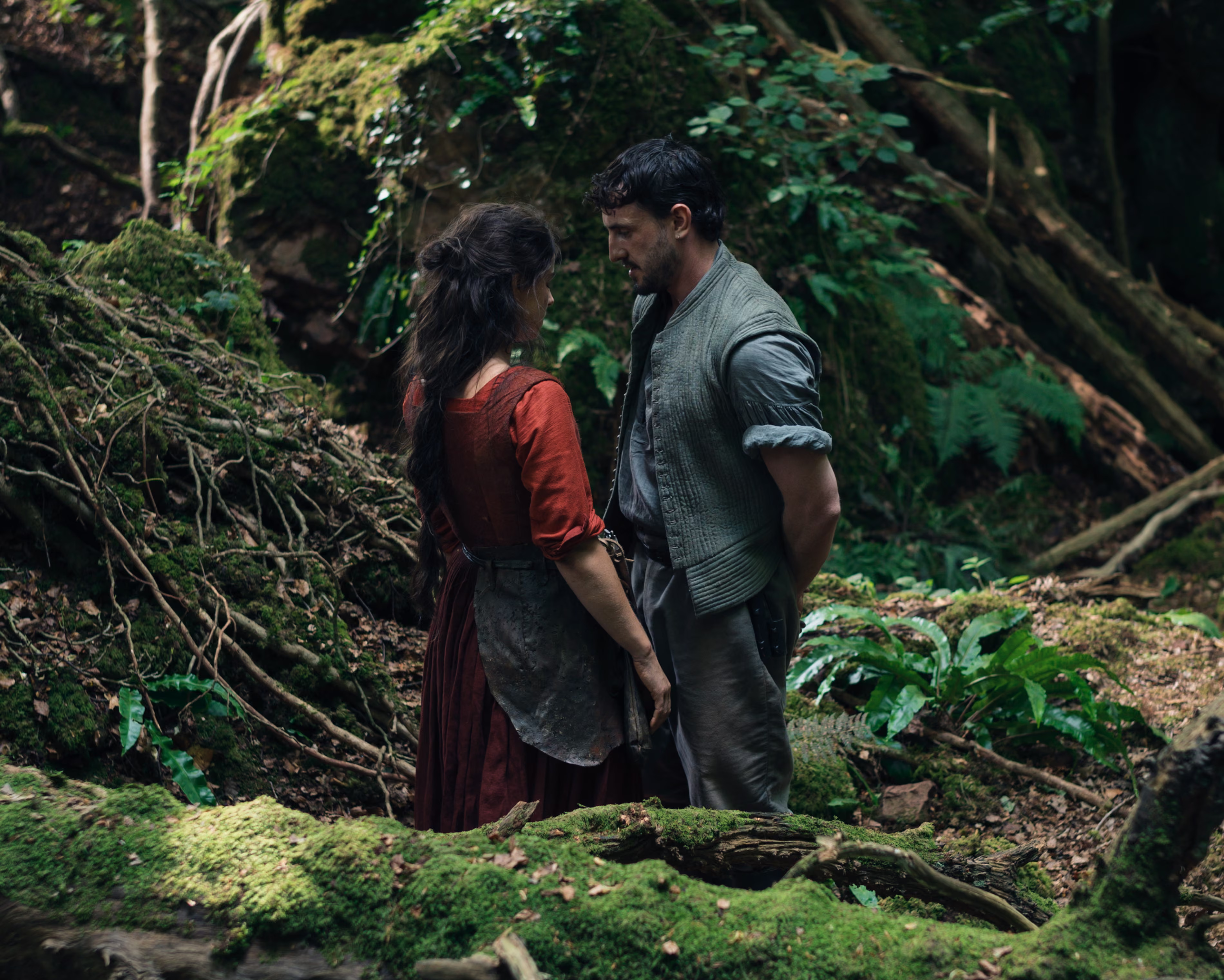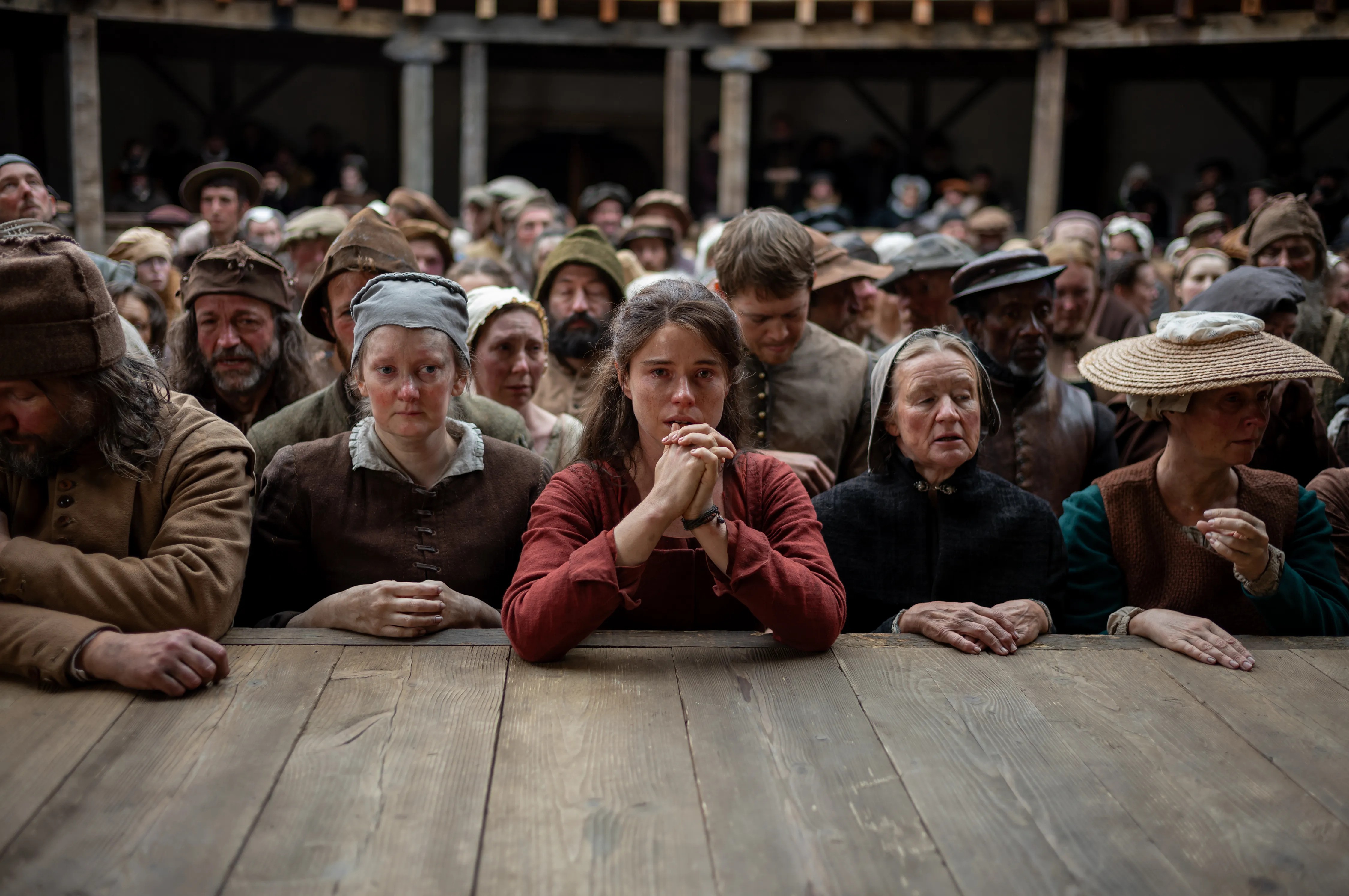
Posted in 2020-2029, Film Review

Materialists (2025)

© 2AM, Killer Films, A24 and Stage 6 Films

Materialists – Film Review

Cast: Dakota Johnson, Pedro Pascal, Chris Evans, Zoë Winters

Director: Celine Song

Synopsis: In the hustle and bustle of New York City, a matchmaker finds herself torn between a wealthy and charming financier and her ex…

Review: What if two people who at one time in their lives were deeply in love and were seemingly destined to be together, only for their trajectories to split? This was the philosophical question that beat at the heart of Celine Song’s reflective and heart-achingly beautiful directorial debutPast Lives, and how those two people reckon with what might have been had their lives taken a different direction. Love is very much at the centre of her follow-up, grounded in the world of dating and matchmaking, with the vibrant and lively atmosphere of the city that never sleeps again serving as the backdrop.

Lucy Mason (Johnson) is a self-proclaimed “eternal bachelorette” matchmaker working for ADORE, providing dating services for high-paying clientele. She has seen incredible success in her career, having matched nine couples who tied the knot. However, she insists she won’t walk down the aisle herself unless she meets someone wealthy. At a client’s wedding, she encounters the groom’s brother Harry (Pascal) and also runs into her ex-boyfriend, John, who works as a waiter for a catering firm while trying to become an actor. Lucy faces a dilemma between starting a promising new relationship with Harry or rekindling the romance with her old flame.

As was the case with her directorial debut, Song delves much deeper beyond the surface of what one might expect from a typical romantic comedy where two souls meet and fall in love with each other. This is encapsulated through an unconventional opening scene that is bound to catch some people off guard, yet it completely illustrates the nature of the story. Humanity’s age-old adventure to find connection, passion, romance and the hope of finding the special person we would like to fall head over heels in love with and wish to spend the rest of our lives with. Sometimes it’s a case of being in the right place at the right time and everything falls effortlessly into place.

However, in the modern world, finding a partner often reduces to persistent scrolling through apps, all in the hope of discovering that elusive dream match. But what truly defines the “perfect someone”? Is it their job, height, hobbies, or the music they listen to? Or perhaps even more specific criteria than that? The dating world is competitive and cutthroat, where everything on a profile has to be flawless in a world where people are filled to the brim with flaws and imperfections. Can a matchmaker really effectively use these various criteria to connect individuals with their ideal partners? This is the central question that Song addresses with unwavering honesty.

Johnson is an actor whose choice of projects (as she herself will tell you) has left a lot to be desired in recent years. It was clear that she had talent, but just needed the right script, and with those aligning, she gives one of her best performances as Lucy. Working in the field of matchmaking requires someone to be cool, calm and collected and the ultimate professional, even when dealing with picky and demanding clients. However, she remains unflustered in her attempts to find partners for that “check all the boxes”. Yet despite her success, she struggles to find the right partner for herself, even when someone as charming and downright handsome as Harry enters her life and goes out of his way to woo her. Pascal makes full use of his limited screentime and brings effortless suave and smouldering good looks. John may not have the same level of wealth as the other man trying to win Lucy’s heart, but Evans also brings charisma and charm aplenty.

When depicting love triangles on screen, human nature often leads us to root for one side to prevail over the other. However, Song’s script takes a balanced approach and allows the audience to understand the perspectives of all parties involved. It would be easy to assume Lucy would go for the man who has all the wealth in the world, but it is considerably more nuanced and complicated. There is, however, a subplot featuring one of Lucy’s clients, Sophie (Winters), which highlights the challenges and all too real dangers women, in particular, can face when dating a male partner and the risk of that partner getting abusive and or violent. While this may hit too close to home for some, it needed to be addressed, and more screentime could have been given to exploring this peril of the dating minefield.

It doesn’t quite pack the emotionally devastating punch as Past Lives, but take nothing away from what Celine Song has achieved. With only her second film, here is a director quickly gaining a reputation for bringing thoughtful and mature romances to the screen. Stories filled with resonant storytelling that make us pause and reflect on our lives, the people we love, and how do we possibly go about finding the one we are looking for in such a crazy, chaotic world where people are motivated by money and material possessions? A universal struggle that humanity has been grappling with throughout the aeons of human history, even for folks as mesmerisingly attractive as its three leading characters.

Bolstered by three excellent performances from its bewitchingly beautiful cast, Materialists offers a sincere and unflinching look at the complicated maze of online dating and humanity’s eternal quest to find romance in an increasingly avaricious world.

Posted in 2020-2029, Film Review

The Brutalist (2025)

© A24. Universal Pictures and Focus Features

The Brutalist – Film Review

Cast: Adrien Brody, Felicity Jones, Guy Pearce, Joe Alwyn, Raffey Cassidy, Stacy Martin, Emma Laird, Isaach de Bankolé, Alessandro Nivola

Director: Brady Corbet

Synopsis:  A talented architect escapes post-World War II Europe and emigrates to the US to start a new life in pursuit of the American dream…

Review: An arduous boat journey, followed by a walk down a gangway, to mark the start of a new life in a country that offers so much potential and opportunities for success. This is the core principle of the American Dream, a concept popularized by US writer James Truslow Adams during the Great Depression. It has been ingrained in the ideals of the nation for decades. No matter who you are or where you come from, you can achieve your dreams in the United States of America. This promise has inspired millions of immigrants to move to the country and lies at the heart of this ambitious and powerful film by Brady Corbet.

In post-World War II Europe, Hungarian-Jewish architect László Toth (Brody) emigrates to the United States after surviving the Holocaust. Unfortunately, he has been separated from his wife, Erzsébet (Jones), who remains in Europe with their niece, Zsófia (Cassidy). After disembarking from the boat and catching an upside-down glimpse of Lady Liberty in all her glory, László makes his way to Pennsylvania to stay with his cousin, Attila (Nivola), and Attila’s wife, Audrey (Laird). Attila offers László the chance to work in his furniture business. One fateful day, they receive an offer from Harry Lee Van Buren (Alwyn), who wants to hire them for a job to renovate the library at his father Harrison’s (Pearce) home. Initially, Harrison, a wealthy industrialist, strongly disapproves of the renovations and dismisses László from his home without paying him for the work. However, after László’s designs for the library receive glowing praise from the architectural community, Harrison returns to offer László the opportunity to design his magnum opus: a community centre that will house a gymnasium, chapel, and reading room in honour of Harrison’s late mother.

In such times when the subject of immigration is at the centre of hateful and bigoted rhetoric emanating from certain world leaders, the arrival of such an expansive and grand film in terms of its scope and themes couldn’t be more timely. Like a vast and tall structure built to last for generations to come, Corbet and Mona Fastvold’s weighty screenplay tackles a plethora of meaningful and potent subjects including the Jewish identity, the unremitting horrors the Holocaust inflicted on the Jewish people, the joys and hardships that go along with looking to fulfil the promise of the American dream as an immigrant, and the desire to make or construct something which will ensure you leave a lasting legacy on the world. Yet that ambition comes with a cost, because as Laszlo finds out, to what extent will you drive yourself into the ground in pursuit of perfection when the path to get there is littered with seemingly mountainous obstacles too heavy to move?

To leave everything you have known behind to pursue a brand new life on an entirely new continent is a journey that millions have embarked upon across generations. For Adrien Brody, whose mother and grandparents fled their native Hungary to emigrate to the US, it is evident how much of a personal role it is for him. He channels this into his incredible performance as we can see Laszlo is a man driven by his passion for his craft, and his determination to make a better life for himself so that one day Erzsébet and Zsofia will finally be able to join him in the US. Such is the lengthy process, it takes a while for Erzsébet and Zsofia to finally be reunited, but when she does finally arrive in the US, Jones more than makes her presence known with a powerful performance. As the wealthy benefactor who plays a central role in giving Laszlo a chance to realise his vision, Pearce is utterly compelling as Van Buren Sr. There is a warmth to him, a generosity where he recognises Laszlo’s talents. However, beneath that warm and embracing exterior, there is a hint of a darker side, a jealousy and bitterness that threatens to come to the surface as the film, and this hugely ambitious project progresses.


Whenever a film clocks in at a runtime exceeding three hours, discussions inevitably arise as to whether it justifies such a lengthy runtime. With a built-in intermission, the film’s structure keeps eyes firmly transfixed on the screen, be it the awe-inspiring production design, Lol Crawley’s breathtaking cinematography and the majestic score by Daniel Blumberg. Given the exorbitant budgets with which many films are made these days, how the film only cost $10m is astonishing and should serve as a lesson for filmmakers that exorbitant budgets aren’t always needed. However, even with the lengthy runtime, during which the audience has been taken on an immersive journey across several decades, the conclusion comes off as very abrupt and rushed. Like spending years on an exciting construction project, only to haphazardly complete the final stages in a comparatively short period. Even with such a lengthy runtime, the film would have benefitted from an extra 15 to 20 minutes to provide audiences with some necessary closure.

Despite some question marks about the film’s use of AI to enhance the Hungarian dialogue of László and Erzsébet, as well as for some of the former’s drawings, what Corbet has brought to the screen with only his third feature film is mightily impressive. With its pertinent exploration of the struggles of immigrants to fulfil the promise that the American dream sold to them, combined with its weighty themes of striving to establish yourself as a master in your craft, only to be held back due to a plethora of societal factors, including but not limited to the brutal (pun absolutely intended) nature of capitalist society. The wondrous filmmaking will only carry increased significance as time goes by.
Across such an epic runtime, The Brutalist could have easily been bogged down by the sheer ambition of its timely story. However, with an engrossing performance from Adrien Brody at its core, Corbet has built a towering and pertinent examination of the immigrant experience which will stand tall for generations to come. 

Posted in 2020-2029, Film Review

Anora (2024)

© Neon, FilmNation Entertainment and Cre Film

Anora – Film Review

Cast: Mikey Madison, Mark Eydelshteyn, Yura Borisov, Karren Karagulian, Vache Tovmasyan, Aleksei Serebryakov

Director: Sean Baker

Synopsis: A young sex worker from Brooklyn begins a whirlwind romance with an extremely wealthy client…

Review: The filmography of Sean Baker has provided audiences with a usually fascinating and insightful glimpse of the pursuit of the American dream from the perspectives of people on life’s periphery who are often looked down on by certain echelons of society. An LGBT sex worker, a working-class family struggling to make ends meet, and a washed-up porn star trying to recapture his former glory. While the latter may have left a lot to be desired in how its lead character went about his ambitions, there’s an enduring appeal in seeing people looking to make their dreams become a reality in a society which promises anyone and everyone has the potential to succeed irrespective of their background, even more so when these people are marginalised. For his latest film, Baker returns to the world of sex work, in a vibrant and hilarious ride.
Opening with a line of sex workers entertaining their clients, set to the backdrop of ‘Greatest Day’ by Take That (an absolutely perfect needle drop), we meet Anora (Madison), or Ani as she prefers to be known. Ani lives in Brighton Beach in Brooklyn and works in an exclusive strip club in Manhattan, frequented by some extremely wealthy clientele. One day, as Ani is the only employee at the club who can speak Russian, she is introduced to Ivan Zakharov (Eydelshteyn), the son of a Russian billionaire. It doesn’t take long for Ivan, or Vanya as he prefers to be known, to become infatuated with Ani and he soon pays for several private encounters with her, which eventually leads to the two of them beginning a relationship that culminates in a spur-of-the-moment wedding in Las Vegas.  Ani, with a beautiful ring on her finger and all the money in the world, is living in the most idyllic fairytale she could imagine. This is until everything comes crashing back down to Earth when word of this impromptu marriage reaches the ears of Ivan’s parents, who set out to do everything in their power to have the marriage annulled.

No matter who you are, everyone needs to find a way to earn a living, and sometimes sex work is the form of employment people choose as their source of income. Yet, even in the modern era, there is a frankly ridiculous taboo that comes with sex work that some may see as objectification. Baker humanises these people as people just looking to get by, particularly as they are ostracised by society due to the sexual nature of their jobs. While he wildly misfired with his previous film due to the predatory nature of a washed-up porn star’s quest to recruit an underage girl into becoming a sex worker, he strikes gold with his lead character this time around.

Having had memorable supporting turns as a Manson family member in Once Upon a Time… In Hollywood and 2022’s Scream, this is Madison’s moment to shine, and it is an opportunity she seizes in spectacular style as she is in scintillating form with a tremendous leading performance. Due to her line of work, she is endlessly charming and self-assured when it comes to wooing the club’s clients. Yet when she is with Ivan, it allows her to be more open and relaxed with the man she believes she will be with for the rest of her life. The romance between them could easily feel forced, but the chemistry between both actors is powerful and genuine. until her romantic bubble emphatically bursts in the latter half of the film when her fairytale marriage is not quite the happy ever after she thought it was going to be. Madison is the unquestioned star of the show, every princess in their fairytale needs a Prince Charming, and Eydelshteyn excels in bringing Vanya’s party animal antics to the core. Here is a kid who is determined to do whatever he can to cling to the life of playing video games, making love to his wife, and not having any responsibilities. Who wouldn’t want that lifestyle when you have that sort of money?

However, all of the fairytale and briefly blissfully wedded romance is rudely interrupted after Vanya’s furious father orders some of his enforcers to travel to the U.S to get the marriage terminated, which is made all the more difficult by Vanya’s decision to literally do a runner and leave Ani in the hands of his father’s goons. It is absolute chaos as the henchmen are left with no choice but to drag Ani along on a wild goose chase in the Big Apple, to locate one person in a city filled with more than eight million people. The heavy drama of the situation, combined with the hilarity of international henchmen desperately wandering around the city, while trying to act imposing and tough with anyone they come across, is a difficult balance to strike. It is a fine line that is walked almost perfectly, although you can’t help but feel as entertaining and chaotic as this frenzied search is, the film’s fast-paced and frantic energy wears off in the third act.

As a result, the film begins to lose momentum in its final stages. However, despite this minor issue, Baker continues to highlight and give a voice to those who through no fault of their own, find themselves marginalized in society. The Palme d’Or victory at the Cannes Film Festival suggests that this could be, to paraphrase the lyrics Take That, the greatest film of Sean Baker’s career.

With a star-in-the-making leading performance from Madison, Anora is an uproarious and compassionate depiction of an outsider’s perspective of the American dream, while flipping the classic fairytale story on its head. 

Posted in 2020-2029, Film Review

Challengers (2024)

© Amazon MGM Studios, Metro-Goldwyn-Mayer and Pascal Pictures

Challengers – Film Review

Cast: Zendaya, Mike Faist, Josh O’Connor

Director: Luca Guadagnino

Synopsis: A former tennis prospect turned coach must train her husband when he faces off against his former best friend…

Review: From the football pitch to the tennis court, to the racing tracks of Formula One, passion is usually never in short supply when it comes to professional sports. From the professional athletes playing the sports to the legions of fans in the stadium, and the countless millions watching on TV across the globe, there is a fervour for following our beloved team or individual player that cannot be outmatched. What if those feelings were not contained to merely the respective arenas on which the sports are played, and went beyond those and into the players’ personal lives? Relationships where the initial love and desire sour turn into seething resentment and acrimony in this steamy tennis drama from Luca Guadagnino.

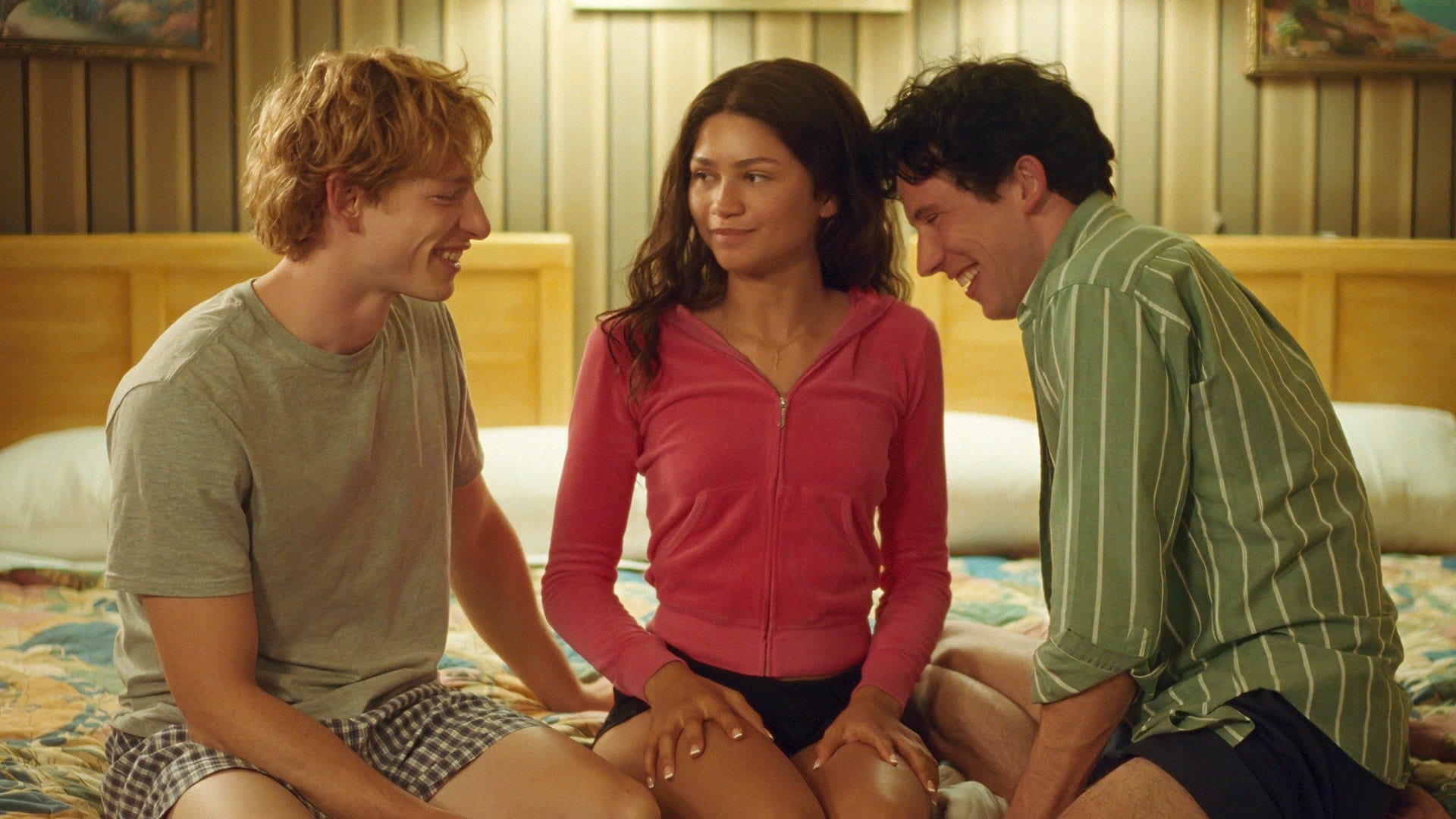
Tashi Duncan (Zendaya) is a tennis prodigy, a star destined for the most unstoppable career trajectory to become one of the best players the sport has ever seen. She captures the attention of lifelong friends Art (Faist) and Patrick (O’Connor), who become instantly smitten by her and desperate to win her affection. She ensnares them both and lays down a tantalising gauntlet, that whoever wins in their upcoming match will be the one who gets Tashi’s number. This challenge to win Tashi’s heart is the first swing in a journey over multiple years in which romance blossoms, once promising careers are cruelly cut short due to injury, and Art and Patrick’s budding friendship in their youth irrevocably damaged. It all comes down to one specific Challenger tennis match, a grudge match in more ways than one, with Tashi watching on from the stands.

Sensuality, desire and seduction are three words inextricably linked to any film directed by Guadagnino. Even in films where you would have thought it would be near impossible to make these themes relevant, such as a story of two young lovers forced to live a life on the run due to their cannibalistic tendencies. It might have seemed impossible to match the sunshine-drenched seduction on display in Call Me By Your Name, but the tennis ball has the peach outmatched because this is arguably the most seductive and horniest film he has made to date. The desire to be the best in your profession, in this case, a tennis player, coincides with the pursuit of a romantic partner/relationship. In Tashi’s mind, tennis is akin to being in a relationship and requires two, or in this case, three people to make it work. It’s this relationship which takes centre court as the boys pursue Tashi, and the ensuing love triangle and the complexities and emotions that go along with their relationships only intensify as the years progress.

By the time the crucial match has come around, saying there’s no love lost would be a massive understatement. The stakes could not be higher, with much more than bruised egos on the line, it is utterly pulsating to watch. Justin Kuritzkes’s screenplay is sharp and fierce with ice-cold and devastatingly brutal jibes and insults, some of which should in time take their place in a montage of some of the best insults/rebukes in cinema. The piercing dialogue, combined with the fierce power struggles that ensue within this bitterly fraught love triangle makes for utterly fascinating viewing, and with three utterly magnetic performances.

O’Connor’s Patrick is exceedingly cocksure and with a smugness that by all rights should make you want to throw a racket, or fire a bunch of tennis balls out of a machine at top speed at him to wipe the smile off his face.  Faist’s Art is considerably more withdrawn and focused on getting one over his former friend and arresting his slump in form. Yet the film’s ace is unquestionably Zendaya. She sets the wheels in motion, splintering apart the friendship between Art and Patrick like a tennis racket being mercilessly destroyed due to frustration. It’s a performance that serves as a reminder as to why she is one of the brightest talents in the industry and the best performance she has given on the big screen at least.

New shirts, please…

A cast fit and firing all on the top of their game is matched by their director. Guadagnino utilises several innovative style choices to illustrate the weight of the stakes that are riding on this match. Sayombhu Mukdeeprom’s cinematography utilises intense, sweat-dripping close-ups of the players in action where drops of sweat even drip onto the camera lens, as if there wasn’t enough sensuality on the screen to pump up the horniness, to wide shots and POV shots of the tennis ball as it is furiously smacked across the tennis court with intense feeling by both players. The tub-thumping disco vibes of the score by Trent Reznor and Atticus Ross only adds to the intensity of the rivalry being played out before our very eyes. Like a tennis rally constantly going back and forth, the film utilises a lot of time-hopping and non-linear narrative to illustrate the differing dynamics at various points in the lives of these people and how they go from lusting after each other to wanting nothing more than to go for each other’s throats.

It effectively illustrates how these emotions go from one extreme to the other over the course of many years, but with so much zipping around, the time jumps can get a tad confusing. Despite that minor fault, in a time when original ideas in Hollywood are certainly out there but don’t always come to the fore, it is refreshing to see such an exhilarating, original and thrilling piece of cinema be served up. Wimbledon and the other major tennis tournaments have a lot to live up to this year.

A fascinating and impassioned character study of desire, power and an insatiable hunger for success served with pulsating filmmaking and three electric performances.  Game, set and match.


Posted in 2020-2029, Film Review

The Iron Claw (2024)

© Access Entertainment, BBC Film, House Productions, A24 and Lionsgate

The Iron Claw  – Film Review

Cast: Zac Efron, Jeremy Allen White, Harris Dickinson, Maura Tierney, Holt McCallany, Stanley Simons, Lily James

Director: Sean Durkin

Synopsis: Telling the true story of the Von Erich family as they forge their legacy in the world of wrestling in the 1980s…

Review: What comes to mind when you hear the word “wrestling”? Aside from the sight of impossibly muscular individuals wearing tight spandex, prominent wrestling figures from when the WWE was at the peak of its popularity in the late ’90s to early 2000s. Names such as The Rock, Stone Cold Steve Austin, or The Undertaker may come to mind. However, for those who watched wrestling in the early to mid-80s, the names on everyone’s lips may well have been those of the von Erich family, whose rise to prominence and the subsequent tragedy that befell them is captured with raw and devastating emotion by Sean Durkin.

Opening in a car park after family patriarch Jack “Fritz” Von Erich has triumphed in a wrestling match at the peak of his career. After the fight, he impresses on his young sons Kevin and David the importance of being the toughest, the strongest, and the greatest they could be. If they can do this, nothing could harm them in the face of adversity, which is particularly significant as Fritz harbours a superstition that there is a curse on the family. Flash forwards several years later and the four Von Erich brothers, Kevin (Efron), Kerrie (Allen White), David (Dickinson), and Mike (Simons) are being coached by their father and pushing them to be the best wrestlers they can be, for a shot at the world heavyweight title that eluded Fritz. Each one of them exhibits the passion, the fire inside, and the determination to be the one that brings the title home while they establish their names in the world of wrestling.

An essential goal for any sports film, irrespective of the sport, is to captivate the audience with a compelling story, even if they have no prior knowledge of the sport in question. Durkin’s screenplay is a powerful combination of how the world of wrestling works and how even though matches have pre-determined outcomes, it emphasizes the immense physical and mental strain placed on professional wrestlers to perform regularly, which is what they will need to do if they want to have a chance of being the best. Such mental and physical tolls, combined with the weight of expectation placed upon their shoulders by their father, bring the brothers together to form the most unbreakable of brotherly bonds, which will resonate with anyone who shares a similar relationship with a brother. Each of them has their own unique personality, whether it’s David’s no-nonsense pre-match fighting talk, Kerry’s athleticism, Kevin’s imposing physicality, or Mike’s more reserved demeanour. They all share warm and loving chemistry with each other, making it all the more emotionally crushing when the Von Erich curse strikes the family once more.

In an ensemble filled with brilliant and layered performances to leave the audience on the ropes with the emotional weight of the tragedy of the Von Erichs’ story, it is Zac Efron’s leading performance that delivers the knockout blow. Aside from the awe-inspiring physical transformation (he gained 15 pounds for the role), it is a role that is as far from a cry from his early career as a star of Disney musicals as physically possible. However, with his almost impossibly imposing physicality, he delivers arguably the best performance of his career and showcases his talent as a dramatic actor. He strongly loves his family and wrestling, though the love for the latter is severely tested. Durkin’s script examines the brotherhood between the Von Erichs and the stern tutelage of their father. However, such was the weight of expectation and burden placed on their shoulders, where the pressure on them to perform was insurmountable and the culture of toxic masculinity, took a severe toll on them both physically and mentally. Unfortunately, this doesn’t leave much time to explore Kevin’s relationship with Pam (James) as they begin a life together raising a family of their own, while Tierney as the Von Erich matriarch is also left on the sidelines.

The heart-breaking nature of this story means it would be easy for the audience to become too overwhelmed by an overpowering sense of devastation and melancholy. However, Durkin handles these emotional moments with care and sensitivity so that, like a signature wrestling move, they leave the audience floored for maximum impact when they hit. Durkin and his cinematographer Mátyás Erdély recreate the ’80s time period when it comes to the wrestling scenes, beautifully with immaculately choreographed scenes that look authentic and pack a tremendous punch, particularly when it comes to the iron claw itself, the von Erich family’s signature wrestling move. Wrestling is a sport with such physical demands on its performers, often taking the lives of many wrestlers well before their time. Many members of the Von Erich family may have seen their time on this Earth prematurely cut short, but their achievements in wrestling have ensured the Von Erich family has built a legacy that will live forever.

Powered by a career-defining performance from Zac Efron, The Iron Claw‘s tragic true story of brotherhood, wrestling and legacy stakes its claim for the title of one of the most harrowing sports dramas that will leave you down and out for the count. 

Posted in 2020-2029, Film Review, London Film Festival 2023

The Zone of Interest (2023)

© A24, Film4, Access, Polish Film Institute, JW Films and Extreme Emotion

The Zone of Interest – Film Review

Cast: Christian Friedel, Sandra Hüller, Ralph Herforth, Johann Karthaus, Luis Noah Witte, Nele Ahrensmeier, Lilli Falk, Medusa Knopf

Director: Jonathan Glazer

Synopsis: A Nazi officer and his wife look to build their idyllic family life in a home right next to Auschwitz…

Review: One does not have to have picked up a history book, or to have studied World War II in extensive detail, to know between 1941 and 1945, the Nazis systematically murdered European Jews during the Holocaust. Around six million Jews, two-thirds of the Jewish population on the continent, were slaughtered. Cinema has often turned its attention to this dark and evil chapter of human history, capturing the horrendous conditions of the concentration/death camps. It seems impossible for a film to find a new way to illustrate the appalling atrocities committed by the Nazis, yet this is exactly what writer/director Jonathan Glazer does with this haunting and unnerving examination of human indifference towards unspeakable brutality.

Loosely based on the 2014 novel of the same name by Martin Amis and set in 1943, the film explores the life of Nazi SS officer and Commandment of the Auschwitz concentration camp Rudolf Höss (Friedel) and his wife Hedwig (Hüller) as they seek to build their family life in a house, right next door to the camp. The mere description of the film’s synopsis is enough to fill anyone with fury and anxiety, and anyone could reasonably think that the film’s opening shot would be an unsettling scene from inside the camp. Instead, after a lengthy black screen with only Mica Levi’s score to fill our eardrums with a terrifying sense of dread, the opening shot is one of the Höss family, having a family day out by a lake. The jarring juxtaposition of joyous family fun, in the immediate vicinity of callous acts of genocide is an immediate jolt to the senses to horrify you beyond measure.

It is such a disturbing and startling contrast that makes your stomach churn, setting the tone for the rest of the film. Throughout, we see the Höss family go about their daily lives. Banal acts such as getting ready for school, coming home, tending to your garden, having a meal, spending a family day by the pool, and sleeping safe and sound in your bed at night. The sorts of regular activities families will go through day after day. All the while, the audible sounds of gunshots, indiscernible orders, screams and cries for mercy, combined with the horrific sight of the Auschwitz chimney splurging out smoke as a result of the gas chambers being used. Yet these horrific sounds do not remotely faze the family in the slightest. They go about their lives while countless innocent souls have theirs ended in such an inhumane and callous manner. The sounds coming from the camp are deliberately kept out of sight but never out of the minds of the audience.

In what cannot have been easy roles for any of these actors to play, Christian Friedel and Sandra Hüller’s performances are both chillingly effective. Friedel portrays Hoss as a man driven by the wellness and comfort of his family while being heavily invested in his disturbing work concerning the efficiency of the camp to please his superiors. Meanwhile, Hüller as the Höss household matriarch also shows a complete lack of emotion to the situation mere yards away from her house. She is far more preoccupied with attending to the flowers and plants in her garden and trying on clothes that belonged to Jews who were housed at the camp. Both their performances are frightening due to their complete indifference to the barbaric acts of violence being inflicted upon other human beings beyond their garden wall, simply because they didn’t acknowledge the people who were housed in those conditions as people at all. Their shocking coldness in the face of the unspeakable screams with furious urgency to the audience, particularly in a world which finds itself in a seemingly never-ending continuous trend of horrific violence being inflicted on people all over the world on a day-to-day basis.

The filmmaking on display is immaculate. Glazer’s use of extensive long takes illustrates the mundanity of the everyday life of the Hoss family, while Lukasz Zal’s stripped-back cinematography is devastatingly effective. Using only practical and natural lighting, the garden scenes exude the warmth of a plot of land filled with love and care. Yet, in the very same shot, the cold, ominous, and unforgiving presence of the concentration camp’s buildings lingers in the background and serves as a glaring reminder of the horrors contained within those walls.

The art form of cinema can so often be a place for audiences to have fun and enjoy themselves, but this is emphatically not one of those instances. Glazer’s intention is absolutely to horrify the audience, to chill them to their very core as to how people can sit idly by while horrific crimes are committed in broad daylight. As the old saying goes: “Those who cannot learn from history are doomed to repeat it”. Such appalling acts of depravity should be forever confined to our history books and museums, never to be repeated. However, as recent years have shown, unspeakable atrocities are being committed due to blind hatred, while bigotry is rearing its ugly head across the world. Glazer’s message rings loud and clear. We cannot and must not be complicit in the face of evil.

An unflinching analysis of the human complicity and apathy in close proximity to the unimaginable brutality inflicted on countless innocent souls that will get under your skin and not leave your mind anytime soon. In time, this will become essential viewing for all.

a


Posted in 2020-2029, Film Review, London Film Festival 2023

Killers of the Flower Moon (2023)

© Apple Films, Paramount Pictures and Imperative Entertainment

Killers of the Flower Moon – Film Review

Cast: Leonardo DiCaprio, Robert De Niro, Lily Gladstone, Jesse Plemons, Tantoo Cardinal, Cara Jade Myers, Jillian Dion

Director: Martin Scorsese

Synopsis: Telling the true story of what became known as “The Reign of Terror” where a series of murders of members took place in the 1920s against of the Osage Native American tribe in the 1920s, sparking a major law investment investigation…

Review: The 1920s, or the Roaring Twenties, was defined by economic prosperity across Western society where certain sections of the population gained enormous wealth. However, as history has shown us time and time again, for some people, the wealth they have acquired is somehow never enough. They are driven by insatiable greed, which as the trailer summarised is “an animal that hungers for blood” and will be willing to commit appalling acts of violence to obtain such wealth. It is this greed and corruption, as well as a series of brutal murders which forms the basis for the latest epic from one of cinema’s greatest living directors.

Ernest Burkhart (DiCaprio) returns to Osage County, Oklahoma after serving in the First World War. In 1898, the discovery of huge quantities of oil underneath the land belonging to the Osage Native American tribe instantaneously made them some of the richest people in the world. Yet, the possession of this wealth provokes the Caucasian members of the community to conspire against the Osage tribe, to swindle them out of this money so that the wealth can come to them. To that end, Burkart is persuaded by his ruthless uncle William Hale (De Niro), to marry Osage member Mollie Kyle, so that were anything to happen to Mollie’s family, the lucrative wealth of this oil money would be passed on to Burkhart, and by extension, Hale.

Based on the book of the same name by David Grann, the screenplay by Scorsese and Eric Roth frames its story from the perspective of the Osage people. We see through their eyes how the viciousness, corruption, greed, as well as white supremacy, drove people to systematically kill off the Osage community. As one Osage leader puts it “they’re like buzzards circling our people”. Over 206 enthralling minutes, the film combines the love story between Mollie and Ernest, the central plot to eliminate the members of the Osage community, and the ensuing Bureau of Investigation (BOI) inquiry into the murders.

Marking the sixth collaboration between himself and Scorsese, DiCaprio is excellent as Burkhart. On the surface, he comes across as a bit dim-witted and extremely naive. Yet, he is also ambitious and is spurred on by his uncle to do some truly terrible things all in the name of acquiring more wealth. Even though she could sense from the start what his ulterior motive was, the romance between him and Mollie is genuine and causes Burkhart to be severely conflicted about the plans his uncle has put in place. In what is De Niro’s tenth feature film collaboration with his long-time friend, he is as thoroughly loathsome and reptilian as Hale. On the outside, he comes across as this charming and friendly soul towards the Osage. Yet, on the inside, he spouts white supremacist ideology which feels eerily reminiscent of modern times. It’s a scaled-back performance in many respects, as he does not need to raise his voice to cause other characters, especially Ernest, to be immensely afraid of a deadly reprisal given the power he holds in the region. Both actors have become Scorsese’s muses over the course of his glittering career, and to see them act opposite each other in a feature film for the first time is a special sight to see.

However, both are outshone by the film’s heart and soul, Lily Gladstone’s Mollie. She initially displays a quiet and restrained performance, even as members of her family and the Osage are being killed. Yet, as the film progresses, that restraint turns into something much more potent and fiercer when it comes to seeking justice for those Osage members who have been cruelly murdered, which results in the Bureau of Investigation sending agent Tom White (Plemons) down from Washington D.C. to lead an inquiry into the murders.

Having been given the largest-ever budget on a Netflix film with his previous film, Scorsese has followed suit with his move over to Apple (with a reported budget of $200m) and the results are as immaculate as one would expect. The filmmakers worked extensively with the Osage tribe to ensure authenticity and were permitted to shoot in areas where the events depicted happened. Similarly, the length gone to recreate genuine Osage costumes, particularly the blankets, demonstrates the tremendous level of care which went into the production. It gives the Osage community a voice which history has often tried to silence. Under the trusted eye of his regular collaborator Thelma Schoonmaker, the film’s editing is meticulous and keeps the film’s pace briskly moving along so that those 206 minutes whistle by, reinforcing the idea that no film is too long if it is paced correctly. Having served as cinematographer on his films since The Wolf of Wall Street, Rodrigo Prieto’s cinematography is visually striking in capturing the Oklahoma oil fields bathed in sunshine and when required,  shifts gear when it comes to the abject horror the Caucasian community wrought upon the Osage.

He might have now reached the age of 80, but for Scorsese age is clearly just a number. He continues to not let his age get in the way of producing stunning pieces of cinema which can shine a spotlight on an important piece of US history that should never be forgotten. It reminds the audience of the horrors and evils that can come with rampant corruption and greed, a lesson which still holds true in modern society. Cinemagoers across generations have been able to watch a master at work for over 60 years, and for that, we can be immensely grateful.

An epic and all-encompassing rumination on the perils of rampant greed, the ugliness of white supremacy and the US’s shameful history when it comes to the treatment of the Native American people. Another stunning achievement from one of the best directors cinema has ever seen. 

a


Posted in 2020-2029, Film Review, London Film Festival 2023

The Holdovers (2023)

© Focus Features and Miramix


The Holdovers  – Film Review

Cast: Paul Giamatti, Dominic Sessa, Da’Vine Joy Randolph, Carrie Preston,

Director: Alexander Payne

Synopsis:  A prep school student must remain on campus over the Christmas holidays with his history professor and the school’s head cook…

Review: Christmas is a usually celebratory and special time of the year when families can get together, exchange gifts, relax and unwind after a busy 12 months prior. However, for some people, this may not be the case. For a multitude of reasons, they might not have anywhere to go. It is a difficult predicament at the best of times, particularly for anyone forced to spend the holidays at an educational institution, such as a boarding school. Such a premise on paper doesn’t sound like it would be ripe material for a heart-warming Christmas film, but the latest film from Alexander Payne is exactly that, a warm hug of a film and one that will surely cement itself as a staple of the holiday season every year.

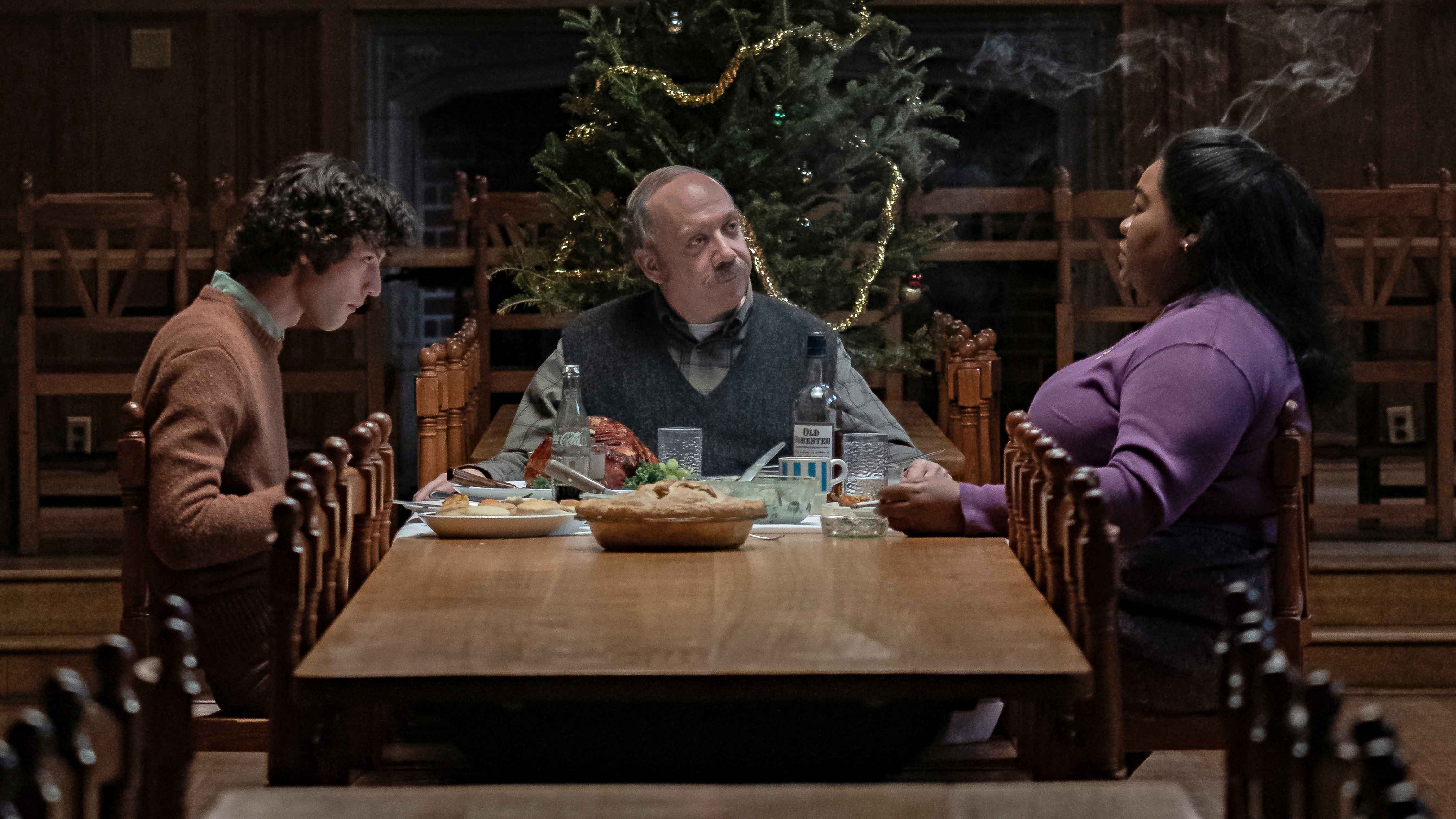
It is Christmas 1970, and cantankerous classics professor Paul Hunham (Giamatti) at the Barton Academy in Massachusetts is tasked by the school’s headmaster to remain on campus to look after and supervise a select group of boys who have nowhere else to go, leaving them rather dismayed. Though when circumstances change and most of the students are allowed to depart thanks to one of their parents, it leaves only Paul, the school’s head cook Mary Lamb (Randolph) and the bright but troubled Angus Tully (Sessa) as the only people remaining on campus through the holidays, the latter duo having both recently lost close members of their family.

Right from the opening titles, which are recreated in the style of the 1970s, the audience is immediately transported into the spirit of the holiday season that gives you such a warm fuzzy feeling that very few times of the year could. The screenplay by David Hemingson, who based it on his own personal experience at a prep school, is filled with razor-sharp wit and humour, while also building poignant and emotional moments between its three main characters as they navigate having to spend the Christmas holidays in the one place they probably wish they could be as far away from as humanly possible.

Reuniting with Payne after they collaborated on 2004’s Sideways, Giamatti excels in a role that was almost certainly written with him in mind given he shares his name with his character. He is well aware that among the students, and even the faculty, he’s thoroughly despised for his strict approach to his job, but it doesn’t faze him at all and almost revels in it. His prickly attitude lends itself to difficult early moments between him and Angus, an unquestionably bright but troubled student going through a troubled moment in his life. To add insult to injury, he has been left behind by his family at the worst possible time. However as they spend more time with each other, the two build an unlikely friendship as they get to know each other’s past and understand the other’s perspective. It’s remarkable to think this is Sessa’s first screen performance and to act alongside Giamatti going toe-to-toe with a veteran of the industry, but he rises to this challenge spectacularly. Randolph completes the trifecta of magnificent performances as she brings warmth and heart to this group, showing compassion for Angus and his difficult situation, and rebuking Paul for his unnecessarily strict attitude towards Angus, all while grieving for the loss of her son.

If the opening titles weren’t enough to help set the scene and make the audience feel like they have time-travelled back to the 1970s themselves, the cinematography from Eigil Bryld beautifully captures the time period as if the filmmakers were using antique cameras and equipment to establish the 1970s setting. Similarly, the film juxtaposes the warmth and cosiness of the holiday season even in the midst of a place which is the antithesis of those two adjectives, while also capturing the cold depths of the Massachusetts winter. In modern times, films which are not part of an existing franchise, or not based on a book or already established source material are increasingly rare these days. As such they should be treasured like a special Christmas present, even more so considering the film contains one off the best insults you will ever hear on film.

Just as Christmas is one of the most joyous times of the year, The Holdovers is fittingly a joyous and emotional tale of three unlikely people coming together to unite in their grief while celebrating the holidays. A future festive classic. 

Posted in 2020-2029, Film Review, London Film Festival 2023

Saltburn (2023)

© Metro-Goldwyn-Mayer Pictures. MRC and LuckyChap Entertainment

Saltburn – Film Review

Cast: Barry Keoghan, Jacob Elordi, Rosamund Pike, Richard E. Grant, Alison Oliver, Archie Madekwe, Carey Mulligan

Director: Emerald Fennell

Synopsis: An introverted Oxford University student is invited by a wealthy classmate to spend the summer at his family’s estate…

Review: There can be surely no finer way for a director to announce themselves as an exciting new voice in cinema when their debut is a powerful piece of storytelling which holds a mirror up to society and ignites a conversation. This is precisely what Emerald Fennell accomplished when her incredible directorial debut, Promising Young Woman, was unleashed onto the world in 2020/21. By putting sexual harassment and the extremely predatory behaviour of men towards women under a microscope, it earned her a well-deserved Academy Award for Original Screenplay, as well as landing nominations for Directing and Best Picture. After such richly deserved success, much anticipation followed as to what she would bring to the table with her follow-up. It is safe to say, here’s a director who is not afraid to really push boundaries.

Oliver (Keoghan) is a bright but socially introverted student who arrives at Oxford University in the mid-2000s. He initially struggles to settle in and make friends, but an act of kindness towards his wealthy aristocrat and extremely popular classmate Felix Catton (Elordi), helps Oliver to integrate himself into Felix’s circle of friends, much to the dismay of Farleigh (Madekwe), Felix’s cousin. Over the next few months, the two of them begin to form a close friendship which culminates in Felix inviting Oliver to spend the summer at his family’s extravagant estate, Saltburn, for a summer filled with extravagant parties, romance and a summer unlike anything Oliver has experienced before.

Over the years, and particularly since the Covid pandemic, films which put the class system under a microscope have been in plentify supply. Yet, while all of these films had a common thread of “eating the rich”, each delivered this message in an original and witty manner. They were full of sharp observations and satire towards the lifestyles of the rich and powerful. Fennell’s screenplay follows a similar theme with the opulence and the extravagance of those lifestyles on full display. Yet, as far as Oliver is concerned, it is not a case of casting a scowl and an angry stare at the affluence of his hosts. Instead, it is in fact a desire (bordering on lust) to integrate himself into that lifestyle, where would be willing to do anything he can obtain it.

After slowly but steadily building his name as an actor to watch in recent years, which culminated in landing his first Oscar nomination in last year’s The Banshees of Inisherin, Barry Keoghan delivers yet another memorable performance to add to an already impressive career. He starts off as a very timid student who seems petrified to come out of his shell. Yet as the film slowly progresses, he morphs and transforms into a very different character once he has a taste of the lifestyle enjoyed by Felix and his family. Speaking of the family, everyone is brilliant to watch, but the standouts are easily Felix’s parents Elsbeth (Pike) and Sir James (Grant). Both of them revel in their status as part of the elite while being snobby and condescending towards those they see as beneath them, and will fire off snide remarks at will towards people such as Oliver and Pamela, a far too brief but wonderful turn from Mulligan to reunite with her Promising Young Woman director.

With no shortage of striking and haunting religious imagery in her debut film, while effortlessly flipping between rom-com and revenge thriller, Fennell repeats this trick once again and demonstrates what a fearless filmmaker she is. This time around, she blends romantic drama, black comedy and psychological thriller into one big melting pot baked in the British summer sunshine. Furthermore, through the immaculate cinematography from Linus Sandgren the beauty of the titular estate while drenched in the warm summer sunshine is juxtaposed with an atmospheric and ominous presence, particularly at nighttime capturing a gothic horror vibe to the place. The clever use of the 4:3 ratio creates the illusion that despite its vast grounds, the Saltburn estate has much less privacy than one might expect.

The film is undeniably visually stunning, and Fennell deserves credit for once again being so daring in her storytelling. However, without getting into spoilers, the direction the story goes in is extremely provocative and twisted. It goes for shock value for the sake of it, rather than having anything of real substance to say the affluence of the 1% and fails to replicate her debut feature’s emotional gut punch that left audiences reeling. That being said, like its predecessor, it does close out on one hell of a needle drop which will likely leave said song stuck in your head for days on end.

Despite some interesting ideas and a scintillating lead performance from Keoghan, Fennell’s follow-up to her Oscar-winning debut is a frustrating case of style over substance.

Posted in 2020-2029, Film Review

Past Lives (2023)

© A24, CJ ENM, Killer Films and 2AM

Past Lives – Film Review

Cast: Greta Lee, Teo Yoo, John Magaro

Director:  Celine Song

Synopsis: Two childhood friends in Korea reconnect years later after one of their families migrated to North America…

Review: As human beings, we have all likely gone through that moment where we have imagined what would have happened had certain decisions we made in our lives been different. Could certain events, or maybe even the whole direction of our lives transpired differently than how they turned out? Would we have lived in a different place, landed on a different career path or met and fallen in love with someone else entirely? These are the questions and ruminations which beat at the heart of this quiet, thoughtful and stunning directorial debut from Celine Song.

Growing up together at a school in Seoul, Na Young and Hae Sung were classmates and childhood sweethearts who seemed destined to spend the rest of their lives together. However, their lives are taken in two different directions when Na Young’s family emigrates to Canada. Flash forward 12 years and Na Young – now going by the name Nora – is a playwright living in New York, while Hae Sung remained in Korea to study engineering. A chance search on social media allows the two of them to reconnect online but, Nora chooses to cease contact so both can focus on their careers. After a further 12 years pass, Kae Sung travels to New York to meet Nora in person, where they contemplate their time together in Korea, how their lives have turned out and ponder what might have been had they stayed together.

For as long as cinema has existed, there have been countless films which have explored romance, relationships and the complicated emotions that can form when two souls who seemed destined to be together are torn apart. Celine Song’s semi-autobiographical screenplay approaches its subject matter in a way which feels uniquely original and accomplishes this without coming across as overly sentimental. The exploration of a Korean concept known as “in-yeon”, where two souls during a chance encounter might have meant something much more to each other in a previous life, sounds quite soppy. Song’s script adds rich layers of emotional depth with a tinge of melancholy, to this heart-achingly beautiful story of romance, longing for a life we’ve never lived, and a rumination of the events which shape our lives.

As the central character of this exquisite love story, Greta Lee is terrific as Nora. We see how throughout her life, she is resolute in her ambition to achieve her goals as a playwright and initially seemed sure of who she would marry in the early stages of her life. However, when it comes to her personal life, she becomes torn between her childhood crush and Arthur (Magaro), the man she married after the two met on a writer’s retreat. The scenes between her and Hae are tenderly portrayed with often periods of silent reflection between them because sometimes silence says more than words ever could. Crucially, the film never strays into any melodrama particularly where Arthur is concerned as he could have been portrayed as a villain. However, Magaro’s layered performance ensures that the audience views him sympathetically as he understands the connection that once existed between his wife and Hae when they were young and doesn’t get in the way of the tender moments between these two former lovers.

The poignant score by Christopher Bear and Daniel Rossen reinforces the wistful and moving nature of the central story, to which Song bides her time and paces things deliberately slowly to allow the relationships between the central three characters to take their course. Sometimes, the most powerful stories come from our own experiences that we encounter during our journey through this mad, crazy and sometimes beautiful world that we live in. Those complicated, layered emotions from those moments where we find pastures new, meet and fall in love, and through no fault of our own, are forced to part ways are captured so succinctly by Song. Like its central characters, this is a film which will likely leave audiences deep in thought and reflection on their own lives once the credits start to roll.

A beautiful and profound character study of the complexities of the emotional and romantic bonds which shape the course of our lives. A masterful directorial debut from Celine Song. 

a