
Saltburn – Film Review
Cast: Barry Keoghan, Jacob Elordi, Rosamund Pike, Richard E. Grant, Alison Oliver, Archie Madekwe, Carey Mulligan
Director: Emerald Fennell
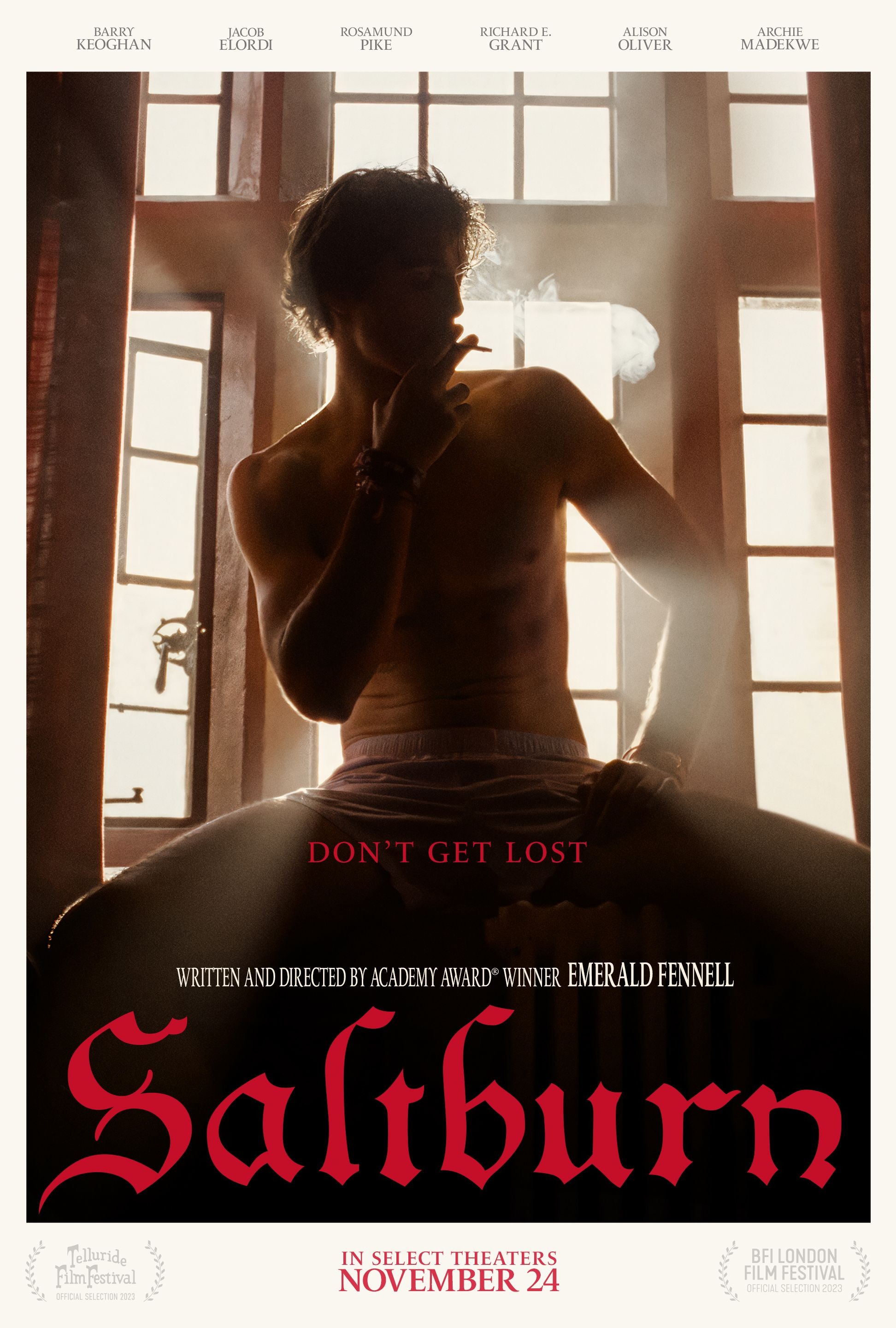
Synopsis: An introverted Oxford University student is invited by a wealthy classmate to spend the summer at his family’s estate…
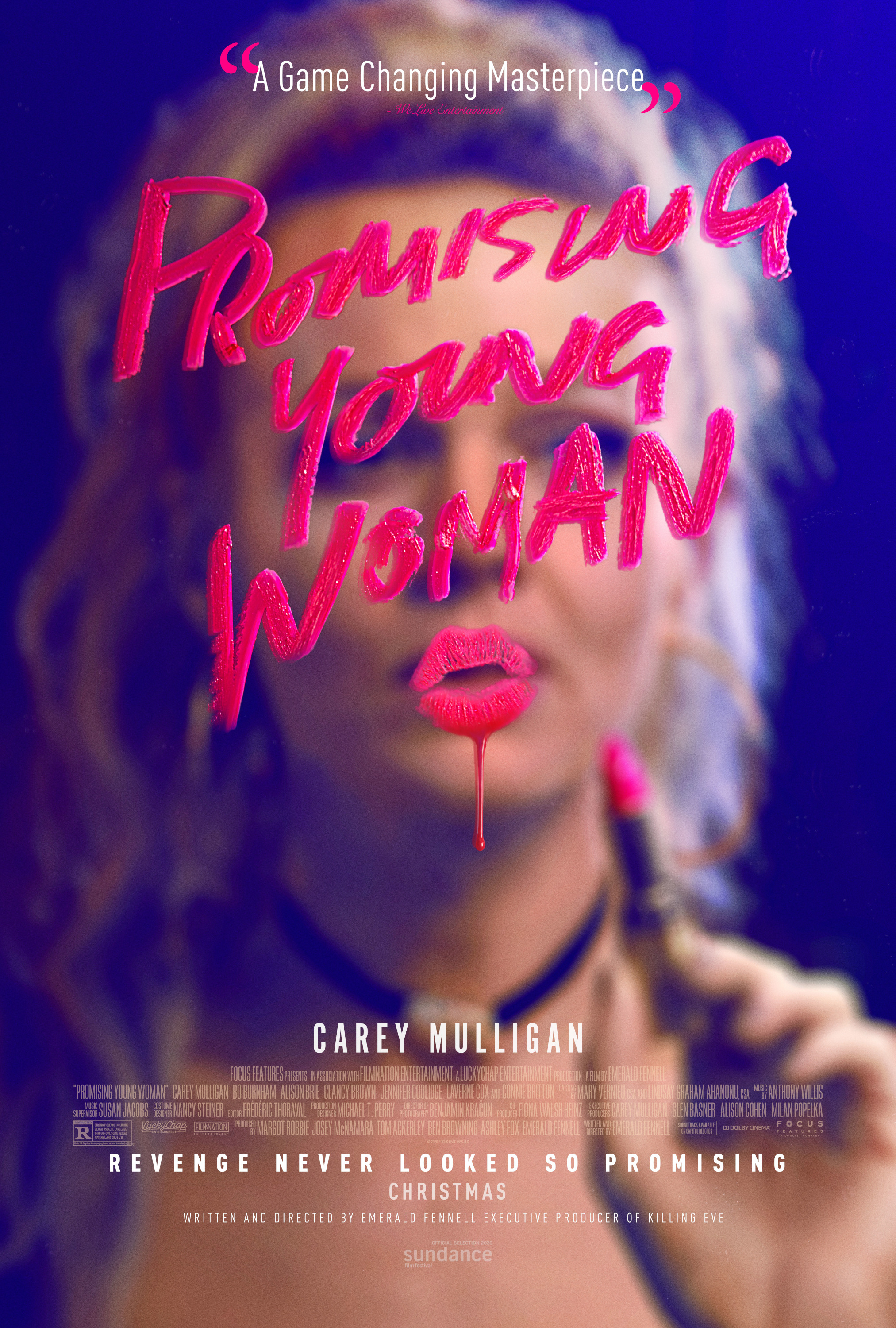
Review: There can be surely no finer way for a director to announce themselves as an exciting new voice in cinema when their debut is a powerful piece of storytelling which holds a mirror up to society and ignites a conversation. This is precisely what Emerald Fennell accomplished when her incredible directorial debut, Promising Young Woman, was unleashed onto the world in 2020/21. By putting sexual harassment and the extremely predatory behaviour of men towards women under a microscope, it earned her a well-deserved Academy Award for Original Screenplay, as well as landing nominations for Directing and Best Picture. After such richly deserved success, much anticipation followed as to what she would bring to the table with her follow-up. It is safe to say, here’s a director who is not afraid to really push boundaries.
Oliver (Keoghan) is a bright but socially introverted student who arrives at Oxford University in the mid-2000s. He initially struggles to settle in and make friends, but an act of kindness towards his wealthy aristocrat and extremely popular classmate Felix Catton (Elordi), helps Oliver to integrate himself into Felix’s circle of friends, much to the dismay of Farleigh (Madekwe), Felix’s cousin. Over the next few months, the two of them begin to form a close friendship which culminates in Felix inviting Oliver to spend the summer at his family’s extravagant estate, Saltburn, for a summer filled with extravagant parties, romance and a summer unlike anything Oliver has experienced before.

Over the years, and particularly since the Covid pandemic, films which put the class system under a microscope have been in plentify supply. Yet, while all of these films had a common thread of “eating the rich”, each delivered this message in an original and witty manner. They were full of sharp observations and satire towards the lifestyles of the rich and powerful. Fennell’s screenplay follows a similar theme with the opulence and the extravagance of those lifestyles on full display. Yet, as far as Oliver is concerned, it is not a case of casting a scowl and an angry stare at the affluence of his hosts. Instead, it is in fact a desire (bordering on lust) to integrate himself into that lifestyle, where would be willing to do anything he can obtain it.
After slowly but steadily building his name as an actor to watch in recent years, which culminated in landing his first Oscar nomination in last year’s The Banshees of Inisherin, Barry Keoghan delivers yet another memorable performance to add to an already impressive career. He starts off as a very timid student who seems petrified to come out of his shell. Yet as the film slowly progresses, he morphs and transforms into a very different character once he has a taste of the lifestyle enjoyed by Felix and his family. Speaking of the family, everyone is brilliant to watch, but the standouts are easily Felix’s parents Elsbeth (Pike) and Sir James (Grant). Both of them revel in their status as part of the elite while being snobby and condescending towards those they see as beneath them, and will fire off snide remarks at will towards people such as Oliver and Pamela, a far too brief but wonderful turn from Mulligan to reunite with her Promising Young Woman director.
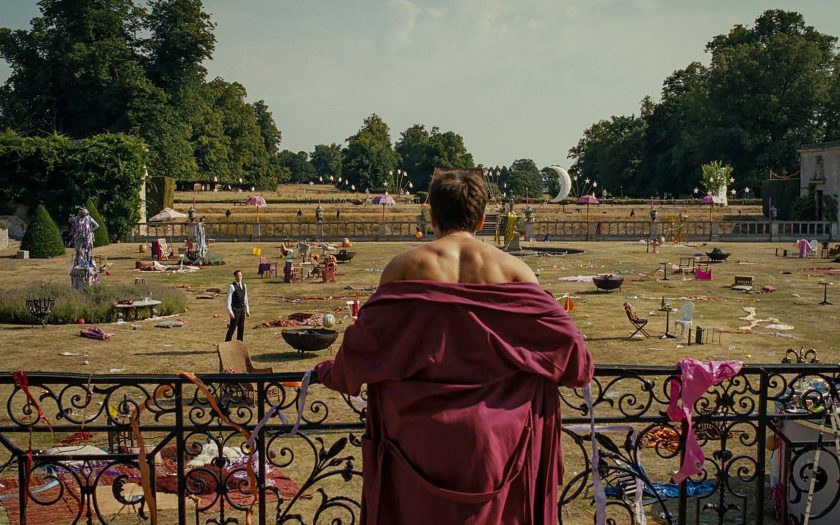
With no shortage of striking and haunting religious imagery in her debut film, while effortlessly flipping between rom-com and revenge thriller, Fennell repeats this trick once again and demonstrates what a fearless filmmaker she is. This time around, she blends romantic drama, black comedy and psychological thriller into one big melting pot baked in the British summer sunshine. Furthermore, through the immaculate cinematography from Linus Sandgren the beauty of the titular estate while drenched in the warm summer sunshine is juxtaposed with an atmospheric and ominous presence, particularly at nighttime capturing a gothic horror vibe to the place. The clever use of the 4:3 ratio creates the illusion that despite its vast grounds, the Saltburn estate has much less privacy than one might expect.
The film is undeniably visually stunning, and Fennell deserves credit for once again being so daring in her storytelling. However, without getting into spoilers, the direction the story goes in is extremely provocative and twisted. It goes for shock value for the sake of it, rather than having anything of real substance to say the affluence of the 1% and fails to replicate her debut feature’s emotional gut punch that left audiences reeling. That being said, like its predecessor, it does close out on one hell of a needle drop which will likely leave said song stuck in your head for days on end.
Despite some interesting ideas and a scintillating lead performance from Keoghan, Fennell’s follow-up to her Oscar-winning debut is a frustrating case of style over substance.





 Through the Silver Screen