Posted in 2020-2029, Film Review

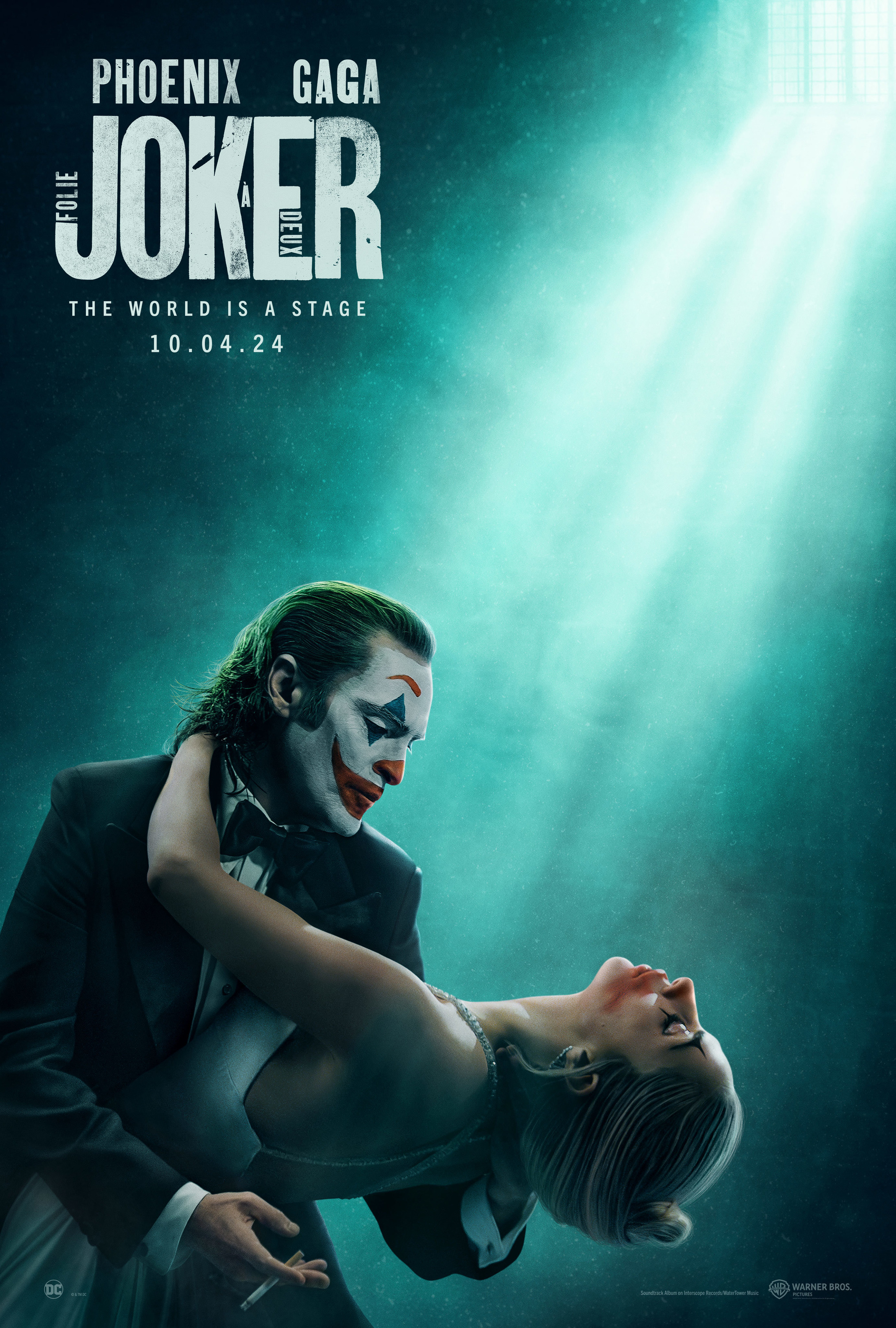
Joker: Folie à Deux (2024)

© Warner Bros Pictures and DC Studios

Joker: Folie à Deux – Film Review

Cast: Joaquin Phoenix, Lady Gaga, Brendan Gleeson, Catherine Keener, Zazie Beetz, Steve Coogan, Leigh Gill

Director: Todd Phillips

Synopsis: Two years after the events of the first film, as he prepares to go on trial for murder, Arthur Fleck meets fellow Arkham inmate Harleen ‘Lee’ Quinzel…

Review: In what was an incredible year for film, there were fewer films released in 2019 which caused a frenzied debate as Todd Phillips’s Joker. The winner of the Golden Lion at the Venice Film Festival, and yet, the controversy which surrounded the film in the run-up to its release was thunderous and widespread, amid fears that it would spark violence and unrest. Despite its very apparent nods to the filmography of Martin Scorsese, the film rode out those fears, taking over a billion dollars at the box office and becoming the highest-grossing R-rated film of all time (a record it held until only very recently) and bagging two Academy Awards. Amid the very divisive reactions, ultimately this version of the Clown Prince of Crime had the last laugh. At least he would have done, had the filmmakers resisted the urge to return to this dreary interpretation of Gotham and make a markedly inferior sequel.

It has been two years since failed comedian Arthur Fleck (Phoenix) violently killed several people, including three Wall Street businessmen, a co-worker, and a prominent talk show host, the latter taking place live on national television, all while adopting the mantle of the Joker. Now imprisoned at Arkham State Hospital, Arthur is awaiting to stand trial for his crimes and at the mercy of Arkham’s guards, who take great joy in taunting him. He soon meets Harleen “Lee” Quinzel (Gaga), and the two begin a bad romance, (rah-ah-ah-ah!) with Lee telling Arthur that they will build a great life for themselves once he is free. Meanwhile, in preparation for his trial, Arthur’s legal counsel Maryanne Stewart (Keener) is aiming to convince him that he has dissociative identity disorder and that it was this Joker character that committed these murders, all this is interwoven with musical numbers which attempt to explore Arthur’s mindset, because apparently a song and dance is a better outlet than talking about it?
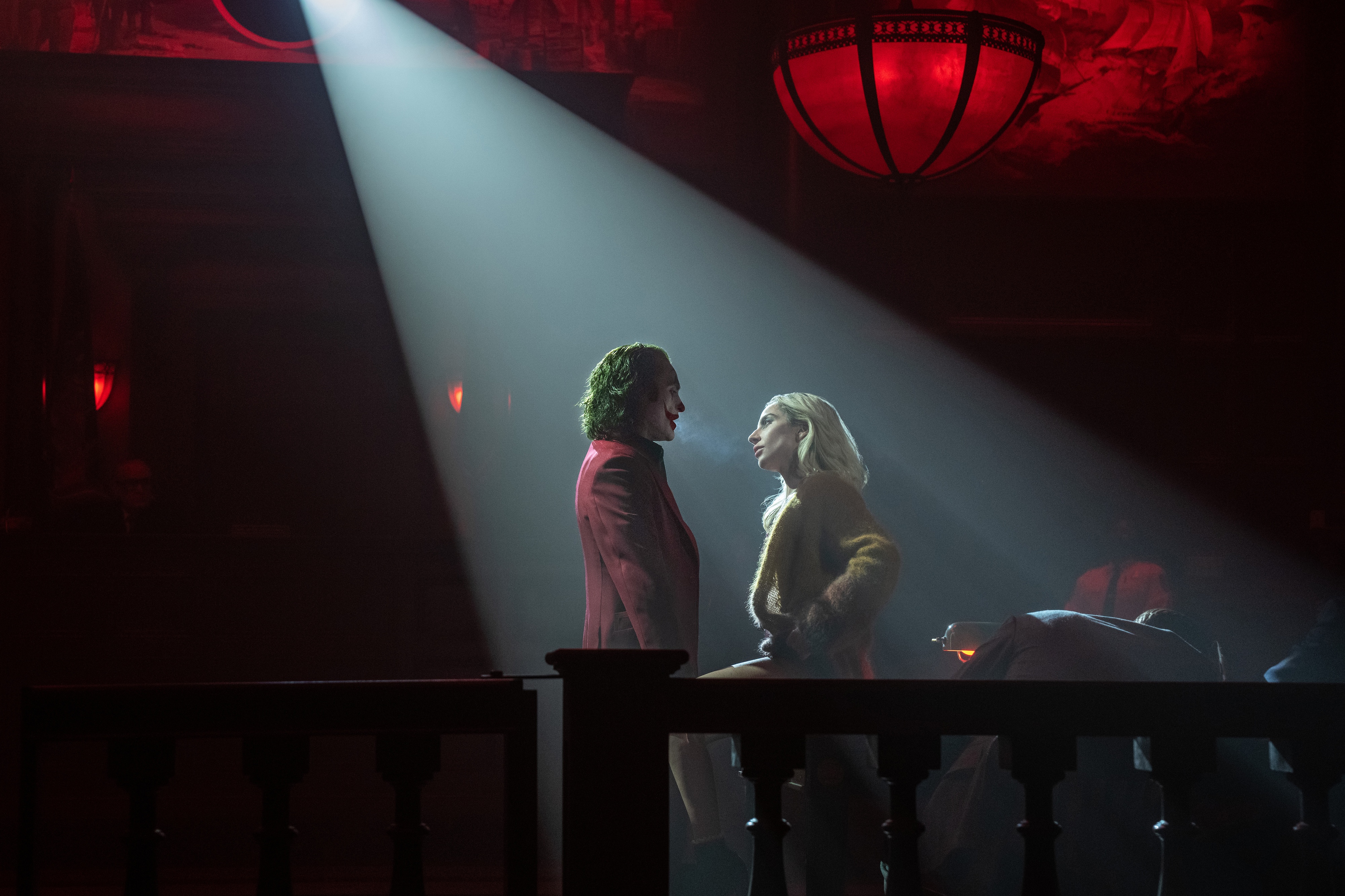
How do you solve a problem like Joker? This is presumably the question on the minds of Phillips and Scott Silver when they set about writing this follow-up. The short answer is you leave it the hell alone as not every film needs a sequel, but clearly money (especially $1bn) talks. While at least this does away with the very overt references to a superior filmmaker’s work, the decision to go down the musical route for such serious discussions about mental health and the state of Arthur’s mind is unquestionably bold. However, boldness counts for nothing if you don’t fully commit to this and go for broke and commit to batshit musical numbers. Even with a singer as talented as Gaga, the musical numbers are flat and unremarkable, and offer nothing substantive as a means of dissecting Arthur’s supposed identity crisis and both his and Lee’s mental state. Folie à Deux (or shared delusion/madness) is an apt subtitle as these are two souls whose delusion knows no bounds, but it’s a shame that the substance of the script is about as shallow as it could possibly get, and its exploration of mental health is superficial if we’re being kind, and bordering on lazy if we’re not, which we absolutely should not.

For all of the script’s many faults, with another being a courtroom drama that should be gripping and intense as Arthur is held accountable for his actions, even if that is half-baked and farcical in its execution. At least Joaquin Phoenix delivers another compelling performance, even though the material he’s been given is far beneath an actor of his immense capabilities. Gaga has proven she has the acting chops to go toe to toe with some of the biggest names in the business, and she does so again here. Her take on this iconic character is much more softly spoken and warmer than some of her immediate predecessors.  However, she doesn’t get enough screen time to truly excel and leave a lasting impression. To underutilise her musical talents, in particular, is an especially egregious sin, among the many many sins committed through a two-hour and twenty-minute run time, with severe drags in the pacing.
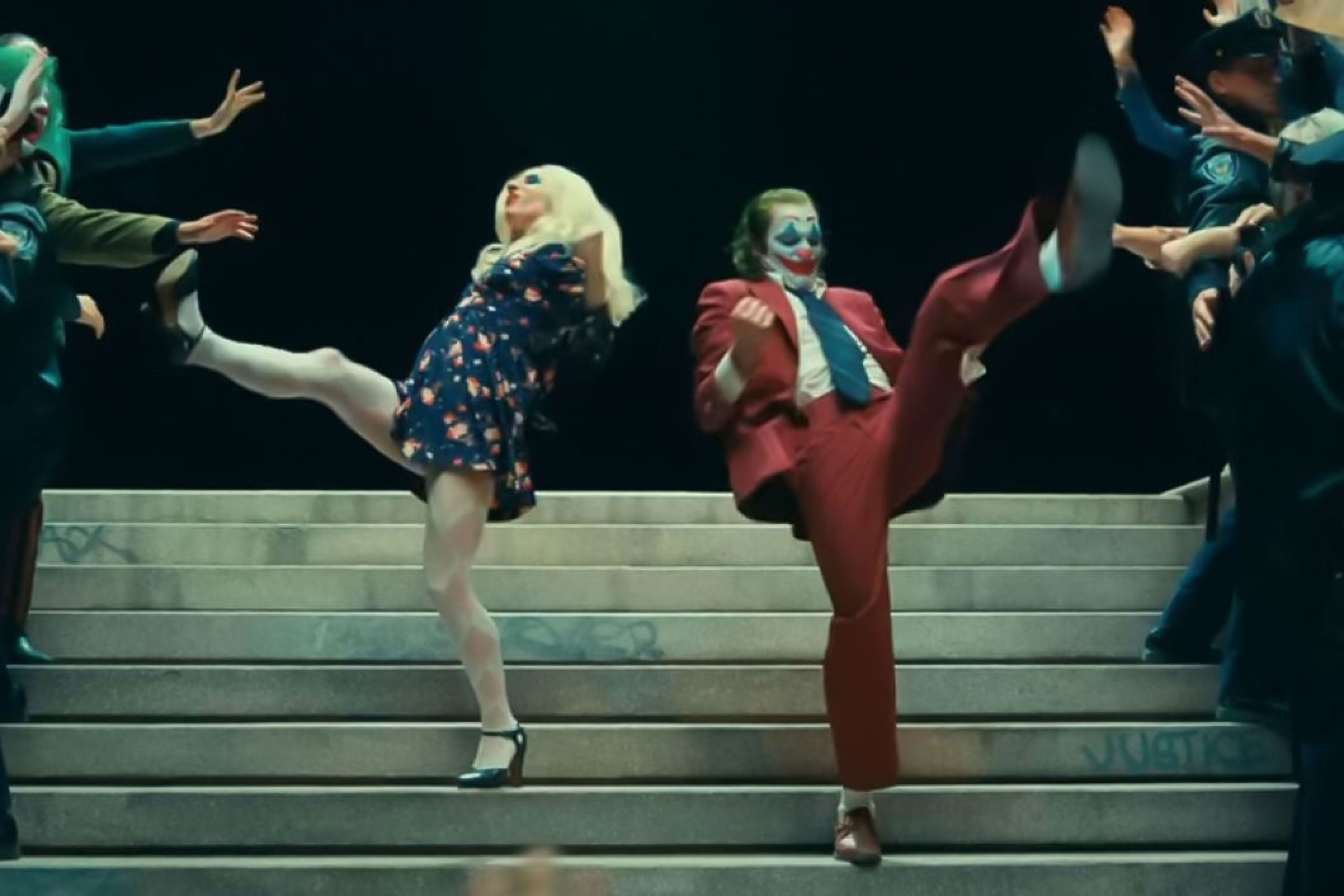
What is considerably less sinful is the sterling work of returning cinematographer and composer Lawrence Sher and Hildur Guðnadóttir, the latter of whom won an Oscar for the first film. The scenes in Arkham are aptly dim and grey, to reflect such a miserable place.  They stand as a perfect contrast to the vibrantly lit musical moments, while Guðnadóttir again deploys a haunting string-heavy to capture the gloominess of Arthur’s predicament when he’s not having a musical interlude, which ultimately feels like a waste of Guðnadóttir’s talents. Phoenix’s phenomenal performance helped to elevate the first film from its obvious influences to provide audiences with a portrayal of one of cinema’s iconic villains that for better or for worse, got people talking. However, this hollow sequel offers absolutely nothing substantial and has absolutely nothing to say. No one is laughing anymore, and it is time for this clown to exit the stage once and for all.
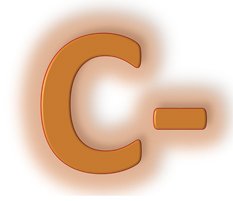
Even with the incredible talents of the production design and technical team, their efforts and excellent performances from Phoenix and Gaga, are all in service of dull musical numbers and a script devoid of anything meaningful to say.

Posted in 2020-2029, Film Review, London Film Festival 2022

The Banshees of Inisherin (2022)

© Searchlight Pictures, Film4 Productions and TSG Entertainment

The Banshees of Inisherin – Film Review

Cast: Colin Farrell, Brendan Gleeson, Kerry Condon, Barry Keoghan

Director:  Martin McDonagh

Synopsis: Tensions arise between two friends when one of them decides to end their friendship…

Review: Friendships can be of tremendous value to us as we navigate this crazy journey that we call life. Yet, sometimes, there can be those situations where a friendship comes to an end, which can be challenging to accept for all the parties involved. What do you do? Allow yourself to accept the situation and move on? Or do you refuse to take no for an answer and make efforts to rekindle the friendship? After setting his last film in the USA, playwright-turned-director Martin McDonagh moves closer to home to deliver another hilarious black comedy, set against the backdrop of the Irish Civil War.

It is 1923 on the fictional remote Irish island of Inisherin. Padraic (Farrell) and Colm (Gleeson) were at one time in their lives, the best of friends and had been for a number of years. However, one day, Colm decides to abruptly end their friendship, which Padriac has difficulties coming to terms with and demands a reason why, which Colm refuses to acknowledge. Wondering what it was that caused Colm to end their friendship, Padriac becomes determined to make amends but these attempts only cause more tension between the two (former) friends, which threatens to boil over into something much more unpleasant that neither of them will like.

Black comedy is an extremely difficult genre to successfully pull off, yet McDonagh is one of those directors who has proven himself to be one of the best in the business when it comes to writing razor-sharp and hilarious dialogue from the bleakest subject matters you could possibly imagine. His last film was filled with some biting social commentary about racism and police brutality in the USA, set against the backdrop of the murder of a young woman.  By contrast, Banshees is a bit more dialled back in terms of the melancholic nature of the comedy, focusing on the (failed) friendship of two men. That being said, by framing this bitterness and anger, ragainst the context of the Irish Civil War, the film offers an extremely compelling analytical look at themes of nihilism, isolation and loneliness. It is perhaps not nearly as thought-provoking as Three Billboards, but it is not a million miles away.

Reuniting with McDonagh after working together to wonderful effect for In Bruges, it is a sheer joy to see both Colin Farrell and Brendan Gleeson share the screen once more. The pair of them strike comedic gold once again, even if they are not together on screen as much as you would perhaps want them to be. Farrell’s Padraic is by his own admission, a bit of a simple man who enjoys tending to his animals, whilst enjoying a good tipple in the evening. The limelight belongs to Farrell and he is truly wonderful to watch and makes the perfect contrast to Colm. The latter of whom is a cultured man without a doubt but one who makes it quite clear that he simply does not have time or willingness to be in Padraic’s presence anymore, and is willing to go to drastic measures to prove his point. The friendship that has now turned to bitterness and hostility between them gives McDonagh license to craft hilarious dialogue, and he does not disappoint, providing numerous moments that will have you howling with laughter.

While both Farrell and Gleeson are in brilliant form, it is Kerry Condon (who made the most of her small role in Three Billboards) who comes the closest to stealing the show from both of them as Siobhan, Padraic’s sister. She provides tenderness and warmth to the story, which can at times be a much-needed respite from not only the cold and detached nature of her brother and Colm’s ruined friendship but from the island of Inisherin as well. Ben Davis’s cinematography manages to simultaneously capture the beauty of the country, yet at the same time, the unwelcoming atmosphere which hangs over the majority of the island, accompanied by another excellent score from Carter Burwell. A story about two friends falling out might seem like an unlikely vessel for hilarity, but McDonagh proves once again that when it comes to crafting comedy from the dreariest of situations, there aren’t many writers/directors who can do it better.

Boasting brilliant performances from Farrell and Gleeson, combined with extremely witty and sharply written dialogue ensures The Banshees of Insherin is another masterclass of bleak hilariousness from Martin McDonagh. 


Posted in 2010-2019, Film Review

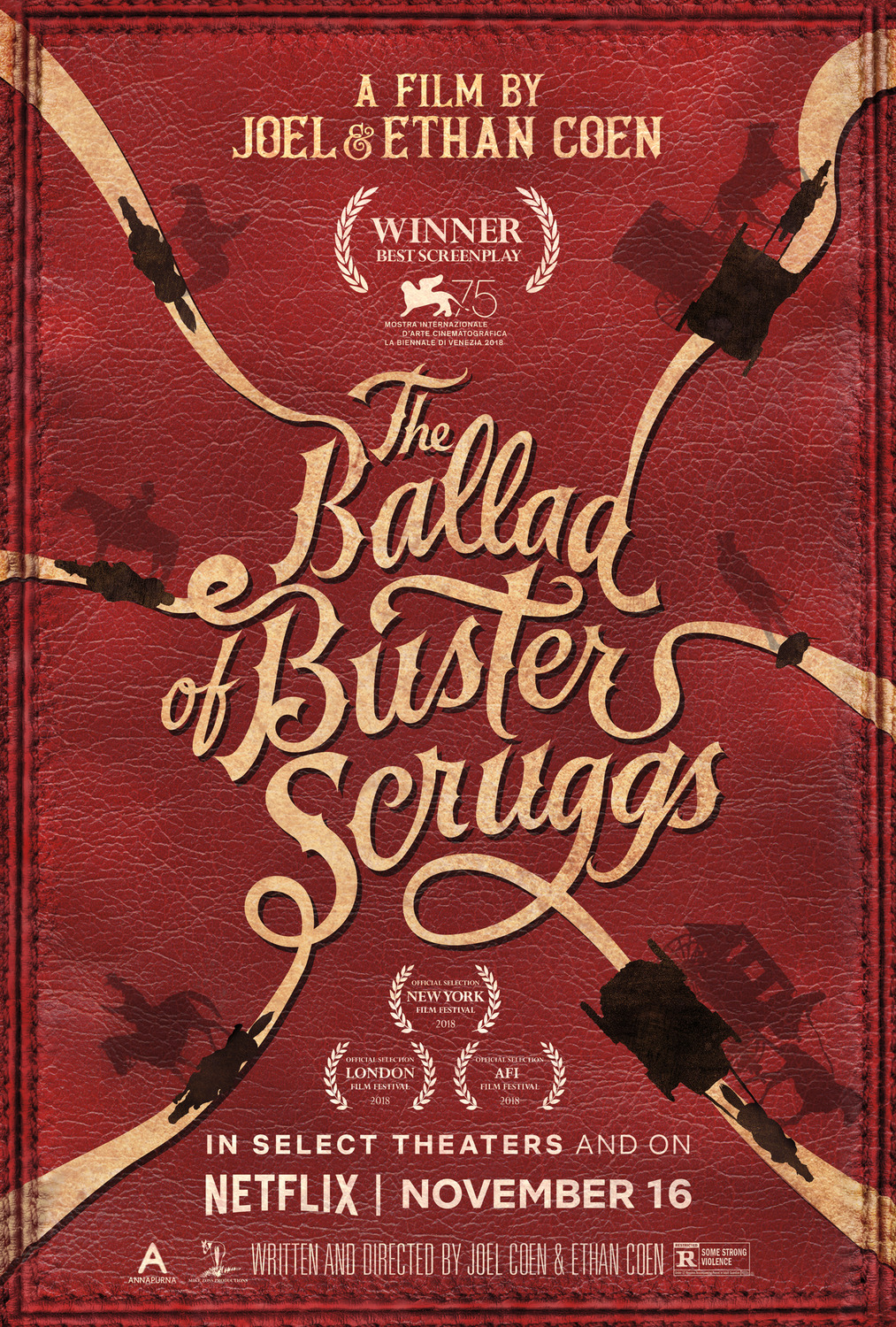
The Ballad of Buster Scruggs (2018)

Image is property of Netflix

The Ballad of Buster Scruggs – Film Review

Cast:  Tim Blake Nelson, James Franco, Liam Neeson, Zoe Kazan, Brendan Gleeson, Tom Waits

Directors: Joel and Ethan Coen

Synopsis: A collection of six unique short stories, telling the plights of various people in very different situations in the West after the Civil War.

Review: Beginning, middle and end, a structure that films tend to adhere to. However, every once in a while, a film will come along that deviates from this structure. It may choose to tell the story in reverse order or to jump back and forth.  Hence this latest venture from Joel and Ethan Coen is unique in this respect, as instead of telling one story across two hours and ten minutes to be precise, they fill this by choosing to tell six unique stories charting the lives of a handful of different folk, each of whom are in a variety of different situations in the wake of the Civil War.

To tell six miniaturised stories as opposed to your more traditional three-structured film is an unconventional choice to say the least, but under the assured direction of the Coen brothers, it for the most part works a treat. Though some are much stronger than others, there is enjoyment to be hand in each of the stories that the Coens bring to life. Telling each story through the perspective of a storybook, we jump in with funnily enough Mr Buster Scruggs himself (Blake Nelson) a tootin’ cowboy who likes to play his guitar and sing a song for y’all. But, he is also a dab hand with a pistol, which inevitably leads to some trouble down the line.

Next we move onto ‘Near Algodones’ a nameless-up-to-no-good cowboy (Franco) who finds himself in a tricky predicament when he tries to rob a bank, with some hilarious results. “Meal Ticket’ features Liam Neeson and Harry Melling as a theatre double act, the latter of whom has no arms or legs. Despite putting on a good show, they find their numbers and income decreasing, which puts Neeson’s character in a tricky situation as to what to do with his companion. While there is some intriguing moments with both of these two segments, they do end somewhat abruptly, which is frustrating, particularly in the case of the latter, it really would have benefited with a bit more closure to the story.

The next two stories are where the film really starts to shine. ‘All Gold Canyon’ features Tom Waits as a prospector seeking the fortune of a rather large collection of gold located in an absolutely beautiful valley. Now would be a good time to mention Bruno Delbonnel’s superb cinematography which is on point across every story, but it is here especially is where it shines brightest. Waits is great as this wacky prospector seeking this fortune that, perhaps unsurprisingly has attracted the attention of some other folk looking for this fortune for themselves. ‘The Gal Who Got Rattled features Zoe Kazan as a young woman who after a family tragedy is seeking a new opportunity. It’s more dialogue heavy than the preceding stories, but Kazan’s excellent performance makes it extremely compelling to watch.

Finally, the last segment  ‘The Mortal Remains’ retains the intrigue but being the most dialogue heavy of all the stories, it is considerably not as interesting as the preceding stories. Though the dialogue is well written once again, it is really quite underwhelming as a final chapter to a rather fascinating collection of short stories. All six stories do explore similar themes about the human struggle as we all navigate this small little thing called life that we as human beings all negotiate, and the rather significant matter of death. However, to ensure that it is not all doom and gloom, The Coens, much like we all do with our own lives, fill each of these segments with their signature style of comedy that, for the most part, serves each story really rather well.

The short nature of each story will undoubtedly leave some viewers unfulfilled. Nevertheless, the thought provoking themes that beat at the heart of all six of the stories, plus some exquisite work in the cinematography, production design and costume department give this anthology film some mighty visual splendour. Though this is not on the level of say a No Country for Old Men or True Grit, given the rambling mess that was Hail! Caesar, a return to the Wild West, and indeed a much more coherent film from the duo is a darn good thing y’all.

Combining comedy and some very dark and dramatic moments, with some strong themes that beat at the heart of all six stories, this is a most welcome to return to form for the Coen brothers. 


Posted in 2000-2009, Film Review

Harry Potter and the Goblet of Fire (2005)

harry-potter-and-the-goblet-of-fire-movie-poster
Image is property of Warner Bros Studios and Heyday Films

Harry Potter and the Goblet of Fire – Film Review

Cast:  Daniel Radcliffe, Emma Watson, Rupert Grint, Michael Gambon, Ralph Fiennes, Gary Oldman, Maggie Smith, Robbie Coltrane, Alan Rickman, Brendan Gleeson

Director: Mike Newell

Synopsis: Now in his fourth year at Hogwarts, the school is playing host to the Tri-Wizard Tournament, and Harry is somewhat unexpectedly selected to take part in this deadly contest.

Review: By the time a franchise reaches its fourth instalment, there is a risk that things could start to get a bit formulaic and a bit repetitive, and viewers may soon start to lose interest. Yet in the case of Harry Potter, after coming on the back of the quite brilliant Prisoner of Azkaban, the interest remained sky high, and to counter the argument that things may start becoming repetitive, this franchise has an answer to that: The Goblet of Fire.

After the dramatic end to the last instalment which went all sci-fi on the audience with the time turner adventure, the excitement picks up almost immediately with our key trio of Harry, Ron and Hermione along with members of the Weasley clan off to the Quidditch World Cup. Visually brilliant, it’s all smiles and joyful with everyone having a good time, until it all goes a bit dark and violent as hints of Voldemort are getting louder and louder. This sets everyone off in quite a melancholic mood as they board their train to start their fourth year at Hogwarts, all the while with Harry having some very dark and sinister nightmares.

With this new year, Hogwarts is the stage for something special, the aforementioned Tri Wizard Tournament in which three champions compete in deadly magical tasks, with one champion from the schools of Hogwarts, with the ladies of the Beauxbatons Academy and the fellas of the Durmstrang Institute, all chosen by the mysterious Goblet of Fire. However, this one champion per school situation is made a bit complicated when Harry is also chosen alongside the other champions. Faced with no other choice, Harry must compete in this competition.

After Alfonso Cuaron brought tremendous visuals to the preceding chapter, new director Mike Newell continues this trend, and also bringing perhaps some of the most gripping sequences of the franchise to date. The Tri-Wizard tasks are very well put together and edited supremely well, with excellent CGI to boot. Despite all the magic and danger involved in this chapter, Newell manages to bring something everyone has experienced at some points in their lives, growing up and falling in love. The hormones are raging throughout the story, as our lead characters in particular are having a tricky time displaying their feelings for one another.  The film’s screenplay is far from perfect, but Kloves does his best to squeeze the key elements from Rowling’s novel in just over 2 and a half hours.

As the actors age, their performances improve quite significantly, particularly the core trio of Harry, Ron and Hermione. The bickering between Ron and Hermione is at times funny but also at times sad, because you want them to get together, but with all those teenage angsty feelings they have going on it does make things difficult. The cast for all the movies to this point was perfect, and it remained so with the addition of some colourful new characters to the mix. The best of the bunch being Brendan Gleeson’s Mad Eye Moody. With him, the clue is in the name, he’s a colourful character, but also just a bit mental. Robert Pattinson also does a sterling job as the Hogwarts champion Cedric Diggory.

Yet the most important new piece in this puzzle was Lord Voldemort, who finally makes a full appearance and is played fantastically by Ralph Fiennes. Much like the core trio of Harry, Ron and Hermione, the casting of the Dark Lord had to be just right, and in Fiennes, they had just the actor to bring this fearsome dark wizard to the big screen. With a brilliant closing battle to close this chapter of the Potter saga, it sends a chilling reminder to its audience, the dark times are returning and no wizard that dwells in the world of magic is safe.

Blending the perils of growing up with great humour and adding in really dark terrifying stuff tremendously well, The Goblet of Fire demonstrated that this franchise may have started off as child’s play, but not any more. 

a