Posted in 2020-2029, Film Review

The Wild Robot (2024)

© DreamWorks Animation and Universal Pictures

The Wild Robot– Film Review

Cast: Lupita Nyong’o, Pedro Pascal, Kit Connor, Bill Nighy, Stephanie Hsu, Mark Hamill, Catherine O’Hara, Matt Berry, Ving Rhames

Director: Chris Sanders

Synopsis: After being shipwrecked on a deserted island, a robot must learn to adapt to its new surroundings and is put to the test when it has to care for an orphaned baby chick…

Review: Our world is home to a diverse range of fascinating wildlife and plant life. This may sound like something you’d hear in a nature documentary narrated by Sir David Attenborough (try reading that first sentence in his voice), but as those series demonstrate, the wonders of nature can be discovered anywhere on this magnificent planet. Since the dawn of humanity, we have explored and uncovered the marvels that the natural world has to offer. Now, imagine yourself as an outsider who has never encountered these wondrous sights or experienced nature’s beauty for the first time. You are a robot programmed to assist humanity, only to find yourself surrounded by an assortment of wildlife. The challenge of assimilation and finding your place in the world is beautifully captured in one of the year’s most compelling films.

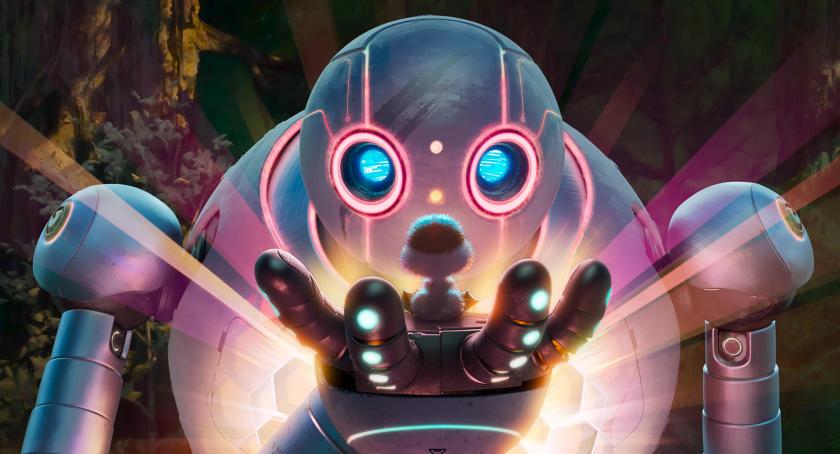
Set on an unnamed island, the Universal Dynamics ROZZUM Unit 7134 (Nyong’o) washes up on the beach after a storm. Upon booting up, Roz, as she quickly becomes known, attempts to adapt to her new surroundings and offers to assist the island’s inhabitants. Unfortunately, the locals are immediately hostile towards her arrival and reject her help. After Roz comes under attack from a frightening predator, she inadvertently destroys a goose’s nest, resulting in the death of the mother goose and leaving only a single egg remaining. Overcome with guilt, Roz decides to raise the surviving gosling, whom she names Brightbill until he is ready to join the rest of his kind for migration. Although she admits that this task is “not in her programming,” Roz becomes determined to work tirelessly until Brightbill can swim, eat, and fly, and gain the strength to take his place among his own kind.

As the relationship between humanity and machines, specifically artificial intelligence (AI), is increasingly scrutinized, The Wild Robot offers a fascinating perspective on how a robot might interact in a natural environment devoid of human presence. Adapted from the book series by Peter Brown, having beautifully brought to life the journey of one boy who learns how to train his dragon, Chris Sanders’ script delves deeper than just the exploration of nature’s struggle against AI. In this touching and heartfelt story, Roz often finds herself at odds with her programming as she works to protect Brightbill, a gosling vulnerable to other animals in their habitat. This conflict only strengthens Roz’s determination to help Brightbill gain acceptance in his community. Throughout their journey, Roz and Brightbill encounter various unique creatures, including Fink (Pascal), a sly and cunning fox with a peckish who sees Brightbill as his prey. However, Roz’s persistence and determination to raise Brightbill as her own leaves a lasting impression on Fink, and Pinktail (O’Hara) and her legion of adorable little babies.

Even if someone has never had children, anyone and everyone will be acutely aware of the difficulties and challenges that come with parenthood and raising children, because let’s be honest, we’ve all done things when we were young with the sole intention to annoy our parents. Therefore Roz’s battle to become a mother, something she has no prior experience of, will undoubtedly strike a chord with those undertaking the most difficult task any living creature could put themselves through. Though parenthood is an immensely difficult challenge, it has its own rewards and the film chooses to celebrate those as well as a pertinent reminder of the healing power that community and togetherness can bring, because as Roz herself puts it: “Sometimes, to survive, you must become more than you were programmed to be.”

Speaking of Roz, a robot is not usually the most expressive and emotional being, on account of it being a robot. It therefore takes an extremely talented actor to bring such warmth and emotion to a life form designed with one specific purpose in mind. In Academy Award winner Lupita Nyong’o, you have the perfect actor to bring those qualities and more. Nyong’o radiates warmth and compassion, even though it goes completely against what the nameless corporate bigwigs at Universal Dynamics clearly intended Roz to be. Nyong’o is the unquestioned star of the show, but she is given excellent support in a glittering voice cast from the likes of one the internet’s favourite personalities, Pedro Pascal who is equally charming and delightful as Fink. The bond between a parent and their child can be a loving one, but it is usually not without its fraught moments, and Kit Connor’s voice performance as Brightbill captures this balance of that very complex and loving relationship that develops between himself and his surrogate mother.

With the likes of Sony’s Spider-Verse films, and last year’s Puss In Boots: The Last Wish, the bar for high-quality animation has been considerably raised in recent years by breaking new ground in what audiences thought possible, as well as combining 2D and 3D styles. Sanders and the animation wizards at DreamWorks have outdone themselves here, with utterly breathtaking visuals that feel so lifelike and realistic, if you didn’t know any better, also feel like they could easily have been pulled straight from one of those nature documentaries. In an increasingly hostile and chaotic world, if an outsider like Roz can against all odds, go against her programming and find her place in the world and work with the community around her, a lesson for all of us to take heed to.

Beautifully animated, with a powerfully resonant and emotional message at its core, Roz and her array of furry friends will charm their way into your hearts and never let go. 

Posted in 2020-2029, Film Review

Inside Out 2 (2024)

© Disney and Pixar

Inside Out 2  – Film Review

Cast: Amy Poehler, Phyllis Smith, Lewis Black, Tony Hale, Liza Lapira, Maya Hawke, Ayo Edebiri, Adèle Exarchopoulos, Paul Walter Hauser, Kensington Tallman, Diane Lane, Kyle MacLachlan

Director:  Kelsey Mann

Synopsis: As she celebrates her 13th birthday, the world inside Riley’s mind grows complicated when new emotions enter the fray…

Review: It is fitting for a studio which has a small group of creative leaders that form its Brain Trust, that over the course of its 30+ year history, Pixar has come up with some utterly ingenious and wonderfully creative concepts. Storytelling works masterfully on two levels to entertain younger audiences and massively pull on the heartstrings of older viewers with weighty and emotionally powerful themes. There’s no shortage of films in its collection to choose from which fulfil these criteria, but Inside Out is a strong contender for the studio at its brilliant best. A mixture of fear and apprehension may have risen when it was confirmed a sequel was in development. However, those fears can be put aside for Pixar has made a worthy companion to its predecessor.

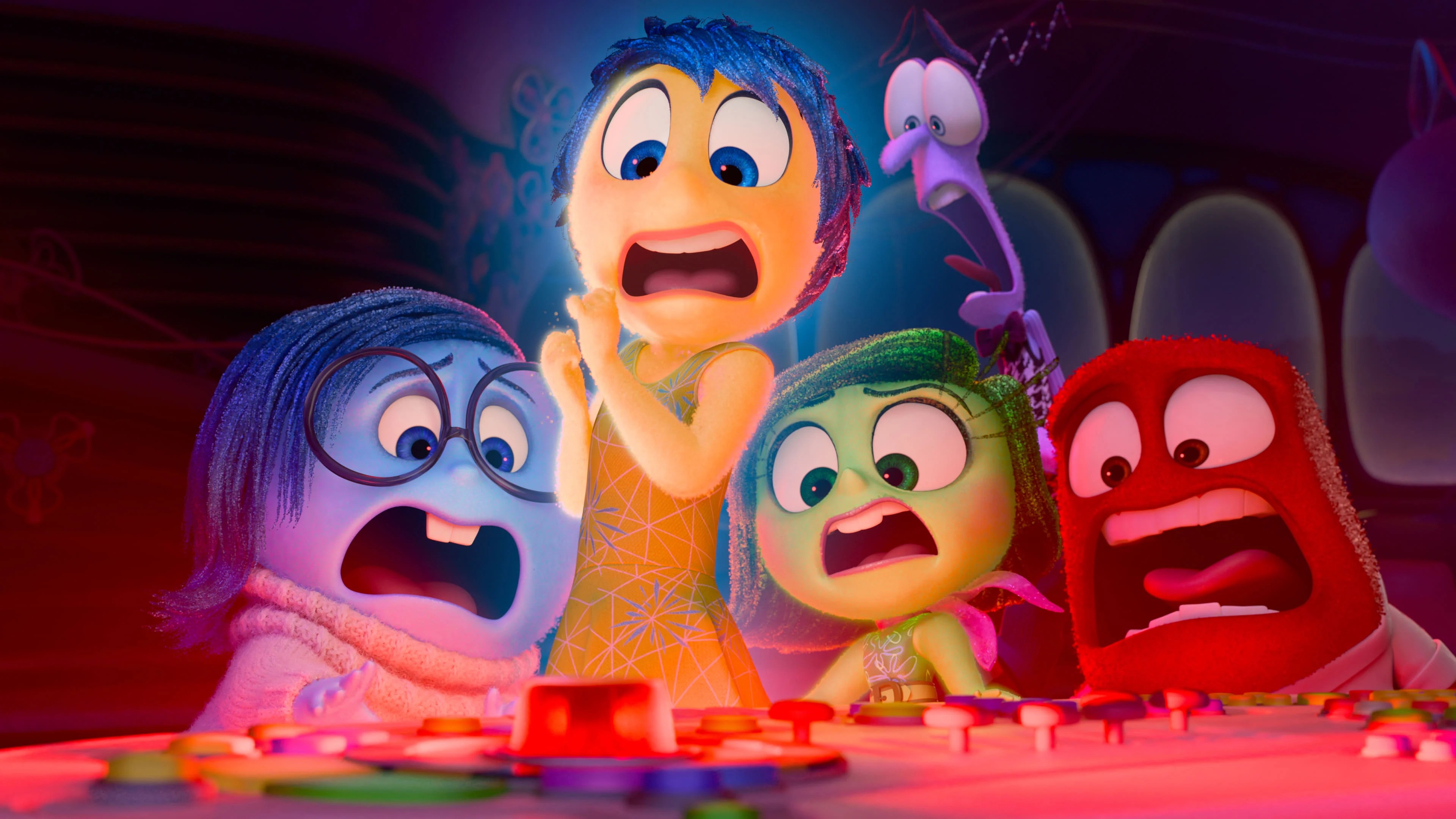
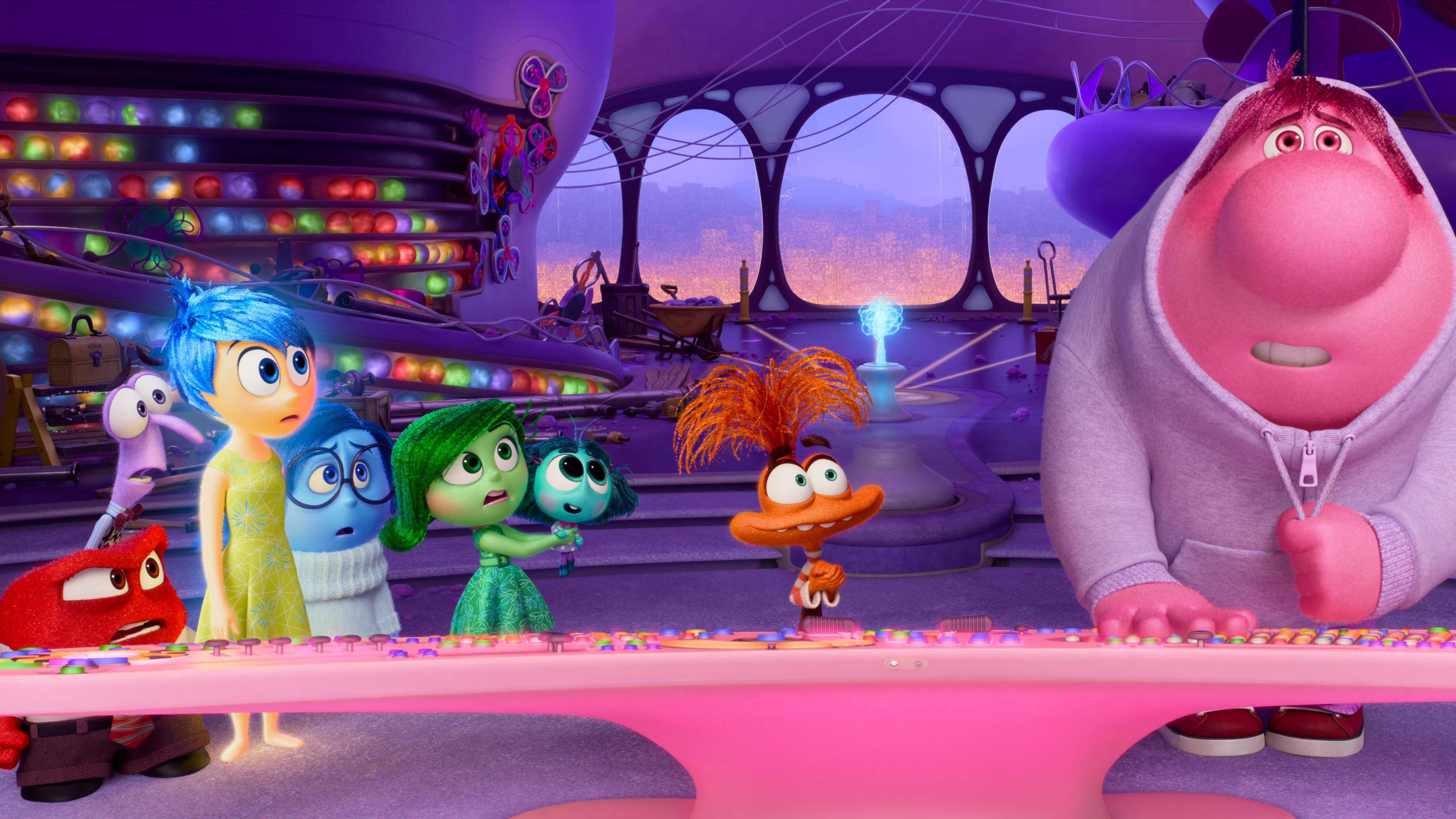
One year has passed since the events of the first film, and Riley (now voiced by Kensington Tallman) has celebrated her 13th birthday and is about to start high school. Her existing emotions, Joy (Poehler), Sadness (Smith), Anger (Black), Fear (Hale) and Disgust (Lapira) have worked collaboratively on a new core component of her mind which establishes memories and feelings which make up Riley’s personality. However, as Riley sets off on an exciting summer venture to win a place on her school’s ice hockey team, she begins to go through puberty. As a result, a range of new emotions arrives at headquarters: Anxiety (Hawke), Envy (Edibiri), Ennui (Exarchopoulos) and Embarrassment (Hauser). The new emotions immediately take over the console upon arrival and run amok, leaving her childhood emotions in a quandary as to how they can prevent the new emotions from causing complete and total chaos inside Riley’s mind.

The word ‘genius’ is thrown around quite a bit in modern discourse, but if ever there was an apt descriptor of the premise of Inside Out, it would be exactly that. An ingenious piece of storytelling to picture what goes on in the endless complexities that make up the human brain, and the emotions we feel as we grow up and experience exciting but also nerve-wracking new life events and experiences. Of all the big new experiences that life throws at us, there is perhaps none bigger than puberty. An exciting but also scary time where our emotions can run amok as our bodies change and returning writer Meg LeFauve and Dave Holstein’s screenplay builds on the wonderfully inventive world created by Pete Docter as how emotions develop and become increasingly complex as we get older and the perils of growing up, making this very much the spiritual sister to Turning Red, minus the red pandas, of course.

The screenplay, from a story by LeFauve and director Mann, cleverly utilises its predecessor’s ingenious train of thought and brilliant imagination to depict and visualise not only the mind and how it develops as we progress from childhood into adolescence. Picking up exactly where that train of thought left off, though instead of hilarious jokes about abstract thought, the film cleverly depicts concepts of the mind, only this time as brainstorms and one of the most effective weapons a teenager has at their disposal to navigate everything life has to throw at them, sarcasm. Because, well as anyone who has been a teenager and gone through puberty will know, it’s a tricky time when emotions are running rampant.

Speaking of those emotions, while all the returning emotions are once again delightful, the majority of them are relegated to bit-part roles. Though as she did in the first film, Poehler shines the brightest as Joy. With such endless positivity and happiness, it is impossible to not love her even in the face of trying circumstances, as the new emotions barge in and take control of Headquarters. Exarchopoulos is perfectly blasé and deadpan as Ennui while Edibiri is delightful as the small but very excitable Envy. However, the star of the show is unquestionably Maya Hawke as Anxiety. Those teenage years are a period in which anxiety can often go into overdrive, particularly in social situations. Hawke manifests this perfectly, as despite the best of intentions, she takes control of HQ and things quickly spiral out of control in Riley’s mind all while filling her with thoughts of apprehension that she may not have what it takes to fulfil her dreams of success when it comes to ice hockey. Anyone who has had self-doubt or anxiety about anything thing in their life can probably relate.

It may lack the emotional gut punch of its predecessor, with no moment that will leave audiences sobbing or put them through a mini existential crisis. Yet, it retains that wonderful inventiveness and humour which made the first film one of the studio’s most revered films in its distinguished filmography. Pixar might have had some wobbles in recent years, but its creative spark remains as strong as ever.

Retaining the ingenuity of its predecessor, Pixar has once again crafted another wonderfully imaginative sequel exploring the heightened emotions and perils of those turbulent teenage years.


Posted in 2020-2029, Film Review

Spider-Man: Across the Spider-Verse (2023)

Columbia Pictures, Sony Pictures Animation, Lord Miller Productions and Marvel Entertainment

Spider-Man: Across the Spider-Verse – Film Review

Cast: Shameik Moore, Hailee Steinfeld, Brian Tyree Henry, Luna Lauren Vélez, Jake Johnson, Jason Schwartzman, Issa Rae, Karan Soni, Daniel Kaluuya, Oscar Isaac

Directors: Joaquim Dos Santos, Kemp Powers and Justin K. Thompson

Synopsis: After spending a year fighting crime as Spider-Man, Miles Morales reestablishes a connection with the multiverse and a whole society of Spider-People who must prevent a new threat from destroying the multiverse…

Review: It is no exaggeration to say that when Spider-Man: Into The Spider-Verse swung its way onto the big screen back in 2018, it was a game changer, not just for animation, but the broader superhero genre itself. The vibrant and colourful animation felt like it was ripped straight from the pages of a comic book and the animation itself was so groundbreakingly impressive, that every studio in town has had to since raise its game while its influence has been noticeably apparent in a handful of subsequent films. Furthermore, the film was ahead of the curve in terms of the plethora of live-action superhero films which have adopted multiverse travelling shenanigans. Five years later, these creative geniuses have only gone and done it again.

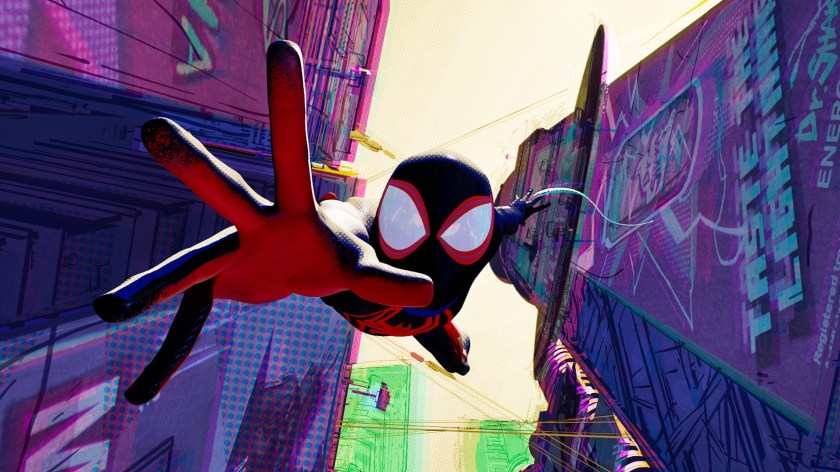
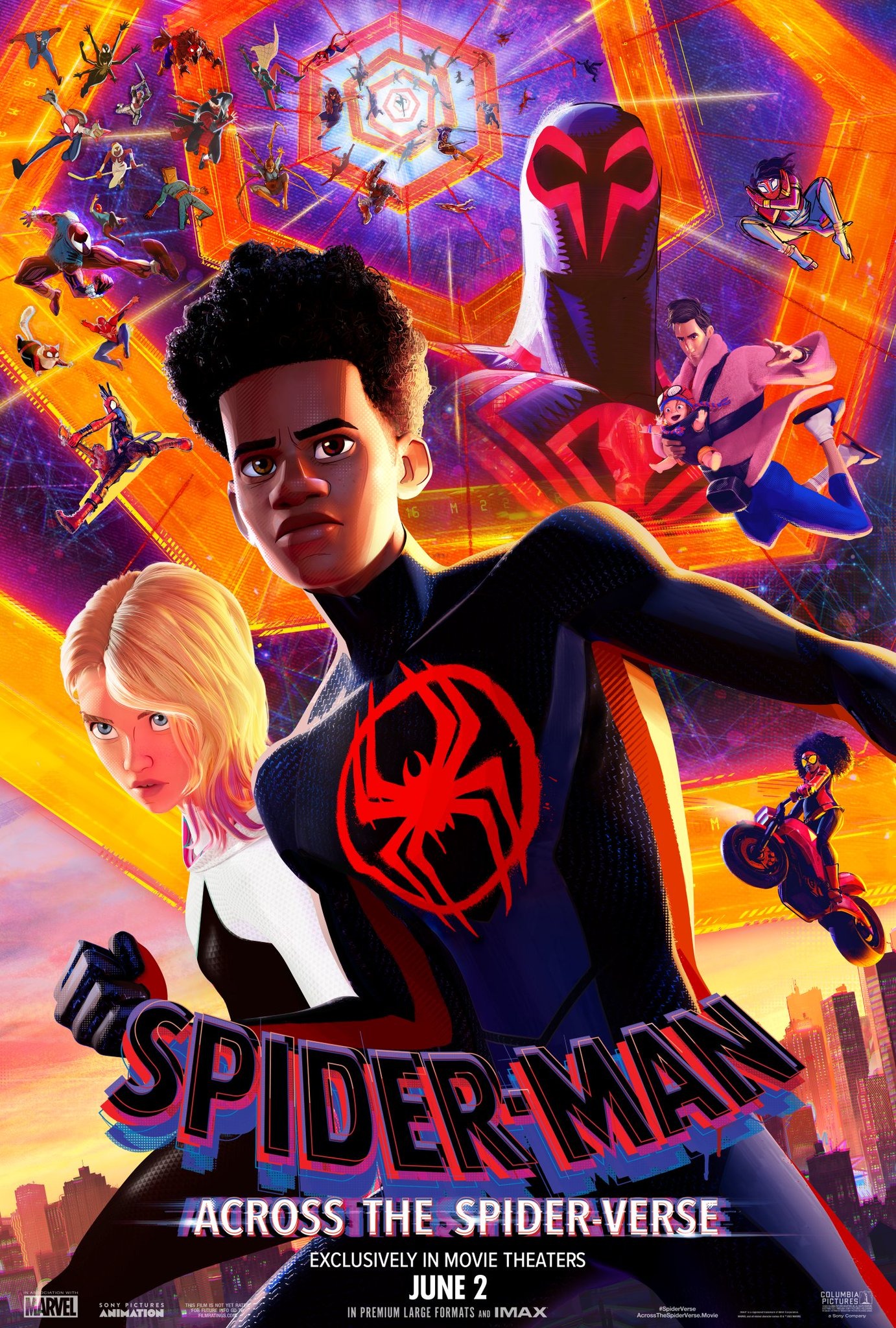
It’s been over a year since the events of Into the Spider-Verse and Miles Morales (Moore) has settled into his life as his universe’s Spider-Man. Though he’s desperate to see the likes of Gwen/Spider-Woman and Peter B. Parker (Johnson) again. When he encounters the mysterious villain known as The Spot (Schwartzman), it sets Miles on a new journey where he encounters a whole web (pun definitely intended) of Spider-People, who seek to neutralise the threat before it breaks the multiverse apart.

Given the many incarnations of this iconic character we’ve had over the years, what made Into the Spider-Verse so special was the way it took the familiar origin story of how the bite of a radioactive spider transforms a young man into a superhero and honours it. Yet at the same time, it breathed new life into it by telling said origin story in a manner which felt unique and original, with some genuine laugh-out moments and hugely inspiring acts of heroism and awesomeness, such as the now iconic Leap of Faith sequence. Across the Spider-Verse picks up where its predecessor left off with Miles balancing his superhero duties with the tricky decision of where he wants to go to college and the even trickier decision regarding his future aspirations. While the previous film really homed in on Miles’ relationship with the other Spider-People, the script by Phil Lord, Christopher Miller and David Callaham allows the relationship between Miles and his parents Jeff (Tyree Henry) and Rio (Velez) to really flourish.

Both can sense Miles has a lot on his mind, but as the old saying goes “Mother knows best” and it is in these personal moments between Miles and his mother which helps keep Miles’ feet on the ground. As well as taking its time to explore his relationship with his parents, the film allows room for Miles’s relationship with his love interest Gwen (Steinfeld) to develop even further, while allowing time for her tragic backstory to take centre stage. The voice work across the board across the board is once again exceptional, especially for Steinfeld given the added emotional gravity of her story and how, like Miles, her role as Spider-Woman has caused the relationship with her father to break down.

Alongside the returning Peter B. Parker (Johnson), the film introduces a number of new friendly multiverse Spider-People, including Jessica Drew (Rae), Indian Spider-Man Pavitr Prabhakar (Soni) Spider-Punk Hobart “Hobie” Brown (Kaluuya), and the leader of the Spider Society, Miguel O’Hara (Isaac), who is determined to prevent The Spot from tearing the multiverse apart at all costs, though the manner in which causes Miguel to frequently clash with Miles. Speaking of The Spot, at face value, he is a villain whose name and appearance could have lent itself to ridicule, but by weaving his origin story into Miles’ previous multiversal adventure, he proves himself to be a powerful and threatening antagonist to the Spider-Society.

Given its predecessor broke new ground in terms of its animation, you would think there is no way they could surpass themselves here. Yet, somehow, these animators have outdone themselves. There are simply not enough superlatives to describe just how astounding it is. Each new world the film explores provides the film’s team of animators to scale new heights and provide a unique look and feel for each different world and utilises a plethora of different animation styles, while once again throwing down the gauntlet for other studios to aspire to be at the level these animators are at. The bar has once again been set at a new height, and the expectation will be at sky levels when the final instalment of this wonderful story, Beyond the Spider-Verse, takes the leap of faith into cinemas next year. Should it stick the landing, we will, without any question of a doubt, be looking at one of the finest trilogies of all time.

Picking up exactly where its predecessor left off, combining stunning animation, a flawless combination of exhilarating action, and a character-driven story to leave the audience on tenterhooks for the concluding chapter of this amazing story. A perfect sequel. 

a

Posted in 2020-2029, Film Review

Puss in Boots: The Last Wish (2023)

© DreamWorks Animation and Universal Pictures

Puss in Boots: The Last Wish – Film Review

Cast: Antonio Banderas, Salma Hayek Pinault, Harvey Guillén, Florence Pugh, Olivia Colman, Ray Winstone, Samson Kayo, John Mulaney, Wagner Moura, Da’Vine Joy Randolph, Anthony Mendez

Directors: Joel Crawford and Januel Mercado

Synopsis:  Discovering he has gone through eight of his nine lives, Puss in Boots discovers a possibility to restore all of his lives through a magical wishing star…

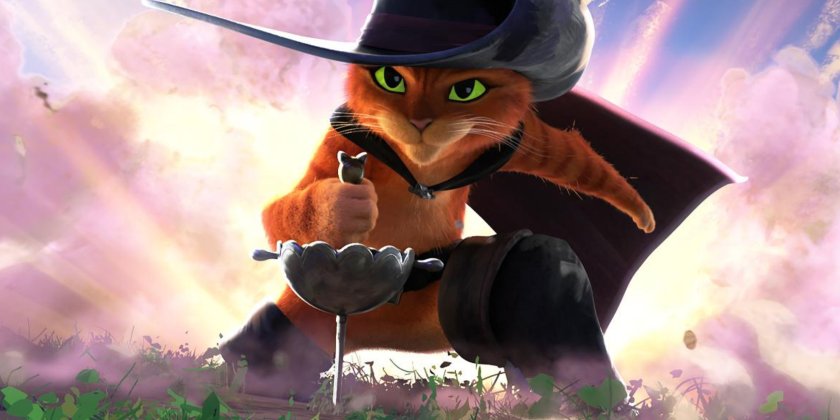
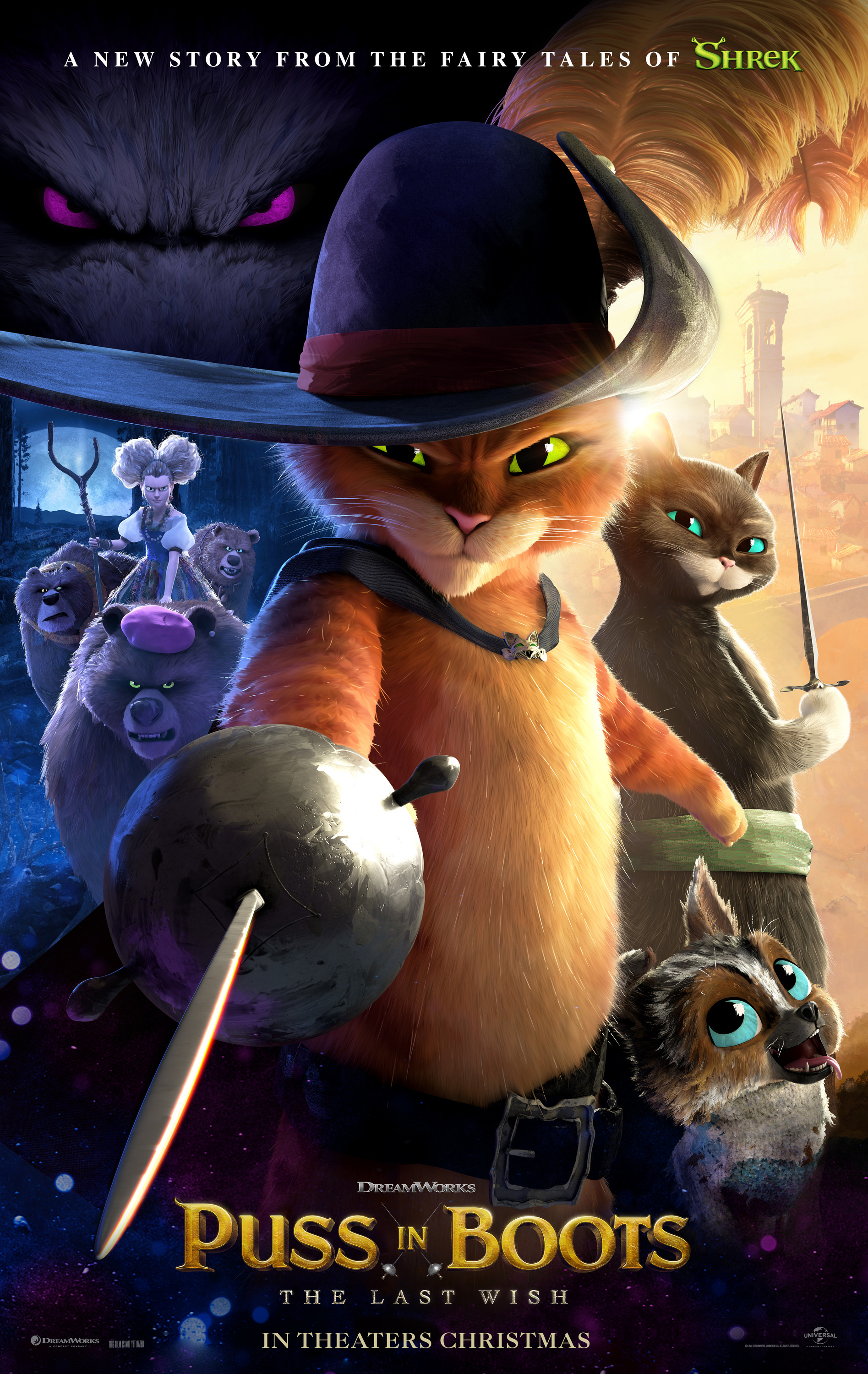
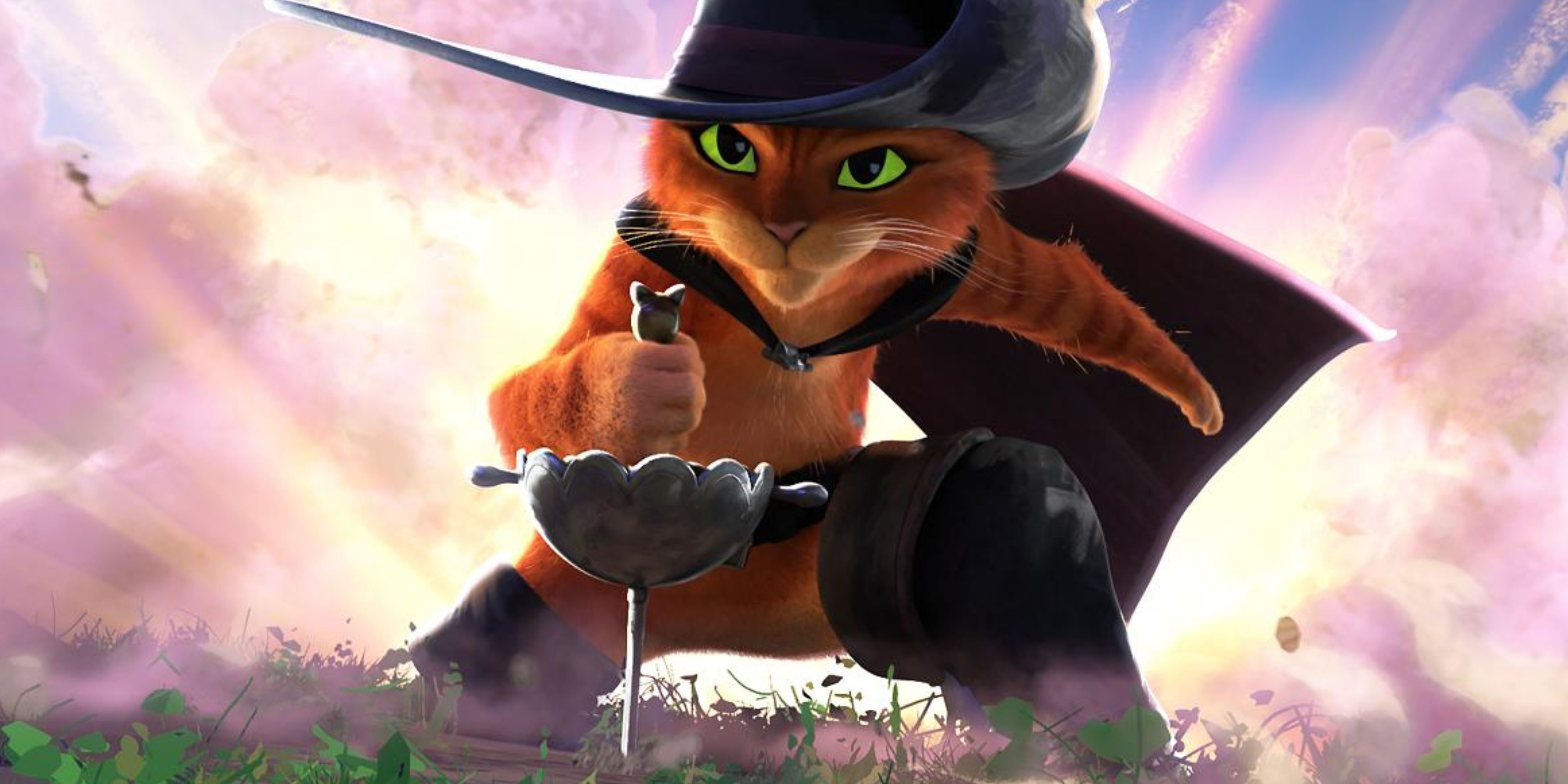
Review: With his signature boots, hat and sword, it is easy to see why the cunning (and cute when he wants to be) feline warrior known as Puss in Boots captured the attention of everyone when he first appeared in Shrek 2 back in 2004. While he cropped up again in later sequels, the first sequel featuring everyone’s grumpy but lovable ogre remained the jewel in the crown for the franchise based in a land far far away. While he later appeared in his own 2011 spin-off which came and went without seemingly too much fanfare, this sequel has come along to put the Shrek franchise back on the map with the best film in the franchise since the first Shrekquel.

Puss In Boots (Banderas) is living his best lives as a fearless warrior who craves adventure, which leads to an enthralling encounter between Puss and a gargantuan monster/mountain hybrid, all within the film’s opening first act. While he succeeds in his fight against the creature, it comes at a cost. Upon waking up, he finds out that he has used up eight of his nine lives and is urged to put his swashbuckling adventure days behind him for good. However, Puss learns of the existence of a magical wishing star which could replenish his lives, but Puss soon discovers he is being hunted by a terrifying hooded wolf (Moura), the physical manifestation of death itself, and must evade him at all costs before he has a chance to get his lives back.

In a franchise which at its peak was a clever and hilarious look at our perception of fairytales, Paul Fisher and Tommy Swerdlow’s screenplay leans into the fairytale world with the magical wishing star, as well as the use of some high profile characters from well-known fables as side characters, most notably Goldilocks (Pugh) and the Three Bears (Winstone, Colman and Kayo). However, it expertly combines this fairytale backdrop with a Western heavy vibe as Puss, a feline version of Clint Eastwood’s antihero from The Man With No Name trilogy in many respects, must battle an assortment of creatures big and small in his quest to avoid a permanent encounter with death. Banderas has always felt perfect for this role and he is once again perfect as there’s an array of emotions Puss goes through over the course of this enthralling adventure, which must see Puss reluctantly work with a past flame in Kitty Softpaws (Hayek Pinault), who is not happy with Puss, to say the least.

It makes for a fascinating dynamic between these two as they go on their adventure, aided by adorable therapy dog Perro (Guillen). Alongside them, Wagner Moura’s performance as the physical incarnation of death feels particularly chilling and foreboding. The best family movies are the ones which combine elements which will delight younger audiences while giving older members thought-provoking and mature themes. With its explorations of mortality, and the anxiety which can come along with that, it adds so much emotional weight to the story. Ever since the release of Spider-Man Into The Spider-Verse, the bar for producing ground-breaking animation has been raised massively. The combination of the fairytale setting, as well as the Western vibe, gives the animators the opportunity to tinker with varying styles of animation. Whether it’s the glint in a character’s eye, an exhilarating action scene, the visualisation of the titular wishing star or another form of magic artefact, the visuals remain dazzlingly impressive throughout.

It is a shame the Big Bad Wolf/Death’s appearances in the film are fleeting because he is such a commanding, ominous presence, it makes the film’s main villain Jack Horner (Mulaney) seem a bit superfluous in comparison. Horner is a bit one note in terms of him being just straight-up evil and cruel with barely any nuance to him, it makes you wish the film had used more of the former and less of the latter. Nevertheless, while many had assumed the Shrek franchise was consigned to the books where one would read about all those fairytales it parodied, Puss In Boots: The Last Wish serves as a reminder that, like its titular hero seeking to replenish his nine lives, there could be plenty more life, and magic, left in the franchise in a land not too far from Far Far Away.

Visually stunning, with a layered and emotionally resonant story at its core, this latest venture into the world of fairytales and talking animals with everyone’s favourite feline warrior will leave audiences purring with delight. 

Posted in 2020-2029, Film Review

The Super Mario Bros. Movie (2023)

© Illumination, Universal and Nintendo

The Super Mario Bros. Movie – Film Review

Cast: Chris Pratt, Anya Taylor-Joy, Charlie Day, Jack Black, Keegan-Michael Key, Seth Rogen, Fred Armisen

Directors: Aaron Horvath and Michael Jelenic

Synopsis: After being transported to the Mushroom Kingdom, Mario must join forces with Princess Peach to stop Bowser from conquering the world…

Review: With his signature red cap, overalls and signature moustache, it is not an exaggeration to say that ever since he made his first appearance in a Donkey Kong arcade video game in 1981, the character of Mario has become one of, if not the, most famous video game character of all time. Given his enormous influence in video games, it is perhaps somewhat surprising that the legendary Italian plumber has crossed over to the cinematic realm only once. Then again, given how poorly received both critically and commercially the 1993 film was, it is little wonder Nintendo exhibited uncertainty before giving another cinematic adventure with Mario the green pipe, sorry, green light. Now, 30 years after that unmitigated disaster, Nintendo has teamed up with Illumination to bring us a new cinematic incarnation which certainly captures the essence of the games, but sadly falls short of landing the gold star it would have hoped for.

Mario (Pratt) and Luigi (Day) are brothers who have started a plumbing business in New York City. While out on a job, the duo stumble across a pipe which transports Mario to the Mushroom Kingdom and Luigi to a realm controlled by the evil Bowser (Black). Determined to rescue his brother, Mario must team up with Princess Peach (Taylor-Joy) to save him and stop Bowser’s plans from taking over the Mushroom Kingdom.  Such a plot feels ripped straight from a Mario game, and the film endeavours to feel as authentic to the games as possible, which will undoubtedly please long-time fans of the franchise. Yet, while striving for authenticity is to be commended, it also comes at a cost. Matthew Fogel’s screenplay opts for a simplistic approach of throwing as many recognisable elements from iconic Mario games of the past into the film, such as the racing, or Luigi’s Mansion, with seemingly little thought of a plot or a fully developed story. The use of these Easter Eggs will please long-time fans, but the world of Mario is so vast and rich, the opportunity was there to come up with a story which is not severely lacking and could not even be fixed with the help of a magic mushroom.

The subject of the voice casting was, to put it mildly, the topic of much discussion, with Chris Pratt’s casting as the voice of Mario being the decision which was by far and away the most debated. Pratt is an actor who has proven he has the potential to be a voice actor in comedies (The Lego Movie) and in more heartfelt emotional roles (Onward). The decision to have Mario and Luigi as brothers who hail from Brooklyn is a smart one and it makes for an easy adjustment for fans who might have been worried about Pratt attempting the familiar exaggerated Italian accent, though there is a fun little nod to that at the beginning of the film. The voice work across the board is functional towards the film’s paper-thin plot. Furthermore, since there’s barely a scintilla of character development in the majority of the characters, with the exceptions of Princess Peach and Bowser, it results in no emotional stakes in the ensuing adventure at all.  Peach’s character is often reduced to the role of a damsel-in-distress in the games, yet she is thankfully proactive and asserts her leadership over the Mushroom Kingdom, while Jack Black’s portrayal of the King of the Koopas injects some much-needed personality and humour into the film, but it all counts for very little.

The animation is impressive in its detail as it perfectly captures the look and feel of a typical Mario game. However, the bar for animated films continues to be raised by studios across the board in recent years, and consequently, in spite of its phenomenal success at the box office with its Despicable Me franchise, Illumination’s efforts still pale in comparison to the efforts of its rival studios. Given the immense popularity of these characters, which have stood the test of time over multiple decades, there was so much potential for a proper big-screen adaptation which would successfully introduce him to a new generation and satisfy the audience members who grew up with the video games. It certainly accomplishes the former, but really misses the mark with the latter. Mamma Mia, what a missed opportunity!

Impressively animated, but a paper-thin story and severely undeveloped characters ensure this latest adaptation of the Nintendo franchise is devoid of any emotional stakes which made the games so iconic.

Posted in 2020-2029, Film Review

Belle (2022)

© Studio Chizu and Toho

Belle  – Film Review

Cast: Kaho Nakamura, Ryō Narita, Shōta Sometani, Tina Tamashiro, Lilas Ikuta, Kōji Yakusho, Takeru Satoh

Director: Mamoru Hosoda

Synopsis: When a shy teenage high school student discovers the online world of “U”, she disappears under her online persona of talented singer Bell, where she soon becomes a viral sensation…

Review: Life in the 21st-century has very much become a society where the internet and social media has become entrenched in just about every aspect of modern life. Having a presence on social media is of paramount importance, especially for younger generations. Social media can be a wonderful place, giving any individual the chance to connect with like-minded individuals and to offer an escape from the madness of the real world. While this vast digital platform does offer plentiful opportunities, it is not without its perils. For his latest film, Mamoru Hosada has crafted an exquisite piece of storytelling that examines this digital universe, whilst also providing a modern update for the tale as old as time.

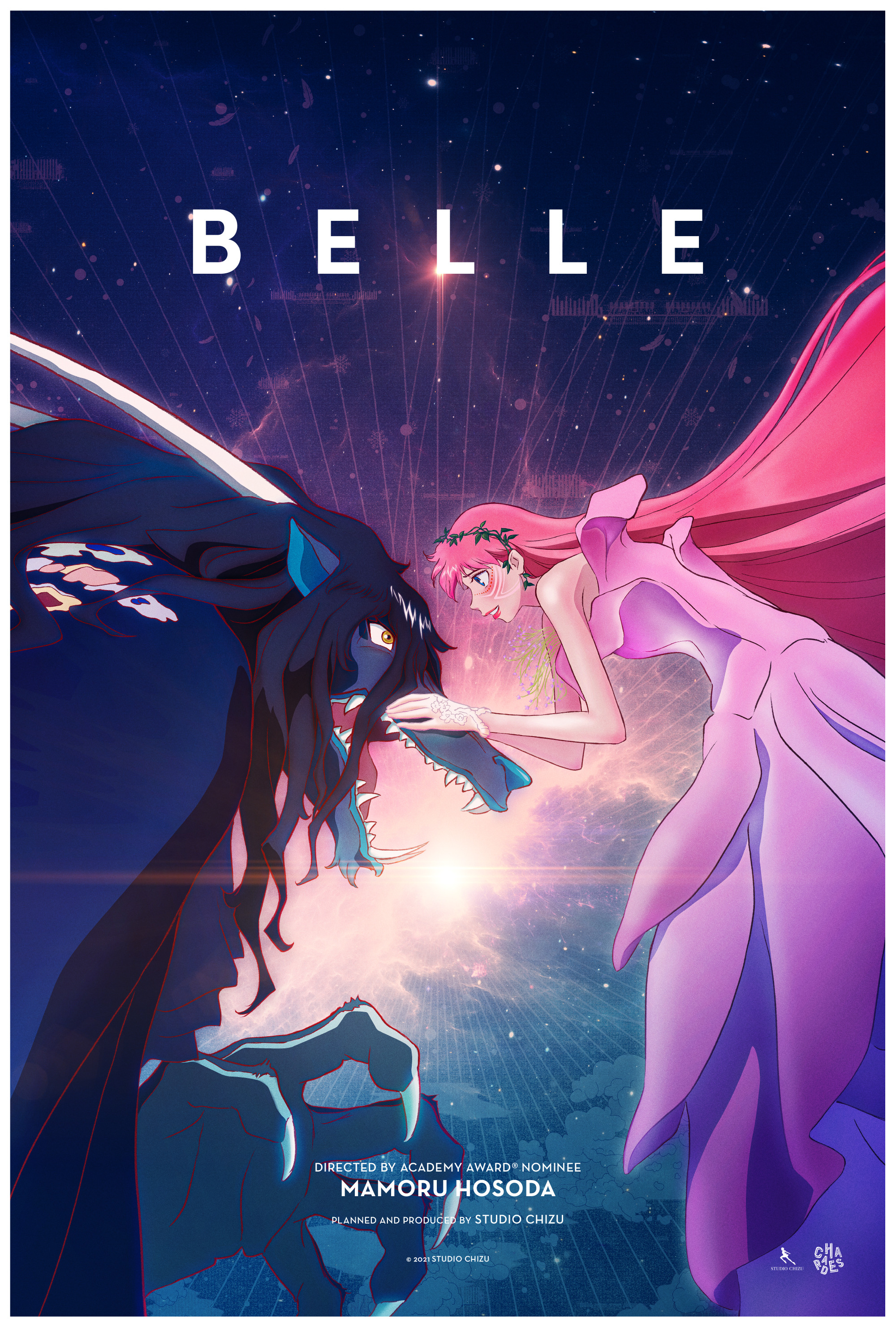
Suzu is a high school student living in a rural village with her father. She has a passion for singing, but ever since an extremely traumatic incident when she was a child, she has struggled to rediscover that passion that she once had for singing and song-writing. Despite his best efforts, Suzu’s father is unable to connect with her, and their relationship has become extremely distant. When she discovers the vast virtual world of “U”, it’s a place that enables Suzu to disappear into a brand new digital world. In this world, she is able to rediscover her voice and adopts the online persona of Belle, where she quickly becomes a viral sensation with her incredible singing talent, attracting the attention of the entire population of “U”. Whilst enjoying the adulation and the spotlight, Belle discovers the mystery of another avatar, known only as The Dragon. She becomes intrigued and strives to know more about him.

The vast digital world that we have at our fingertips today is an incredible one that offers anyone a plethora of opportunities to follow and meet like-minded people and to express themselves creatively. This can be a positive outlet for people, which can help boost their creative sparks. However, it can also be an exceedingly dangerous place where people can be subjected to unspeakable cruelty and callousness. Hosoda’s screenplay is hugely ambitious in this respect, as it attempts to take a thorough exploration of both the positives and negatives when it comes to this vast digital platform. Marvelling at the power that such a digital world can do for a person’s morale, whilst simultaneously highlighting the dangers and dark sides that come with internet fame and popularity, such as trolls and cyberbullying.

However, this is merely scratching the surface of the story that Hosoda has penned. It is also a profound examination of the effect that bereavement can have on a child. Not only that, but it explores the adverse effect that this can have when it comes to a child’s creative outlets and how they want to express themselves. As if that wasn’t ambitious enough, the reinvention of the classic fairy-tale of Beauty and The Beast for a 21st-century audience, adds another fascinating layer to the story. In this world of “U”, Belle strives to understand who this beastly character is. Is he really is the terrible, and evil monster that the world of U portrays him as? Or could it be that he’s just misunderstood? With such an ambitious screenplay that has numerous different concurrent plot threads being weaved together, the film could have got convoluted very quickly. However, Hosada’s expertise shines through, and his screenplay weaves them all together in a thoroughly profound and emotionally resonant manner.

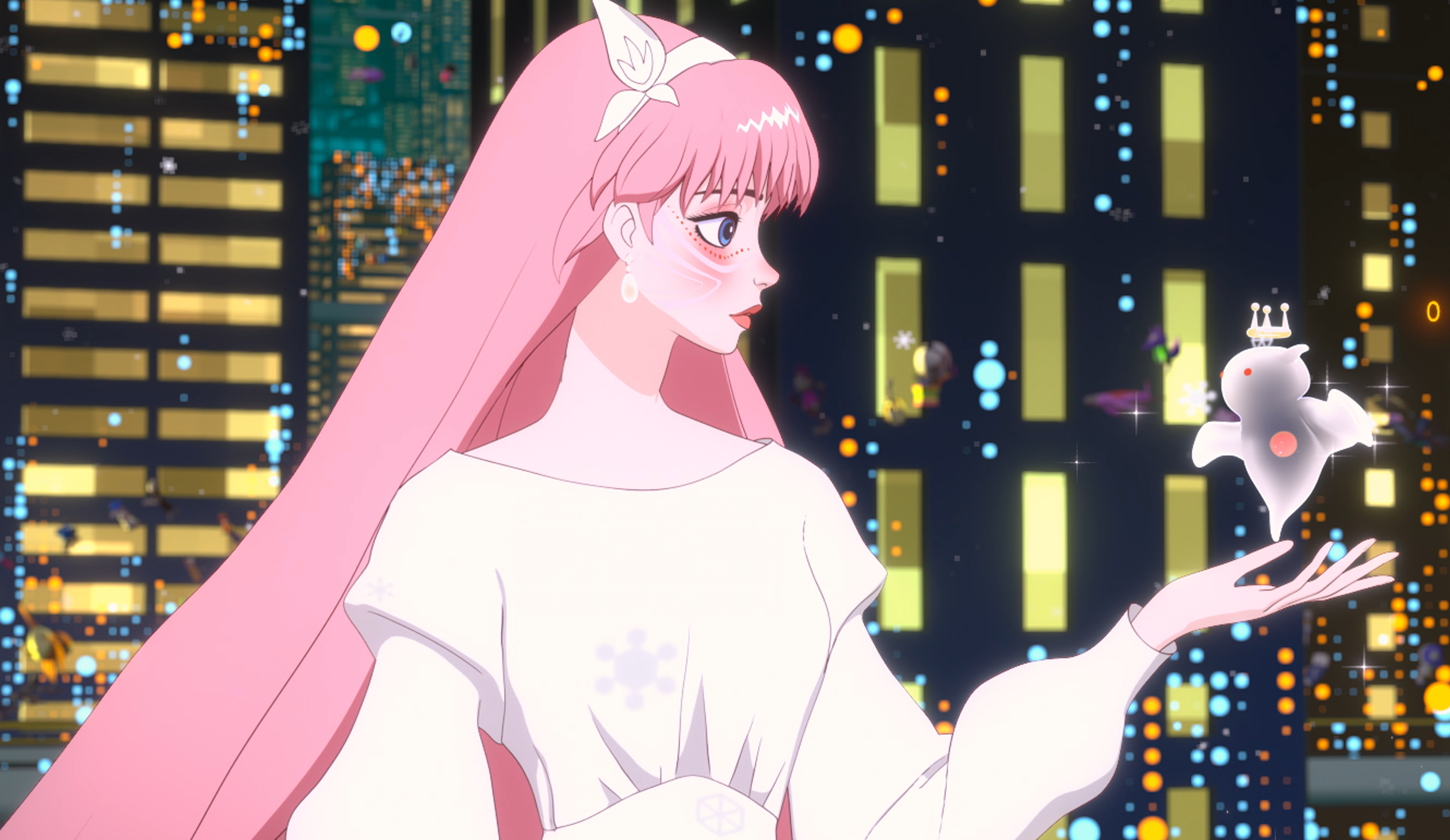
When it comes to modern animation, the technology that animators have at their disposal is so advanced that audiences have come to expect the best quality animation every time. Yet such effort takes a lot of work, and even with that weight of expectation, the work that the animation team accomplishes to make the world of “U” feels like a fully realised place is absolutely astounding. Using a perfect combination of more traditional hand-drawn animation, with CG animation, the work done by every animator is absolutely astounding. On top of which, the character designs for each of the avatars in “U” is absolutely extraordinary. From Belle’s long pink hair, to her freckles, to the extraordinary detail on the Dragon. Every character in this world feels less like they are an online persona, and more like a real person. If at the mere touch of a button, there was such a vast digital world that offers a wealth of opportunities for individuals to reinvent themselves, it’s surely an opportunity that anyone would surely seize with both hands.

 An emotional and profound examination of the wonders and perils of the digital age, intertwined with a beautiful reimagining of a classic fairy-tale. Mamoru Hosoda has crafted a stunning and heart-wrenching masterpiece.

a 

Posted in 2020-2029, Film Review

Encanto (2021)

© Walt Disney Animation Studios

Encanto – Film Review

Cast: Stephanie Beatriz, John Leguizamo, María Cecilia Botero, Diane Guerrero, Jessica Darrow, Angie Cepeda, Wilmer Valderrama

Directors: Byron Howard and Jared Bush

Synopsis: In an enchanted house in the hills of Colombia, live the Madrigal family, all of whom have magical gifts that help them give back to the community.

Review: Back in 1937, a certain company called Walt Disney Productions unveiled Snow White and the Seven Dwarfs to the world. It was a truly historic and monumental achievement and one that would change the course of animation filmmaking forever. Though when celebrating their extraordinary accomplishment, probably not even Walt himself could have quite imagined the legacy that the film would leave. Indeed, over eighty years after that historic first film was released, the studio that bears his name would still be at the top of their game in terms of releasing top-quality animated films. Not only that, but they would be celebrating the release of their 60th animated feature film and a very magical one at that.

Set in the hills of Colombia, the Madrigal family live in an enchanted house that they call the Casita. Through incredible magic, each descendant of the family is granted an extraordinary gift. The Madrigal family, via their magical gifts, give back to the vibrant community that has built up over the years since the Casita was built. Though there’s one member of the family who doesn’t have a gift of any kind, and that is Mirabel (Beatriz). Due to her lack of a magical gift, Mirabel is convinced that she’s not as special as the rest of her family. However, when an incident threatens to erase the magic of the Casita, the task falls to Mirabel to establish what’s going on and to save the magic before it is too late.

With any animated film that is produced by the House of Mouse, it is a formality that the film’s animation is going to be flawless. After the previous 59 films, one would suspect that they have seen the best animation that the studio has to offer. Yet, with each new film that has its stamp, they continue to surprise and delight in equal measure. In the same way that Raya and the Last Dragon represented a landmark moment for representation for Southeastern Asian communities, Encanto does that, and more for the country of Colombia. The Colombian community is vibrant and colourful, and it’s clear that the filmmakers have gone to great lengths to honour this culture on screen. Furthermore, the magic that brings the Casita to life, and the breath-taking magical gifts of the Madrigal family are vibrant and leap off the screen.

Each member of the family has their own unique gift, whether it’s Luisa with her extraordinary strength, Isabela with her ability to make flowers appear at will, or Antonio’s ability to talk to animals. It would therefore be easy for the protagonist Mirabel to be, as she is the only family member sans magical powers, to be unmemorable. However, this couldn’t be further from the truth. While she might be perceived as weird and different by the rest of her family, what Mirabel lacks in magical ability, she makes up for in her courageousness and bravery. She’s determined to be the one to save the magic of the Encanto and to save her family, and Stephanie Beatriz’s voice performance imbues her with the personality of a role model that anyone, especially those who hail from Latin America, can aspire to be.

2021 has already been quite the year for Lin-Manuel Miranda. First, there was the big-screen adaptation of his hit musical In the Heights, next came his directorial debut. Finally, to round out his phenomenal year, he reunites with Disney for another match made in heaven collaboration. Having worked to great effect with the Mouse House with the music and lyrics for Moana, Miranda is once again back on songwriting duty for this unique celebration of Colombian culture. The songs have the unique Lin-Manuel Miranda signature to them, hence making them all extremely catchy and enjoyable to listen to.

However, given the plethora of soaring and memorable ballads that have been heard in previous films, akin to Miranda’s “How Far I’ll Go” from Moana or a “Let it Go” from Frozen, there’s nothing that soars to quite the extent that those aforementioned songs do. The film’s narrative is definitely one you’ll have seen from previous Disney films, but the sheer quality of the craft of the animators, and the loving depiction of Colombian culture, ensures that Disney hits this creative landmark in beautiful style.

Filled with dazzling and vibrant animation, the narrative beats may be somewhat familiar, but even after 60 films down, the House of Mouse still has that magical touch.

Posted in 2020-2029, Film Review

Luca (2021)

© Disney and Pixar Animation Studios

Luca  – Film Review

Cast: Jacob Tremblay, Jack Dylan Grazer, Emma Berman, Saverio Raimondo, Maya Rudolph, Marco Barricelli, Jim Gaffigan, Sacha Baron Cohen

Directors: Enrico Casarosa

Synopsis:  In a picturesque town on the Italian Riviera, two young sea monsters go on a sun filled summer adventure above the waves…

Review: The summer, the time of year that promises super long days (depending on where you live), gloriously warm weather, and the prospect of making new friends and having an experience that you will never forget. However, what if say you’re a creature who lives beneath the waves, who desires to break free from his overly protective parents, and who yearns to experience live on the land that we humans dwell on? The answer lies in the form of the 24th feature film from Pixar Animation Studios.

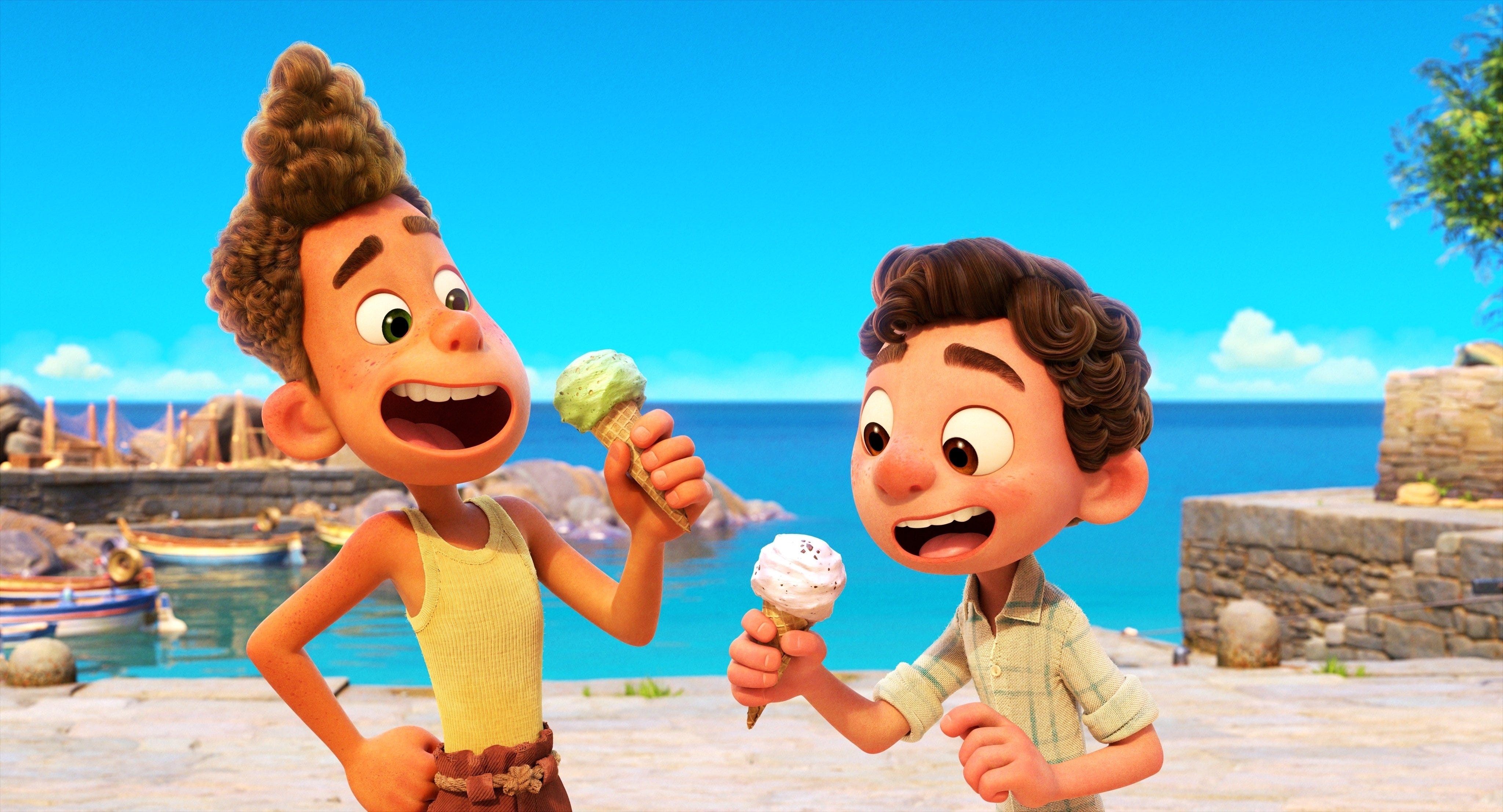
Set in the picturesque town of Portorosso on the Italian Riviera, there are stories of terrifying sea monsters that lurk beneath the waves that have the residents of this town spooked. One such sea monster is Luca (Tremblay), who is categorically forbidden by his parents from ever venturing to the surface. His parents do not trusts those creatures that dwell on the land, and as it turns out, the feeling is mutual as the humans have a distrust for sea creatures. However, when Luca meets another young adventurous sea monster named Alberto (Grazer), the two of them form a friendship and head for the town for an adventure unlike anything that they have ever experienced before.

In any adventure/coming-of-age type story that features two characters going on a life-changing journey, the dynamic the two lead characters is fundamental as to whether this adventure sinks or swims. Fortunately, it’s the former as the voice performances of Jacob Tremblay and Jack Dylan Grazer are perfect, as they help to establish the friendship that quickly forms between these two young friends. These two are merely out to have the best time of their lives whilst they are living with the humans, and away from all they have ever known in their lives beneath the big ocean blue. Through all of this adventure, Luca and Alberto have their eyes on one prize, to own a Vespa, and this dream leads to Giulia (Berman), one of Portorosso’s residents who befriends Luca and Alberto. Instantaneously, there’s a connection between the three of them, as she is someone who is looked down by certain sections of the town.

Throughout all of their films, Pixar’s animation style has always been tremendous, and that streak continues with Luca. As Pixar has taken audiences on a couple of trips beneath the waves before, one could almost expect a similar style of animation when compared to those two films. Yet, the animation style feels much more different than not just the two Finding films, but rather any previous Pixar film in general. In many respects, what director Enrico Casarosa has crafted feels more reminiscent of Studio Ghibli than it does Pixar. The ensuing adventure that takes place between Luca, Alberto and Giulia is one that audiences will enjoy. The film is awash with plenty of laughter, emotion and familiar beats of not being afraid to be who you are. However, given that this studio has become known for those moments that pack the strongest of emotional punches to leave the audience’s emotions in pieces, there’s nothing of that nature to be found in this Italian Riviera themed adventure.

There is perhaps an assumption that any film that carries the Pixar name will have deeply philosophical themes throughout. Furthermore, given many of their prior films have for instance, touched on deep questions about life and the passions we have, our deep connection with life and music, or the emotions that guide us through life. Indeed, when their films attempt to answer these philosophical questions, is arguably where Pixar have excelled the most, whilst reducing audiences to emotional wrecks. On the one hand, it is the case that due to this lack of emotional depth, Luca is unable to surpass those films that have come before it. Yet on the other hand, it is perhaps a bit unfair to expect every Pixar film to tackle these existential themes every time is perhaps a bit unfair. Luca promises a sun soaked adventure filled with laughs, friendship and, yes, dreams about one day owning a Vespa, and that’s what it delivers. Magnifico!

It may be more simplistic and formulaic than many of previous Pixar films, yet thanks to the performances of its three leads, and a vibrant style of animation, this sun-soaked adventure will warm your heart.

Posted in 2020-2029, Film Review

The Mitchells vs. the Machines (2021)

© Netflix, Columbia Pictures and Sony Pictures Animation

The Mitchells vs. the Machines  – Film Review

Cast: Danny McBride, Abbi Jacobson, Maya Rudolph, Michael Rianda, Eric Andre, Olivia Colman, Fred Armisen, Beck Bennett, John Legend, Chrissy Teigen, Blake Griffin, Conan O’Brien

Directors: Michael Rianda and Jeff Rowe

Synopsis: When a robot uprising occurs during a family road trip, one dysfunctional family becomes the last hope for humanity…

Review: It isn’t exactly news that humanity as a species have become rather obsessed with all gadgets of various shapes and sizes that have a screen in them. Whether it be phones, laptops, tablets or TVs, if we’re not working, chances are high that we will have our eyes glued to those gadgets that are “bathed in ghoulish blue light”. But what if those machines that we are so dependent on, instead decided to do away with humanity as a species and rule this planet for themselves? While humanity’s over-reliance on technology is far from an original concept, in the hands of Phil Lord and Christopher Miller, the duo who helped to bring the visual wizardry of Spider-Man: Into the Spider-Verse to life, they’ve turned that concept into this bonkers, but uproariously entertaining adventure.

Katie (Jacobson) is as an aspiring filmmaker, who is one step closer to her dream job after being accepted into a film school. Her ambitions don’t sit well with her technophobe father Rick (McBride). Due to her ambitions and his own issues with technology, he struggles to connect with Katie. Fearing that they may drift apart for good once Katie has settled into college, Rick decides to take the entire the family go on a cross-country road trip, which is meant to be in theory one last family outing. Unfortunately for the Mitchell family, their family trip coincides with the beginning of a robot uprising determined to eradicate humanity from the face of the Earth. Consequently, this quirky, oddball family find themselves as the last hope for humanity to stop the robot apocalypse.

While many may well see Disney and its subsidiary Pixar as the top dogs of animation movie making, there are certainly plenty of studios that are producing some stellar animation flicks that are certainly capable of challenging Disney and Pixar’s status as animation top dogs. For Sony Pictures Animation, Into The Spider-Verse was the perfect example of an innovative, unique stunningly crafted piece of film-making that really pushed the boundaries of what this medium could accomplish. Under the direction of first time directors Michael Rianda and Jeff Rowe, this enthralling adventure continues that trajectory with a unique and exhilarating blend of 2D and 3D animation styles.

As with the animation, the voice work of the cast is exceptional across the board. As the film’s central protagonist, much is resting on Katie’s shoulders and through the excellent voice work by Abbi Jacobsen, she carries the film marvellously well. There will be many out there who empathise with Katie as a quiet somewhat introverted individual who’s passionate about what she does, and Jacobson imbues Katie with a fiercely independent, yet extremely likeable personality. Due to his difficult relationship, and his immense disdain for technology, the strained relationship between Rick and Katie features at the centre of the film. McBride excels as a father who strives to find the balance between being the stern parent trying to steer his children away from the allure of the screens, whilst simultaneously trying to do his best for his daughter.

While the voice talents of Jacobsen and McBride are given most of the spotlight, the performances of Maya Rudolph and co-director Michael Rianda are perfect as mother Lin and Katie’s brother Aaron, are given plenty of screen time to flesh out their characters. Though, like with any film that features a robot apocalypse, the need for a strong villain is imperative. In this instance, that antagonist is PAL, a super intelligent AI who’s basically like if the personal assistant in your phone went rogue and tried to kill you and all of humanity in the process. Proving that the no one plays an antagonist better than the British, the casting of Olivia Colman in this menacingly evil, and simultaneously hilarious role, is an absolute masterstroke.

At 113 minutes, the film is certainly longer than average when compared to most animated adventures. However, from the word go, the momentum that’s generated from the film’s wild and exhilarating story ensures that at no point does the film lose the momentum that it has generated. It moves from fun road trip film to a battle for humanity’s survival with effortless ease, as a wild mixture of hilarious gags and thrilling action help to keep the plot going at a frenetic and exhilarating pace. Furthermore, it packs plenty of heart-warming character moments in between absolutely thrilling action scenes that will definitely be appreciated by man and machine-kind alike in equal measure.

With its perfect combination of bonkers and hilarious action and sincere heartfelt character moments, the latest Lord/Miller collaboration sets the bar high for the rest of 2021’s animated offerings.

Posted in 2020-2029, Film Review

Raya and the Last Dragon (2021)

Image is property of Disney Animation Studios

Raya and the Last Dragon – Film Review

Cast: Kelly Marie Tran, Awkwafina, Gemma Chan, Daniel Dae Kim, Sandra Oh, Benedict Wong, Izaac Wang, Thalia Tran, Alan Tudyk

Directors: Don Hall and Carlos López Estrada

Synopsis: In the ancient land that was once known as Kumandra, a warrior princess goes in search of what is believed to be the last dragon….

Review: Throughout the many decades of animated films to emerge from Walt Disney Animation Studios, stories of fairy tales and Princesses have been plentiful. It is after all, one of the many things that they do best. The early Disney Princess stories might have leaned into the more traditional aspects of fairytales and princesses. Yet, from the Renaissance years onwards, the studio’s Disney Princess outings have all had an element of striving to something that does not stick to the norm, and breaks substantial new ground in terms of story-telling and representation. With what is their 59th film, they’ve taken a massive step forward in terms of representation by creating for the very first time, a South-East Asian heroine.

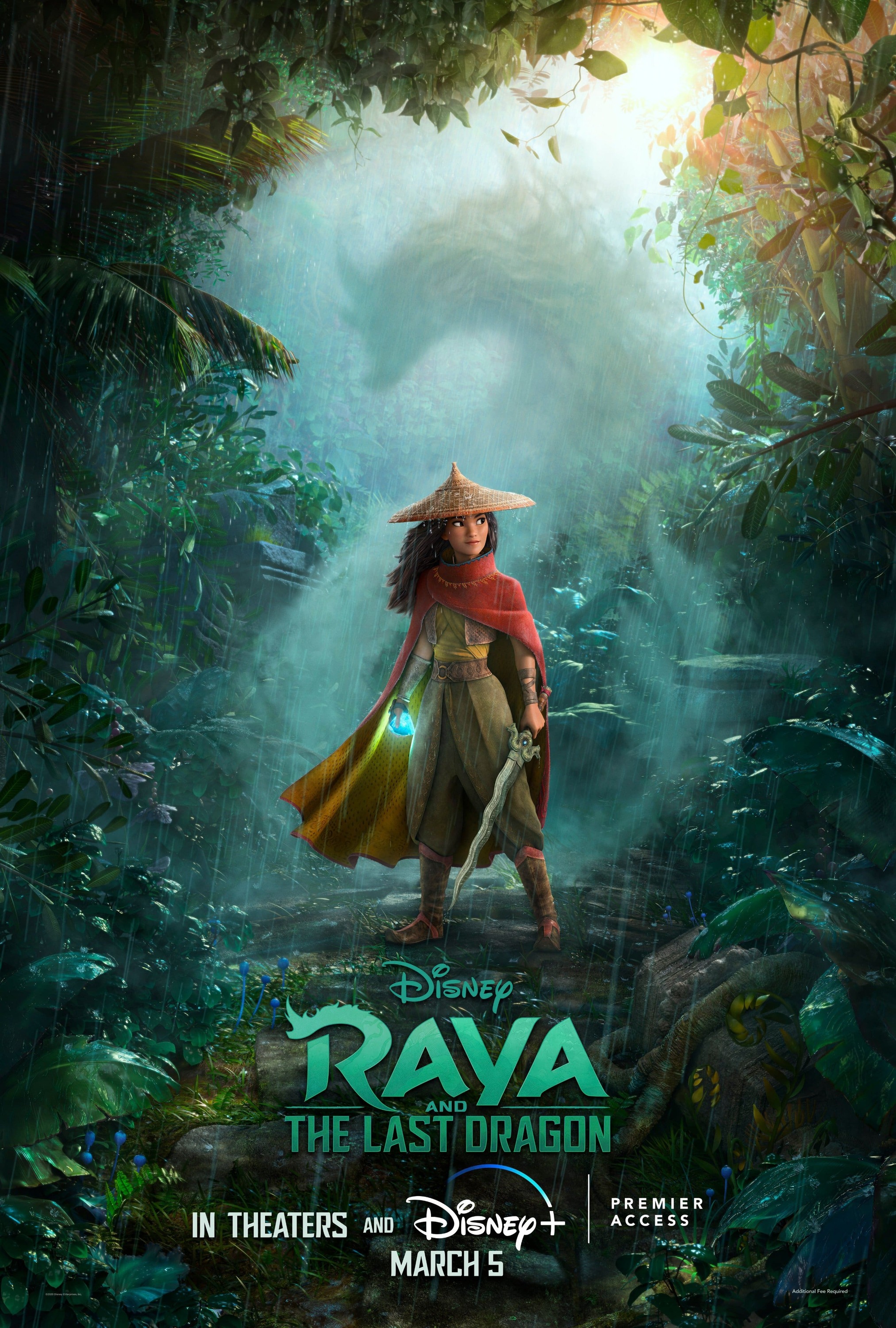
Many centuries ago, in the land of Kumandra, humanity and dragons co-existed in harmony. However, when the land comes under attack from a vicious evil spirt known as the Druun, an all powerful artefact that repels the Druun is created to repel them forever. Flash forward to the present, and with the dragons now believed to be long gone, the people are now divided into five warring tribes, all seeking possession of this artefact. When the conflict boils over, and this deadly evil spirit returns, the burden falls on Raya’s shoulders to seek out the Last Dragon, before this evil spirit consumes the entire world as they know it.

It’s practicality a formality that whenever one comes to watch an animated film from the House of Mouse, that the animation is going to be the best that it could possibly be. It is to the immense credit of the animators, that not only is the animation absolute breath-taking to look at, but it seems to be somehow getting even better with each passing film. For each territory of this civilisation, there’s a considerable change in the terrain, and this shift provides numerous opportunities for the animators to explore the richness and the diversity of the terrain. Through their wonderful work, they do not disappoint as each territory enables the animators to demonstrate their animation wizardry, which helps to bring so much vividness and beauty to this world.

After having endured an absolutely ridiculous and completely undeserved amount of flak for her work in the Star Wars franchise, seeing Kelly Marie Tran given a leading role as a Disney Princess is just wonderful, and she absolutely crushes it with her performance as Raya. Through her excellent voice work, she imbues this character with a sense of courage, honour, and duty to her family and her people. While this may all be familiar beats for a Disney film, what Raya also has in her favour is that she is a fearless warrior who boasts excellent skills with a sword, which should ensure Raya adds her name to the ever growing list of fierce, strong and badass heroines that Disney films have produced.

Alongside her, Awkwafina, an actress who has been excelling in recent years, almost steals the show as the voice of the dragon Sisu. Being the last of her kind, there’s an understandable element of seriousness given how integral this character is to the film’s story. However, the film’s script by Qui Nguyen and Adele Lim, allows Awkwafina to use her comedic talents to wonderful effect, and through the voice talents of both actresses, the characters form a deep bond that helps to drive the film forward. Furthermore, the cast is further enhanced with excellent contributions from the talents of Gemma Chan, Sandra Oh, Benedict Wong, and Alan Tudyk as Tuk Tuk, one of the most adorable animal side characters this studio has ever created.

The film can sometimes get a bit bogged down by the sheer amount of lore and backstory that it tries to fill in its runtime. While there’s some familiarity with some of the story’s beats, the film packs plenty of heart and emotional weight. In many ways, Raya and The Last Dragon is a film that feels tailor made for these divisive and troubled times that the world has been living through for the last year or so. As a society that feels broken, bereft of trust and compassion for those around us, as we collectively struggle to deal with a crisis that has shaken society to its very core, leaving a heart-breaking amount of pain, and loss in its wake. In the year 2021, the world could learn a thing or two from a hero like Raya.

Bursting with gorgeous, colourful animation, and a ground-breaking Warrior Princess heroine, Raya and The Last Dragon is another House of Mouse gem that feels tailor-made for the times we’re living in.