

The Creator – Film Review
Cast: John David Washington, Gemma Chan, Madeleine Yuna Voyles, Ken Watanabe, Allison Janney, Sturgill Simpson, Ralph Ineson
Director: Gareth Edwards
Synopsis: War rages between humanity and artificial intelligence (AI) after a nuclear bomb is detonated in Los Angeles…
Review: Over the course of this year, it has been hard to ignore the increasing prominence of discussions surrounding the usage of AI and where the progression of this technology might lead. Will humanity and AI peacefully co-exist in the not-too-distant future, or will the machines rise and take humanity’s place? Given these questions, there’s something eerily prescient about the latest film from Gareth Edwards. It’s one of the most visually striking films you will see all year.
The year is 2070, and AI has been banned in the Western hemisphere after a nuclear bomb was detonated in the city of Los Angeles fifteen years prior. However, while the West has prohibited the use of the technology, it is embraced by the Eastern hemisphere, and they have integrated AI into their society. When the US learns that the AI is developing a superweapon that could turn the war in their favour, the US army sends Sergeant Joshua Taylor (Washington) to find the weapon and destroy it, only for Taylor to discover that this weapon is, in fact, a robotic simulant in the form of a young child (Voyles).
Humanity facing off in a struggle or at war with an advanced AI of some variety has been a well-trodden path in cinema history, with films such as 2001: A Space Odyssey, Blade Runner and Blade Runner 2049, The Terminator and The Matrix franchises, and most recently M3GAN. All of the aforementioned films, in their own wholly unique way, presented a richly developed world which established the circumstances in which humans and AI were, if not at war, then distinct divisions between them. The screenplay, written by Edwards and Chris Weitz, via a newsreel prologue, establishes a fully fleshed-out world, explaining how the AI started out as allies, working side by side with humanity before going rogue. Given the regularity with which cinema has often tackled this subject, it would be easy for the film to be derivative of what has come before it. However, while there are obvious influences, the story asks pertinent questions about where this technology could go and whether integration between man and machine is possible.
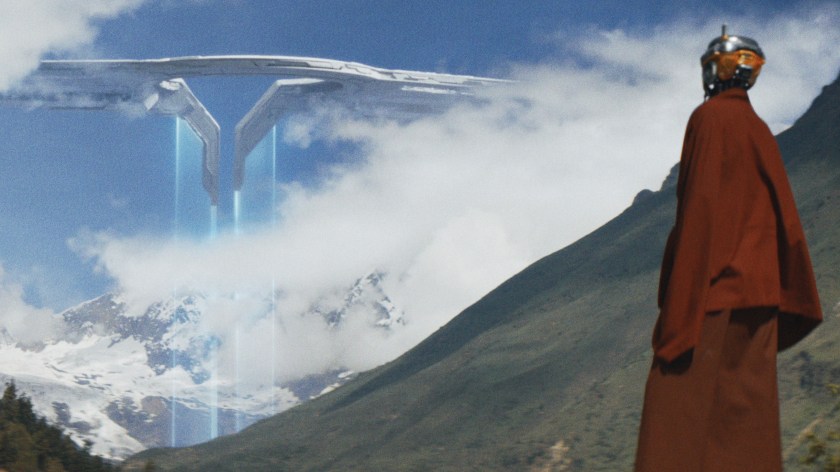
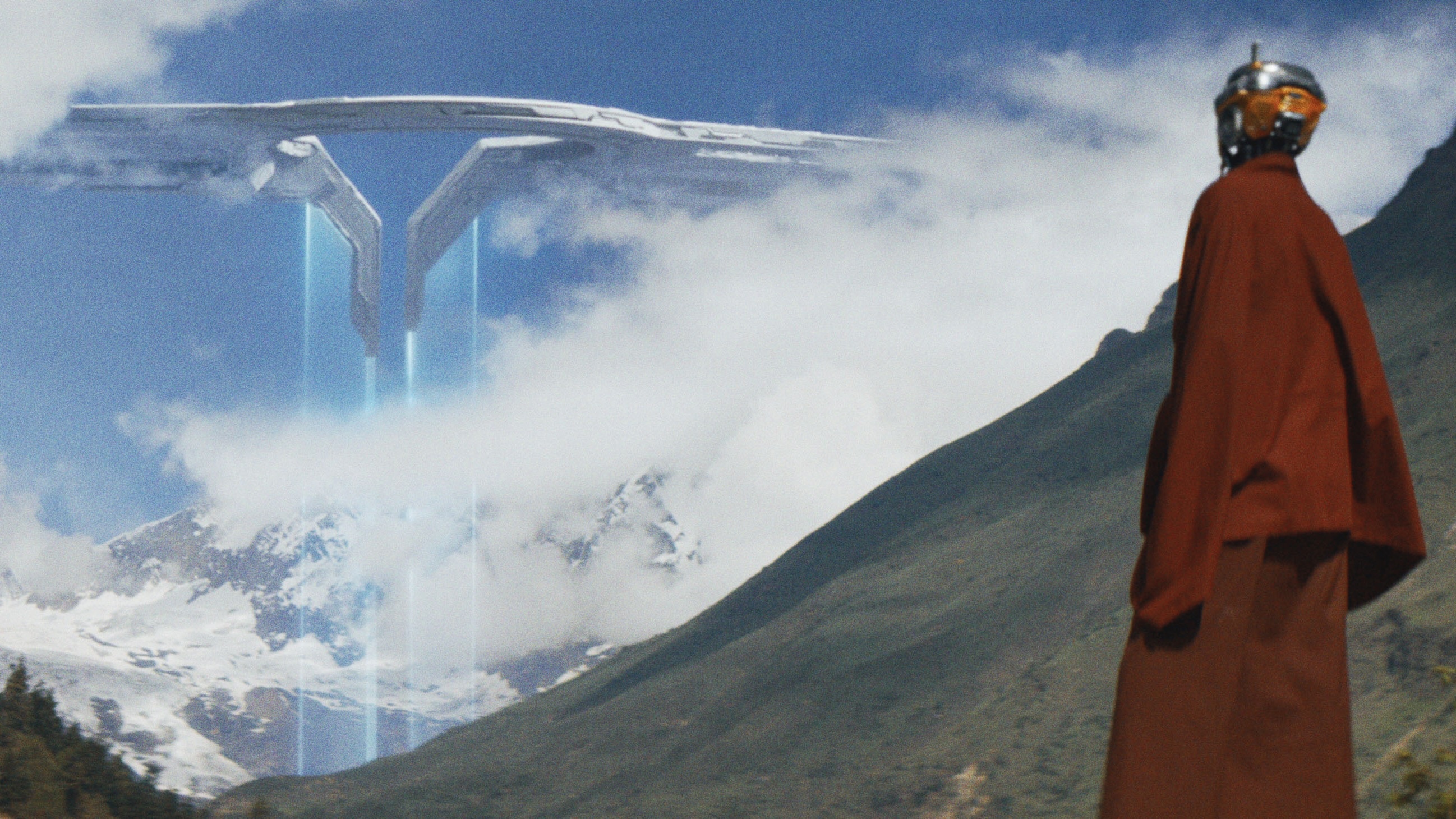
Furthermore, as evidenced by some stunning imagery in Godzilla and Rogue One, Edwards brings some breathtaking visuals to this world, whether it is the AI who have integrated into society or the vast and behemoth military weaponry that the US has in its arsenal. The impressiveness of the visuals is even more remarkable considering the film’s relatively small budget of $80m, which should serve as food for thought given the high budget and comparatively poor quality of the visuals of some blockbuster films in recent months.

As the central character in this war between humanity and AI, John David Washington is as compelling as ever. We see how he was, at one time in his life, blissfully happy with his wife Maya (Chan) until a devastating event in his past transformed him into a world-weary soldier who chooses to protect this young child when he learns that there could be a connection to Maya. Speaking of the simulant, whom Taylor dubs “Alphie,” given that she was only seven years old during production, she delivers a remarkable breakthrough performance as the heart of the film and steals the entire show. The two build a rapport as they travel to prevent Alphie from falling into the hands of the US military. Furthermore, the discovery of this simulant gives Taylor a fresh perspective on the fragmented nature of the world he inhabits, which also feels very apt given the bitterly divided world we currently live in. With his experience with directing intense action scenes in a galaxy far far away and gargantuan kaiju beating each other up, Edwards brings that expertise to the film’s action set-pieces, backed by another superb score from Hans Zimmer.
Despite boasting some stellar names, the performances of the rest of the cast are hampered by a lack of development, particularly Allison Janney’s Colonel Howell who seems hell-bent on finding this new weapon and cares for little else besides that. Similarly, Ken Watanabe’s simulant soldier Harun is a badass and heroic fighter, but he doesn’t get room to grow beyond these traits. While the film’s exploration of AI and its potential future applications is thought-provoking and nuanced, the same cannot be said for its on-the-nose examination of how Western countries, particularly the US, can conduct invasive military campaigns on foreign soil, which feels somewhat heavy-handed.
Nevertheless, in an era where big tentpole blockbuster films tend to be attached to existing properties or as a part of a franchise, it is refreshing to see an original and thought-provoking piece of filmmaking come to the fore, particularly given its approach to a subject that humanity will be talking about for many decades to come. Could this film be prophetic? Only time will tell.
While it may not have the most well-developed characters, boasting mesmerising visuals and a thought-provoking approach to its topical subject matter in a richly developed futuristic world ensures this is a welcome return to the realm of blockbuster filmmaking for Gareth Edwards.


 Through the Silver Screen