Posted in 2020-2029, Film Review

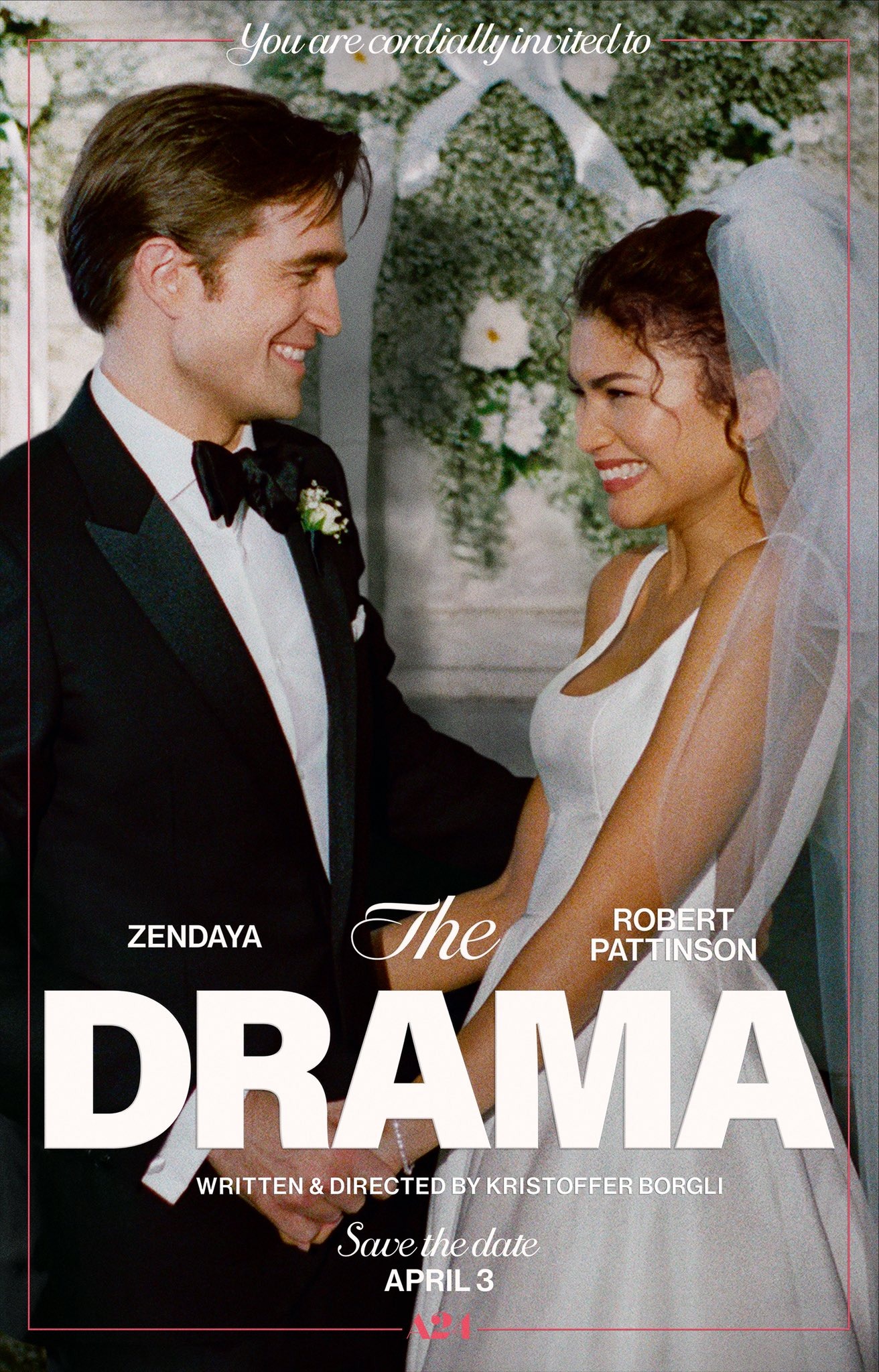
The Drama (2026)

© A24

The Drama – Film Review

Cast: Zendaya, Robert Pattinson, Alana Haim, Mamadou Athie

Director: Kristoffer Borgli

Synopsis: The seemingly perfect relationship of a couple preparing to tie the knot is put to the test following a startling revelation…

Review: Depending on your familiarity with modern-day or Gen Z slang, you may or may not have heard the phrase: “Spill the tea”. For those unaware, it means to gossip or share new, potentially juicy information. As human beings, we certainly love to natter and share fun or amusing stories on a whole array of topics when hanging out with friends. You would assume that if you’re with your significant other on such an occasion, the person you trust more than anyone in the world, you wouldn’t share anything you haven’t already told them. But what if, while on a double date ahead of your upcoming wedding, a secret is shared that makes you question everything you thought you knew about the one person you thought you would spend the rest of your life with? This is the juicy pull of this riveting drama from Kristoffer Borgli.

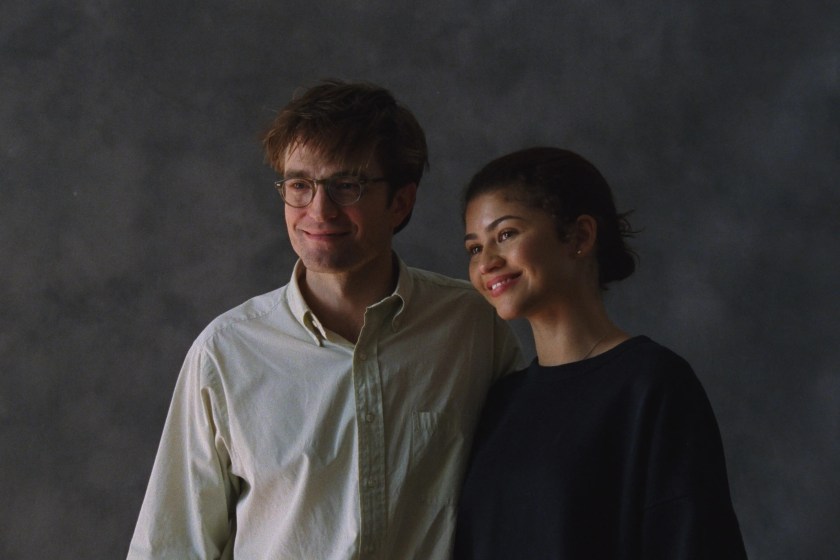
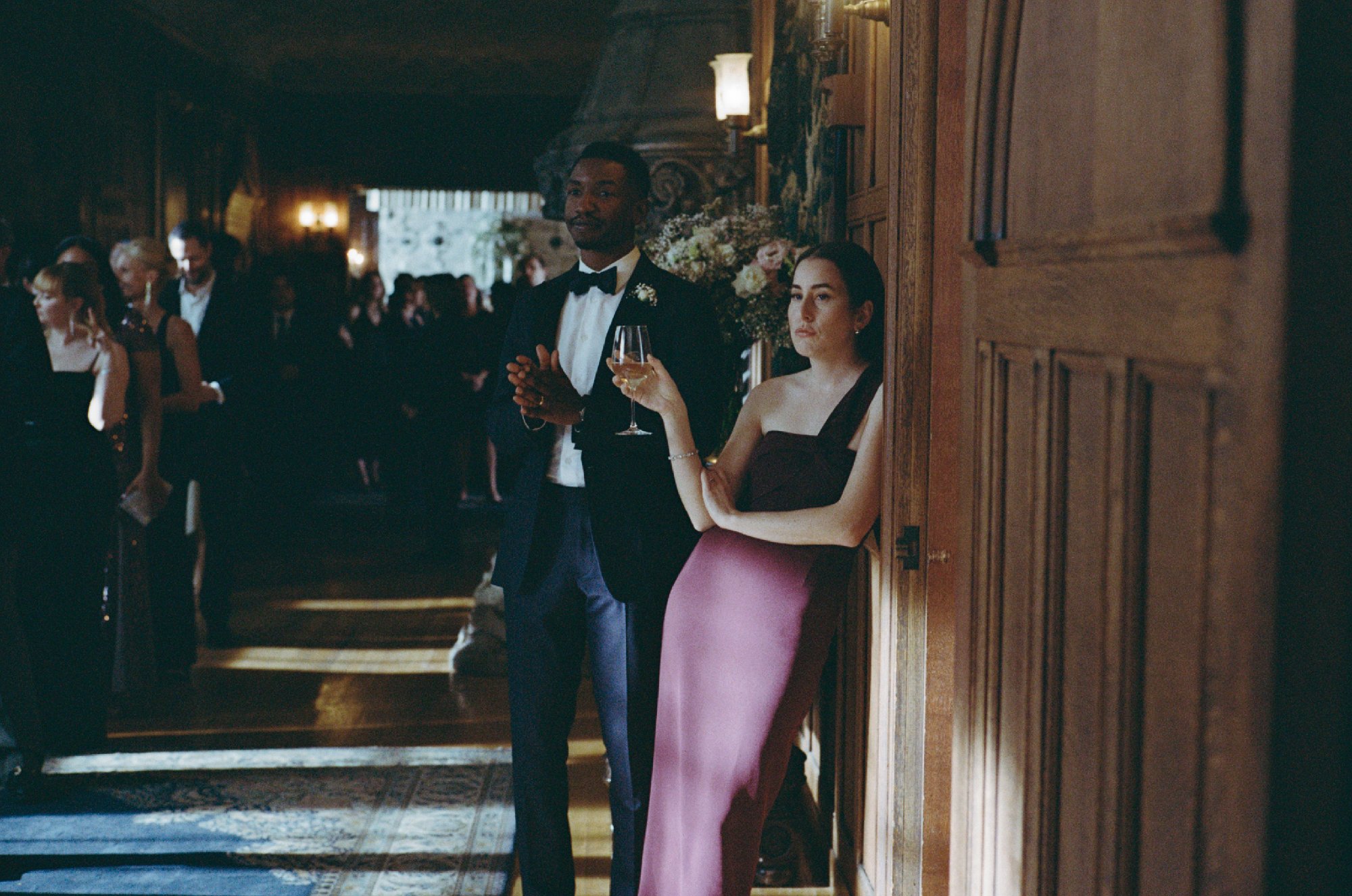
The couple at the centre of this is Emma (Zendaya) and Charlie (Pattinson), who are in the midst of planning their wedding, with only a week to go before the big day. After a busy day finalising arrangements, they go wine-tasting with their friends Mike (Athie) and Rachel (Haim), who will be the best man and the maid of honour. After several bottles of wine, the conversation turns to a drunken game in which they spill the tea and reveal the worst thing they have ever done. Some uncomfortable truths are exposed, including cyberbullying and neglectful behaviour.
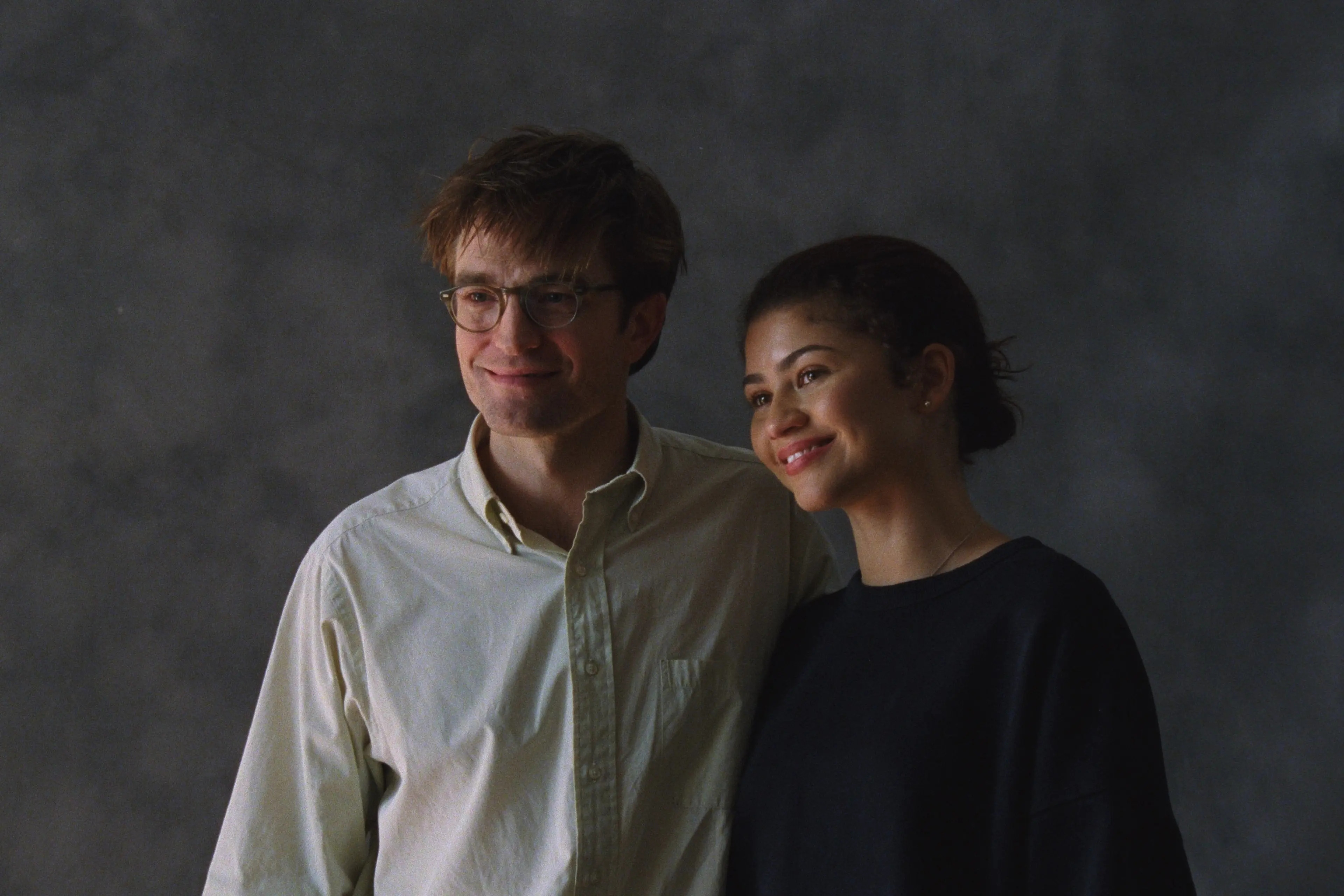
However, everything comes to a head when it’s Emma’s turn to reveal that, in high school, she had planned to carry out a mass shooting at her school after being bullied by her classmates, but ultimately did not go through with it. In an instant, the group’s friendly, jovial atmosphere shifts to one of horror, confusion and apoplectic anger, with Rachel in particular left absolutely disgusted by the trauma of seeing a family member severely injured in a shooting. All the while, Charlie begins to question his entire relationship with Emma, wondering whether she is really the same person he met years earlier and whether he should go through with the wedding.

Just as we humans love a bit of gossip, we watch with a mixture of unease and apprehension as the blissful romance we thought was impenetrable between our happy couple is instantly shattered. The fallout they grapple with makes for absolutely riveting viewing, and as awkward and uncomfortable as it is in places, you just cannot look away. Humans are most assuredly not perfect creatures; we all have at least one skeleton in the closet that we would prefer never see the light of day. However, Borgli’s screenplay is bold in its examination of the relationships we hold dear, and is not afraid to ask some difficult questions of the characters, and by extension the audience, about how far those relationships will be put to the test when confronted with the most alarming of discoveries that may fundamentally change how you once perceived that person. How far would we be willing to go to grapple with and ultimately forgive a person for any flaws they may have in their character, especially at a time when their mental health was probably not in the best shape?
In light of the fact that gun violence is a recurring problem that is never far from the headlines, and given the frequency with which such tragic incidents occur in the United States, credit where credit is due for attempting to broach this topic to begin with. It may only be scratching the surface and could have delved much deeper into how such incidents can tear apart entire families and communities. In this increasingly polarised and deeply divided world, using this as a framing device is a courageous move and a valuable starting point for addressing an issue that blights American society.

Such is the script’s controversial and challenging nature that it demands confident, brave performances to dive deep into these characters and ensure it doesn’t amount to a complete misfire. Zendaya and Pattinson rise to the occasion. Arguably two of the hottest (meant in every sense of the word) actors working today, they bring effortless, abundant chemistry to scenes in which they fall madly in love with one another. Not the most difficult task for such popular actors, but everything changes once Emma’s past indiscretion comes to light. It adds a whole new layer to their performances, as Emma is left scrambling to confront the dark truth about her past she hasn’t faced in years, while Charlie flickers between disbelief and quintessential British awkwardness and bewilderment about what his soon-to-be bride nearly carried out. This is emphatically not the case for Alana Haim’s Rachel, who, despite revealing an arguably even worse indiscretion than Emma’s, exhibits pure, venomous hostility towards a woman she once considered her closest friend.

Life is no picnic. It has its joyous moments, such as a wedding (in normal circumstances). Yet it can also present us with difficult dilemmas that don’t offer easy answers. This is the essence of what makes The Drama such a compelling, sometimes awkward, and sometimes hilarious watch. Your tolerance for how it chooses to confront a thorny subject may vary depending on whether a traumatic event has occurred in your family. But above all, it challenges us to accept that the love we have for another person will have its ups and downs. Ultimately, would you be willing to forgive and accept the person you thought you would spend the rest of your life with for who they are, no matter their flaws or mistakes they might have made in the past? Now there is one question you won’t find in any wedding vows.

It may make you squirm with discomfort like a bad speech at a wedding, but with committed performances by Zendaya and Pattinson, The Drama spills the tea to offer a fascinating look at the emotional complexities of a relationship.

.  

Posted in 2020-2029, Film Review

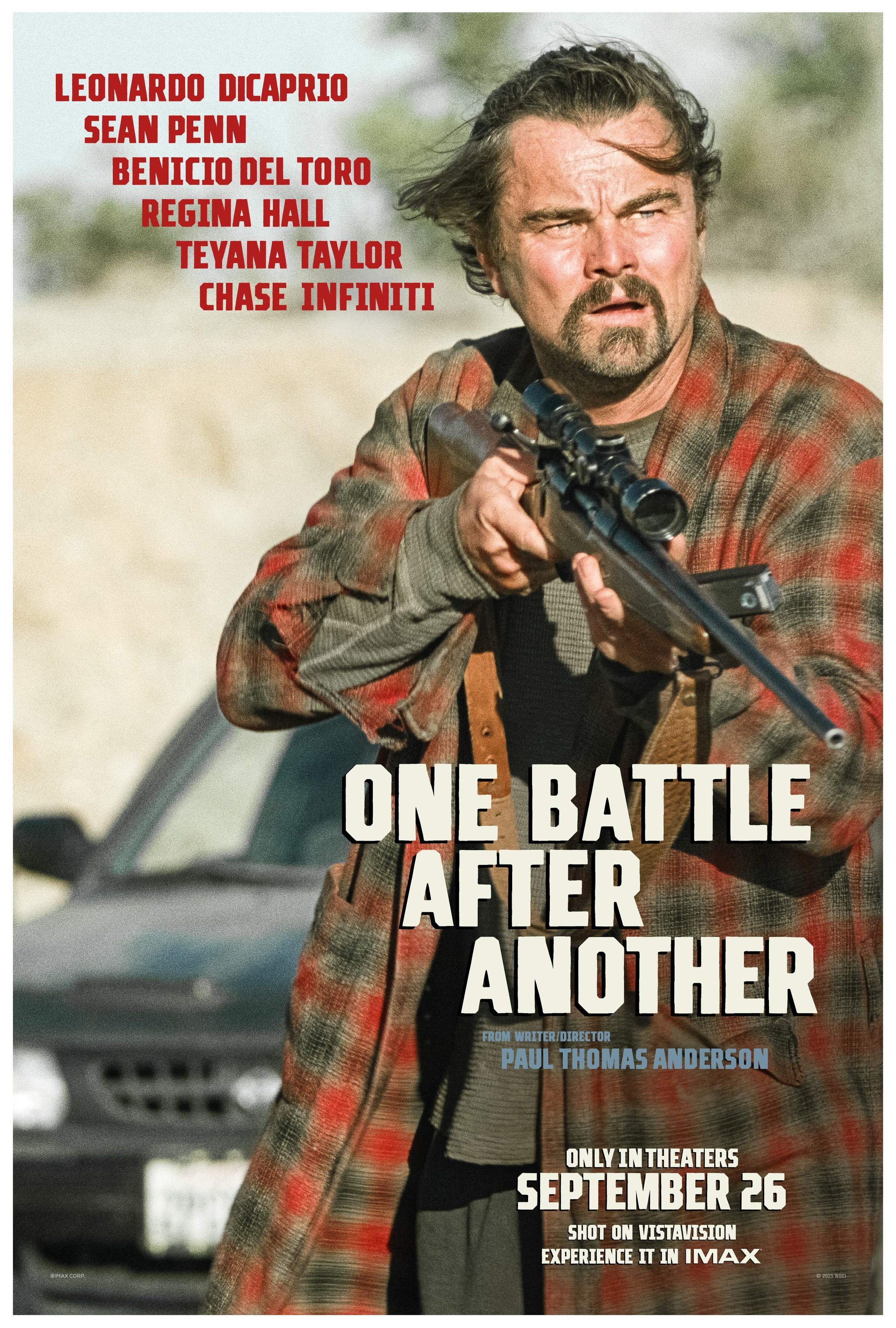
One Battle After Another (2025)

  © Warner Bros. Pictures and Ghoulardi Film Company

One Battle After Another – Film Review

Cast: Leonardo DiCaprio, Teyana Taylor, Chase Infiniti, Sean Penn, Regina Hall, Benicio Del Toro, Alana Haim

Director: Paul Thomas Anderson

Synopsis: A washed-up former revolutionary is forced to confront his past when both he and his daughter are hunted by a former foe…

Review: You’d have to be living under a rock to be unaware that the political climate in the United States in 2025 is as fraught and bitterly divided as it has been at any point over the past decade. In such politically charged times, it takes a brave filmmaker to hold nothing back and go for the jugular with a thorough, uncompromising look at the land of the free and what the country actually stands for. Enter Paul Thomas Anderson, with a film two decades in the making, where the revolution will very much be televised.

In one of, if not the, most frenzied first acts of the year, Pat (DiCaprio) and Perfidia (Taylor) are two members of the far-left revolutionary group the French 75. The group have gathered outside an immigrant detention centre to storm the facility and release the migrants detained, while also perpetrating attacks against other key targets against the country’s infrastructure. These attacks capture the attention of Colonel Steven J Lockjaw (Penn), who makes it his personal mission to hunt down and eliminate the group’s members at any cost. Pat and Perfidia soon fall in love and have a child, whom they name Charlene. After their daughter’s birth, Pat is determined to lay low and leave his revolutionary days behind, but Perfidia isn’t one to give up the fight so easily, which lands her on Lockjaw’s radar. After 16 years of lying low, now going under the aliases of Bob and Willa (Infiniti), the duo find themselves on the run again when they realise they are once more in Lockjaw’s crosshairs.

After an adrenaline-charged first act that throws you headfirst into the heat of the action, Anderson briefly gives the audience a moment to catch their breath, but don’t get too comfortable. One Battle After Another truly lives up to its title; while the characters may have claimed an initial victory, the war is far from over. Loosely adapted from Thomas Pynchon’s 1990 novel Vineland, Anderson’s screenplay is sharp and scathing in its criticism of modern-day America, and the parallels between the revolutionaries and the pushback against the US government’s callous and inhumane treatment of migrants are all too relevant in the absurdity of this timeline. Yet, this is a film with a lot more on its mind as it also scathingly rebukes the hatred and oppression that marginalised groups, especially immigrants, face and a society which allows this contempt to filter into society through truly poisonous ideologies such as white supremacy. Such hatred, while those at the top perpetrate rampant corruption. It is all too relevant to the absolute authoritarian hellscape that is the US in 2025, which ensures the film hits like a sledgehammer, with a powerful and furious urgency.

Having come very close to working with Anderson on 1997’s Boogie Nights, Leonardo DiCaprio can finally add Anderson’s name to the distinguished list of filmmakers he has worked with across his career. DiCaprio rarely disappoints, even when the film around him is an absolute dumpster fire (looking at you Don’t Look Up). Unlike that film’s pitiful attempts at humour, Anderson combines the tense political themes with a surprising amount of humour. Not least because in those 16 years, he has developed a penchant for anxiety-reducing drugs to ease his paranoia, which is understandable given his revolutionary past. Consequently, he spends a not insignificant part of the film stoned out of his mind, while wearing a knitwear bathrobe that could give Jeff “The Dude” Lebowski a serious run for his money. Taylor makes her presence felt with what little screentime she has, but it is to the film’s detriment that she only appears in those explosive first 30 minutes and disappears thereafter.

Going toe to toe with such a titan of the industry would be a daunting task for anyone, especially a newcomer, but Chase Infiniti goes toe to toe with her more experienced counterpart and more than holds her own with a fierce and spirited performance. Even in the midst of a society that is seemingly crumbling before her very eyes, there is fire in her belly, especially when it comes to the threat posed by Lockjaw and her determination to find and be reunited with her father. Penn gives a fiendishly frightening turn as a bigoted and loathsome human being (those individuals being well represented in the current US administration) who thrives on the cruelty and mistreatment of others and will stop at nothing with almost robotic-like efficiency until he finds his target.

Shot in stunning VistaVision, Michael Bauman’s cinematography is nothing short of breathtaking, pulling the audience into a vividly chaotic world on the brink of collapse, yet still managing to find beauty amidst the turmoil. Jonny Greenwood continues his collaboration with Anderson with a score that pulses with intensity, driving the film’s 162-minute runtime with an electrifying energy that ensures the pacing never lags, culminating in a pulsating, edge-of-your-seat action sequence in the third act. The fires of revolution have been lit, and it is up to all of us to ensure they never go out, especially in the face of fascism, bigotry and tyranny from power-hungry madmen. Viva La Revolución!

Combining comedy with high-intense and serious drama in a society on the brink doesn’t always fully mesh. However, with the power of its performances, especially newcomer Chase Infinity, and its furiously urgent messages ensures Paul Thomas Anderson has made the most important film of his career to date.