Posted in 2020-2029, Film Review

Puss in Boots: The Last Wish (2023)

© DreamWorks Animation and Universal Pictures

Puss in Boots: The Last Wish – Film Review

Cast: Antonio Banderas, Salma Hayek Pinault, Harvey Guillén, Florence Pugh, Olivia Colman, Ray Winstone, Samson Kayo, John Mulaney, Wagner Moura, Da’Vine Joy Randolph, Anthony Mendez

Directors: Joel Crawford and Januel Mercado

Synopsis:  Discovering he has gone through eight of his nine lives, Puss in Boots discovers a possibility to restore all of his lives through a magical wishing star…

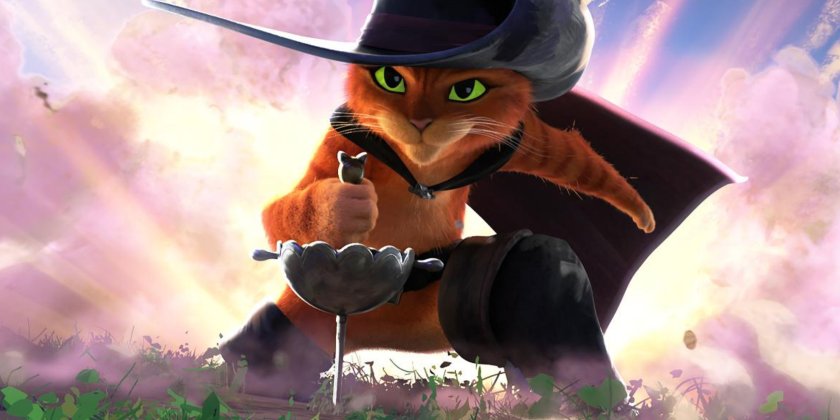
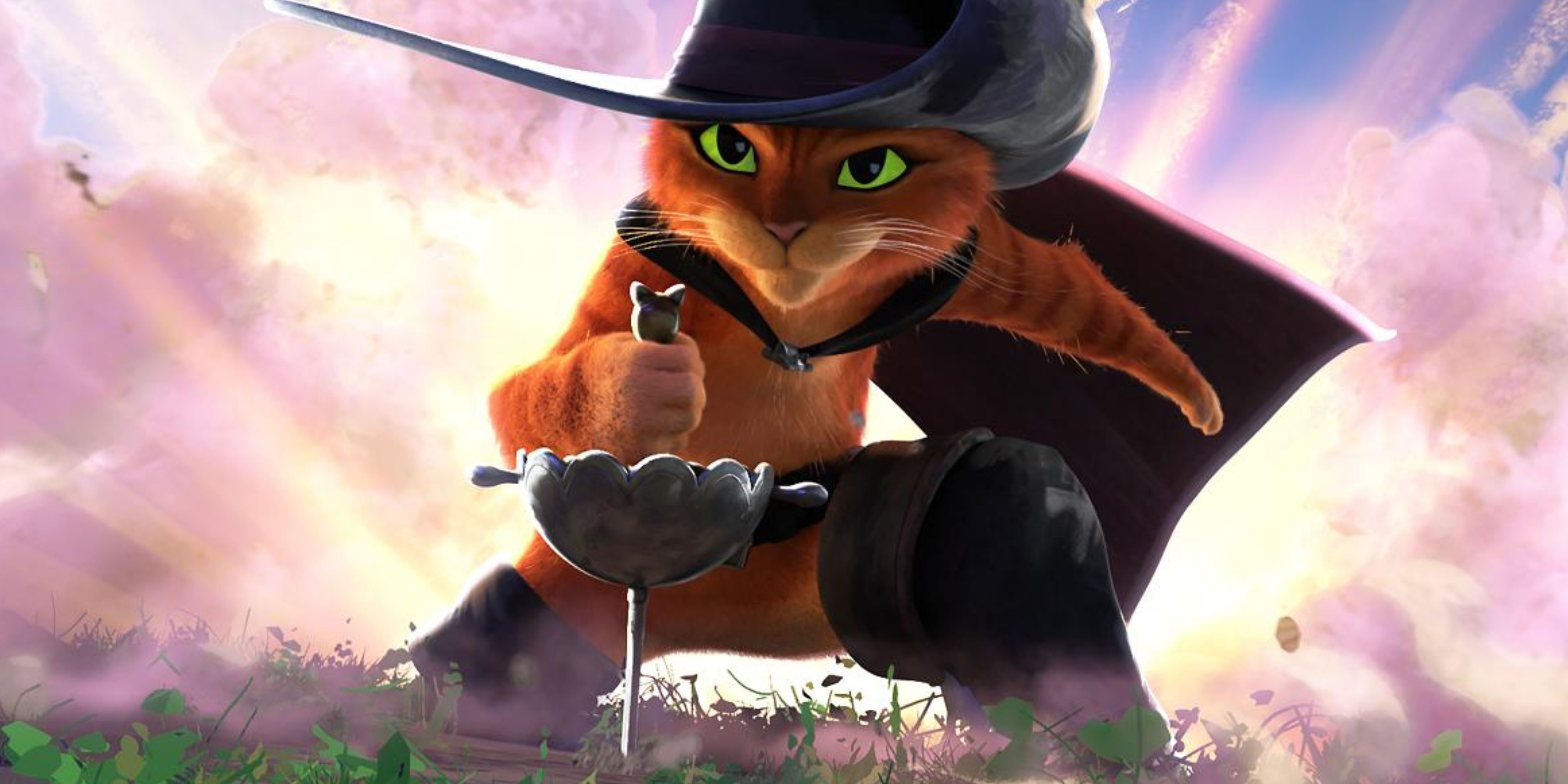
Review: With his signature boots, hat and sword, it is easy to see why the cunning (and cute when he wants to be) feline warrior known as Puss in Boots captured the attention of everyone when he first appeared in Shrek 2 back in 2004. While he cropped up again in later sequels, the first sequel featuring everyone’s grumpy but lovable ogre remained the jewel in the crown for the franchise based in a land far far away. While he later appeared in his own 2011 spin-off which came and went without seemingly too much fanfare, this sequel has come along to put the Shrek franchise back on the map with the best film in the franchise since the first Shrekquel.

Puss In Boots (Banderas) is living his best lives as a fearless warrior who craves adventure, which leads to an enthralling encounter between Puss and a gargantuan monster/mountain hybrid, all within the film’s opening first act. While he succeeds in his fight against the creature, it comes at a cost. Upon waking up, he finds out that he has used up eight of his nine lives and is urged to put his swashbuckling adventure days behind him for good. However, Puss learns of the existence of a magical wishing star which could replenish his lives, but Puss soon discovers he is being hunted by a terrifying hooded wolf (Moura), the physical manifestation of death itself, and must evade him at all costs before he has a chance to get his lives back.

In a franchise which at its peak was a clever and hilarious look at our perception of fairytales, Paul Fisher and Tommy Swerdlow’s screenplay leans into the fairytale world with the magical wishing star, as well as the use of some high profile characters from well-known fables as side characters, most notably Goldilocks (Pugh) and the Three Bears (Winstone, Colman and Kayo). However, it expertly combines this fairytale backdrop with a Western heavy vibe as Puss, a feline version of Clint Eastwood’s antihero from The Man With No Name trilogy in many respects, must battle an assortment of creatures big and small in his quest to avoid a permanent encounter with death. Banderas has always felt perfect for this role and he is once again perfect as there’s an array of emotions Puss goes through over the course of this enthralling adventure, which must see Puss reluctantly work with a past flame in Kitty Softpaws (Hayek Pinault), who is not happy with Puss, to say the least.

It makes for a fascinating dynamic between these two as they go on their adventure, aided by adorable therapy dog Perro (Guillen). Alongside them, Wagner Moura’s performance as the physical incarnation of death feels particularly chilling and foreboding. The best family movies are the ones which combine elements which will delight younger audiences while giving older members thought-provoking and mature themes. With its explorations of mortality, and the anxiety which can come along with that, it adds so much emotional weight to the story. Ever since the release of Spider-Man Into The Spider-Verse, the bar for producing ground-breaking animation has been raised massively. The combination of the fairytale setting, as well as the Western vibe, gives the animators the opportunity to tinker with varying styles of animation. Whether it’s the glint in a character’s eye, an exhilarating action scene, the visualisation of the titular wishing star or another form of magic artefact, the visuals remain dazzlingly impressive throughout.

It is a shame the Big Bad Wolf/Death’s appearances in the film are fleeting because he is such a commanding, ominous presence, it makes the film’s main villain Jack Horner (Mulaney) seem a bit superfluous in comparison. Horner is a bit one note in terms of him being just straight-up evil and cruel with barely any nuance to him, it makes you wish the film had used more of the former and less of the latter. Nevertheless, while many had assumed the Shrek franchise was consigned to the books where one would read about all those fairytales it parodied, Puss In Boots: The Last Wish serves as a reminder that, like its titular hero seeking to replenish his nine lives, there could be plenty more life, and magic, left in the franchise in a land not too far from Far Far Away.

Visually stunning, with a layered and emotionally resonant story at its core, this latest venture into the world of fairytales and talking animals with everyone’s favourite feline warrior will leave audiences purring with delight. 

Posted in 2020-2029, Film Review

Guardians of the Galaxy Vol. 3 (2023)

© Marvel Studios

Guardians of the Galaxy Vol. 3 – Film Review

Cast: Chris Pratt, Chris Pratt, Zoe Saldaña, Dave Bautista, Karen Gillan, Pom Klementieff, Vin Diesel, Bradley Cooper, Sean Gunn, Chukwudi Iwuji, Will Poulter, Elizabeth Debicki, Maria Bakalova, Sylvester Stallone

Director: James Gunn

Synopsis: The Guardians of the Galaxy are put in a perilous predicament when their base, and one of their own, comes under attack…

Review: It seemed unthinkable back in 2014 that a film based on a very obscure comic, which featured a sentient raccoon and a talking tree, could have been such a runaway success and brought a new dimension to the Marvel Cinematic Universe. Aided by a banging soundtrack, perfectly well-drawn characters who developed a strong sense of camaraderie, along with humour and heart, this is precisely what James Gunn brought to the table when the first Guardians of the Galaxy film blasted its way into cinemas. A sequel was inevitable, which had its moments but fell short of reaching the lofty heights set by its predecessor. Following on from their team-up with Earth’s mightiest heroes, a holiday special, and amid a rocky road to the big screen following the initial firing and subsequent rehiring of Gunn, everyone’s favourite team of rag-tag, lovable outlaws-turned-heroes is back for one last emotional adventure.

The Guardians, Star-Lord (Pratt), Drax (Bautista), Nebula (Gillan), Mantis (Klementieff), Rocket (Cooper) and Groot (Diesel),  have established their base on Knowhere and are enjoying a rare moment of peace after their years of saving the galaxy from an assortment of creatures, from a living planet to the Mad Titan Thanos. Star-Lord (Pratt), in particular, is still reeling from the loss of his lover Gamora after Thanos sacrificed her and is spending a lot of his time drowning his sorrows. Their brief respite from galaxy-saving is halted when their base comes under attack from a terrifying new threat, putting the lives of specific members in immediate peril. Forced to regroup and assess the new threat they face, the Guardians set out on a deeply personal quest (which sees them cross paths with alternate-timeline Gamora)  to find out who is targeting them and neutralise them before they bring about the end of the team as we know it.

Right from the moment we first met them as an out-of-sorts bunch of criminals who became the galaxy’s defenders, there has been an ever-present strong sense of camaraderie between this unlikely team of eccentric beings from all over the galaxy, a togetherness arguably stronger than any other team-up in the MCU to date. They were united by a common bond of being looked down on by the galaxy for one reason or another, which drew them closer together and made them a family, just not one related by blood. Having gone off to work with DC to give their equivalent to the Guardians some CPR, while his situation with Marvel was up in the air,  Gunn’s screenplay continues to build on the strength of the togetherness and bonds that this team have built over the years, especially for a mission where the stakes are just as high when compared to the previous two films, but for a very different reason this time around.  No spoilers to be found here, but while Vol. 2 explored Star Lord’s origins at length, this time around, as Gunn himself admitted, the key motivation for coming back to conclude the trilogy was to finish telling Rocket’s story.

The examination of this origin story, and the deeply personal nature of the ensuing mission make it the most personal film for the team, and by extension for Gunn himself. A recurring theme which has been recurring throughout the franchise is the idea that everyone deserves a second chance, and Gunn emphatically drives this point home here. There’s lots of emotion at stake here, not just for the Guardians who are fighting to save one of their own but are coming up against by far their most compelling antagonist yet in the High Evolutionary, portrayed terrifyingly by Chukwudi Iwuji. To say this guy has an ego (no, not that one) would be an extreme understatement. He is obsessed with creating essentially a utopia, to the extent that he will stop at nothing with experimentation, and Rocket is the key to all of his plans. The film goes into detail with the backstory of how Rocket came to be the lovable and awesome badass that he is, which isn’t afraid to explore some thought-provoking and heavy themes, and also really packs an emotional punch.  Every character gets their moment to shine, but make no mistake, this movie belongs to Rocket.

The film is a little rough around the edges in places and could have benefited from a little bit of fine-tuning to trim down its two-and-a-half-hour runtime. However, given the status of this concluding chapter was up in the air for so long and there were real question marks as to whether Gunn would get to close out this chapter, those can be forgiven, especially when the characters have established this deep bond, not only as a team but with the audience themselves. Gunn’s attention now turns to DC to oversee the revamp of its own cinematic universe, but this franchise has always been his baby. Therefore, after nine years since we first (fooled around) and fell in love with these characters, the impact they have had on the MCU is immeasurable, and it is immensely satisfying to see Gunn close this chapter of the galaxy’s favourite bunch of a-holes in mighty fine style.

Easily the most personal story in the trilogy, Vol. 3 combines the humour, action and establishes a deeply felt unity and togetherness like no other Marvel team-up.  A fittingly awesome and emotional send-off for the galaxy’s favourite collection of misfits-turned-heroes.

Posted in 2020-2029, Film Review

The Super Mario Bros. Movie (2023)

© Illumination, Universal and Nintendo

The Super Mario Bros. Movie – Film Review

Cast: Chris Pratt, Anya Taylor-Joy, Charlie Day, Jack Black, Keegan-Michael Key, Seth Rogen, Fred Armisen

Directors: Aaron Horvath and Michael Jelenic

Synopsis: After being transported to the Mushroom Kingdom, Mario must join forces with Princess Peach to stop Bowser from conquering the world…

Review: With his signature red cap, overalls and signature moustache, it is not an exaggeration to say that ever since he made his first appearance in a Donkey Kong arcade video game in 1981, the character of Mario has become one of, if not the, most famous video game character of all time. Given his enormous influence in video games, it is perhaps somewhat surprising that the legendary Italian plumber has crossed over to the cinematic realm only once. Then again, given how poorly received both critically and commercially the 1993 film was, it is little wonder Nintendo exhibited uncertainty before giving another cinematic adventure with Mario the green pipe, sorry, green light. Now, 30 years after that unmitigated disaster, Nintendo has teamed up with Illumination to bring us a new cinematic incarnation which certainly captures the essence of the games, but sadly falls short of landing the gold star it would have hoped for.

Mario (Pratt) and Luigi (Day) are brothers who have started a plumbing business in New York City. While out on a job, the duo stumble across a pipe which transports Mario to the Mushroom Kingdom and Luigi to a realm controlled by the evil Bowser (Black). Determined to rescue his brother, Mario must team up with Princess Peach (Taylor-Joy) to save him and stop Bowser’s plans from taking over the Mushroom Kingdom.  Such a plot feels ripped straight from a Mario game, and the film endeavours to feel as authentic to the games as possible, which will undoubtedly please long-time fans of the franchise. Yet, while striving for authenticity is to be commended, it also comes at a cost. Matthew Fogel’s screenplay opts for a simplistic approach of throwing as many recognisable elements from iconic Mario games of the past into the film, such as the racing, or Luigi’s Mansion, with seemingly little thought of a plot or a fully developed story. The use of these Easter Eggs will please long-time fans, but the world of Mario is so vast and rich, the opportunity was there to come up with a story which is not severely lacking and could not even be fixed with the help of a magic mushroom.

The subject of the voice casting was, to put it mildly, the topic of much discussion, with Chris Pratt’s casting as the voice of Mario being the decision which was by far and away the most debated. Pratt is an actor who has proven he has the potential to be a voice actor in comedies (The Lego Movie) and in more heartfelt emotional roles (Onward). The decision to have Mario and Luigi as brothers who hail from Brooklyn is a smart one and it makes for an easy adjustment for fans who might have been worried about Pratt attempting the familiar exaggerated Italian accent, though there is a fun little nod to that at the beginning of the film. The voice work across the board is functional towards the film’s paper-thin plot. Furthermore, since there’s barely a scintilla of character development in the majority of the characters, with the exceptions of Princess Peach and Bowser, it results in no emotional stakes in the ensuing adventure at all.  Peach’s character is often reduced to the role of a damsel-in-distress in the games, yet she is thankfully proactive and asserts her leadership over the Mushroom Kingdom, while Jack Black’s portrayal of the King of the Koopas injects some much-needed personality and humour into the film, but it all counts for very little.

The animation is impressive in its detail as it perfectly captures the look and feel of a typical Mario game. However, the bar for animated films continues to be raised by studios across the board in recent years, and consequently, in spite of its phenomenal success at the box office with its Despicable Me franchise, Illumination’s efforts still pale in comparison to the efforts of its rival studios. Given the immense popularity of these characters, which have stood the test of time over multiple decades, there was so much potential for a proper big-screen adaptation which would successfully introduce him to a new generation and satisfy the audience members who grew up with the video games. It certainly accomplishes the former, but really misses the mark with the latter. Mamma Mia, what a missed opportunity!

Impressively animated, but a paper-thin story and severely undeveloped characters ensure this latest adaptation of the Nintendo franchise is devoid of any emotional stakes which made the games so iconic.

Posted in 2020-2029, Film Review

Fall (2022)

© Lionsgate and Signature Entertainment

Fall – Film Review

Cast: Grace Caroline Currey, Virginia Gardner, Mason Gooding, Jeffrey Dean Morgan

Director: Scott Mann

Synopsis: Two friends find themselves stranded atop a 2,000ft tall radio tower…

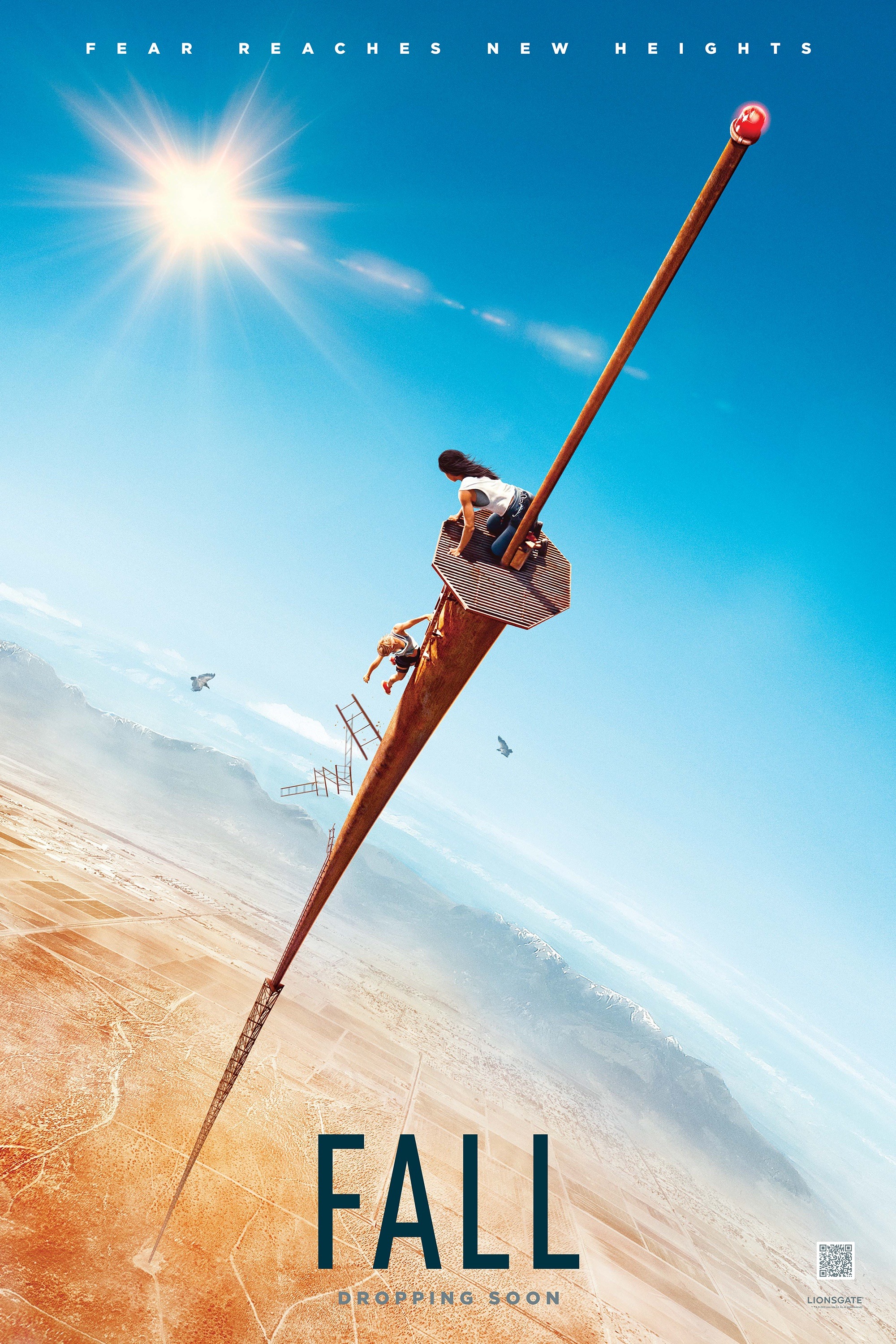
Review: As human beings going about our day-to-day lives, we are accustomed to having our feet on terra firma for most of the time. However, there are those daredevils out there who love to be adventurous/out of their minds (delete where appropriate), and climb exceedingly tall structures all in the name of thrill-seeking and adventure. Such individuals form the basis for this simple, but undeniably extremely tense and nerve-shredding thriller which is exhilarating and positively terrifying for those who are utterly terrified of heights.

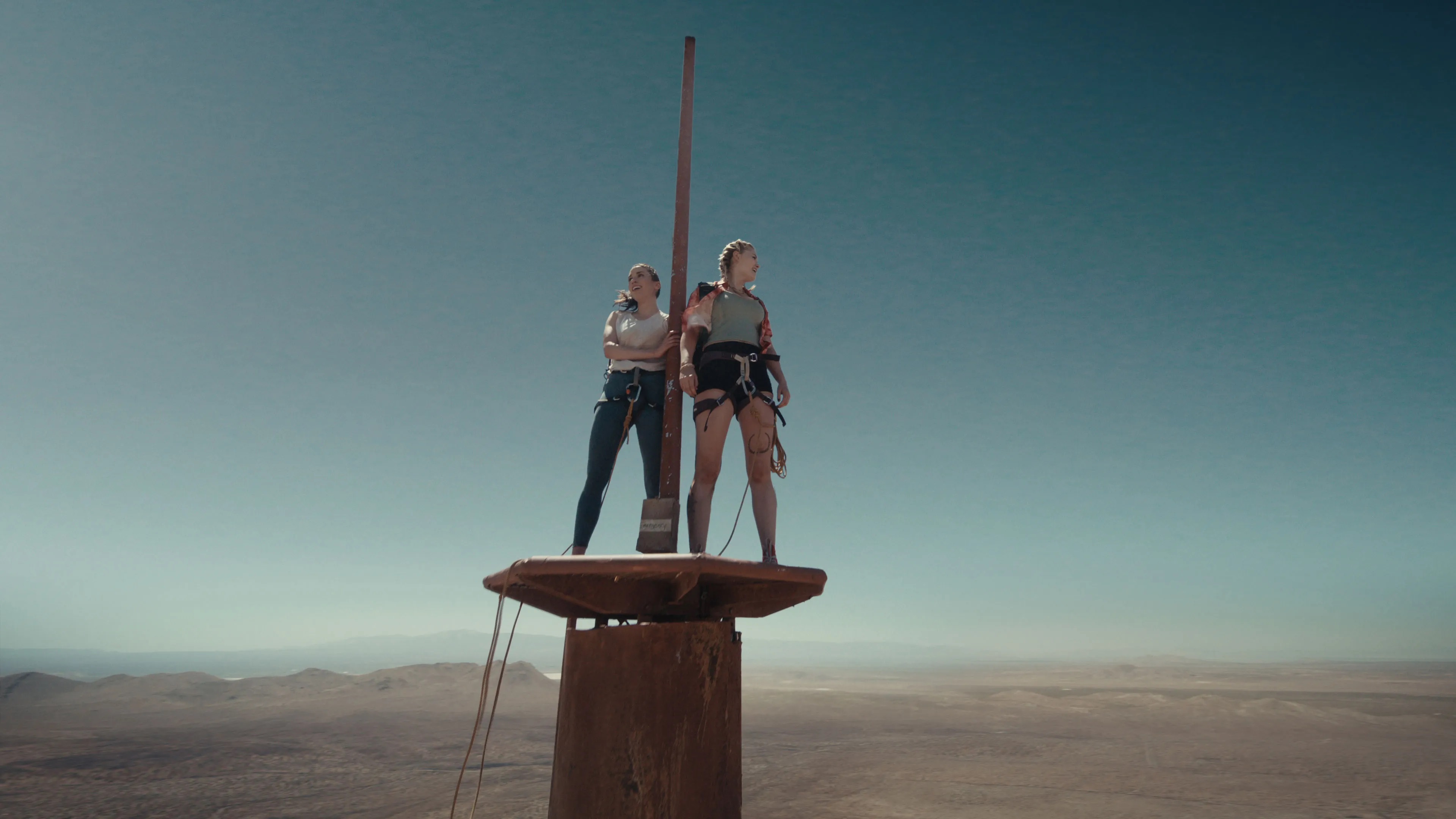
Becky (Currey) and Hunter (Gardner) are two best friends who love to go rock climbing. On one particular day, they are out climbing a mountain one day, with Becky’s husband Dan (Gooding), when tragedy strikes. Fast forward nearly a year, and Becky’s life has spiralled where she is in a deep depression and battling alcoholism. Upon encouragement from Hunter, the two of them set out to climb the 2,000 ft B67 TV tower in the middle of nowhere, so the two can rediscover their passion for adventure and enable Becky can finally move on from the tragic events one year prior. The adventure goes to plan when the two of them are, for a brief moment, on top of the world for a brief moment. However, as they begin to make their descent, disaster strikes as the ladder they used to climb up breaks apart, leaving them stranded atop the tower, with no way down and with very little in the way of supplies.

To put it into perspective, standing at 2,000ft, the B67 TV tower would be the fourth tallest building in the world behind only the Burj Khalifa in Dubai, the Merdeka 118 in Malaysia and the Shanghai Tower, which is all sorts of terrifying. While the actors were not actually at such extraordinarily unnerving heights, the decision by the filmmakers to shoot on a practical location in the California desert, and construct the upper part of the tower on top of a mountain, is extremely effective as it adds a great of authenticity to the suspense. Mann’s direction, with the vertiginous cinematography and a very effective score, all combine to sell the peril of their situation and are guaranteed to make anyone sweat profusely with anxiety as the horror of the situation unfolds as these two battle the elements, and more, in their bid to stay alive.

The script by Mann and Jonathan Frank wastes little time establishing the core events which prompt Becky and Hunter to make this perilous ascent up to the top of this abandoned TV tower. To make matters worse for them, the platform at the top of the tower is exceedingly narrow, giving Becky and Hunter little room for manoeuvre as they must find a way to ensure they avoid that terrifying 2,000 ft drop back down to earth and alert the authorities to their plight. While the script does veer a bit into the overly dramatic with some of the dialogue between the two of them, it serves to develop the relationship between them, and the performances of both Currey and Gardner remain strong as the desperation of their plight means drastic action may well have to be taken sooner or later.

The seemingly hopeless nature of these two poor souls’ plight enables Mann to keep the audience on their toes throughout the film’s 97-minute run time, while retaining the nail-biting tension. Yet by the time it reaches the culmination of the third act, the ending does feel a little bit rushed. However, it is a refreshingly original and extremely effective tale of survival in the most perilous circumstances. By the time the credits begin to roll, and your heart rate has returned to normal,  you may be eternally thankful you’ve got those two feet on the ground and will almost certainly have no plans to scale such heights now, or at any point in the future.

The premise is totally absurd, but due to extremely compelling film-making, Fall is an enthralling and simultaneously terrifying white-knuckle ride. 


Posted in 2020-2029, Film Review

Creed III (2023)

© MGM, United Artists Releasing and Warner Bros. Pictures

Creed III – Film Review

Cast: Michael B. Jordan, Tessa Thompson, Jonathan Majors, Mila Davis-Kent, Wood Harris, Florian Munteanu, Phylicia Rashad

Director: Michael B. Jordan

Synopsis: After a successful boxing career, Adonis Creed (Jordan) faces a new challenge when a former childhood friend and boxing prodigy (Majors) resurfaces…

Review: To follow in the footsteps of a cinematic icon like Rocky Balboa is far from an easy feat. Yet, with its superb blend of nostalgia, pulsating fight scenes and an unwavering determination for its lead character to honour the legacy of Apollo Creed, as well as forging his own, this is precisely what the spin-off to the Rocky franchise accomplished when its first film fought its way into cinemas to critical acclaim. With its sequel, it continued along this path by adding some deeply personal stakes for both its lead character and his coach. It might have seemed unthinkable the third film would not feature the iconic character of Rocky in any capacity. Yet even without the involvement of Sly Stallone, it has proved it has plenty of fight left in the tank.

Adonis Creed has spent years enjoying a successful boxing career. However, he has now reached a point where he has chosen to retire as a professional fighter and transfer to the role of a coach/promoter and the owner of a gym training the next generation of fighters. On top of this, Adonis also has family responsibilities parenting his daughter Amara (Davis-Kent) with his wife Bianca (Thompson). However, when a former childhood friend Damian Anderson (Majors) comes back into Adonis’s life after spending 18 years in prison, he wants his chance to become a professional fighter and make up for the time he lost while serving his sentence. Initially offering his former friend a chance to rehabilitate and train, Adonis is forced to confront his past relationship with Damian when it becomes clear Damian’s aspirations threaten to challenge the legacy Adonis worked so hard to build.

The script by Keenan Coogler and Zach Baylin, working from a story co-written with Ryan Coogler, continues to honour the theme beating at the heart of these films: legacy. The boxing aspect unquestionably plays a part in the films, but the emphasis is first and foremost on these characters and their relationships with those closest to them and the legacies they strive to build. For Adonis, he may have enjoyed a phenomenal career as a pro boxer, but the question about legacy becomes even more prescient since Adonis has hung up his gloves. With a daughter to now take care of, given the fierceness and brutality of the sport, the film explores what kind of effect will his boxing career have on her as she grows up and handles the challenges of life. A dilemma which causes tension between Adonis and Bianca. However, there are also some extremely heart-warming moments of the trio as a family, with Bianca also getting much more screen time as she is also having to balance her career and her parental responsibilities.

Yet, despite those heartwarming moments, the crunch of the film’s conflict lies in the relationship between Adonis and Damian. Through a flashback sequence, the relationship between the young Adonis and Damian is established and how events in the past have shaped the men they have become. Fast forward to the present day, and it is fair to say the relationship is complicated. There is initially respect between the two men, but it doesn’t take long for this respect to erode as Damian’s aspirations put him and Adonis on a direct collision course, which leads to an enthralling showdown. He’s certainly the man of the moment given his status as the MCU’s next big bad, and Jonathan Majors delivers a sensational performance as Damian effortlessly combing the intense physicality of the fight scenes with the more restrained emotional moments between these two friends-turned-rivals.

Taking the directorial gloves from Coogler and Steven Caple Jr in his directorial debut, Jordan follows in the footsteps of his predecessors as he puts his own stamp on the film’s fight scenes, proving his talent both in front of and behind the camera. Is there anything this man cannot do? He has made no secret of his love of anime and those influences come through in the fight scenes with intense close-ups of the fighters’ facial expressions, and slow motion before a significant blow is about to be landed. It is an effective combination and adds to the intense physicality of the fight scenes, which particularly comes through when viewed on the big screen. The Creed franchise had a lot to live up to, but through three excellent films which rarely put a foot wrong, it has honoured the legacy of the icon of Rocky Balboa and has given its star to launch himself as one of Hollywood’s newest and most exciting young directors.

Continuing to honour its central themes of family and defining your legacy, while getting another superb performance out of man-of-the-moment Jonathan Majors, ensures this threequel earns delivers the knockout blow and earns its title as a worthy successor to one of the greatest sports film franchises of all time.

Posted in 2020-2029, Film Review

Cocaine Bear (2023)

(C) Universal Studios, Lord Miller Productions and Brownstone Productions

Cocaine Bear – Film Review

Cast: Keri Russell, O’Shea Jackson Jr., Christian Convery, Alden Ehrenreich, Brooklynn Prince, Isiah Whitlock Jr., Margo Martindale, Ray Liotta, Matthew Rhys

Director: Elizabeth Banks

Synopsis: After a drug deal goes awry, a stash of cocaine is ingested by a black bear…

Review: There can be any number of factors when it comes to what could be used as a selling point for a particular film. Perhaps, it is the director, or it could be the lead actors, a particular genre, or the attachment of a particular studio. Yet, every once in a while, there comes a film where the appeal does not have anything to do with the talent in front of, or behind the camera. Instead, its unique selling point is based on a premise so absurd and ridiculously insane, and yet somehow is also in part a true story, it simply has to be seen to be believed. This is precisely the case for the latest film by Elizabeth Banks.

The year is 1985 and while attempting to carry out a drug deal, drug smuggler Andrew C. Thorton (Rhys) drops a stash of cocaine from a plane, which lands in the Chattahoochee National Forest in Georgia. It isn’t long before a considerable amount of the narcotics are promptly consumed by a large black bear, giving it a craving for the drug which threatens to be lethal for anyone who gets in its way. Local drug lord Syd White (Liotta) sends his fixer Daveed (Jackson Jr) and son Eddie (Ehrenreich) to retrieve the drugs before they can be found by law enforcement, who have sent Bob (Whitlock Jr) to retrieve the drugs and apprehend White. Also in the mix are Liz, a local park ranger (Martindale), Sari (Russell), her daughter Dee Dee (Prince) and her friend Henry (Convery) who skip school to head into the woods, which could be a recipe for disaster, particularly when there is a cocaine-fuelled bear is on the loose.

This animal can bearly believe these emotions she’s experiencing at this moment…

The truth of the event is upon ingesting the large stash of cocaine, the bear died at some point afterwards, which would not have nearly enough meat on its bones for a feature-length film. Hence, the script by Jimmy Warden uses the central premise of a bear fuelled by narcotics as a centrefold for this group of people who have to negotiate just a little bit more than a big surprise for their journey into the woods. The screenplay attempts to give these characters some backstory to make the audience care about them. In reality, while it does provide this for some characters, it is thin at best for others. The film is self-aware enough to know what the audience is really here for to see a massive apex predator, on some Class A drugs, going on a rampage. Hence, its main goal is to get this group of people into a situation where they are forced to confront an enormous black bear off its face on cocaine and have them fight to survive.

With the surface-level development of some of the characters does feel intentional to a point as this enables Warden and Banks to have some fun with the brutality because, as Leonardo DiCaprio in The Revenant found, a bear at the best of times is hazardous. Giving it a penchant for expensive narcotics is only going to make things worse, and the film gleefully utilises this by turning the dial up with the gory nature in which some of these characters are picked off. The film walks a fine line between comedy and horror as despite plenty of moments which can be horrifying to watch, it offers up plenty of humourous moments, particularly when the titular bear experiences a comedown after the drugs start to wear off.

The CGI for the titular bear does look a little iffy in places. In addition, despite clocking in at a mere 95 minutes, the film does not feel as brisk as it should, and there are a few moments towards the third act where the pacing is also feeling the aftereffects and experiencing a comedown after the first two acts provided such hilarious antics. However, despite these minor nitpicks, Cocaine Bear knows exactly what the audience wants to see and it does exactly what it says on the tin/package/container/duffel bag from which the drugs were stored to deliver a ridiculously entertaining time at the movies which will leave you feeling high (pun most certainly intended) by the time the credits begin to roll.

The plot is undoubtedly as thin as they come, and the character development is minimal but, it matters not. The filmmakers understood the assignment and Cocaine Bear delivers exactly what you’d expect from its hilariously absurd premise. 

Posted in 2020-2029, Film Review, London Film Festival 2022

The Whale (2022)

© A24 and Protozoa

The Whale  – Film Review

Cast: Brendan Fraser, Hong Chau, Sadie Sink, Samantha Morton, Ty Simpkins

Director:  Darren Aronofsky

Synopsis: A recluse English professor makes an attempt to reconnect with his estranged teenage daughter…

Review: Back in the early 90s and mid-2000s, there was an immensely popular actor who was beloved in Hollywood, particularly with his leading role in The Mummy franchise. He seemed like someone who would go on to enjoy a very prolific career in Hollywood. Unfortunately, a mixture of personal tragedies and a sexual assault accusation levelled against the then President of the Hollywood Foreign Press Association in 2018, led to him reportedly being blacklisted from Hollywood. Now, after many years from the limelight, Brendan Fraser is making his long overdue comeback in the most heartbreaking way possible.

Charlie (Fraser) is an English professor who, due to a deeply personal tragedy, has allowed himself to be stricken and overwhelmed by the grief which has driven the rest of his family away. Consequently, to help him cope with the emotional torment of his situation, he has eaten to such an extent he has since become obese. He holds his classes online, with his camera off to avoid being seen by his students, which enables him to remain in his flat all the time hidden away from the rest of the world. He recognises in his condition, he may not have much time left in his life and so when his estranged daughter Ellie (Sink) shows up unexpectedly one day, he makes an attempt to reestablish a relationship with her.

Based on the play of the same name by Samuel D. Hunter, there’s always a risk when a film is set in one singular location, it will find itself unable to escape the limitations of being confined to the same four walls and hold the audience’s attention. However, when you have actors putting in phenomenal performances, especially Fraser, the film can escape that confinement. Fraser’s performance is so powerful, with every word of dialogue, you can feel the raw pain and torment within him and how guilty he feels for driving his family away. Actors being buried under piles of make-up and or prosthetics can sometimes become a distraction where this becomes the singular focus and the performance is forgotten about, but this is emphatically not the case here. The process of grieving when we’ve lost someone we love affects everyone in different ways, but for Charlie, it has left such a devasting impact on him to the point where he has accepted his fate.

While Charlie is resigned to the inevitable, there are individuals in his life who do their utmost to convince him that life is worth living. The most prominent is Liz (Chau) who assists Charlie as a nurse with his medical needs and also serves as his main source of company. While she pleads, in vain, with Charlie to seek medical treatment, she remains unwavering in her commitment to care for Charlie despite her pleas falling on deaf ears. There is Charlie’s estranged daughter Ellie, who turns up on Charlie’s door out of the blue after a long time because she wants her father’s help with her studies. It is an extremely difficult role to pull off as she understandably harbours a lot of bitterness and resentment towards her father for the significant period he was absent from her life, but Sink rises to the challenge in magnificent style.

The decision to have the entire film in a 4:3 ratio is an inspired creative choice on the part of Aronofsky. as it encapsulates both Charlie’s confinement to the four walls of his flat and his refusal to venture outside of those walls. Characters in previous Aronofsky films have often found themselves either at their moment of triumph or in some cases at their utmost lowest ebb. Given the circumstances of its main character, The Whale is definitely the latter, but through the bleakness of which Charlie finds himself, come plenty of moments of touching humanity and emotional gravity. It will be a minor miracle if you’re not at least holding back the tears by the time the credits begin to roll.

A simplistic, scaled-back story of redemption told with compassion, elevated with an extremely powerful lead performance at its core. Welcome back Brendan Fraser, we have missed you.

Posted in 2020-2029, Film Review, London Film Festival 2022

Empire of Light (2022)

© Searchlight Pictures

Empire of Light  – Film Review

Cast: Olivia Colman, Micheal Ward, Monica Dolan, Tom Brooke, Tanya Moodie, Hannah Onslow, Crystal Clarke, Toby Jones, Colin Firth

Director:  Sam Mendes

Synopsis: On the south coast of England, a romance develops between two cinema employees…

Review: Where do you go after making what could feasibly be deemed your magnum opus? This would have been the question for Sam Mendes following the magnificent triumph of his captivating war film 1917.  It has been popular among big-time Hollywood directors to focus on films which illustrate the wonders of the big screen, understandable given the COVID-19 pandemic caused cinemas everywhere to remain dark for many months. Therefore, it seems a given a renowned director like Mendes would be able to bring something unique to this increasingly popular cinematic trend. Yet, despite some good intentions, Mendes’ follow-up to his World War I masterpiece is a crushing disappointment.

Set in the early 1980s on the South Coast of England, Hillary (Colman) is the manager of the Empire, a beautiful cinema in a prime location on the seafront. Despite being a consummate professional who is dedicated to doing her job to the best of her ability in spite of the presence of her rather unpleasant boss Mr Ellis (Firth), Hillary’s happiness is beginning to diminish as the job takes a toll on her mental health. However, with the arrival of Stephen (Ward), things initially start to seem a little brighter as the two of them develop a romance. However, it is a brief respite for Hillary as her mental health worsens, especially with the country sliding into recession, putting the cinema at risk, and the foul stench of racism clogging the seaside air.

The film marks Mendes’ first solo attempt at writing a screenplay and it is telling his efforts completely crumble under the enormous weight of the story it is trying to convey. It is all well and good to tackle important social issues such as the stigma which still surrounds mental health and the poisonous presence of racism in society. Yet, it is all rendered utterly meaningless as the attempts to tackle these issues are so hamfisted and underdeveloped, that the film feels completely unsure of what it really wants to say. In doing so, it doesn’t add anything meaningful to the issues it is trying to address, even more so considering the film is also attempting to portray a love story between two cinema employees, while also coming across as a moving ode to the magic of the big screen, the latter of which seems to be tacked on as a mere afterthought. There are simply too many different subplots happening at one time and it ultimately proves too much for Mendes to weave these together all by himself.

Since winning her first Oscar in 2019, Olivia Colman has quickly become something of an industry favourite among industry and audiences alike, given she has added two further nominations in the last two years. While both Colman and Michael Ward admirably try their hardest to elevate the poor and underdeveloped material they have both been given to work with, it proves to be too difficult a challenge for both of them to overcome. Their romance is by far and away the most developed part of the film, but even then it is not nearly given the attention it needs to flourish due to the numerous ongoing themes the film tries to explore. Furthermore, there is simply not enough chemistry between the two of them which makes it difficult to care about their romance. One of the film’s few bright sparks is the ever-reliable Toby Jones as Norman, the cinema’s resident projectionist.

Frequent Mendes collaborator Roger Deakins’s cinematography is immaculate, and Trent Reznor and Atticus Ross do not disappoint with their score. It is therefore such a shame their fine work ultimately goes to waste on a film which should have been a sure bet in such capable hands. Yet, rather than recapture the feelings of joy and wonder which often come from seeing films on the big screen in a packed auditorium, this is completely devoid of any charisma and charm, leaving nothing but an empty feeling inside. There will undoubtedly be many more films released in the coming years serving as a reminder of the power this medium can have on audiences, but this one misses the mark entirely.

Despite the best efforts of the cast and a very capable director, Empire of Light completely fails to dazzle due to its unfocused script, combining poorly developed social commentary with a half-hearted tribute to the beauty of cinema.


Posted in 2020-2029, Film Review

The Woman King (2022)

© Sony Pictures Releasing, TriStar Pictures, eOne and TSG Entertainment

The Woman King – Film Review

Cast: Viola Davis, Thuso Mbedu, Lashana Lynch, Sheila Atim, John Boyega

Director:  Gina Prince-Bythewood

Synopsis: A group of all-female warriors in a West African kingdom seek to protect and defend their lands from enemy outsiders…

Review:  The subject of history is an endlessly fascinating one as it enables us to revisit specific periods of the past and learn about a plethora of different cultures and civilisations that have existed throughout the centuries human life has existed on this planet. Indeed, one of the many wondrous aspects of films is they can shine a spotlight on these civilisations and bring them to life in such a rich, beautiful and meaningful manner. While some societies have been covered more than others, there are others who have not been talked about as much as they should be. This is precisely what this enthralling historical epic from Gina Prince-Bythewood does, by shining a light on an incredibly fierce troop of all-female warriors, the Agojie.

Set in the Kingdom of Dahomey, West Africa, General Nanisca (Davis) is the commander of the Agojie, an all-female elite troop of warriors who are sworn to protect the Kingdom from enemy forces that wish to conquer them, most notably the Oyo Empire. Nanisca is seeking capable warriors from the next generation to join this prestigious arm and to prepare their people for the defence of their homeland. Seeking to prove herself worthy to be a part of this elite group of warriors is Nawi (Mbedu) who is determined to prove herself after being shunned by her family for refusing to be married off to suitors chosen by her father. Her ambition and relentless determination capture Nanisca’s and, and Igozie’s (Lynch) attention, the latter of whom resolves to provide Nawi with the tutelage she will need to succeed in her aim to become part of the Agojie and successfully defend their land.

Having a historical epic like this being led by a predominantly black, female cast is a hugely significant moment for these types of big-budget blockbusters, the importance of representation and giving a platform for filmmakers to tell stories from the perspective of these civilisations cannot be overstated. The screenplay from Dana Stevens tackles first and foremost, female empowerment and the sheer intensity and skill of the Agojie on the battlefield. However, it also drives the significance of home, a family and a vibrant community which would enable a new recruit to rise through the ranks and take her place as part of the Agojie, who served as the inspiration for the Dora Milaje from Black Panther. In addition, the film crucially does not shy away from the part the Dahomey Kingdom had in the slave trade.

To be the leader of the kingdom’s all-powerful group of female warriors, you need an actor who brings a commanding screen presence every time she steps in front of a camera. Someone who has the aura of someone you would dare not cross or talk back to, and Viola Davis brings both those qualities in abundance. Nanisca is the exact sort of leader you want to have on the front line of the battlefield. However, there is far more to Nanisca’s character than being the commander of the Kingsguard, there’s a very personal element to her story which comes to the fore when she meets Nawi. To be tasked to act alongside a legend of the industry like Davis is far from an easy feat. However, Mbedu rises to the challenge in spectacular fashion, a feat all the more impressive considering this is her feature film debut. Lashana Lynch’s career is going from strength to strength and she gives perhaps the performance of her career thus far, being the warrior to take Nawi under her wing and offer invaluable advice, while John Boyega is the perfect combination of gravitas and a surprising amount of humour with his role as King Ghezo.

Through all of the moving exploration of the community of the Agojie and the powerful bond between all of these amazing and brave warriors, under Prince-Bythewood’s soaring direction, the battle scenes are immaculately helmed and enthralling to watch. There is one minor side plot with a romance between Nawi and a man who is travelling with a group of slave traders which is not properly developed and could have easily been cut out from the final cut, but it is not enough to drag the film down. Historical epics have rarely been told from the perspectives of black women, and showcasing these extraordinary warriors deserves to be celebrated and championed.

Through its extraordinary ensemble cast, led by Viola Davis, The Woman King delivers emotionally resonant themes of female empowerment combined with enthralling action scenes that will have you bowing down in awe.


Posted in 2020-2029, Film Review

Avatar: The Way of Water (2022)

© 20th Century Studios, TSG Entertainment and Lightstorm Entertainment

Avatar: The Way of Water – Film Review

Cast: Sam Worthington, Zoe Saldana, Sigourney Weaver, Stephen Lang, Kate Winslet, Cliff Curtis, CCH Pounder, Jamie Flatters, Britain Dalton, Trinity Jo-Li Bliss and Jack Champion

Director:  James Cameron

Synopsis: After several years of peace, Jake Sully must do all he can when his adopted planet of Pandora comes under attack from a familiar foe…

Review: From an 80-page script drafted in 1994, to spending years crafting a constructed language and working with designers to design the world which came to be the planet of Pandora, James Cameron’s Avatar was a project long in the making. When it was finally released to the world in 2009, it became an instant cultural phenomenon, smashing box office records here, there and everywhere on its way to becoming the highest-grossing film of all time, a record it temporarily lost, but has since reclaimed after a brief tussle with the MCU. Such an accomplishment meant a sequel was inevitable, but as was the case with its predecessor, the sequel’s journey to the big screen has been beset with delays. Now, after a 13-year wait, it is finally time for audiences to return to Pandora, but was it worth the wait?

At least a decade has passed since the first film’s events, Jake (Worthington), having been permanently transferred into his Na’vi form, has started a family with Neytiri (Saldana), living peacefully, raising their four children: Neteyam, Kiri, Lo’ak and Tukitrey. However, their peace is interrupted as the Sky People have returned, still desperate to utilise Pandora’s resources to save Earth. However, the mission has some added personal stakes for the humans as they are also out for revenge against Jake after he led the Na’vi to victory against them. Left with no choice, Jake and Neytiri are forced to relocate to take their family to a new region of Pandora, where they meet another Na’vi clan who, unlike the Omticaya, make their homes and livelihoods in the waters of Pandora.

When Avatar first came out, the one thing no one could deny was its utterly breathtaking visual effects, combined with the pioneering motion capture technology. Combined together, these incredible feats of filmmaking brought the beauty of Pandora, its majesty, the Na’vi and the incredible array of characters which call this world home to life in a manner so vivid and fully realised, it could (almost) convince you that Pandora is a planet which exists somewhere in the vast array of the universe.  Yet, having played his card of wowing audiences with astounding immersive visuals once, surely Cameron and his team of visual effects artists could not outdo themselves to create even more impressive visual effects this time around?

Srane (Na’vi for yes), srane they can! By taking this sequel to a whole new section of Pandora, it gives them what is essentially a whole new world to play in and the cast and crew dive (pun definitely intended) straight into the opportunity. The world of performance capture has come a long way since Avatar was released, but Cameron once again goes one better by pioneering incredible technology with visual effects company Weta, enabling the cast and crew to utilise motion capture technology while actually filming scenes underwater. These scenes illustrate the incredible power of this technology and are so stunning and mesmerising to look at, illustrating that there aren’t many better companies than Weta when it comes to crafting stunning visual effects. No words in the English (or Na’vi) language can do justice to how immaculate these visuals look on screen, and they deserve to be seen on the biggest screen you can find in order to appreciate them in all of their stunning glory. They might as well start engraving the names of the artists on the respective visual effects awards trophies now.

While the film’s visuals certainly leap off the screen, they cannot do all the heavy lifting and there’s still a need for the cast to deliver the performances required to drive the narrative forward.  The screenplay by Cameron, Rick Jaffa and Amanda Silver, by expanding our horizons of what we know of Pandora, proved to be a smart decision, not just for the technology but for the story too. It puts the characters in a difficult position where they must learn to adapt to how this water-based Na’vi clan live their lives, which is especially hard for Jake and Neytiri’s children, as their lives in the forest are all they have ever known. It is through their eyes that we see this acclimatisation to the new clan and their ways unfold. Each of these young actors’ performances (Jamie Flatters, Britain Dalton and Trinity Jo-Li Bliss) shines through motion capture technology.

However, the biggest revelation here is the portrayal of Kiri by frequent Cameron collaborator Sigourney Weaver as Kiri. It might have seemed an odd choice to have the legendary actor play a 14-year-old Na’vi child, but through the magic of seemingly Eywa herself, it works wonders. Also returning from the first film (in a slightly different role) is Stephen Lang’s villainous Quaritch, now taking the form of the Na’vi to utilise their speed and strength as a weapon against them as he leads the charge for the humans in seeking revenge against Jake.

While the change in location serves the story up to a point, with the film coming in with a run time of 192 minutes, it struggles to justify such a lengthy run time with an imperfect second act. Furthermore, by putting the focus to such an extent on the young Na’vi children, certain important characters are relegated to bit-part roles. There is undoubtedly a familiarity in terms of the narrative, but when it is time for the Na’vi and the humans to clash once more, it remains utterly compelling and reinforces Cameron’s credentials as a master of crafting action. It might have taken a bit longer to return to Pandora than he would have liked. Still, when you have a director like Cameron in his element, pioneering ground-breaking performance capture and visual effects,  all in the name of our entertainment, you just have to take your hat off to him and say, irayo (thank you).

While it can feel a bit repetitive in terms of its story, the long-awaited return to Pandora goes to extraordinary depths with stunningly immersive visuals which surpass its predecessor, reinforcing Cameron’s reputation as a master blockbuster filmmaker.