Posted in 2020-2029, Film Review

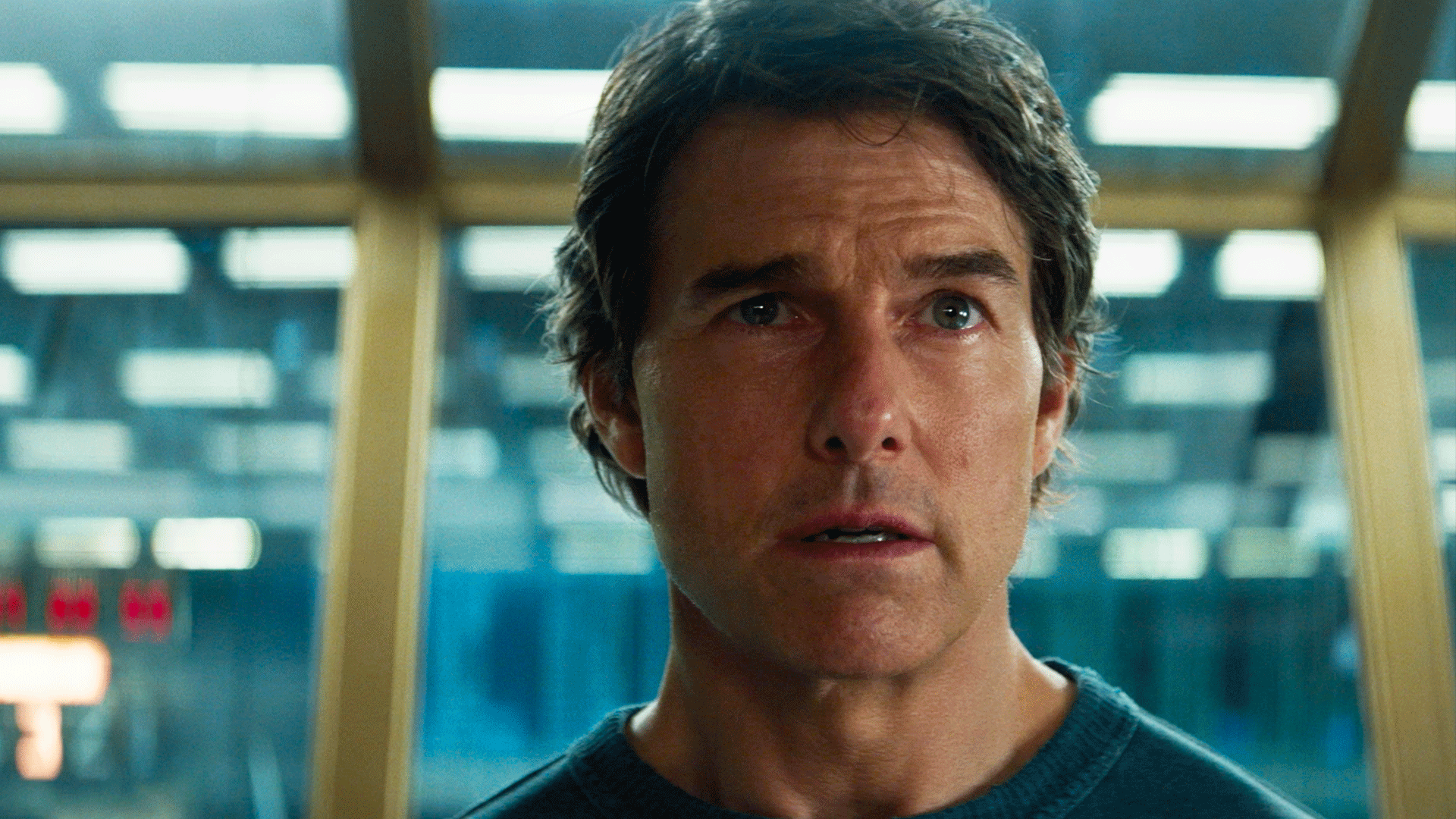
Mission: Impossible – The Final Reckoning (2025)

© Paramount Pictures, Skydance Media and TC Productions

Mission: Impossible – The Final Reckoning  – Film Review

Cast: Tom Cruise, Hayley Atwell, Ving Rhames, Simon Pegg, Esai Morales, Pom Klementieff, Shea Wigham, Greg Tarzan Davis, Henry Czerny, Angela Bassett, Hannah Waddingham, Tramell Tillman

Director: Christopher McQuarrie

Synopsis: Two months after the events of Dead Reckoning, the IMF continue their mission to prevent the AI known as The Entity from unleashing global chaos…

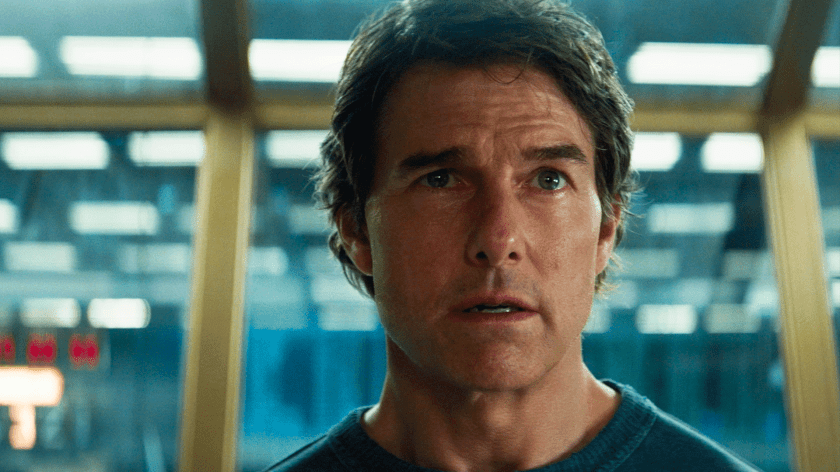
Review: “Your mission, should you choose to accept it.” Ever since this iconic line was first uttered in the original Mission: Impossible film in 1996, it has been quite an incredible journey over the past three decades. Eight globe-trotting missions, some truly death-defying and insane stunts, and over $4bn at the worldwide box office— all largely due to the extraordinary tenacity and commitment of the man who has been at the heart of it all from the very beginning: the one and only Tom Cruise. He is someone who has always worked his hardest and has never stopped running (literally), in his bid to entertain the audiences. However, there eventually comes a point where the time is right to close the curtain on a franchise. Now, after the events that were set in motion by Dead Reckoning, Ethan Hunt and the Impossible Mission Force take their (supposed) final bow.

It has been two months since the IMF became aware of the existence of the sentient and nefarious AI known as the Entity, which has since made itself known to the world, causing complete and total havoc for governments across the world by taking control of the nuclear arsenals of some of the most powerful nations. With time running out before the AI causes a devastating global catastrophe, the IMF learn of the existence of a software that could neutralise the Entity. With the fate of the world as we know it at stake, as Ethan himself tells the President of the United States, Erika Sloane (Bassett), “I need you to trust me, one last time”. With the stakes somehow higher than ever before, Ethan and his crew embark on a mission to prevent the villainous Gabriel (Morales) from getting his hands on the AI.

There comes a point, even when you have had a great a run as Mission has, that the time will eventually come for the franchise to take its final bow, one last mission to accept if you will. Ever since taking the reins with Rogue Nation, Christopher McQuarrie and the age-defying star that is Tom Cruise have crafted some of the best action cinema, with the latter’s commitment to putting Ethan in perilous predicaments to deliver spectacle on a truly epic scale. Unfortunately, McQuarrie and Erik Jendresen’s script is bogged down by a bloated and extremely slow first act that delivers a mountain of exposition and is on its own mission to recap every film that has led to this mission. It comes across as completely redundant, given that the audience will have more than likely been with Ethan since he first accepted his mission back in 1996, and it puts an unnecessary drag on the film’s nearly three-hour runtime.

Furthermore, in the same vein as its predecessor, it is evident that McQuarrie and Cruise were so laser-focused on the stunts and how they would be accomplished that the script was relegated to the realm of an afterthought, serving merely as a vehicle for some jaw-dropping stunts. In doing so, it gives long-time Mission stalwarts, such as Simon Pegg’s Benji and especially Ving Rhames’ Luther with not a great deal to do beyond their usual supporting roles as long-time friends of Ethan. They frankly deserved far better, given how they have been key members of the team for so long. Furthermore, even the newer members of the team, such as Hayley Atwell’s Grace and Pom Klementieff’s Paris, are also underutilised, all the more disappointing given their memorable introductions in Dead Reckoning. Given the increasing capabilities that humanity has been seeing with the rise of artificial intelligence, there is a point to be made about how this technology may one day bring the world to its knees and cause unprecedented havoc. That being said, if you break it down for even a minute, the plot is so ridiculous that it doesn’t make one iota of sense, and Gabriel does not leave a lasting impression as the antagonist.

What does not disappoint is Tom Cruise, because when does he ever let us down? When you consider the truly staggering stunts he has managed to accomplish over the years, from climbing the world’s tallest building, to hanging off an aeroplane mid-flight and riding a motorcycle and parachuting off a cliff? Surely, he can’t pull off anything more jaw-dropping than that? Well, leave it to him to continue to find new ways to make it his mission to laugh in the face of death with two truly set pieces, with one involving a deep-sea dive that might make people discover a fear of deep water, or thalassophobia. From one end of the spectrum in the deep depths of the ocean to the skies above us, as his other mind-boggling stunt is another stunt involving biplanes, with Hunt literally hanging off them and a terrifying drop back to earth. It will set your heart rate soaring, and your palms will sweat profusely. It truly has to be seen to be believed.
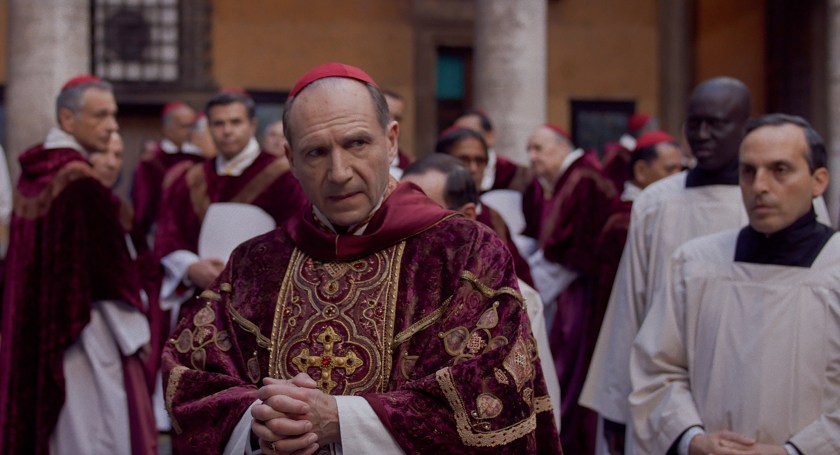
Since the first fuse was lit all those years ago, it has been a wild and exhilarating ride across those nearly three decades. Eight missions, and some truly nail-biting and tense action set-pieces. The impact that Cruise has had on cinema as a whole is immeasurable, and we can be immensely grateful for everything he has put into this series. Time will tell if indeed this is the final mission Ethan Hunt and the IMF will accept, but if it is, it is not the explosive bang it would have hoped for.

A confoundingly dull first act of flashbacks threatens to derail the mission before it really gets going. However, once the film moves past this point, it hits top running speed and never looks back.

Posted in 2020-2029, Film Review

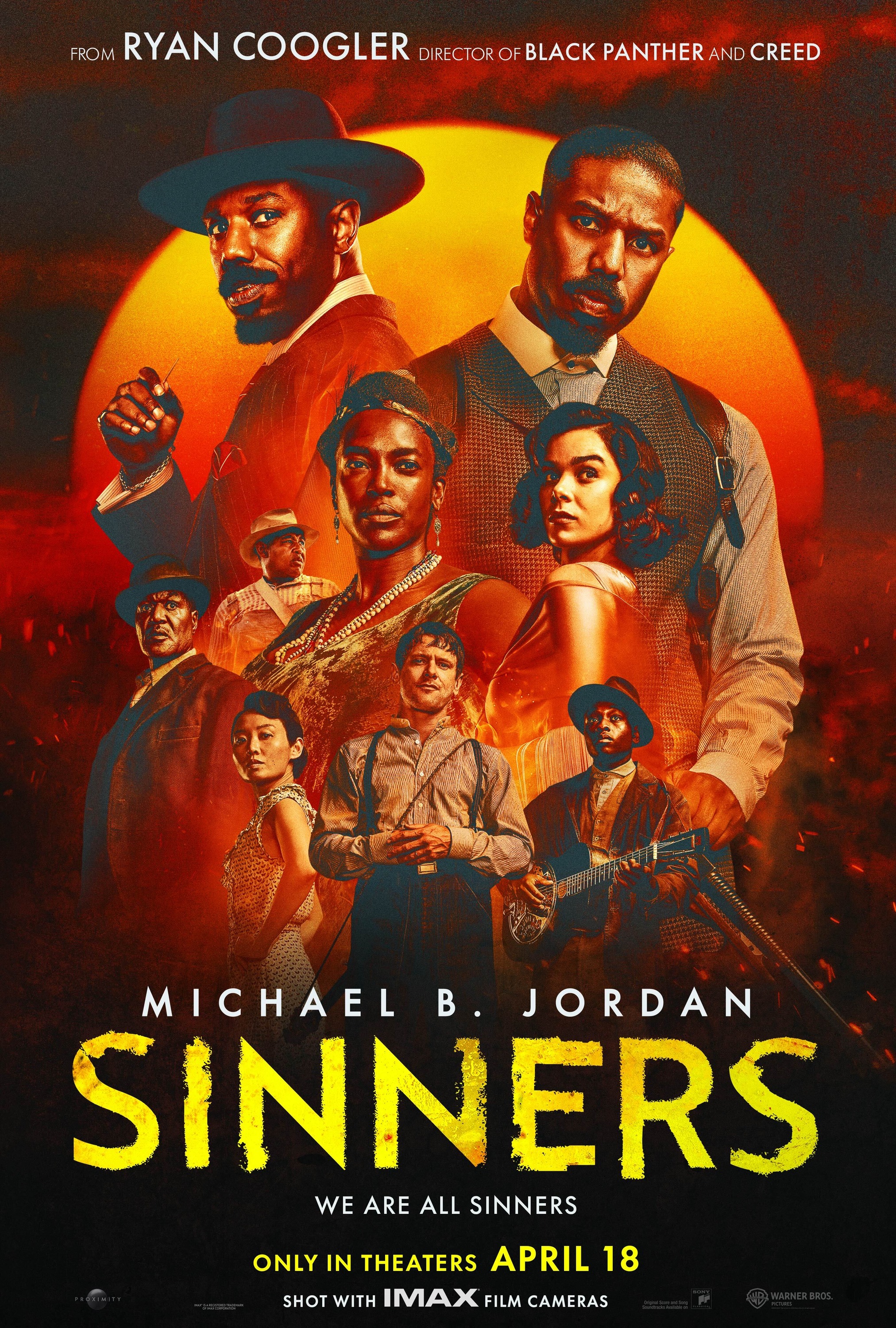
Sinners (2025)

© Warner Bros Pictures and Proximity Media

Sinners – Film Review

Cast: Michael B. Jordan, Hailee Steinfeld, Miles Caton, Jack O’Connell, Wunmi Mosaku, Jayme Lawson, Omar Benson Miller, Li Jun Li, Delroy Lindo

Director: Ryan Coogler

Synopsis:  Looking to leave their troubled lives behind them, twin brothers look to start a news business in their hometown. However, they soon discover that a sinister presence is waiting to welcome them back…

Review: Ever since Ryan Coogler made his directorial debut with the harrowing Fruitvale Station, his career has only gone from strength to strength. A fantastic re-invention of the Rocky franchise and leaving his mark on not one, but two Marvel Cinematic Universe films. The first of which became the first MCU film to win Academy Awards, and the latter was made in the most unimaginably difficult circumstances following the tragic passing of Chadwick Boseman. Throughout Coogler’s journey to becoming a household name, Michael B. Jordan has been with him every step of the way. Their fifth collaboration takes them both into uncharted territory, a pulsating edge-of-your-seat descent into the supernatural world of horror.

Deep in the Jim Crow south of the United States, twin brothers Smoke and Stack (Jordan) have returned home to their home town of Mississippi after working as prohibition gangsters in Chicago for a certain Al Capone. Upon their return, they set about acquiring a property and turning it into a juke joint, while simultaneously seeking to drum up interest among the town’s residents ahead of the opening night. With the opening night in full swing, the drinks flowing and the blues music ringing out, it soon becomes clear that there is an ominous and foreboding presence terrorising certain members of the community. Over the course of one night, what started as a party becomes a desperate and bloody fight for survival against this menacing threat.

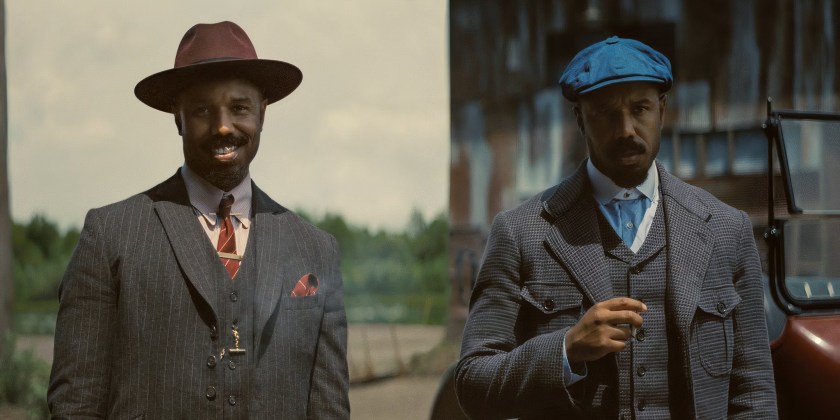
Double Michael B. Jordan trouble…

Now, depending on what marketing material you might have seen, you may or may not be aware of the exact nature of this supernatural threat. So, for the benefit of those who may not know, the nature of the evil threat at the centre of this shall remain a mystery. He may have worked within the confines of the well-oiled MCU machine for his last two films, but there was never any doubt that Coogler stamped his authority over those two films with deeply personal and powerful themes that resonated with audiences worldwide. A delve into the world of the supernatural, and this mysterious presence that is terrorising this town, is also very well-trodden. However, an effective combination of richly developed characters, some truly soulful blues music and an impeccably well-shot and designed film that hooks its teeth into you from the outset and never lets up. Coogler’s screenplay is patient, bides its time to build up these characters, establish the key relationships, and what makes each character tick. You come for the supernatural element, but Coogler once again brings layers and richly explored themes to his story, ahead of a very tense and enthralling showdown at the brothers’ juke joint, where the blood flows in plentiful supply.

Through his collaborative partnership with Coogler, Jordan has portrayed characters ranging from the tragic to the motivated to one of the MCU’s most fleshed-out and ruthless villains. In a year where we have already seen an actor play two different roles, or another actor playing cloned versions of himself, Jordan takes the crown for the most effective use of one actor to play numerous characters. The differences are subtle, with Smoke being more refined and calmer than the brash Stack, yet both retain an intimidating presence. Cross them at your peril. The rest of the ensemble are all sublime in their roles too, from Stack’s ex-girlfriend Mary (Steinfeld), Smoke’s former lover Annie (Wunsu) with whom he shares a painful and tragic past, and Delta Slim (Lindo) a musician with a penchant for drinking who brings a surprising amount of humour.


However, aside from the twins, the centrepiece of this riveting story is Miles Caton’s Sammie Moore, a local preacher’s son, and the twins’ cousin. A fantastically gifted musician and singer, though his father warns him about the temptation of playing music is akin to “dancing with the devil”, with the power to conjure spirits. Sure enough, such is Sammie’s power and fantastic talent, the presence lures the evil presence to the party, led by the sinister Remick (O’Connell). Yet, Sammie remains undeterred and lets his passion for the music shine through in his performances of several songs before the epic showdown at the brothers’ juke joint. It is an incredibly confident and assured performance, all the more impressive considering it marks his acting debut. You would be wise to remember the name.

It would be easy for Coogler to establish this as a supernatural battle of good vs evil, but weaving the music and the celebration of the impact that music had on the culture of the time is a critical aspect of the story that unfolds across the 147-minute runtime. Aside from Caton’s incredible vocal performances, regular Coogler collaborator Ludwig Göransson once again delivers a vibrant and memorable score heavily inspired by the Blues music of the period and his personal connection to the genre, in the shape of his blues guitarist father. The production design by Hannah Bleachler and Ruth E. Carter’s costumes expertly transports us to the time period, captured in all their glory by Autumn Durald Arkapaw’s fantastic cinematography, which demands to be seen in IMAX.

At a time when Hollywood is grappling with several threats, not least of which being the risk to originality and creativity, Sinners is a reminder of the kind of brilliance that can be brought to the table when singular filmmakers like Coogler are given the full backing to realise their vision. When the results are this spectacular and a complete feast for the eyes and the soul, it is enough to convince you to go dancing with the devil every day of the week.

An exhilarating and blood-spattered supernatural descent into horror that ups the stakes with thematic examination of US history, soulfully stirring music and a cast firing on all cylinders. Ryan Coogler has firmly established himself as a true modern visionary director.

Posted in 2020-2029, Film Review

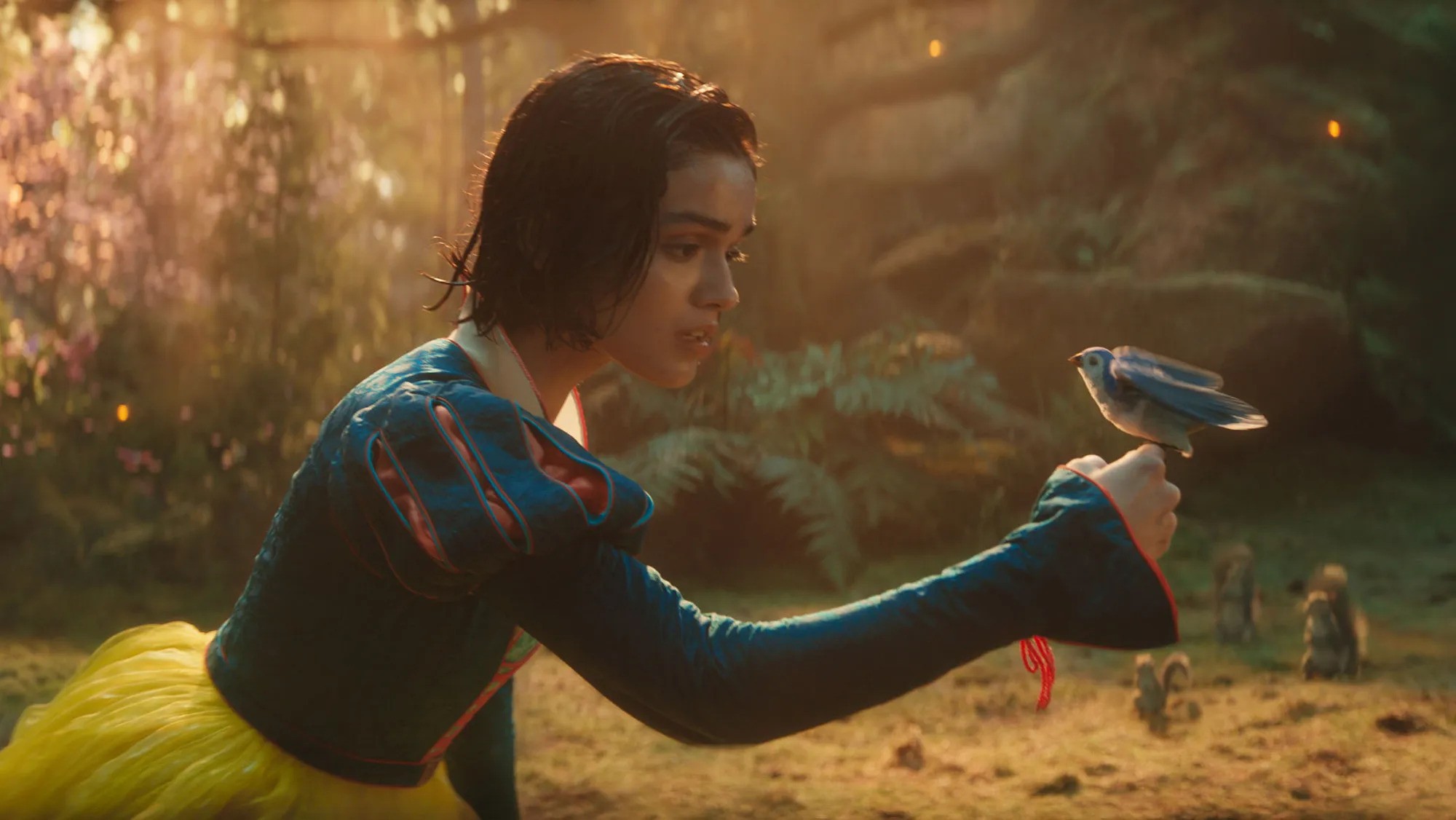
Snow White (2025)

© Walt Disney Studios Motion Pictures

Snow White (2025) – Film Review

Cast: Rachel Zegler, Gal Gadot, Andrew Burnap, Ansu Kabia, Patrick Page, Andrew Barth Feldman, Tituss Burgess, Martin Klebba, Jason Kravits, George Salazar, Jeremy Swift,  Andy Grotelueschen

Director: Marc Webb

Synopsis: After her evil stepmother usurps the throne, a young princess must join forces with seven dwarves to save her people…

Review: Heigh-ho, heigh-ho, it’s off to work Disney goes as the House of Mouse continues to beaver away in its mission to remake all its animated classics. While some live-action remakes have breathed new life into the classic stories on which they are based, others have felt like soulless cash grabs with no reason to justify their existence other than to use audiences’ nostalgia to print money. It was therefore only a matter of time before attention was turned towards remaking the first animated film Disney ever made, the first animated film to be produced in the United States and one of the most influential animated films of all time, Snow White and the Seven Dwarfs.

In the same vein as the previous reinterpretations, the story’s core remains the same as its animated predecessor. During a fierce snowstorm, the king and queen of a benevolent kingdom welcome their daughter – Snow White – into the world. Her name is in honour of the wintry weather during the night she was born. After the tragic death of her mother, her father remarries another woman and quickly rushes off to see to an urgent matter he never returns from. The new Queen seizes the throne for herself, and her vanity causes the lives of her citizens to quickly take a turn for the worse, while Snow White is forced to become a servant. After being told that Snow White is the fairest of them all, the Queen furiously orders her huntsman to kill Snow White, causing her to flee the kingdom, where she runs into the forest and meets and befriends the seven dwarves.

Magic mirror on the wall, does this latest live-action remake bring anything new or noteworthy to the table at all? It is slim pickings, however despite all the absurd, and let’s be honest racist and sexist backlash that has come her way ever since she was cast, Zegler delivers a beautiful portrayal of the titular princess. She is given more agency and independence and is not simply reduced to waiting for her Prince Charming to swoop in and save her. Like her animated counterpart, she possesses a kind heart and compassion for the kingdom’s other citizens, which is timely and pertinent given the poisonous hate dominating too much of modern discourse. As well as new iterations of “Whistle While You Work” and “Heigh-Ho”, it also includes new songs to further emphasise Snow White’s independence including “Waiting on a Wish” penned by Oscar-winning songwriters Benj Pasek and Justin Paul, which gives Zegler a chance to show her incredible singing ability.

However, despite Zegler giving everything she has in this role and hitting all the right notes, everything around her possibly took a bite out of a poisoned apple as it doesn’t match up to her performance. Aside from the aforementioned changes to Snow White’s character, Erin Cressida Wilson’s script mostly sticks to the original source material, namely the 1812 fairytale by the Brothers Grimm. However, in place of the handsome Prince Charming, her love interest is now in the form of the leader of a group of bandits named Jonathan (Burnap), who is looking to rebel against the tyrannical Evil Queen. The film allows time for their romance to blossom, and their chemistry is sincere. Unfortunately, Burnap’s performance lacks sufficient charisma to differentiate him from any would-be love interests looking to win the princess’s heart.

Talking of someone looking to win cut out the princess’s heart, Gal Gadot looks the part of the Evil Queen, in no small part due to the excellent costume design by the legendary Sandy Powell. However, elegant costumes cannot hide the reality that Gadot’s performance is so painfully wooden that you may wonder if she was mistakenly on the set of another live-action reimagining of Pinocchio. It does not even bear thinking about. Furthermore, her singing may give you flashbacks to a certain viral video. As if a flat and dull villain wasn’t enough, to add further insult to injury, the dwarves are ghastly CGI abominations with none of the charm that their animated counterparts had. The debate raged as to whether the film should have opted to use real-life actors, and while it was a case of damned if they did and damned if they didn’t, these magical creatures are nightmare fuel personified.

Despite some solid production design, this feels inadequate for the House of Mouse, especially given the reported production budget of between $240 million to $270 million, especially as not even such a large budget can hide some very apparent green screen for those scenes in that not-so-magical woodland. Marc Webb has proven himself to be a talented director, but the whole film has a very directed-by-committee feel to it and pales in comparison to certain other musicals that have graced the big screen in recent times.  You would hope this might give Disney pause to reconsider its plans to remake all its films and instead return to crafting original stories and reminding audiences of bringing the magic that they are more than capable of. Yet, even with this setback, the live-action remake train unfortunately shows no sign of stopping.

Even with a radiant and beautiful performance from Rachel Zegler, a horrid combination of some ugly visuals and uncharismatic supporting characters ensures this live-action remake is most definitely not the fairest one of all. 

Posted in 2020-2029, Film Review

Captain America: Brave New World (2025)

© Marvel Studios

Captain America: Brave New World – Film Review

Cast: Anthony Mackie, Danny Ramirez, Shira Haas, Carl Lumbly, Xosha Roquemore, Giancarlo Esposito, Tim Blake Nelson, Harrison Ford, Liv Tyler

Director: Julius Onah

Synopsis: After an attempt is made on the life of the President of the United States Thaddeus Ross (Ford), Captain America must investigate a conspiracy which threatens to have major international ramifications…

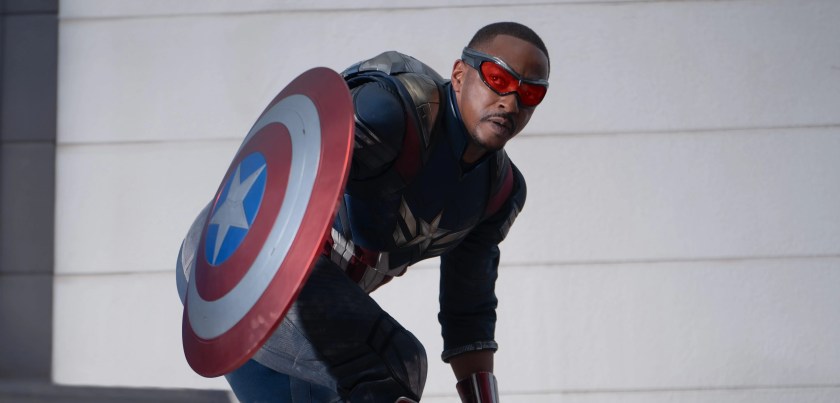
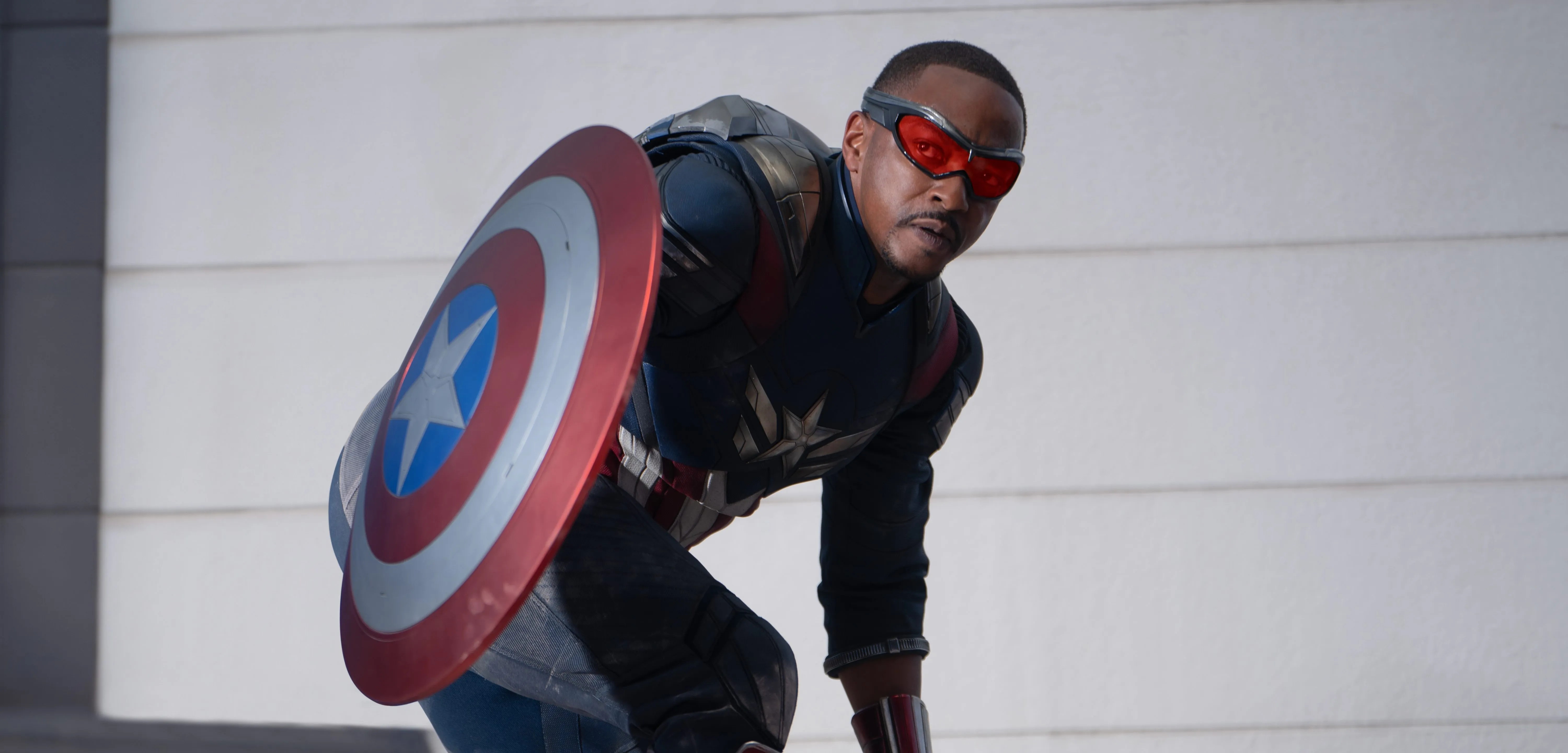
Review: It has been quite the journey for Sam Wilson in the Marvel Cinematic Universe since we were first introduced to him as Steve Rogers’ jogging buddy in Captain America: The Winter Soldier. Since then, he helped to confront and Steve the nefarious HYRDA, took his friend’s side as the Avengers went to war with themselves, fought in the war against a mad Titan with the fate of the entire universe at stake. It all culminated in the passing of the torch shield to becoming his friend’s successor as Captain America. A mantle he momentarily relinquished before reclaiming what was rightfully his. Now in the wake of the events of The Falcon and the Winter Soldier, Sam Wilson is ready to take flight for his first mission, in a film which sadly fails to soar and reach the lofty heights of its predecessors.

It has been a few years since Sam fought with Bucky Barnes to take down the Flag Smashers, and in that time, Thaddeus “Thunderbolt” Ross has been elected as President of the United States. Despite having had their differences in the past, the new man in the Oval Office tasks Cap and the new Falcon Joaquin Torres (Ramirez) to foil an illegal arms deal in the first step of a more collaborative relationship. Ross later informs Sam he wants his help to rebuild the Avengers. During a summit at the White House concerning the emergence of Celestial Island and a rare new material, an attempt is made on the President’s life by veteran super soldier Isiah Bradley (Lumbly). With the US on the brink of a major global conflict, Sam must find out who was behind the attempted assassination of the President and uncover the truth behind this global conspiracy and clear Bradley’s name.

It is no exaggeration to say that in 2025, the world is a fraught and sometimes scary place, with entrenched and bitter political divides showing no signs of easing. In such times, making a tense spy-political thriller is a brave and dangerous move as the film has to navigate such a fraught political metaphorical minefield. However, it is not entirely without precedent, as the Russo brothers and screenwriters Christopher Markus and Stephen McFeely successfully tackled similar themes with spectacular success The Winter Soldier and its sequel Civil War. Whether or not you feel the MCU has lost its way since the high of Avengers: Endgame is beside the point, as it was always going to be a tall order for Brave New World to follow in the footsteps of its predecessors.

“You may be Captain America, but you’re not Steve Rogers”, the President scornfully tells Sam after the foiled assassination attempt. “You’re right, I’m not”, Sam sharply retorts. It is a highlight in a film which doesn’t offer many, but also a statement of intent for the new star-spangled man with the shield that he will forge his own legacy as the iconic superhero. In his seventh big screen appearance in this role. Mackie is once again superb. He is fully aware that the legacy of the title he now has comes with an enormous responsibility, at one point grappling with the dilemma as to whether he should have taken the super soldier serum, but this is what makes him more than worthy of that shield. When you have gone up against what he has armed with just a wingsuit, what does he have to fear, especially since now he has the welcome addition of a vibranium shield, and the new Falcon by his side. Although, despite being one of the more interesting parts of the miniseries, Isiah Bradley is once again frustratingly forced to sit in a jail cell, when he really deserves a chance to show what he can do.

The irony is that this script, written by Onah and four other credited writers, could have benefited from some script serum to enhance it and give it some additional polish. One can only speculate, but given certain events that occurred in 2024, it seems that the political themes of the film may have been diluted due to the current state of world politics. In addition to continuing the story established in the preceding miniseries, the film serves as a sequel to both Eternals (good to see this underappreciated film get acknowledged) and The Incredible Hulk, as the villain is a character that audiences may have nearly forgotten. Portraying a role that was successfully played by someone for many years is never an easy task, but Ford does an excellent job as Ross, succeeding the late William Hurt. Along with his signature gruffness, Ross is grappling with the daunting challenge of leading a country on the brink of major conflict while also battling his own internal struggles and trying to reconnect with his daughter, Betty (Tyler). Given the current state of US presidents, especially now, you’d take Ross’s leadership any day of the week.

Despite Ford’s impressive portrayal of Ross and his complex (and possibly red) inner demons, the film’s action, while undeniably slick and well-crafted, fails to bring anything new or memorable to the MCU. It frustratingly adheres to a formulaic structure, which feels like a significant missed opportunity for what could have been a gripping political thriller, similar to its predecessors. The 35th entry into the MCU could have marked a bold new direction for both the star-spangled hero and the wider universe. Instead, it feels tired and stale, as if our titular hero’s wings have been clipped, leaving him unable to rise above this uninspiring and frankly bland story.

Despite stellar performances from Mackie and Ford, with the former more than proving himself worthy of the shield, Brave New World is a political thriller that seems too afraid to go for the jugular in these politically fraught times, while also lacking in thrills.  


Posted in 2020-2029, Film Review

The Brutalist (2025)

© A24. Universal Pictures and Focus Features

The Brutalist – Film Review

Cast: Adrien Brody, Felicity Jones, Guy Pearce, Joe Alwyn, Raffey Cassidy, Stacy Martin, Emma Laird, Isaach de Bankolé, Alessandro Nivola

Director: Brady Corbet

Synopsis:  A talented architect escapes post-World War II Europe and emigrates to the US to start a new life in pursuit of the American dream…

Review: An arduous boat journey, followed by a walk down a gangway, to mark the start of a new life in a country that offers so much potential and opportunities for success. This is the core principle of the American Dream, a concept popularized by US writer James Truslow Adams during the Great Depression. It has been ingrained in the ideals of the nation for decades. No matter who you are or where you come from, you can achieve your dreams in the United States of America. This promise has inspired millions of immigrants to move to the country and lies at the heart of this ambitious and powerful film by Brady Corbet.

In post-World War II Europe, Hungarian-Jewish architect László Toth (Brody) emigrates to the United States after surviving the Holocaust. Unfortunately, he has been separated from his wife, Erzsébet (Jones), who remains in Europe with their niece, Zsófia (Cassidy). After disembarking from the boat and catching an upside-down glimpse of Lady Liberty in all her glory, László makes his way to Pennsylvania to stay with his cousin, Attila (Nivola), and Attila’s wife, Audrey (Laird). Attila offers László the chance to work in his furniture business. One fateful day, they receive an offer from Harry Lee Van Buren (Alwyn), who wants to hire them for a job to renovate the library at his father Harrison’s (Pearce) home. Initially, Harrison, a wealthy industrialist, strongly disapproves of the renovations and dismisses László from his home without paying him for the work. However, after László’s designs for the library receive glowing praise from the architectural community, Harrison returns to offer László the opportunity to design his magnum opus: a community centre that will house a gymnasium, chapel, and reading room in honour of Harrison’s late mother.

In such times when the subject of immigration is at the centre of hateful and bigoted rhetoric emanating from certain world leaders, the arrival of such an expansive and grand film in terms of its scope and themes couldn’t be more timely. Like a vast and tall structure built to last for generations to come, Corbet and Mona Fastvold’s weighty screenplay tackles a plethora of meaningful and potent subjects including the Jewish identity, the unremitting horrors the Holocaust inflicted on the Jewish people, the joys and hardships that go along with looking to fulfil the promise of the American dream as an immigrant, and the desire to make or construct something which will ensure you leave a lasting legacy on the world. Yet that ambition comes with a cost, because as Laszlo finds out, to what extent will you drive yourself into the ground in pursuit of perfection when the path to get there is littered with seemingly mountainous obstacles too heavy to move?

To leave everything you have known behind to pursue a brand new life on an entirely new continent is a journey that millions have embarked upon across generations. For Adrien Brody, whose mother and grandparents fled their native Hungary to emigrate to the US, it is evident how much of a personal role it is for him. He channels this into his incredible performance as we can see Laszlo is a man driven by his passion for his craft, and his determination to make a better life for himself so that one day Erzsébet and Zsofia will finally be able to join him in the US. Such is the lengthy process, it takes a while for Erzsébet and Zsofia to finally be reunited, but when she does finally arrive in the US, Jones more than makes her presence known with a powerful performance. As the wealthy benefactor who plays a central role in giving Laszlo a chance to realise his vision, Pearce is utterly compelling as Van Buren Sr. There is a warmth to him, a generosity where he recognises Laszlo’s talents. However, beneath that warm and embracing exterior, there is a hint of a darker side, a jealousy and bitterness that threatens to come to the surface as the film, and this hugely ambitious project progresses.


Whenever a film clocks in at a runtime exceeding three hours, discussions inevitably arise as to whether it justifies such a lengthy runtime. With a built-in intermission, the film’s structure keeps eyes firmly transfixed on the screen, be it the awe-inspiring production design, Lol Crawley’s breathtaking cinematography and the majestic score by Daniel Blumberg. Given the exorbitant budgets with which many films are made these days, how the film only cost $10m is astonishing and should serve as a lesson for filmmakers that exorbitant budgets aren’t always needed. However, even with the lengthy runtime, during which the audience has been taken on an immersive journey across several decades, the conclusion comes off as very abrupt and rushed. Like spending years on an exciting construction project, only to haphazardly complete the final stages in a comparatively short period. Even with such a lengthy runtime, the film would have benefitted from an extra 15 to 20 minutes to provide audiences with some necessary closure.

Despite some question marks about the film’s use of AI to enhance the Hungarian dialogue of László and Erzsébet, as well as for some of the former’s drawings, what Corbet has brought to the screen with only his third feature film is mightily impressive. With its pertinent exploration of the struggles of immigrants to fulfil the promise that the American dream sold to them, combined with its weighty themes of striving to establish yourself as a master in your craft, only to be held back due to a plethora of societal factors, including but not limited to the brutal (pun absolutely intended) nature of capitalist society. The wondrous filmmaking will only carry increased significance as time goes by.

Across such an epic runtime, The Brutalist could have easily been bogged down by the sheer ambition of its timely story. However, with an engrossing performance from Adrien Brody at its core, Corbet has built a towering and pertinent examination of the immigrant experience which will stand tall for generations to come. 

Posted in 2020-2029, Film Review

Nosferatu (2024)

© Focus Features and Universal Pictures

Nosferatu – Film Review

Cast: Lily-Rose Depp, Nicholas Hoult, Bill Skarsgård, Aaron Taylor-Johnson, Emma Corrin, Ralph Ineson, Willem Dafoe, Simon McBurney

Director: Robert Eggers

Synopsis: In 19th-century Germany, a young woman has disturbing dreams and visions of an ominous supernatural presence who becomes infatuated with her…

Review: Humanity has always been fascinated with mythical creatures, perhaps none more so than the creatures of the night known as vampires. These blood-sucking entities have sunk their teeth into and left an indelible mark on the history of cinema, going all the way back to 1922 when F. W. Murnau’s silent film Nosferatu: A Symphony of Horror was released. The first vampire film and one of the films to establish horror as a genre, its influence has stood the test of time. Yet, if ever there was one filmmaker who could reimagine this gothic nightmare for a modern audience, you would be hard-pressed to find a more suitable filmmaker for this reimagining than one of the new masters of horror in Robert Houston Eggers.

It is 1838 in the German town of Wisburg and Ellen Hutter (Depp) has married estate agent Thomas Hutter (Hoult). Thomas is tasked by his employer Herr Knock (McBurney) to travel to Transylvania to get the reclusive Count Orlok (Skarsgård) to agree to a deal that will see the Count buy a dilapidated old manor, on the promise that the completion of the deal will see Thomas gain significant monetary reward and a promotion. Upon arriving at the Count’s foreboding residence, their fateful meeting sets off a chain of events leading back to Ellen. In the absence of her husband, she has been suffering from seizures and nightmarish visions of a creature she calls “Death” incarnate, which leads the villainous Count to become obsessed with her and pine after her in a twisted attempt to cure her loneliness.

Having been in development as a passion project for Eggers since 2015, it has perhaps served him well that during the years he worked to awaken this project from the slumber of development, he has gone on to refine his craft as a new master of horror. First, he captivated audiences with his New England folk-horror story and the haunting yet darkly comedic tale of two lighthouse keepers struggling to maintain their sanity on a remote island. After taking a break from horror to dabble in Norse mythology, he has returned to familiar territory, fully in his element and ready to scare the living daylights out of the audience. His screenplay takes the bones of the 1922 film (based on Bram Stoker’s Dracula) and puts considerably more meat on them by framing the story of Orlok’s campaign of terror from Ellen’s perspective. We see from her perspective how her intense desire for companionship, even if it is from a supernatural being of any kind, and Orlok is only too happy to oblige.

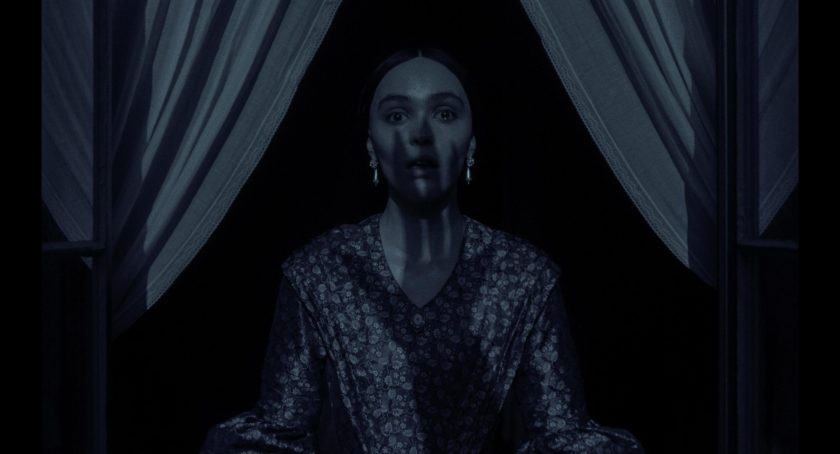
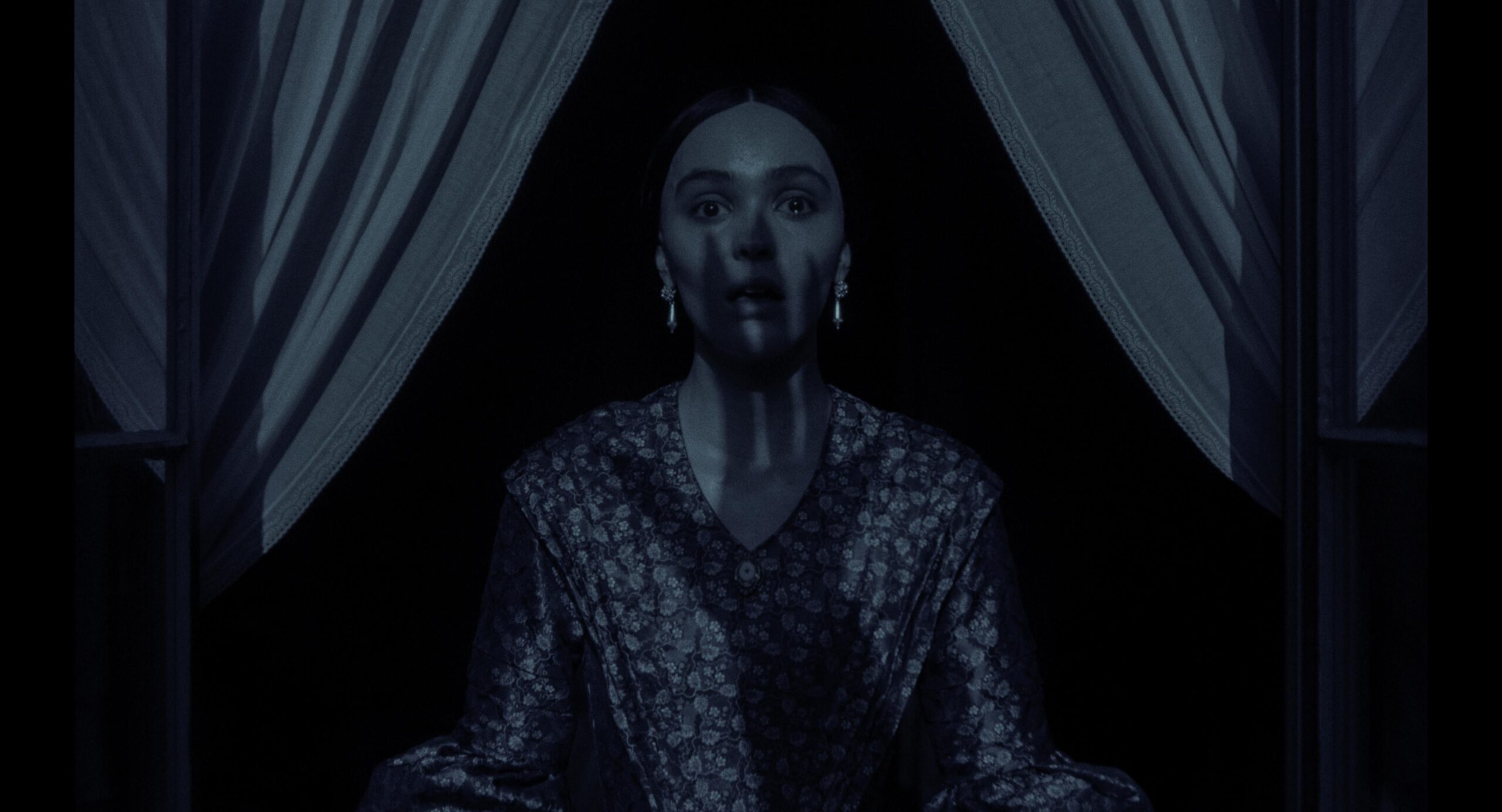
Framing the story from Ellen’s perspective is a masterstroke by this masterful director, and every cast member delivers truly outstanding performances. The sheer terror of being haunted by such a frightening presence demands a powerful performance, exactly what both Lily-Rose Depp and Nicholas Hoult deliver. Depp invests everything into her role, allowing the audience to profoundly feel her dread and fear, which leads to some extremely unsettling scenes where it truly feels like she has been possessed by a supernatural entity and an immediate exorcism is required. Similarly, having to make the unsettling journey to Transylvania to deal with Orlok directly, you really feel Thomas’s absolute terror at staying in such an objectively unsettling place.

Having likely given countless people who suffer from coulrophobia with his portrayal of Pennywise, Skarsgård’s menacing performance stands an excellent chance of being one of the most unsettling horror performances ever put to film. Through a combination of incredible makeup work and an extremely sinister voice, is one you will remember for a very long time as it will chill you to your very soul. Even with a horrifying sense of dread, Dafoe, re-teaming with Eggers for the third time, once again fully understands the assignment and injects some humour into the gothic and unnerving moments.

In keeping with his earlier films, Eggers immerses the audience as if they were themselves in 19th-century Germany being haunted by this terrifying blood-sucking creature of the night. The director has explicitly said he has no desire to ever make a film in modern times, and all the better for it. Amidst incredible work from the production design and costume departments, special mention must go to returning cinematographer Jarin Blaschke. who has shot every single one of Eggers’ films, produces some of his best work here with some atmospheric and truly haunting cinematography.  The scenes at the Orlok residence in particular stand out where the conniving Count is shrouded in shadow and darkness for a considerable proportion of the film. The dead of night can be a scary enough place as it is, but Blaschke’s work is so ominous and foreboding, that it may well leave you with a temporary phobia of the dark and consequently be tempted to sleep with the lights on.

Reimagining a film which has left an enduring impact on the world of film would have been a daunting task, but Eggers’ passion for the project comes through with each and every bewitching and yet simultaneously haunting frame. This new iteration of this classic tale packs plenty of bite, and by the end, will leave you no choice but to succumb to the darkness of its terrifying beauty.

With chillingly committed performances from Depp and Skarsgard, this new atmospheric incarnation of the classic vampire story will invade your nightmares as it passes into horror folklore.

Posted in 2020-2029, Film Review

Conclave (2024)

© Black Bear UK, Focus Features, FilmNation Entertainment and Indian Paintbrush

Conclave – Film Review

Cast: Ralph Fiennes, Stanley Tucci, John Lithgow, Sergio Castellitto, Isabella Rossellini, Lucian Msamati, Carlos Diehz

Director: Edward Berger

Synopsis: After the death of the Pope, a cardinal is tasked with organising the vote to elect a new leader of the Catholic Church…

Review: In a year when many people worldwide have gone to the polls to cast their ballot in elections, Edward Berger’s follow-up to his Oscar-winning All Quiet on the Western Front, couldn’t be timelier. Like the outcomes of these general elections, the election of a leader for an institution like the Catholic Church – an important pillar of faith for millions – is highly consequential. While the process is conducted away from the eyes of the watching world, Berger swaps the trenches of World War I for the halls of the Vatican and peers through the black or white smoke, at one of the most secretive and oldest elections in human history.

The film opens with Cardinal Lawrence (Fiennes) pacing through the streets of Rome late at night, arriving at the Pope’s private chambers in the Vatican. There, he receives the solemn news that the Holy Father has passed away from a heart attack. As the Dean of the College of Cardinals, Lawrence is tasked with organising the papal conclave, the election process to select the new pope. As the election begins, four leading contenders emerge: the liberal Cardinal Bellini (Tucci), the socially conservative Cardinal Adeyemi (Msamati), the moderate Cardinal Tremblay (Lithgow), and the hardline traditionalist Cardinal Tedesco (Castellitto), who threatens to reverse decades of reform. As the election unfolds to determine the most powerful figure in the Catholic Church, startling revelations emerge, threatening to overshadow the process and could cause catastrophic damage to the Church’s reputation, if they became public knowledge.

In the same vein as the elections the public participates in, with politicians desperately looking to either attain power or hang onto it by any means necessary by appealing to their respective electorates, Conclave is a fascinating exploration of humanity’s innate and almost selfish desire for ambition and to obtain power whenever they can. These are traits you wouldn’t expect of religious men in the service of a higher being and the institution to which they have devoted their lives. Peter Straughan’s script, adapted from the book of the same name by Robert Harris, lays this for all to see as these four men desperately look to play their hands and outmanoeuvre their competitors. It is all the more difficult for Lawrence, who shares the same political mindset as Bellini but must position himself as neutral given his position as the one who is overseeing the election. Yet, he knows of the damage that would be dealt to the Church and the Papacy if someone like Tedesco ascended to the papal throne. All the while, as the election takes shape, the revelations that come to light cause Lawrence to doubt his faith in the institution to which he has devoted his entire life.

The hallways of the Vatican, featuring men in fancy garments writing some words on a bit of a paper to choose their next leader, might seem the most unlikely ground for a pulsating, edge-of-your-seat thriller. Yet, for a gripping 120 minutes, as agendas begin to shuffle, the scheming commences as support for the various candidates fluctuates as some uncomfortable truths are revealed. It never fails to be utterly captivating, in no small part due to the phenomenal performances across the board. As the cardinal at the centre of this, Fiennes has consistently had a consistently captivating screen presence across his 40-year career, and he is utterly masterful once again. He must balance the difficult task of remaining objective in the running of the conclave, while desperately trying to prevent the election of a pontiff that would in his mind, cause considerable damage to an institution that has already had plenty of issues to contend with that have damaged its standing with the public. While Bellini ideologically aligns with Lawrence, he emphatically rejects any desire to become Pope. However, he may find himself reluctantly drawn into it to prevent Tedesco, or the devious Tremblay from winning the election, the latter of whom may also have some secrets he desperately tries to keep hidden.

While these cardinals scheme, bicker and devise plots throughout the process, the nuns in the Vatican remain mostly anonymous and silent observers. This is until Sister Agnes (Rossellini) is called upon when a decades-old secret comes to Lawrence’s attention. Fleeting though her screentime may be, with every word or gesture, she makes the most of her screentime in no uncertain terms. Reteaming with Berger after their combined Oscar success, Volker Bertelman’s string-heavy score is enough to get your heart racing with its intensity as if there wasn’t fraught enough with the events of the election playing out before our very eyes. The brisk editing by Nick Emerson ensures the film’s pacing never lags while Stéphane Fontaine’s cinematography is with several scenes boasting such visual splendour, that they wouldn’t look out of place in the Sistine Chapel. 2024 has been a significant year for vying for power at the highest positions of government, perhaps more than some would have liked it to be, given the outcomes of certain elections. Yet, it serves as a stark reminder, that absolute power corrupts absolutely, and no man, religious or not, can hide from that inescapable truth.

Through the divine work of an impeccably acted ensemble, featuring some of the best performances of Fiennes’ illustrious career, who would have thought a film about the election of a leader of the Catholic Church could be so thrilling?

Posted in 2020-2029, Film Review

The Apprentice (2024)

© StudioCanal, Scythia Films, Profile Pictures,  Tailored Films, Rich Spirit, AQuest Films, Head Gear Films, Metrol Technology, AC Films Inc., Wild7 Films

The Apprentice – Film Review

Cast: Sebastian Stan, Jeremy Strong, Maria Bakalova, Martin Donovan, Catherine McNally and Charlie Carrick

Director: Ali Abbasi

Synopsis: Charting the rise of New York real estate businessman Donald Trump in the 1970s and 80s under the tutelage of a ruthless lawyer…

Review: If there is one name that everyone on planet Earth has become extremely familiar with in recent years, it would be Donald Trump. For years, he was the face of a reality TV business show billed as the “ultimate job interview” on the back of his career as a businessman. Yet this was a mere prelude to a successful run to become the most powerful person in the world, the President of the United States of America. An intensely divisive figure during his campaign and while in office, his first stint as the leader of the free world was tumultuous, to say the least, and ended in disgrace. Consequently, as he stands to be returned to the job once again, this biopic which depicts the beginnings of his career as a wealthy New York businessman couldn’t be timelier, or scathing in its assessment of the man who is once again poised to become the most powerful person in the world.

It is 1973, and while on a date at a restaurant frequented by the city’s wealthy elite, years before he ever uttered the words “You’re fired” on TV, Trump (Stan) meets the unscrupulous and uncouth lawyer and prosecutor Roy Cohn (Strong). With the federal government pursuing a lawsuit against his father’s business empire for racial discrimination, Trump recruits Cohn as his lawyer to get the lawsuit dismissed, using underhand means. Eager to move away from his father’s sphere of influence, Cohn takes Trump under his wing as the latter moves to strike out on his own and looks to develop a hotel at a derelict site in the city.  Along the way, Cohn teaches Trump his three vital lessons to live life by: “attack, attack, attack”, “admit nothing, deny everything” and “always claim victory and never admit defeat”. The last of those feels particularly significant and ominous, given the circumstances in which he refused to concede defeat in an election, which resulted in a violent insurrection at the heart of the US government decades later.

Much like the central figure of this biopic, controversy has followed this film from the get-go, as one of its early funders reportedly attempted to stop it from being released. Further legal action even came from Trump’s legal team to prevent the film from ever being released and it also became the subject of an angry social media tirade from Trump himself (nothing new there then). With the days of his first stint as President still all too fresh in many people’s minds (as well as the events that followed following his 2020 election defeat) Gabriel Sherman’s screenplay wisely avoids his time at the Oval Office, and instead focuses on the dynamic between these two men and how Trump takes a leaf out of Cohn’s book in terms of being utterly ruthless and determined to let nothing stand in his way from achieving what he wants, including musing about a run for President in the future, which the film takes some very unsubtle hints to demonstrate, including what would become his campaign slogan. It is a sobering reminder of the rampant ego Trump has always possessed. Here is a man who you can show all the loyalty in the world, and yet he will not hesitate to cast aside anyone who gets in his way, even the man who mentored him.

To portray a polarising political figure, especially one revered by some and loathed by others, is a daunting challenge for any actor. While there have been many comedic portrayals of Trump over the years, Stan’s performance is firmly grounded in reality. Even though the story is set decades before most people outside of New York knew who he was, Stan illustrates that significant research has gone into his role. He captures Trump’s unique mannerisms and way of speaking in a manner that never feels like parody or mockery, all while depicting his callousness and desire for power above all else. Alongside him, Strong delivers an equally outstanding performance as Cohn, skillfully bringing forth Cohn’s thoroughly unlikable qualities that make viewers uncomfortable each time he appears on screen. Strong is no stranger to the cutthroat world of power struggles and backstabbing, having showcased his talent in HBO’s award-winning series, Succession. It is a testament to his acting skills that even while playing someone as monstrous and unredeemable as Cohn, Strong manages to add a layer of sympathy, considering the circumstances he faced towards the end of his life.

The concentration on the relationship between Trump and Cohn and how that unleashes the monster that became the leader of the free world does mean that the relationship between Trump and his first wife Ivana ( an underutilised Bakalova) is not given as much screentime as it perhaps could have. However, it does include an explicit scene based on a divorce deposition Ivana filed against her ex-husband, which she then later recanted. Whether factual or not, it is a further illustration of this man’s contemptible character and his clear misogyny, which was further demonstrated by the now-infamous Access Hollywood tape. One can argue that this biopic doesn’t reveal anything that wasn’t already known. While that may be true, it shines a light on the scruples (or lack thereof) of a man who stopped at nothing in his pursuit of power and serves as a reminder of who the man entrusted with one of the most important jobs in the world really is.

While it doesn’t have the bite or shocking new revelatory details one might have hoped from a biopic of one of the most controversial figures of the 21st century, The Apprentice packs plenty of punch thanks to the performances of Stan and Strong.

Posted in 2020-2029, Film Review

Wicked (2024)

© Universal Pictures and Marc Platt Productions

Wicked – Film Review

Cast: Cynthia Erivo, Ariana Grande-Butera, Jonathan Bailey, Ethan Slater, Bowen Yang, Marissa Bode, Peter Dinklage, Michelle Yeoh, Jeff Goldblum

Director: Jon. M. Chu

Synopsis: A misunderstood young woman forges a friendship with a popular student at Shiz University in the land of Oz…

ReviewThere is a very good reason The Wizard of Oz is considered a timeless classic and an iconic work of cinema which has stood the test of time. More than three-quarters of a century since Dorothy and her friends travelled down that yellow brick road, its enduring themes of finding your courage and the power of friendship, combined with the memorable music (for which it won two Oscars) and the iconic red footwear adorned by its lead character, contribute to its legacy. It is no surprise that in the years since, there have been numerous expansions to the wonderful world of Oz in various forms, including the 1995 prequel novel “Wicked: The Life and Times of the Wicked Witch of the West,” which later inspired a musical. A musical that has been seen 65 million times in more than 100 cities in 16 countries. Popular, indeed, but the road from stage to screen can sometimes be tricky to negotiate. Fortunately, in the hands of Jon. M. Chu, the first part of this adaptation truly soars.

Adapting the first act of the musical, Galinda (Grande-Butera) arrives at Shiz University and soon becomes eager to impress the school’s Dean of Sorcery Madame Morrible (Yeoh). There she meets Elphaba (Erivo), the misunderstood daughter of the Governor of Munchkinland. Elphaba has possessed magical abilities from childhood, but is mocked and scorned by society due to her green skin. After the duo are forced to room-share while at university, they forge the most unlikely friendship. This leads them both to visit the Wizard of Oz in the Emerald City before their paths diverge forever into becoming The Good Witch and The Wicked Witch of the West respectively.

When you have had music and lyrics that have enchanted theatre audiences for more than 20 years, it shouldn’t come as a shock that the music composed for the stage by Stephen Schwartz has remained unchanged for the screen. Likewise, for the dialogue, however given this first half is confined solely to the musical’s first act, it allows Winnie Holzman and Dana Fox’s screenplay to devote considerably more time to exploring these characters and fully fleshing out their backstories, particularly Elphaba. Villains can so often be misunderstood souls who are driven to their wickedness by the cruelty and mockery inflicted upon them by others, and Elphaba is one such soul. Disliked by her father since birth, while being kept at arm’s length by her disabled sister Nessarose (Bode), means she is more withdrawn and reserved, but doesn’t allow herself to let the bullies wear her down.

Galinda, by contrast, is the complete opposite of Elphaba. The vainglorious queen of Shiz University, always with a couple of faithful minions in tow and looking to stand out from the crowd, with an excessively pink wardrobe that could give Barbie a serious run for her money. While she initially joins the rest of the students in mocking Elphaba, she eventually becomes sympathetic towards her and strives to improve her popularity among the rest of the university’s students. As well as possessing terrific singing voices, the film’s magic lies in the chemistry between Elphaba and Galinda, and Erivo and Grande deliver magical performances. The latter might not have the most extensive acting resume to her name, but she effortlessly brings Galinda’s vanity to the core, demanding to be the centre of attention at all times. Yet, there is an endearing quality to her that you can’t help but love, particularly in those tender moments between her and Elphaba.

Without a doubt, Erivo and Grande are the stars of the show, though they are wonderfully supported by a quirky cast of characters, including the effortlessly charming Prince Fiyero (Bailey), and the stern yet compassionate Madame Morrible. Yeoh, reuniting with her Crazy Rich Asians director, to wonderful effect. Additionally, no film set in the land of Oz would be complete without the Wizard himself, portrayed perfectly by Jeff Goldblum, who brings his signature quirkiness to the role. Chu is no stranger to musicals, having directed 2015’s Jem and the Holograms and 2021’s In the Heights. Despite the latter’s truly spectacular musical numbers, Chu really steps up to deliver some truly showstopping musical numbers that will have you singing the songs for days and weeks afterwards.

Adapting such a beloved piece of storytelling that has cast a spell and bewitched its way into the hearts and minds of legions of fans was always going to be a tough ask, as adaptations of musicals can often go very very wrong. Yet, Chu has brought to the screen a very timely story about being unafraid of who you’re meant to be, to stick to your guns and not be intimidated in the face of bullies. A magical experience in every sense of the word, and the good news is, this is only the first half. Grab your broomsticks and pointy hats, because we’ll be venturing down the yellow brick road back to Oz again this time next year.

Filled with truly magical musical numbers, enchanting costumes and sets, and spellbinding performances combine to deliver an enthralling cinematic experience for long-time fans of the Broadway play and newcomers alike. Expectations and gravity well and truly defied.


Posted in 2020-2029, Film Review

Gladiator II (2024)

© Paramount Pictures, Scott Free Productions and Lucy Fisher/Douglas Wick Productions

Gladiator II – Film Review

Cast: Paul Mescal, Pedro Pascal, Joseph Quinn, Fred Hechinger, Lior Raz, Derek Jacobi, Connie Nielsen, Denzel Washington, Yuval Gonen, Matt Lucas, Tim McInnerny

Director: Ridley Scott

Synopsis: After his home is invaded and conquered by the Roman army, Lucius Verus is forced to follow in the footsteps of the legendary Maximus and become a gladiator…

Review: “What is your Roman Empire?” is a question you may have noticed has popped up a lot in interviews recently, thanks to a trend on social media in which men are asked how often they think about the Roman Empire. If one were to put this question to Sir Ridley Scott, the answer would probably be a fair bit due to the fact among the legendary director’s distinguished filmography, many could point to 2000’s Gladiator as his magnum opus, and for good reason. The story of a Roman General who is betrayed and sees his family murdered on the orders of a corrupt emperor, then becomes a gladiator to seek vengeance, in this life or the next, has stood the test of time for its epic scope, an incredible array of characters, enthralling action sequences, and one of maestro Hans Zimmer’s greatest scores of all time. After nearly a quarter of a century, the Roman Empire evidently wasn’t far from Scott’s mind because, like a triumphant gladiator, he returns to the Colosseum, in thrilling style.

Sixteen years after the death of Maximus in the arena following a personal bout with his uncle Commodus, Lucius Verus, going by the alias “Hanno”, lives in the Roman province Numida with his wife Arishat, a far cry from his early life by his mother Lucilla’s side in preparation for a very regal future. In the years since, Lucius’s grandfather Marcus Aurelius’s dream that was Rome is a distant memory, with the twin Emperors Geta (Quinn) and Carcella (Hechinger) presiding over corruption and political turmoil.  This has left some in the Roman army, such as General Acacius (Pascal) increasingly disillusioned with their rule. When his home is conquered by the Roman army, Lucius follows in the footsteps of Maxiums and becomes a gladiator after being sold into slavery. He soon comes to the attention of former slave Macrinus (Washington) who senses Lucius’s rage and looks to offer him a path to satisfy the rage he has against those who invaded his homeland and murdered his family.

It’s remarkable that even at 86 years old, Ridley Scott shows no signs of slowing down and continues delivering spectacular films, particularly in the swords-and-sandals and historical epic genres, in a way few directors can match. However, creating a sequel to such a beloved and iconic masterpiece is undoubtedly a daunting and risky endeavour for this legendary director. Reteaming with his Napoleon screenwriter, David Scarpa’s screenplay wisely chooses to follow the narrative beats of the original. In this continuation, the protagonist experiences a significant loss, which drives him to channel his grief and intense rage against those responsible for inflicting great pain, for the loss of those he held dear and for those who cost He takes his vengeance to the Great Colosseum of Rome, where he must fight in several bloody battles to the death, while trying to convince anyone who will listen of his grandfather’s dream. However, as Lucius will soon find out, the depravity that went on while his uncle held the throne is nothing compared to what has been allowed to unfold in the nearly two decades since under the reign of the two men who sit on the throne that by all rights, should have been his.

Like a fatal blow in the Colosseum, the film’s powerful central message – that will strike deep and echo in eternity – lies in its damning indictment of modern-day politics. In recent years, the world has seen numerous figures rise to power on the back of populist rhetoric. When these charlatans rise to power, with their unchecked egos demanding loyalty from anyone and everyone while never giving anything in return, they leave considerable damage in their wake and show little to no thought or consideration for the harm they have inflicted with their arrogance and pomposity. It serves as a damning reminder of what can happen when such dangerous and unqualified demagogues are allowed to assume positions of power.

Such political chaos and turmoil allow for some savvy and cunning figures to exploit the corruption to get ahead, and this is where Macrinus thrives. Washington, the legend that he is, is clearly having a ball with this role and he captivates every time he’s on screen, so much so it matters not that he is speaking with his natural accent. Filling Maximum’s armour is a tough ask, but Lucius’s arc makes for a compelling one, and Mescal gives a suitably wounded and gritty performance, his anger and fury with those in power never too far from the surface. Meanwhile, Quinn and Hechinger are suitably deranged and loathsome as the maniacal emperors, channelling Commodus’s wickedness and being accompanied by a pet monkey, as you do.

Some of the action scenes in the original could very easily lay claim to some of the best action of Scott’s long and glittering career as a director. So how does the octogenarian director top what he accomplished 24 years ago, by putting the history book to the sword and refusing to give a damn whether or not the events depicted in the Colosseum have any foundation in historical fact. Battles with manic baboons, and rhinos, and filling the Colosseum with water to recreating a great naval battle. It’s all utterly bonkers and wild, how can you not be entertained and give a thumbs up and watch the carnage and bloody battles unfold on screen in all their bloody glory. Yet, given the film’s exorbitant $250m budget, some of the VFX looks lacklustre and merits a thumbs down. Matching the lofty standards set by the first film was always going to be a tall order, but with Scott committed to delivering swords to the wall action and the political machinations that are all too relevant today, gives this sequel the strength and honour it needs for the audience to say: We who love Gladiator salute you, Sir Ridley.

It could have been an almighty risk to return to the Colosseum 24 years after Gladiator conquered everything before it, but with a scathing critique of modern-day politics and a memorable Denzel Washington performance, this sequel will leave you more than entertained.