
Hamnet – Film Review
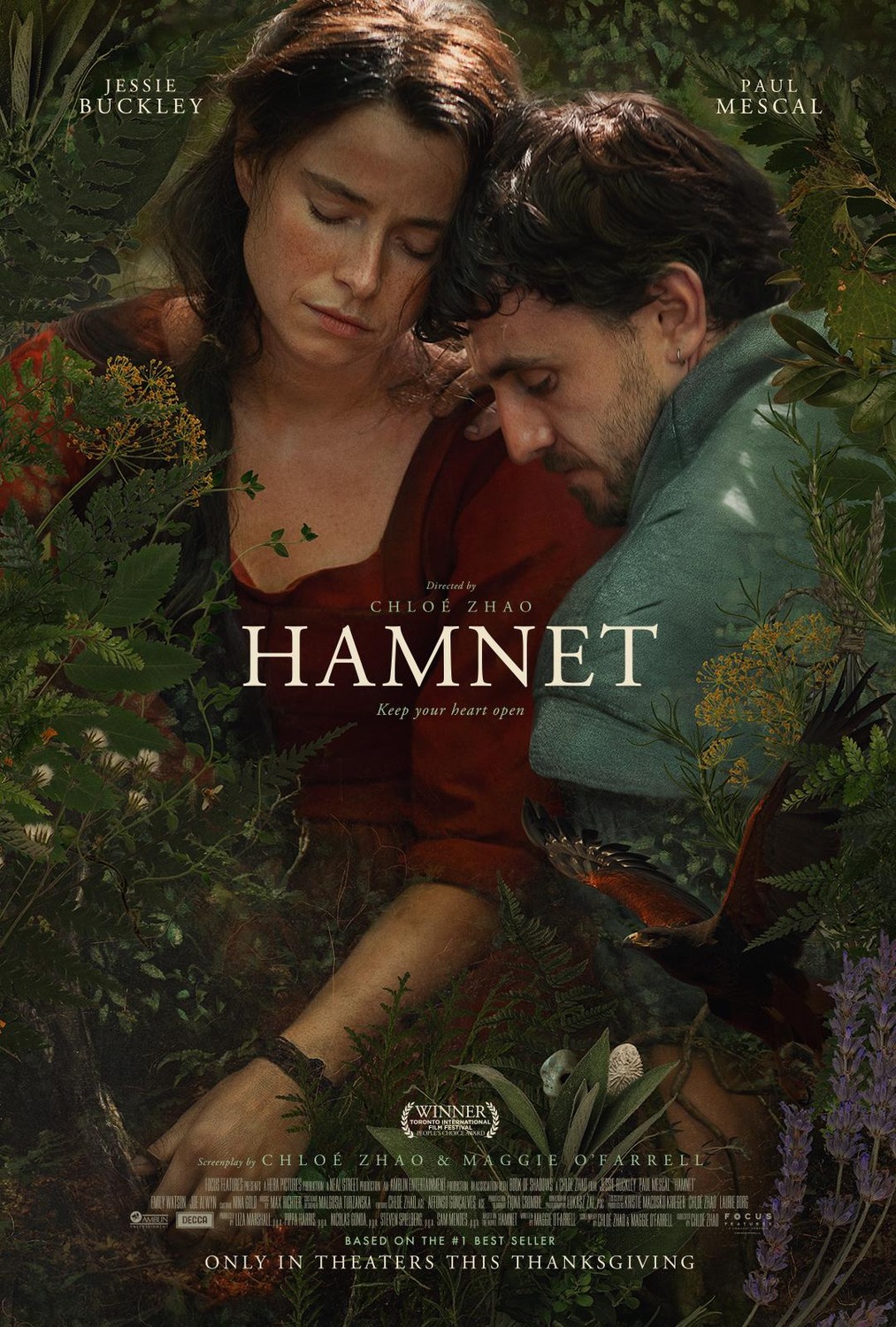
Cast: Jessie Buckley, Paul Mescal, Emily Watson, Joe Alwyn, Jacobi Jupe, Olivia Lynes, Bodhi Rae Breathnach
Director: Chloé Zhao
Synopsis: A fictional account of the tragic circumstances which led William Shakespeare to write his timeless masterpiece “Hamlet”…
Review: “To be, or not to be, that is the question.” It is one of the most instantly recognisable quotes from among the nearly 40 plays that make up the works of the great William Shakespeare. A line delivered in the third act, when the play’s protagonist is deeply contemplative, pondering whether to end his own life. A line so powerful that it has taken on a life of its own over the centuries since it was first written on parchment. What may have inspired one of the greatest writers in history to craft this line and, indeed, one of his most significant works? Enter Academy Award-winning filmmaker Chloé Zhao with an equally compelling and tragically heart-wrenching interpretation of how one of the greatest writers who ever lived channelled his grief into creating a masterpiece.
After a prologue revealing that the names Hamnet and Hamlet were interchangeable, we meet a young William Shakespeare (Mescal) working as a Latin tutor at a local school, long before he became the renowned playwright history remembers him as. On one fateful day, he catches sight of Agnes (Buckley) practising falconry and quickly falls head over heels in love with her. Despite protests from their respective parents, they wed and swiftly consummate their union, with Agnes first giving birth to a daughter, Susanna, followed by twins Judith and Hamnet. As the children grow up, the bonds within the family strengthen, even as William begins to find success in London and is forced to spend time away from his family, making the moments he shares with his children, particularly Hamnet (remember the name Jacobi Jupe), all the more precious. This makes it all the more harrowing when tragedy strikes.
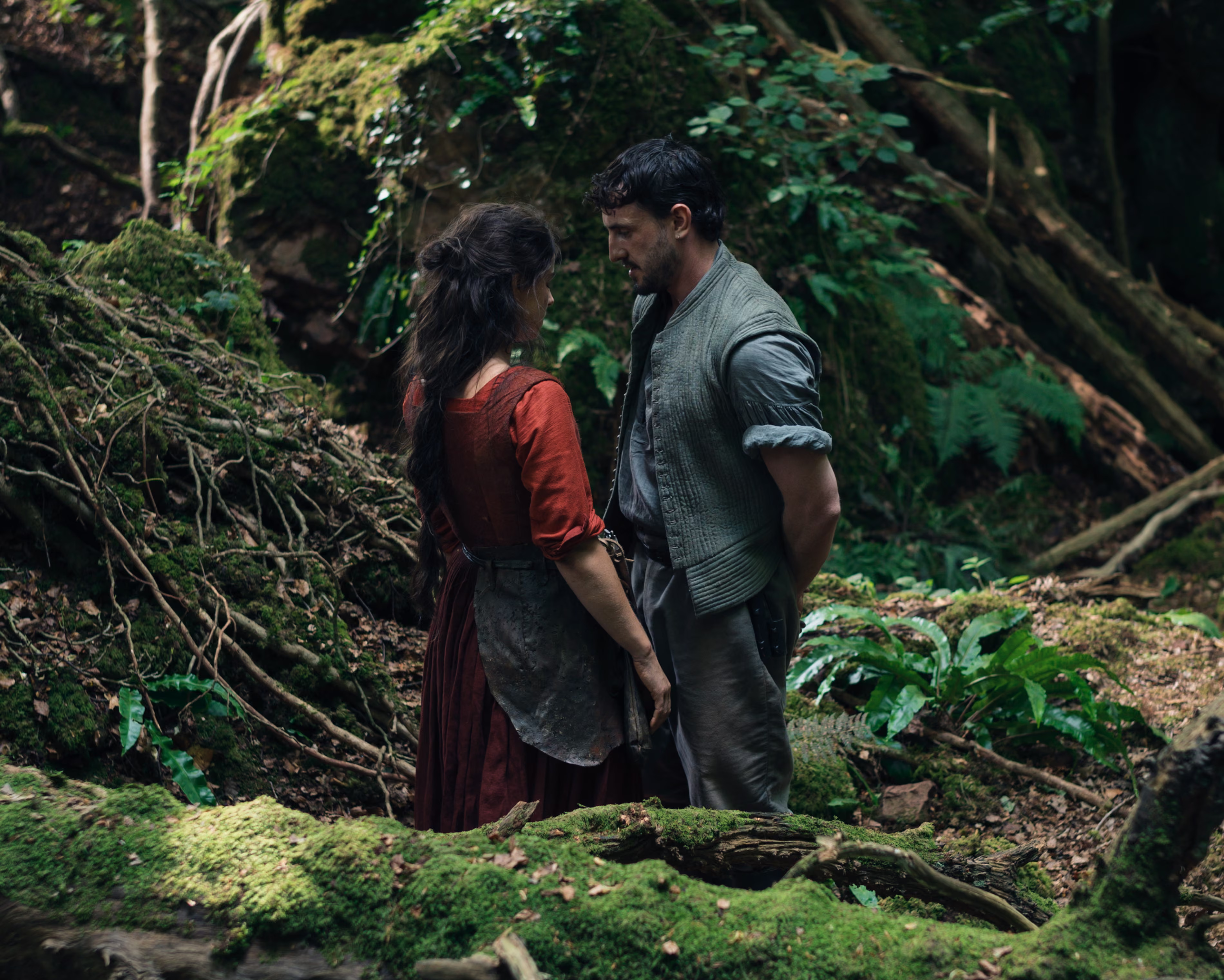
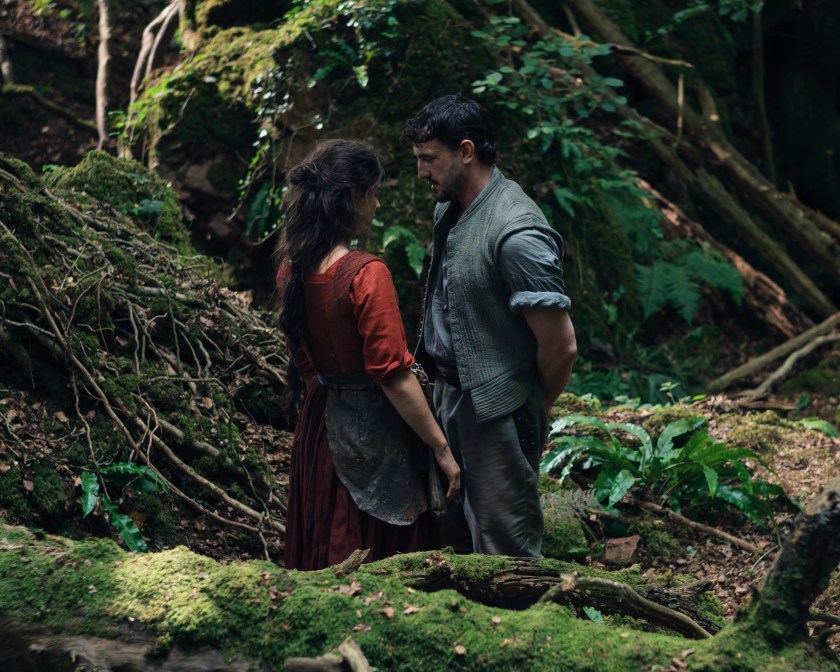
From a moving (and Oscar-winning) story about a woman who chooses to live as a modern-day nomad to the all-encompassing Marvel Cinematic Universe, to tell the (underappreciated) story of a group of all-powerful, immortal Marvel deities, to Shakespeare, Chloe Zhao’s filmography is undoubtedly eclectic. Yet there is a common theme that beats at the heart of all these films, exploring the humanity and spirit of people who, for one reason or another, find themselves cut adrift and/or isolated from society. Zhao and Maggie O’Farrell’s script (based on O’Farrell’s book of the same name) leans into this and patiently explores the loving and tender romance that develops between Will and Agnes. With one having the gift of the written word and the other a deep connection to the forest, they are isolated from their families, and their relationship feels wholly incompatible. It wouldst appear that opposites doth attracteth, and though their love and the love they have for their children blaze like wildfire, it is severely put to the test in a way that no parents should have to go through.
Grief is a shared experience, something we will all go through at some points in our lives, though it affects us in different ways. Zhao’s masterful and measured direction empowers her actors to deliver performances that are both subtle and profoundly moving. For a film that focuses on the life and one particular work of Shakespeare, he doesn’t have the most substantial amount of screen time. Nevertheless, Mescal delivers another captivating performance, capturing the emotion and humanity of the man and the wordsmith. With her husband out of the picture and away on business for a considerable portion of the film, it falls on Agnes to be the glue that binds the family together. Jessie Buckley is nothing short of sensational here and gives maybe her career-best performance. She captures the fierce maternal instinct of a mother who will stop at nothing to protect those closest to her. Yet, when something as potent as a deadly illness comes, she is completely powerless to stop it from claiming her child’s life. The emotion is raw, guttural, and she will split the audience’s hearts into a thousand pieces.
Such an unfathomable and devastating loss would severely test the most resolute and unbreakable bonds that hold a family together. How would one even begin to comprehend, make sense of their life and purpose, and process their sorrow? Despite her own unbearable pain, Agnes knows she must endure and be strong, if not for her own sake, then for the sake of her other children, even more so with her husband more distant than ever and lost in his own grief. Such grief serves as the inspiration for the creation of his ultimate tragedy, his timeless magnum opus, which forms the basis for the film’s poignant third act as the play is performed for the very first time, with Agnes in the audience.
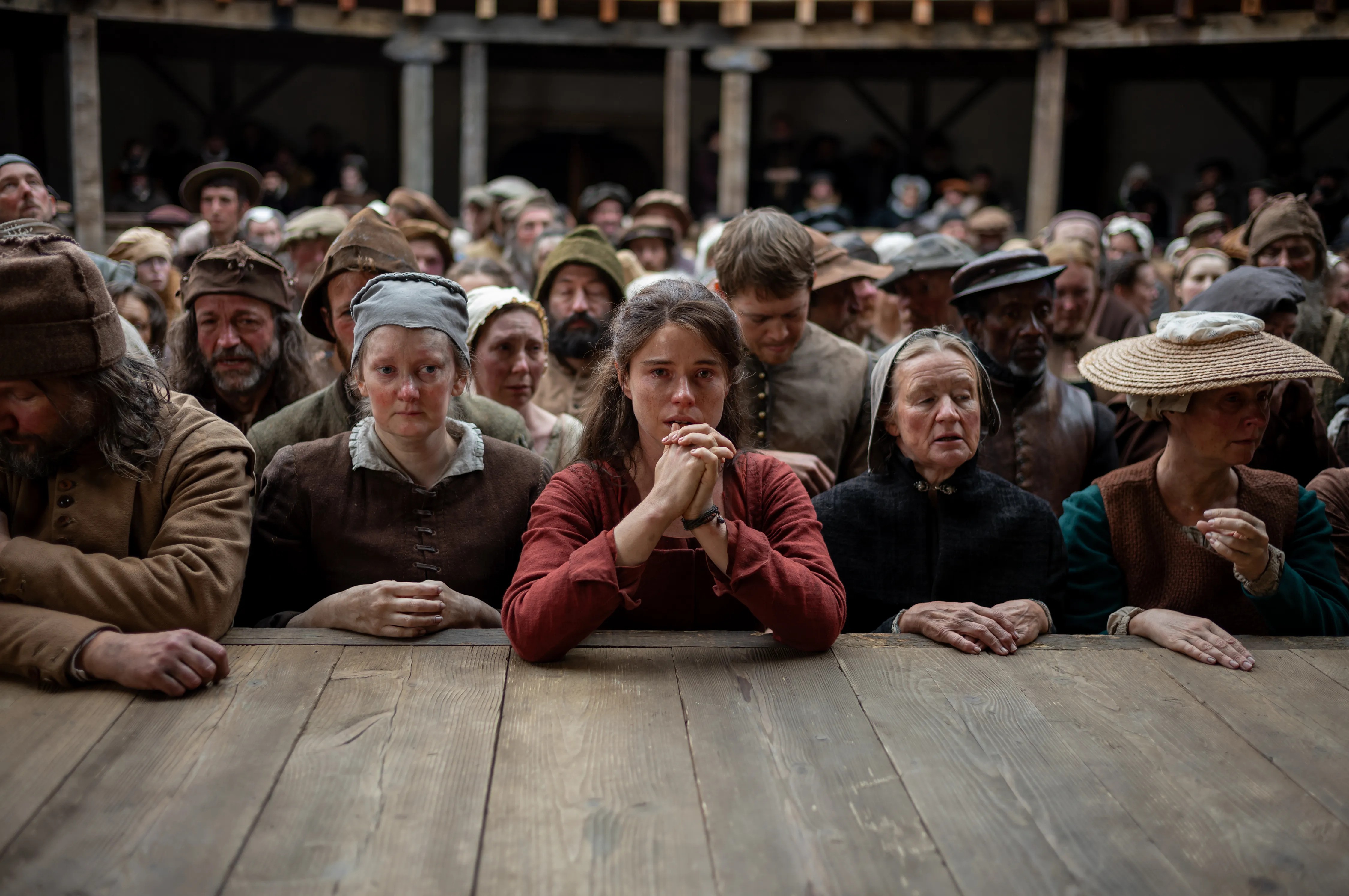
With Fiona Crombie’s incredible production design to faithfully recreate the Globe Theatre, we see through Agnes’ eyes the anguish of the loss she has felt since his death, being released as fury and confusion as to why this latest play bears her son’s name. Yet, this dissipates when she begins to understand the play’s meaning, allowing for a moment of emotional release felt not just by Agnes, but by the whole crowd in the Elizabethan England theatre and the audience themselves. Max Richter’s emotionally resonant score features Elizabethan instruments to wonderful effect throughout, but it is the use of the composer’s most well-known piece that you will have heard in previous films that will have the tears flowing, unless thou art a robot. It is fitting that in the same way the Bard’s grief inspired him to create a literary masterpiece, the creation of that play has enabled another team of artists centuries later to create a masterpiece of the cinematic variety.

 Through the Silver Screen
2 thoughts on “Hamnet (2025)”